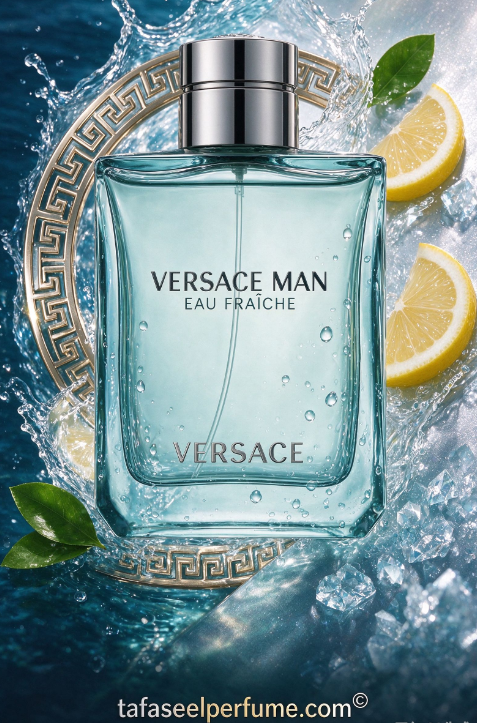
- Versace Man Eau Fraiche by Versace is a fragrance that needs no elaborate introduction for anyone who has spent even a passing moment in the men’s fresh scent aisle.: Versace Man Eau Fraiche by Versace is a fragrance that needs no elaborate introduction for anyone who has spent even a passing moment in the men’s fresh scent aisle. Released in 2006 and composed by Olivier Cresp, it has quietly become a reference point for what a warm-weather citrus-aromatic should feel like: bright, clean, uncomplicated, and almost impossible to offend with.
Versace Man Eau Fraiche by Versace is a fragrance that needs no elaborate introduction for anyone who has spent even a passing moment in the men’s fresh scent aisle. Released in 2006 and composed by Olivier Cresp, it has quietly become a reference point for what a warm-weather citrus-aromatic should feel like: bright, clean, uncomplicated, and almost impossible to offend with. This guide moves beyond the surface-level “fresh cologne” label and examines the composition, the real-world performance, the reformulation conversation, and the practical decisions a wearer faces when choosing it.
Short Introduction
Versace Man Eau Fraiche is a woody-aquatic eau de toilette built around lemon, bergamot, and star fruit over a cedar-sage heart, finishing with musk, amber, and woods. It is a daytime, warm-weather scent first and foremost, prized for its cooling citrus opening and clean dry-down rather than for projection or ten-hour longevity.
Extended Introduction
What separates Versace Man Eau Fraiche by Versace from the avalanche of blue and aquatic releases is a specific kind of restraint. The opening is not a sharp, synthetic blast; it is a rounded citrus accord where lemon and bergamot are softened by the slightly tropical, almost pear-like sweetness of carambola, with cardamom adding a dry, aromatic edge rather than a loud spice. The heart brings cedar, clary sage, and a measured dose of pepper—enough to keep the composition from collapsing into fruit juice, but never enough to make it feel aggressive. The base is where the fragrance reveals its designer pedigree: a smooth musk-amber-wood foundation that stays close to the skin after the citrus fades.
In practice, this is a fragrance that earns its reputation through wearability. It does not demand attention; it creates an impression of cleanliness and ease. That is precisely why it has survived nearly two decades in a market that constantly rewards novelty. For a deeper look at how other citrus-forward icons handle the same brief, the Acqua di Gio Armani guide offers a useful point of comparison, and the Dream Cologne concept piece explores why some scents are remembered as feelings rather than note lists.
Table of Contents
1. What Does Versace Man Eau Fraiche Actually Smell Like?
2. The Note Pyramid: A Closer Breakdown
3. Performance: Longevity, Sillage, and the Honest Numbers
4. The Reformulation Conversation: Has It Changed?
5. Season and Occasion: When It Works Best
6. How It Compares to Dolce & Gabbana Light Blue
7. Who Should Wear It—and Who Should Skip It
8. How to Apply It for Better Results
9. Versace Man Eau Fraiche vs. Versace Pour Homme
10. Value for Money: Is It Still Worth Buying?
11. Common Complaints and How to Address Them
12. Final Verdict: A Fresh Classic or a Relic?
1. What Does Versace Man Eau Fraiche Actually Smell Like?
The first spray is lemon-forward, but not in the way a cleaning product is lemon-forward. It is juicy and slightly sour, immediately tempered by bergamot’s floral-citrus roundness and a surprising tropical whisper from carambola. Within minutes, cardamom and a faint peppery tingle emerge, giving the opening a dry, aromatic backbone instead of letting it collapse into pure fruit. The effect is closer to a crisp, well-made citron pressé than to a sugary sport drink.
As the citrus recedes, cedar and clary sage take over. This is the most “masculine” phase of the fragrance in a traditional sense—woody, slightly herbal, and clean—but it never becomes heavy or patchouli-adjacent. The sage contributes a subtle metallic-green edge that some noses read as “synthetic,” while others experience it as the scent’s signature freshness. The base is quiet: musk, a soft amber warmth, and a general woodiness that sits close to the skin. If you are looking for a fragrance that announces itself across a room, this is not it. If you want something that makes you smell showered, put-together, and approachable, the dry-down delivers exactly that.
For wearers who appreciate this style of transparent, citrus-led construction, the Tommy T Cologne guide covers another classic that prioritizes ease over statement, while the Men’s Perfume category provides a broader context for where Eau Fraiche sits in the modern masculine landscape.
2. The Note Pyramid: A Closer Breakdown
Top notes: Lemon, bergamot, carambola (star fruit), cardamom, and Brazilian rosewood. The rosewood is often overlooked, but it contributes a soft, slightly rosy woodiness that prevents the citrus from feeling one-dimensional. Heart notes: Cedar, clary sage, dragon tree (sometimes listed as dragon’s blood), and pepper. The pepper is restrained; it provides texture rather than heat. The dragon tree note is difficult to isolate but adds a faint resinous-balsamic whisper that gives the heart a little more body than a standard aquatic. Base notes: Musk, woody notes, saffron, amber, and sycamore wood. The saffron is often described as “discreet” in reviews, and that is accurate—it does not announce itself as a leathery-spicy saffron, but it adds a dry, slightly suede-like warmth underneath the musk.
This pyramid explains why the fragrance reads as more sophisticated than its price point suggests. The combination of carambola and saffron is unusual for a designer fresh scent, and the use of rosewood in the opening gives it a vintage-leaning polish that many modern aquatics lack.
3. Performance: Longevity, Sillage, and the Honest Numbers
This is where expectations must be calibrated. Community averages on fragrance tracking platforms place longevity at 2.4 out of 5 and sillage at 2.5 out of 5—numbers that confirm what most wearers report: Eau Fraiche is a moderate-performance EDT that leans intimate after the first hour. On skin, many users get 4 to 6 hours of detectable wear, with the citrus phase lasting roughly 60 to 90 minutes before the cedar-sage heart settles closer to the body. On clothing, performance improves noticeably; fabrics hold the fragrance for significantly longer, and the sillage remains present even when the skin scent has faded.
There is a meaningful difference between projection and presence. Eau Fraiche does not project loudly, but it creates a consistent scent bubble for the first two to three hours. After that, it becomes a skin scent—still there, still clean, but no longer broadcasting. This is not a flaw in the formulation; it is the nature of a high-citrus, low-musk eau de toilette. If you need all-day performance, the practical answer is reapplication, not over-spraying at the start.
For a sense of how other fresh fragrances handle the longevity question, the 1 Million Lucky Cologne review examines a very different performance profile, while the Perfume Ranking section offers comparative data across categories.
4. The Reformulation Conversation: Has It Changed?
Reformulation is the elephant in the room for any fragrance that has been in production since 2006. The consensus across long-term wearers is that Eau Fraiche has been reformulated multiple times, and that newer batches are often perceived as weaker and less fruity than older bottles. Some users who owned 2012-era batches report that the scent profile is “the same” but the longevity has dropped dramatically, in some cases to under two hours on skin. Others find that recent batches are still pleasant and wearable, but require more sprays and more frequent reapplication to achieve the same effect.
It is important to separate batch variation from macro-level reformulation. A bottle that has sat in a hot warehouse or been exposed to sunlight can smell flatter than a freshly shipped unit. But the broader pattern—reduced tenacity, a slightly less pronounced carambola sweetness—is consistent enough that it cannot be dismissed as anecdotal. The practical takeaway is simple: do not buy Eau Fraiche expecting vintage performance. Buy it because you enjoy the scent profile and are willing to manage its limitations. For readers interested in how reformulation affects other designer releases, the Dior Sauvage Elixir analysis touches on the tension between concentration and perceived quality.
5. Season and Occasion: When It Works Best
The data and the wearer consensus align almost perfectly: 49% of tracked wears occur in summer and 42% in spring, with fall and winter accounting for a small fraction. This is not a cold-weather fragrance. In heat and humidity, the citrus opening feels genuinely cooling, and the cedar-sage heart provides enough structure to keep it from smelling like a body splash. In cool weather, the composition can feel thin and fleeting, as if the brightness has nowhere to land.
The best occasions are daytime, casual-to-smart-casual, and situations where you want to smell clean without making a statement: the office on a warm day, a weekend brunch, a vacation, a commute, a post-gym errand run. The community tags “vacation” and “chill time” heavily, and that is accurate. It is not an evening seduction scent in the conventional sense, though some wearers find the musk-amber base pleasant enough for a relaxed dinner. If you are looking for a fragrance with more nocturnal weight, the Valentino Donna review explores a very different register, while the Unisex Perfume collection includes options that blur the day-night boundary more effectively.
6. How It Compares to Dolce & Gabbana Light Blue
The comparison is almost mandatory because both fragrances share a perfumer—Olivier Cresp—and a citrus-aquatic DNA. Light Blue pour Homme opens with a sharper, more grapefruit-driven citrus and a distinct juniper-rosemary aromaticity. Eau Fraiche opens smoother and fruitier, with the carambola note giving it a rounder, slightly tropical quality that many wearers find more approachable. In terms of performance, the two are close: Light Blue has a reputation for slightly better projection, while Eau Fraiche is often described as less harsh and more refined in the opening.
The price difference is also relevant. In many markets, Eau Fraiche sits at a lower price point than Light Blue, which makes it an attractive alternative for anyone who enjoys the style but wants to spend less. For a deeper exploration of how designer fresh scents compare across price tiers, the Creed Vanille Sublime piece examines the luxury end of the spectrum, and the Perry Ellis Cologne Nearby guide covers the accessible tier.
7. Who Should Wear It—and Who Should Skip It
Wear it if: you want a dependable warm-weather signature that smells clean, citrusy, and slightly woody without demanding attention; you work in a close-quarters environment where a loud fragrance would be a liability; you enjoy the ritual of a mid-day refresher spray; you are building a beginner’s wardrobe and need a versatile summer option that will not break the bank.
Skip it if: you expect eight-hour longevity from two sprays; you prefer fragrances with strong projection and a noticeable “trail”; you dislike the slightly synthetic/metallic edge that some noses detect in the sage-cedar heart; you are looking for a cold-weather or evening-oriented scent. Eau Fraiche is excellent at what it does, but it does one thing. If that one thing is not what you need, there are better-matched options in the Women’s Perfume and Perfume Gift Sets categories.
8. How to Apply It for Better Results
The application strategy for a moderate-performance citrus EDT is different from a concentrated parfum. Moisturize first: dry skin releases fragrance faster, so an unscented lotion on the pulse points can extend wear. Spray from 10–15 centimeters onto the neck, wrists, and behind the ears, and do not rub the wrists together—friction accelerates the breakdown of the top notes and shortens the fragrance’s life. Apply to clothing as well as skin; fabric holds the cedar-musk base far longer than skin does. For a subtle, longer-lasting trail, a light mist on the hair or the inside of a jacket works well. Finally, carry a travel atomizer. The single most effective way to enjoy Eau Fraiche is to accept that it is a reapplication fragrance and plan accordingly. A mid-afternoon refresh revives the citrus opening and resets the scent bubble for the second half of the day.
9. Versace Man Eau Fraiche vs. Versace Pour Homme
This is a common internal debate for anyone exploring the Versace men’s line. Pour Homme is often described as more elegant and rounded, with a softer citrus-floral opening and a warmer, more substantial base. Eau Fraiche is brighter, more overtly fruity, and more casual. Some wearers find Pour Homme more suitable for smart-casual and evening wear, while Eau Fraiche remains the quintessential hot-weather daytime choice. If you want one fragrance for both, Pour Homme is arguably more versatile; if you specifically want a dedicated summer scent, Eau Fraiche is the more focused execution.
For readers building a broader Versace-oriented wardrobe, the Brands section provides an overview of how individual releases fit into the house’s overall identity.
10. Value for Money: Is It Still Worth Buying?
Community value ratings sit at 3.9 out of 5, which reflects the fragrance’s ongoing position as a strong price-to-quality proposition despite reformulation concerns. The bottle design—a heavy glass rectangle with a prominent Medusa cap—still feels premium, and the scent itself, when judged on its own terms, remains more interesting than many similarly priced aquatics. The caveat is that performance expectations must match the price. If you are paying designer-fresh prices, you are getting a designer-fresh experience: pleasant, versatile, and not built to last all day. For a comparison of how value holds up at different price tiers, the Baccarat Rouge 540 price analysis is a useful reference point.
11. Common Complaints and How to Address Them
“It disappears too fast.” This is the most common critique. The solution is not more sprays at the start—that wastes juice and can make the opening sharp—but strategic reapplication and application to clothing. “It smells synthetic up close.” The clary sage and cedar can read as metallic to some noses. If this bothers you, apply to clothing rather than skin, where the projection is softer and the aromatic edges blur. “It is too simple.” That is the point. Eau Fraiche is a transparent, linear fresh scent. If you want complexity and evolution, look elsewhere. “New batches are weak.” This is a legitimate concern. If possible, test a recent batch before committing to a large bottle, or buy from a retailer with a generous return policy. For guidance on navigating batch codes and reformulation in general, the Vintage Fendi Perfume guide offers useful context on how formulations change over time.
12. Final Verdict: A Fresh Classic or a Relic?
Versace Man Eau Fraiche by Versace is neither a forgotten relic nor a current hype object. It is a working classic—a fragrance that continues to do a specific job extremely well: make the wearer smell clean, bright, and appropriately dressed for warm weather without imposing on the people around them. Its weaknesses are real: moderate longevity, intimate sillage, and a reformulation history that has eroded some of its original punch. But its strengths are equally real: a genuinely pleasant citrus-aromatic opening, a smooth woody-musk dry-down, and a price point that makes it easy to own and easy to replace.
If you approach it as a summer daytime staple rather than an all-occasion powerhouse, it delivers exactly what it promises. The Perfume Gift Sets section is a practical place to explore if you are considering it as a gift, and the Beauty Guides offer complementary advice on grooming and fragrance layering. For anyone who values freshness, wearability, and a clean citrus profile over projection and trend-chasing, Eau Fraiche remains a quietly excellent choice.
Frequently Asked Questions About Versace Man Eau Fraiche
Is Versace Man Eau Fraiche suitable for winter?
No, it is not at its best in cold weather. The composition is built around citrus and light woods that shine in heat and humidity. In winter, it can feel thin and disappear quickly. It is best reserved for spring and summer.
How many sprays should I use?
Start with 4 to 6 sprays across the pulse points and clothing. Because the fragrance is moderate in strength, under-spraying is a common mistake. Do not expect two sprays to last through a workday; plan for a mid-day refresh if you need continued presence.
Does Versace Man Eau Fraiche smell like Dolce & Gabbana Light Blue?
They share a perfumer and a citrus-aquatic family, but Eau Fraiche is smoother and fruitier, with a more pronounced carambola sweetness and a softer opening. Light Blue is sharper and slightly more aromatic in the top notes.
Is it reformulated, and does it matter?
Yes, it has been reformulated multiple times, and many long-term wearers find newer batches weaker and less tenacious. The scent profile remains recognizable, but performance expectations should be adjusted. If you are concerned, test a current batch before buying a large bottle.
Can women wear Versace Man Eau Fraiche?
Absolutely. The fragrance is marketed as masculine, but its citrus-musk-wood structure is effectively unisex. Many women wear it comfortably, especially in hot weather, and some reviewers describe it as a slightly deeper, more durable version of Light Blue pour Femme.
What is the best time of day to wear it?
Daytime, without question. Morning and afternoon application aligns with the fragrance’s citrus freshness and moderate performance. It can work for an early evening in summer, but it is not designed for nightlife or formal evening occasions.
Does it last longer on clothing than on skin?
Yes. Fabric holds the cedar-musk base significantly longer than skin, and the sillage remains noticeable on a shirt collar or jacket even after the skin scent has faded. Spraying both skin and clothing is the most reliable way to extend wear.
Is the bottle refillable or travel-friendly?
The standard bottles are not designed as refills, but the 30ml and 50ml sizes are convenient for travel. The most practical solution for daily carry is a separate travel atomizer decanted from your main bottle, which allows for the reapplication that this fragrance genuinely benefits from.


