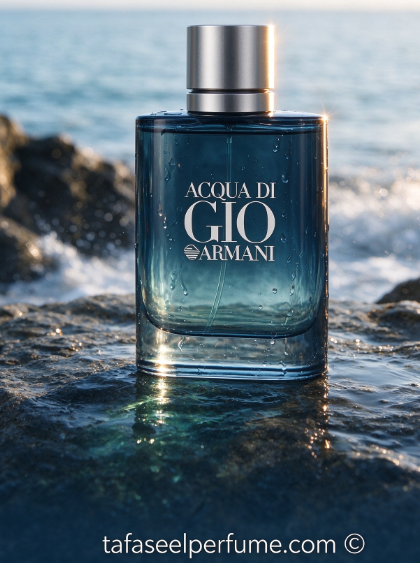
- Acqua di Gio Armani: The Complete Guide to the Marine Citrus Icon, Its Profumo Legacy, and the 2023 Parfum That Replaced It: Few fragrances have shaped the modern masculine wardrobe the way Acqua di Gio Armani has. Since 1996, Alberto Morillas’s marine-citrus composition has sold continuously, spawned a family of flankers, and survived the rare transition from “popular” to “institutional.”
Few fragrances have shaped the modern masculine wardrobe the way Acqua di Gio Armani has. Since 1996, Alberto Morillas’s marine-citrus composition has sold continuously, spawned a family of flankers, and survived the rare transition from “popular” to “institutional.” This guide covers the original EDT, the discontinued Profumo that became a collector’s reference, the 2023 Parfum that now carries the incense torch, the deeper Profondo, the feminine Acqua di Gioia, and the practical questions—layering, gifting, and occasion—that decide whether a bottle earns its place on your shelf. Whether you are buying your first bottle or replacing a discontinued favorite, the sections below are built to answer the questions that actually matter at the counter and on skin.
Big Introduction. Acqua di Gio is not a single scent; it is a family with a shared genetic code—marine notes, citrus brightness, and a clean woody base—expressed at different densities and moods. The original Eau de Toilette is the lightest and most transparent expression, designed for heat and daytime wear, and it remains the best-selling masculine prestige fragrance in many markets three decades after launch. Profumo (2015) took that DNA and laid sage, rosemary, incense, and patchouli underneath it, turning a bright aquatic into a mineral, gently smoky composition that lasted through a working day. Armani discontinued Profumo, and the 2023 Acqua di Gio Parfum now occupies that perfume-strength slot with a close but not identical structure: marine notes and bergamot over rosemary, clary sage, geranium, frankincense, and patchouli. Profondo (2020) pushes in a different direction—mineral, cypress-lifted, and saltier—while Acqua di Gioia translates the aquatic idea into a feminine floral with lemon, jasmine, and cedar. The practical consequence is that “Acqua di Gio” can mean several different wearing experiences depending on the bottle, and the guide below treats each as a distinct purchase decision rather than a footnote.
Jump to a Section:
1. The 1996 Original EDT: Why It Still Works
2. Profumo: The Incense Turning Point
3. Acqua di Gio Parfum (2023): The Current Incense Answer
4. Profondo: The Mineral Deep Dive
5. Acqua di Gioia: The Feminine Counterpart
6. Layering and Longevity: Practical Rituals
7. Gifting Acqua di Gio: Sets, Sizes, and What They Signal
8. Season, Occasion, and the One-Bottle Question
1. The 1996 Original EDT: Why It Still Works
The original Acqua di Gio Eau de Toilette was composed by Alberto Morillas in 1996 and inspired by Pantelleria, the volcanic island where Armani spent his summers. Its architecture is deceptively simple: a sharp, juicy opening of Calabrian bergamot and green tangerine, a marine heart that reads as clean sea air with a soft rosemary edge, and a base of cedar, patchouli, and white musk that keeps the composition from turning sour in heat. What separates it from the crowded aquatic category is calibration: the citrus is bright without being sharp, the marine accord is salty without smelling synthetic, and the woody base is present enough to give shape but never so heavy that it fights the freshness. In real humidity, it behaves more naturally than either Profumo or the Parfum, and it is the safest of the three for gym bags, beach days, and repeated daytime application. The trade-off is presence. By mid-afternoon the EDT sits close to the skin, and because it is one of the most widely worn fresh colognes in the world, it rarely feels personal. If you want a fragrance that announces itself after lunch, this is not that bottle; if you want a clean, uncomplicated signature for heat and casual wear, it remains difficult to beat. The current bottle is refillable, which makes daily use more defensible over time. For readers exploring the wider masculine category, this EDT is also a logical entry point into the Men’s Perfume landscape, precisely because it is so legible and versatile.
2. Profumo: The Incense Turning Point
Acqua di Gio Profumo (2015, also Alberto Morillas) is the flanker that changed what an aquatic could be. It keeps the marine-bergamot opening of the original, but within the first hour sage, rosemary, and geranium push the composition in a mineral-herbal direction, and then a dry, gentle smoke settles in—incense and patchouli wrapping the sea notes without burying them. On skin, Profumo is moderate rather than loud; users consistently report eight to nine hours of wear with strong projection in the first two hours and a dense, noticeable trail afterward. That performance profile made it a favorite for office wear, dinners, and formal events, and it is at its best in spring and autumn, though it remains wearable in summer because there is no sugar in the composition. The critical fact for 2026 and beyond is availability: Armani has discontinued Profumo, and its US site lists it under discontinued products. Old stock now sells at a premium, and discontinued favorites are exactly what counterfeiters copy, so buyers should check the full product name, the year, and the listed notes rather than trusting the word on the box. Profumo’s legacy is secure—it is the reference against which the 2023 Parfum is judged—but it is no longer a straightforward retail purchase. If the smoky-mineral facet is what you love, the Perfume Articles section is the place to compare the alternatives before paying collector prices.
3. Acqua di Gio Parfum (2023): The Current Incense Answer
Acqua di Gio Parfum is Armani’s current perfume-strength marine-incense composition and the bottle that functionally replaced Profumo in the lineup. The listed notes are marine notes and bergamot at the top; rosemary, clary sage, and geranium at the heart; and frankincense and patchouli at the base. On paper the shift from Profumo is small—clary sage replaces plain sage, and the incense is named as frankincense—and in structure the two wear in a similar arc: a marine opening that turns herbal and then resinous. On skin, opinion splits. Some wearers find the Parfum a touch brighter at the start; others notice no meaningful difference. The practical advantages are real: it is in production, normally stocked, and sold in refillable bottles, which removes the scarcity premium and the counterfeit risk that now attach to Profumo. Performance is in the same working-day range as Profumo—close to the skin after the first hours but still present on fabric and skin at the end of the day—and it is versatile enough for office, dinners, and weekends. The honest recommendation is this: if you never smelled Profumo, the Parfum is the sensible purchase. If Profumo was your signature, smell the Parfum on skin before committing to a full bottle, because the opening brightness and the clary-sage heart are the points where loyalists most often split. The bottle’s graduated black glass and refillable design also make it a more sustainable long-term object than the discontinued original.
4. Profondo: The Mineral Deep Dive
Acqua di Gio Profondo (2020) is the flanker that treats “aquatic” as a geological idea rather than a citrus one. Its top notes combine sea tones, aquozone, bergamot, and green mandarin; the heart brings rosemary, lavender, cypress, and mastic; the base lands on amber, mineral accord, patchouli, and musk. The result is saltier, more mineral, and more herbal than either the EDT or the Profumo line—less about sparkling citrus and more about wet stone and coastal vegetation. Wearers who prefer Profondo often describe it as the most “marine” of the family, with a mineral salt character that reads as more aggressive in the opening than Profumo and more persistent in the base. It is not a replacement for the incense thread of Profumo or the Parfum; it is a parallel interpretation for people who want the sea note without the smoke. In a collection, Profondo occupies a specific niche: it is excellent in heat when you want something with more texture than the EDT, and it layers unusually well with unscented moisturizers because the mineral base clings to skin. For a broader look at how this flanker sits against other designer aquatics, the Perfume Ranking pages are a useful cross-reference. If you already own the EDT and want a second Acqua di Gio that does not duplicate the Profumo/Parfum axis, Profondo is the most distinct choice in the current lineup.
5. Acqua di Gioia: The Feminine Counterpart
Acqua di Gioia is the feminine expression of the same Pantelleria-inspired idea, and it is not simply “Acqua di Gio for women.” Its structure is a fresh floral aquatic: crushed mint and Amalfi lemon at the opening, jasmine and an aquatic note in the heart, and a base of cedarwood, brown sugar, and labdanum. On skin, the mint-lemon opening is the most arresting part—bright, almost effervescent—while the jasmine keeps the composition feminine without turning it into a heavy white floral, and the cedar-labdunum base gives it more persistence than the transparent opening suggests. Customer reviews consistently describe it as “light,” “clean,” and “refreshing,” with moderate longevity that makes it a daytime and warm-weather scent rather than an evening statement. The brown sugar in the base is a quiet detail that separates Gioia from the sharper masculines in the family; it adds a soft, rounded warmth that reads as comfort rather than sweetness. For anyone building a his-and-hers pair, Gioia pairs naturally with the EDT or the Parfum without smelling like a matching set—the shared marine-citrus DNA is there, but the floral-mint direction is distinct. The Women’s Perfume category on this site is the logical next step if you want to compare Gioia against other fresh florals, and the Unisex Perfume angle is worth considering if you prefer to shop without the gender label.
6. Layering and Longevity: Practical Rituals
Acqua di Gio’s marine-citrus structure is unusually responsive to layering, and the most reliable gains come from same-range products rather than unrelated oils. The mechanism is straightforward: matching shower gels and after-shave balms contain surfactants and emollients that leave a thin scented film on skin, giving the perfume molecules a base to cling to and slowing evaporation. In practice, the ritual looks like this: shower with the matching gel, apply an unscented or matching lotion to pulse points while skin is still slightly damp, then spray the fragrance from a short distance onto wrists, inner elbows, and neck, and do not rub the wrists together. For the EDT, this routine can add meaningful hours to a composition that otherwise becomes a skin scent by mid-afternoon. For the Parfum and Profumo-style concentrations, layering is less about longevity and more about smoothing the transition from the herbal heart to the resinous base. Clothing also matters: a single mist on the inside of a shirt collar or a scarf holds the marine-incense character longer than skin alone, especially in dry indoor air. The Fragrance Gels and Spa & Fragrance ranges are the most direct way to build a same-DNA base without buying a full perfumed lotion, and they are particularly useful for travel or gym bags.
7. Gifting Acqua di Gio: Sets, Sizes, and What They Signal
Acqua di Gio is one of the safest gifts in masculine fragrance because it is recognizable, broadly liked, and rarely perceived as a risky statement. The practical gift question is not “Will he like it?” but “Which version and which format?” A three-piece set that includes the EDT, Profondo, and Parfum is the most informative option: it lets the recipient compare the bright original, the mineral deep dive, and the incense-strength current release without committing to a full bottle of any single one. For a first-time buyer or a younger recipient, the EDT alone or an EDT-and-shower-gel set is the lowest-risk entry point, and reviewers frequently describe the original as “great for a first cologne or a gift”. For someone who already wears the EDT and wants a step up in density, the Parfum is the logical upgrade, and the refillable bottle makes it a more responsible long-term gift. One caution: because Profumo is discontinued, gift sets that still contain Profumo may be old stock or repackaged inventory, so check the product name, the year, and the seller’s return policy. The Perfume Gift Sets category is the best place to compare configurations, and the Perfume Brands index is useful if you want to cross-shop Armani against other design houses at the same price tier.
8. Season, Occasion, and the One-Bottle Question
The most common Acqua di Gio question is not about notes; it is about whether one bottle can cover a whole year. The answer depends on which concentration you choose. The EDT is at its best in heat and humidity—spring and summer daytime, the gym, the beach, casual weekends—and it is the most natural of the family in real sweat and sun. The Parfum is the closest thing to a one-bottle solution for someone who wants a fresh scent that survives a working day and still registers at dinner; it is versatile across spring, summer, and autumn, and it can be worn in winter if you prefer freshness over sweetness. Profumo, when you can find it at a fair price, is the most elegant of the three for evening and cool-weather wear, but its discontinuation makes it a collector’s purchase rather than a daily driver. Profondo is the specialist: choose it if you want maximum mineral-salt texture in heat and already own a citrus-forward EDT. Gioia is a daytime and warm-weather feminine, not an evening floral, and it should be bought with that expectation. The honest “one-bottle” verdict: if you wear fragrance primarily in summer and accept reapplication, the EDT is enough. If you want one Acqua di Gio that moves from desk to dinner without fading, buy the Parfum. If you want the full picture, the three-piece set is the most efficient education—and the most useful gift.


