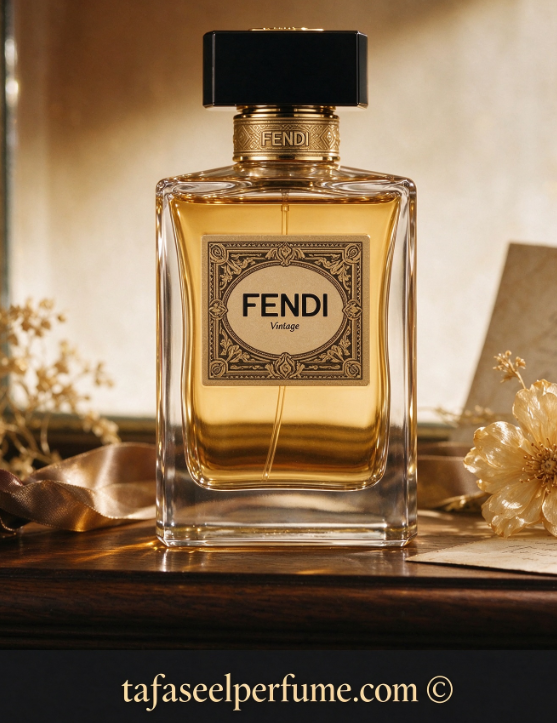
- Vintage Fendi Perfume: The Discontinued Roman Masterpieces Collectors Can’t Stop Hunting: Quick Intro: Vintage Fendi perfume is not a single scent but a closed chapter of Italian luxury—a series of bold, opulent compositions released between 1985 and the early 2000s, then retired when the house’s fragrance licenses shifted. For collectors, a vintage Fendi bottle is a piece of olfactory history: chypres with teeth, orientals with weight, and packaging that still looks like it belongs in a Roman palazzo.
Big Intro: Fendi has been a name in Roman luxury since 1925, but its perfume archive is a different story from the bags and furs. The first Fendi fragrance for women arrived in 1985, a chypre floral built with aldehydes, spices, leather, and oakmoss—the kind of uncompromising “power scent” that defined the decade. Over the next fifteen years, the house released Asja (1992), Fantasia (1996), Theorema (1998), and a small handful of others, each carrying the same appetite for richness and structure. Then came the corporate shifts. By the mid-2000s, the pre-LVMH Fendi perfumes were discontinued, and the bottles that once sat on department-store counters became eBay hunts and collector swaps. Today, “vintage Fendi perfume” means a specific window of production: original Fendi by Fendi, Asja, Theorema, Life Essence, and the early Uomo releases—each one a discontinued gem, each one increasingly hard to find in wearable condition. If you have explored the broader
archive, you already know that discontinued fragrances carry a different kind of gravity. Vintage Fendi is that gravity in its purest form.
1. Fendi by Fendi (1985): The Chypre That Started It All
2. Asja (1992): The Fruity Oriental With a Spiced Heart
3. Theorema (1998): The Spicy Oriental Masterpiece
4. Fendi Uomo & Life Essence: The Masculine Archive
5. How to Date and Authenticate a Vintage Fendi Bottle
6. Why Vintage Fendi Perfume Still Matters to Collectors
1. Fendi by Fendi (1985): The Chypre That Started It All
The original Fendi by Fendi, also referred to as Fendi Donna, is the cornerstone of any vintage Fendi collection. Launched in 1985, it was composed by Jean Gréget as a chypre floral with a serious backbone: aldehydes and bergamot up top, a dense floral heart of rose, jasmine, carnation, and ylang-ylang, and a base that reads like a luxury interior—patchouli, sandalwood, leather, oakmoss, amber, and vanilla. This is not a polite modern chypre. It is the 1980s in a bottle: furry, spacious, and unapologetically present. Reviewers on Basenotes have described it as “opaque,” “complicated,” and even “messy” in the way the most fascinating personalities are messy—a scent that shifts from leather and furs to rose and amber without ever losing its authority. The original EDP and parfum concentrations are the ones collectors chase; later formulations were softened by IFRA restrictions on oakmoss, and the difference is audible to a trained nose. If you are building a reference shelf of 1980s chypres, this belongs next to the greats. It also pairs conceptually with the kind of
curation that values character over trend.
2. Asja (1992): The Fruity Oriental With a Spiced Heart
Asja arrived in 1992 in a round gold-and-black striped bottle that looks like a piece of Roman nightlife. The scent is an oriental with a fruity opening: apricot, raspberry, peach, lemon, and bergamot, followed by a spiced heart of nutmeg, cinnamon, honey, carnation, and orchid. What makes Asja compelling is the tension between the juicy top and the warm, almost mulled-wine middle—it is glamorous without being sweet for the sake of sweetness. One long-time wearer described it as a fragrance for “women who wear red lipstick, black patent pumps, and party dresses,” a scent for nights when you intend to be remembered. Asja was discontinued in the great Fendi fragrance retreat of the 2000s, and full bottles with intact sprayers are now scarce. Miniatures and splash bottles are more common, but they carry the same DNA. For collectors who find the original Fendi too stern, Asja is the more extroverted sibling—still vintage, still discontinued, but with a wink.
3. Theorema (1998): The Spicy Oriental Masterpiece
Theorema, launched in 1998 and composed by Christine Nagel, is often named the crown jewel of the later vintage Fendi era. It is a spicy oriental that opens with a burst of orange, cardamom, nutmeg, pepper, and citrus, then settles into cinnamon, osmanthus, and a woody-amber base of sandalwood, gaiac wood, and patchouli. Nagel’s construction is remarkably transparent for such a rich scent: the spices are high-pitched and sharp, the flowers are watercolor-light, and the woods sit underneath like a warm shadow. Theorema was discontinued, and prices for full bottles have climbed accordingly—often in the $200–$400 range for well-preserved examples, sometimes more for sealed boxes. It is the vintage Fendi that converts people who thought they did not like spicy orientals. If you already browse the
category for shared compositions with depth, Theorema is a natural reference point: it wears beautifully across genders and never feels retro for the sake of retro.
4. Fendi Uomo & Life Essence: The Masculine Archive
Vintage Fendi perfume is not only a women’s story. Fendi Uomo, launched in 1988, is a leather-and-tobacco classic that represents old-school Italian elegance at its most assured. Life Essence, released in 1996, is a woody-spicy composition that never received a major reformulation after the late-1990s ingredient restrictions—meaning the vintage bottles are the only bottles that smell the way the perfumer intended. Both are discontinued, both have devoted followings, and both sit comfortably alongside the
selections that favor structure and longevity over fashion. The masculine Fendi bottles from the 1990s are often easier to find than the women’s chypres, but clean, full examples are drying up. If you come across a boxed Uomo or Life Essence with a batch code that predates 2005, it is worth a serious look.
5. How to Date and Authenticate a Vintage Fendi Bottle
Dating a Fendi perfume is part detective work and part patience. The first clue is the label: early bottles from the 1985–1993 period often carry the name “Fendi Profumi” rather than a later distributor’s mark, reflecting the house’s initial lack of a dedicated fragrance distributor. Batch codes are the second clue. Fendi batch codes from the 1980s and 1990s are not standardized across all contract manufacturers, but collector communities have built partial databases; a code like “F01 01” on an original 1985/86 EDP, for example, has been independently verified as 1986 production. The third clue is the juice itself: original Fendi chypres darken with age, and a deep amber-to-brown color is normal, but sediment or a sour smell indicates spoilage. Finally, packaging matters. The original Fendi by Fendi boxes were bold yellow-and-black with gold accents—a design language that later Fendi releases abandoned. If you are also collecting
or vintage minis, the same rules apply: check the crimp, the sprayer type, and the batch code before you commit.
6. Why Vintage Fendi Perfume Still Matters to Collectors
Vintage Fendi perfumes matter because they capture a specific moment when Italian fashion houses treated fragrance as an extension of couture, not as a licensing afterthought. The original Fendi by Fendi is a chypre with the same weight as a fur coat; Theorema is a spice market wrapped in silk; Asja is a night out in a bottle. These scents were discontinued not because they were bad, but because the business of fragrance changed. For collectors, that discontinuity is the point. A vintage Fendi bottle is a finite object—once the remaining stock is gone, it is gone. If you are building a collection around discontinued luxury, the
index is a useful map of which houses still have an archive worth hunting. And if you are new to the category, start with a mini or a decant of Theorema or Asja before committing to a full bottle; the
can help you calibrate which discontinued profiles are most likely to suit your taste.
Frequently Asked Questions About Vintage Fendi Perfume
When was the first Fendi perfume launched?
The first Fendi fragrance for women, Fendi by Fendi (also called Fendi Donna), was launched in 1985. It was a chypre floral composed by Jean Gréget and is now discontinued.
Are vintage Fendi perfumes still produced?
No. The pre-LVMH Fendi fragrance range was retired in the mid-2000s, and the original formulations—including Fendi by Fendi, Asja, Theorema, and Life Essence—have not been reintroduced. Any bottle you find today is from the original production window.
Which vintage Fendi perfume is the most collectible?
The original 1985 Fendi by Fendi in parfum or early EDP concentration is generally considered the most collectible, followed closely by Theorema. Both command high prices when full and well-preserved, often $200–$400 or more depending on condition and box.
How can I tell if a vintage Fendi perfume is authentic?
Check the label for early “Fendi Profumi” markings, verify the batch code against collector databases, inspect the box for period-correct design (yellow-and-black for the original 1985 release), and assess the juice for abnormal sediment or a sour smell. When in doubt, buy from sellers who provide batch-code photos and accept returns.
Is vintage Fendi perfume safe to wear?
Vintage perfume is a collectible, not a modern cosmetic. Ingredients may have degraded, and patch testing is strongly recommended before wearing any aged fragrance on skin. Many collectors buy vintage bottles for display or reference rather than daily wear.
What does Theorema smell like?
Theorema is a spicy oriental with a bright opening of orange, cardamom, and pepper, a cinnamon-and-floral heart, and a warm woody-amber base of sandalwood, gaiac wood, and patchouli. It is rich but transparent, and often described as unisex.
Where can I learn more about discontinued Fendi fragrances?
Collector forums, Basenotes, Fragrantica, and dedicated vintage-perfume archives are the best sources for batch codes, reformulation histories, and wearability notes. You can also explore curated
for broader context on discontinued and vintage compositions.


