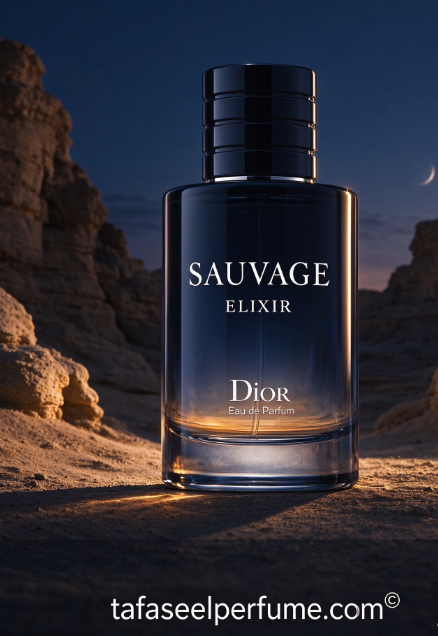
- Dior Sauvage Elixir Eau de Parfum: The Concentrated Statement That Rewrote the Sauvage Rulebook: Dior Sauvage Elixir is not simply a stronger version of the fragrance you already know. It is a separate composition—darker, spicier, and far more concentrated—that takes the fresh Sauvage DNA and rebuilds it around warm spices, AOP lavender, licorice, and a dense woody-amber base. For anyone who has worn the original Eau de Toilette or the 2018 Eau de Parfum and wondered what Sauvage would smell like with the volume turned up and the lights turned down, the Elixir is the answer.
Dior Sauvage Elixir is not simply a stronger version of the fragrance you already know. It is a separate composition—darker, spicier, and far more concentrated—that takes the fresh Sauvage DNA and rebuilds it around warm spices, AOP lavender, licorice, and a dense woody-amber base. For anyone who has worn the original Eau de Toilette or the 2018 Eau de Parfum and wondered what Sauvage would smell like with the volume turned up and the lights turned down, the Elixir is the answer. This guide breaks down what it actually smells like, how it performs, who it is for, and where it fits into a fragrance wardrobe without repeating the marketing copy.
Launched in 2021 and composed by François Demachy, Sauvage Elixir arrived at a moment when the Sauvage line was already the best-selling men’s fragrance in the world. The Elixir was not designed to replace the EDT or EDP. It was designed to occupy a different slot entirely: the cold-weather statement piece, the evening signature, the bottle you reach for when the occasion calls for presence rather than politeness. Its concentration sits closer to a parfum extrait than a standard eau de parfum, and that shift in strength comes with a shift in character—less bright bergamot, more cinnamon and nutmeg, a lavender heart with vanilla-tinged coumarin, and a base of Haitian vetiver, patchouli, sandalwood, licorice, and amber wood. The result is a fragrance that smells unmistakably like Sauvage and almost nothing like the bottle sitting next to it on the shelf.
What follows is a structured walkthrough of the Elixir as a wearer’s fragrance rather than a collector’s curiosity: the note structure, the difference between it and the EDP, the seasons and occasions where it makes sense, the performance you should realistically expect, the price-per-milliliter math, and the batch-code question that has occupied forums since the first reformulation whispers appeared. If you are considering the Elixir as a blind buy, a gift, or an upgrade to an existing Sauvage bottle, the sections below are organized to answer the questions that actually decide the purchase.
In this guide:
1. What Dior Sauvage Elixir Actually Smells Like
2. Elixir vs. Sauvage EDP: Same DNA, Different Job
3. When and Where to Wear It: Season, Occasion, and Application
4. Concentration, Longevity, and Projection: Setting Honest Expectations
5. Price, Value, and the Counterfeit Question
6. Batch Codes, Reformulation, and What Changed
7. Frequently Asked Questions About Dior Sauvage Elixir
1. What Dior Sauvage Elixir Actually Smells Like
The opening of Sauvage Elixir is where most expectations get corrected. If you are coming from the EDT, you may expect a burst of bright Calabrian bergamot and Sichuan pepper. The Elixir opens with grapefruit and spice instead—cinnamon, nutmeg, and cardamom are immediately present, giving the top a warm, almost edible quality rather than a citrus-forward freshness. The grapefruit is there, but it reads more like a textured citrus peel than a sharp juice; its job is to keep the spice from feeling heavy, not to dominate the first thirty seconds.
The heart is where the Elixir separates itself most clearly from every other Sauvage. AOP lavender from Nyons is the centerpiece, and it is not the camphorous, barbershop lavender that some fragrance wearers associate with the note. Dior describes it as “tailor-made,” a blend of carefully selected harvests that emphasizes the floral, vanilla-tinged coumarin facets of the flower rather than its herbal sharpness. The effect is smooth and slightly sweet, with a licorice undertone that becomes more apparent as the lavender settles. This is not a lavender that smells like soap; it smells like lavender folded into a warm, resinous base.
The base is where the Elixir earns the “extrait” comparison. Haitian vetiver gives it an earthy, slightly smoky anchor. Patchouli adds depth without turning dusty. Sandalwood and amber wood create the density that makes the fragrance feel substantial rather than airy. And licorice—listed explicitly in the note breakdown—weaves through the dry-down as a sweet, smooth, almost anise-like thread that softens the woods and keeps the composition from feeling austere. The overall arc is spicy-fresh at the top, floral-resinous in the middle, and woody-sweet at the base. It is recognizably Sauvage in its freshness, but the freshness is subordinate to the spice and the woods.
If you are exploring how spicy-woody compositions fit alongside other masculine fragrance styles, the broader men’s perfume landscape is a useful reference for comparing the Elixir against other warm, evening-leaning releases. The Elixir is not an outlier in the category; it is a particularly concentrated and polished example of the modern spicy-woody template.
2. Elixir vs. Sauvage EDP: Same DNA, Different Job
The most common question about Sauvage Elixir is not “What does it smell like?” but “Should I buy this instead of the EDP?” The honest answer is that they are not interchangeable, and the EDP remains the better first purchase for most people.
Sauvage EDP, launched in 2018, is the versatile workhorse of the line. It opens with bergamot and pepper, moves through a lavender-and-sandalwood heart, and settles into an ambroxan-vanilla base that reads clean, warm, and broadly appealing. It works in an office, at a wedding, on a date, and in most weather conditions without requiring a second thought. Its longevity sits in the eight-to-ten-hour range, and its projection is strong enough to be noticed across a table without filling a room. For a single-bottle solution, the EDP is the rational choice.
The Elixir is not that bottle. It is the cold-weather specialist, the evening statement, the fragrance you wear when you want the scent to arrive before you do. The spice load is higher, the lavender is richer, the woods are denser, and the sweetness from licorice and coumarin gives it a warmth the EDP does not have. Where the EDP is bright and clean, the Elixir is dark and enveloping. Where the EDP is polite, the Elixir is present. Neither is “better” in isolation; they solve different problems.
The practical recommendation is the one that appears consistently across comparative reviews: if you do not already own a Sauvage bottle, start with the EDP. It covers the widest range of situations and will tell you whether you like the Sauvage DNA in the first place. If you already own the EDP and find yourself reaching for something heavier in November and December—something that does not disappear under a coat—the Elixir is the upgrade that makes sense. Owning both is not redundant; it is a two-bottle rotation that covers the calendar without overlap.
For a wider view of how signature masculine fragrances are structured around versatility versus occasion, the perfume articles and reviews archive is a useful place to see how other lines handle the same EDT-to-concentration progression.
3. When and Where to Wear It: Season, Occasion, and Application
Sauvage Elixir is a fragrance that rewards correct context. Worn in the right setting, it is magnetic and memorable. Worn in the wrong one, it can feel like too much—not because the composition is flawed, but because its density and projection are designed for cool air and evening distance, not close quarters and humid afternoons.
Season: Fall and winter are the Elixir’s natural habitat. The warm spices, the licorice sweetness, and the woody-amber base all perform best when the air is cold and dry. In spring, it can work on cool evenings, but it will feel heavy on a warm afternoon. In summer, it is generally too dense for daytime wear, though a single spray on a cool summer night is not unreasonable. The practical rule is simple: if you would not wear a coat, you probably do not need the Elixir.
Occasion: Evening is the default. Date nights, dinners, formal events, holiday parties, and any situation where you want the fragrance to be part of the impression you make. It is not an office scent in the conventional sense—two sprays under a shirt can work in a spacious, well-ventilated office, but in a shared cubicle or a small meeting room, the projection will be noticed whether you intended it or not. The Elixir is a “go light indoors” fragrance; one or two sprays is often enough, and the scent will still be present hours later.
Application: The concentration changes the math. With an EDT or a standard EDP, three to five sprays is a normal starting point. With the Elixir, two sprays on pulse points—neck and chest—is a sensible baseline, and a third spray on clothing will extend the dry-down without increasing the sillage to room-filling levels. Over-applying is the most common mistake with this fragrance; the spice and amber can become oppressive in enclosed spaces if the wearer treats it like a lighter concentration. Under-applying is less of a risk because the base is persistent, but it is still possible to go so light that you miss the evolution from the spicy opening to the licorice-tinged dry-down.
If you are building a fragrance rotation that balances heavier evening scents with lighter daytime options, the unisex perfume category is worth exploring for compositions that sit between traditional masculine and feminine codes—useful context for understanding why the Elixir’s lavender-licorice-woods structure reads as neither aggressively macho nor unisex, but distinctly modern masculine.
4. Concentration, Longevity, and Projection: Setting Honest Expectations
The word “Elixir” is not decorative. Sauvage Elixir is formulated at a concentration that sits at the upper end of the eau de parfum range, closer to a parfum extrait than a standard EDT or EDP. Dior describes it as “extraordinarily concentrated,” and the practical result is a fragrance that behaves differently on skin from the rest of the Sauvage line.
Longevity is the Elixir’s strongest performance metric. Across comparative reviews and wear tests, the consistent range is ten to fourteen hours on skin, with some wearers reporting longer on clothing. The spicy opening and the lavender heart are the most volatile phases; the woody-licorice-amber base is what persists into hour eight and beyond. If you apply two sprays in the evening, you will still detect the dry-down on your skin the following morning in many cases. This is not a fragrance that requires reapplication during a normal evening out.
Projection is strong but not uncontrollable. In the first two to three hours, the Elixir projects noticeably—enough to be detected across a table or in a conversation distance. After that, it settles closer to the skin while remaining clearly present. The “room-filling” reputation is partly accurate and partly a function of spray count: four or five sprays will fill a small room, while two sprays will create a confident personal bubble without imposing on others. The Elixir is not a scent that whispers, but it is also not a scent that requires a trigger warning for nearby allergy sufferers if applied with restraint.
The one performance caveat worth knowing is that skin chemistry matters more with the Elixir than with lighter concentrations. Dry skin can make the opening feel sharper and the dry-down shorter; moisturized skin extends the base and softens the spice. Applying an unscented lotion before spraying is a small step that makes a measurable difference. Clothing application—one spray on a collar or a scarf—is another way to extend the fragrance without increasing the skin projection, and the licorice-amber base clings to fabric particularly well.
5. Price, Value, and the Counterfeit Question
Sauvage Elixir is the most expensive bottle in the Sauvage line, and the price structure is deliberately different from the EDT and EDP. The standard 60 ml bottle retails around $199, with 100 ml and 150 ml sizes scaling upward from there. The unusual part is the flagship 60 ml format: Dior launched the Elixir in a smaller, lacquered-glass vial rather than the 100 ml default of the EDP, which means the sticker price looks closer to the EDP than it actually is on a per-milliliter basis.
The per-milliliter math is the honest way to evaluate the value. At roughly $3.32 per ml and around $0.33 per spray for the 60 ml bottle, the Elixir is significantly more expensive per wear than the EDP. But the spray count matters: because the Elixir is more concentrated, two sprays do the work that three or four sprays of the EDP would do. The cost per wearing narrows considerably when you account for application volume, and for a fragrance that is designed for evening and cold-weather use rather than daily year-round wear, the bottle lasts longer than the raw price suggests. This is not a budget argument for the Elixir; it is an argument that the value calculation is more nuanced than “it costs more, therefore it is worse value.”
The counterfeit question is more serious. Sauvage Elixir is one of the most counterfeited designer fragrances on the market, and the Elixir’s premium price makes it a target. Reviews and forum threads regularly surface bottles with incorrect batch codes, mismatched packaging, and scent profiles that are sharper or thinner than the genuine article. The practical safeguards are straightforward: buy from authorized retailers or Dior directly, check the batch code on the box against the code engraved on the bottle, and be skeptical of prices that undercut the standard retail by more than a modest discount. If a 100 ml bottle is being sold for $120, the most likely explanation is not a sale—it is a fake. For gift purchases, the perfume gift sets route through authorized channels is a lower-risk way to buy, because the packaging and batch information are easier to verify.
6. Batch Codes, Reformulation, and What Changed
No discussion of Sauvage Elixir is complete without addressing the batch-code conversation that has occupied fragrance forums since 2024 and 2025. The short version is that the Elixir has been reformulated at least once since its 2021 launch, and the formula code on the box—not just the batch code—is the reliable way to identify which version you are buying.
The original formulation, associated with formula code 15755, is the version many early adopters describe as the richest and most powerful, particularly in the opening and the first few hours of projection. A later formulation, formula code 18415, is described by some wearers as noticeably less forceful, with a drier and woodier character and a faster drop-off in projection after the opening. A third formulation code, 21664, appears in bottles produced from around April 2025 onward, and reports on its character are mixed—some wearers find it closer to the original richness, while others describe it as more variable from batch to batch.
What does this mean for a buyer in 2026? First, it does not mean the current Elixir is a bad fragrance. The reformulation conversation is about degrees of intensity and richness, not about the scent turning into something unrecognizable. The spicy-lavender-licorice-woods structure is still present across formulations. Second, it means that if you are specifically seeking the denser, more powerful expression that early reviews described, you should check the formula code before purchasing, especially from discounters or secondary sellers. The formula code is printed on the box, usually near the ingredients list or the barcode; the batch code is stamped or engraved on the bottle and the box. A mismatch between the two is a red flag. Third, it means that “batch hunting” is a real but limited strategy: you can improve your odds of getting a formulation you prefer, but you cannot guarantee it, and the differences are subtle enough that most wearers will not notice them without a side-by-side comparison. The perfume ranking and top lists section is a useful place to see how the Elixir’s performance is assessed against other high-concentration designer releases, which provides context for whether the batch variation is a dealbreaker or a footnote.
7. Frequently Asked Questions About Dior Sauvage Elixir
Is Dior Sauvage Elixir the same as Sauvage Eau de Parfum?
No. They share the Sauvage name and a fresh-spicy DNA, but they are different compositions with different concentrations, note structures, and intended uses. The EDP is brighter, more versatile, and designed for year-round wear; the Elixir is darker, spicier, more concentrated, and designed for cold-weather evenings and special occasions. The Elixir is closer to a parfum extrait in concentration, while the EDP sits in the standard eau de parfum range.
How many sprays of Sauvage Elixir should I use?
Two sprays on pulse points is the standard starting point. The Elixir is significantly more concentrated than the EDT or EDP, and two sprays will produce a confident personal scent bubble that lasts through an evening. A third spray on clothing can extend the dry-down, but going beyond three sprays risks overwhelming enclosed spaces. If you are wearing it to an office or a dinner where people will be sitting close to you, one or two sprays is sufficient.
Does Sauvage Elixir last longer than the EDP?
Yes, in most wear tests. The Elixir’s longevity is consistently reported in the ten-to-fourteen-hour range, while the EDP sits around eight to ten hours. The difference is most noticeable in the base: the Elixir’s vetiver, patchouli, sandalwood, and licorice-amber dry-down persists on skin and clothing well after the EDP’s ambroxan-vanilla base has faded. That said, skin chemistry, application amount, and moisturization all affect the final result.
Is Sauvage Elixir worth the price compared to the EDP?
It depends on what you are buying it for. If you want one Sauvage bottle that covers work, weekends, dates, and most weather, the EDP is the better value and the more versatile purchase. If you already own the EDP and want a heavier, more concentrated fragrance for cold-weather evenings and occasions where you want to be noticed, the Elixir’s higher price is justified by its performance, its distinct character, and the fact that two sprays go further than four sprays of the EDP. The per-milliliter cost is higher, but the cost per wearing narrows when application volume is taken into account.
How can I tell if a Sauvage Elixir bottle is authentic?
Check three things: the batch code, the formula code, and the seller. The batch code should match between the box and the bottle, and it should be legible and consistent with Dior’s formatting. The formula code on the box should correspond to a known Dior formulation; if the box lists a code that does not match the bottle’s batch information, that is a warning sign. Buy from authorized retailers, Dior’s own website, or reputable department stores rather than marketplace sellers with prices that are significantly below retail. Counterfeit Elixir bottles often have mismatched codes, thinner glass, and a scent that is sharper or less complex than the genuine article.
Was Sauvage Elixir reformulated, and does it still smell the same?
Yes, it has been reformulated at least once since its 2021 launch, and there are at least three known formula codes. The original 15755 formulation is often described as the richest and most powerful. Later formulations, including 18415 and 21664, are reported by some wearers to be drier, woodier, or slightly less intense in projection, though the core spicy-lavender-licorice-woods character remains. The differences are subtle and batch-dependent; most wearers will still recognize the fragrance as Sauvage Elixir. If you are specifically seeking a particular formulation, check the formula code on the box before purchasing.


