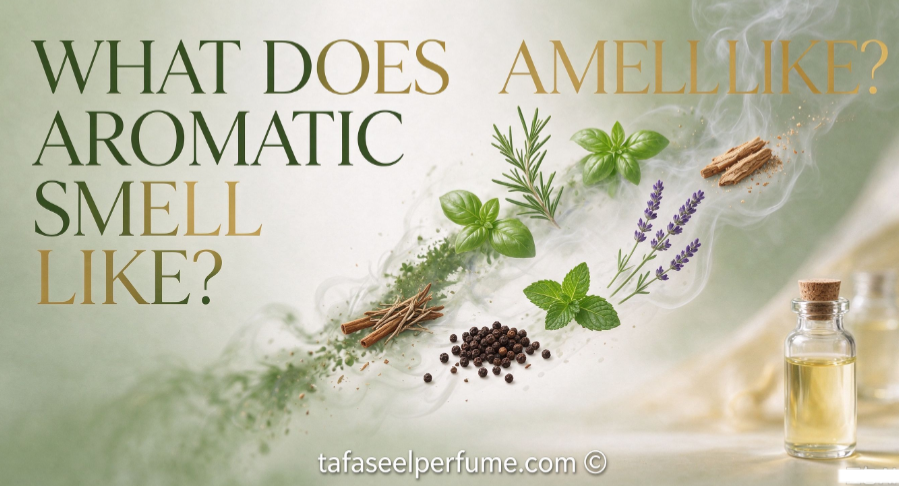
- What Does Aromatic Smell Like? The Herbal Freshness Behind Perfumery’s Cleanest Scent Family: Quick Intro: If you have ever crushed a rosemary leaf between your fingers, walked past a lavender field, or smelled the sharp green snap of fresh sage, you already know the core of an aromatic smell. It is cool, clean, herbal, and slightly bitter, with a brightness that feels closer to a garden or a kitchen than to a flower shop. Aromatic fragrances take that sensation and turn it into perfume: crisp, restorative, and quietly sophisticated.
Full Intro: The word “aromatic” gets used loosely in everyday conversation, but in perfumery it points to something fairly precise. An aromatic smell is built around culinary and Mediterranean herbs—lavender, rosemary, sage, thyme, basil, mint—often lifted by citrus at the top and grounded by woods, moss, or tonka bean underneath. It is not a single note but a family of effects: fresh, camphorous, green, and clean. This guide breaks down what aromatic smell actually smells like, which notes create it, how it connects to the classic fougère accord, and how to wear it without smelling like a barbershop cliché. You will also see how aromatic fragrances sit naturally alongside broader collections, from light cologne-style compositions to the full spectrum of Creed’s aromatic fougères.
In This Guide
1. What Aromatic Smell Actually Smells Like: The Core Sensation
2. The Key Notes That Build an Aromatic Scent
3. Aromatic vs. Fougère: The Connection Most People Miss
4. Is Aromatic Fragrance for Men or Women?
5. When and Where to Wear Aromatic Perfume
6. Classic Aromatic Fragrances Worth Knowing
1. What Aromatic Smell Actually Smells Like: The Core Sensation
If you had to reduce an aromatic smell to a single impression, it would be “clean but not soapy, fresh but not citrus-only, herbal but not medicinal in a bad way.” The dominant sensation is a cool, lifting greenness that seems to clear the air around it. Lavender contributes a soft, slightly floral freshness; rosemary adds a sharper, almost camphorous edge; sage brings a dry, bitter-herbal depth; mint introduces a cold, tingling brightness. Together, they create a smell that feels like crushed leaves on a cool morning—restrained, articulate, and naturally deodorizing.
What surprises many people is that aromatic smell is not sweet in the conventional sense. There may be a whisper of sweetness from lavender or a citrus top, but the overall effect is dry, brisk, and slightly bitter. That bitterness is part of its appeal: it keeps the fragrance from becoming heavy or cloying, and it gives aromatic perfumes their reputation for understated elegance. A good aromatic scent feels like it has been rinsed in cold water—clear, bracing, and impossible to overdo.
2. The Key Notes That Build an Aromatic Scent
The aromatic family is unusually consistent in its raw materials. The most recognizable notes are lavender, rosemary, sage, thyme, basil, and mint, with supporting players like tarragon, chamomile, geranium, and lemon verbena. Lavender is often the anchor: familiar, softly herbal, and capable of bridging the gap between freshness and a subtle floral softness. Rosemary and sage push the composition toward a drier, more angular herbal character, while mint and basil add a vivid green lift.
Citrus is almost always present as a top note—bergamot, lemon, grapefruit, or verbena—because it amplifies the brisk, sunlit quality of the herbs without competing with them. In the base, aromatic fragrances typically turn to cedarwood, vetiver, oakmoss, patchouli, or tonka bean for grounding. Cedar and vetiver keep the dry, woody-herbal tone alive; tonka bean introduces a soft, hay-like warmth that prevents the composition from feeling austere. This structure—citrus on top, herbs in the heart, woods and moss at the base—is the backbone of what most people recognize as an aromatic smell. You can see the same architecture in many everyday aromatic colognes designed for repeat wear.
3. Aromatic vs. Fougère: The Connection Most People Miss
In fragrance classification, “aromatic” and “fougère” are close cousins, and the overlap confuses many shoppers. Fougère—French for “fern”—is a specific accord built on lavender, coumarin, and oakmoss. It smells dry, herbal, and slightly hay-like, with a powdery smoothness from coumarin and a damp, woody depth from oakmoss. An aromatic fougère takes that core and adds more green herbs—mint, sage, basil, thyme—pushing the freshness and herbal clarity even further.
This is why so many classic men’s fragrances are labeled “aromatic fougère” rather than simply “aromatic.” The fougère structure supplies the skeleton; the aromatic herbs supply the character. A pure aromatic composition may skip coumarin entirely and lean on lavender-rosemary-citrus for a cleaner, more linear freshness. But the sensory result is related: both smell cool, green, and restorative, with a natural sophistication that has kept this style in production for generations. Understanding the link helps explain why aromatic notes appear so often in heritage British men’s fragrance collections that prize restraint and craft over trend.
4. Is Aromatic Fragrance for Men or Women?
Aromatic smell has no inherent gender. The notes themselves are neutral: lavender, rosemary, sage, and citrus are used in perfumery for every category. Historically, the fougère and aromatic fougère structures became strongly associated with men’s grooming in the twentieth century, which shaped marketing and bottle design more than the scent profile itself. But an aromatic composition built around lavender, bergamot, and soft woods can read as perfectly unisex, and many modern niche houses release aromatic scents explicitly for everyone.
What changes across genders is usually the balance. A more floral aromatic might soften the herbs with rose, jasmine, or violet; a more traditionally masculine aromatic might push cedar, leather, or oakmoss forward. Neither version is “correct.” If you enjoy the sensation of clean herbs and cool freshness, you are responding to the aromatic family itself, not to a gendered label. This is also why aromatic notes appear in women’s signature scent guides just as often as in men’s cologne recommendations—the appeal is sensory, not categorical.
5. When and Where to Wear Aromatic Perfume
Aromatic fragrances are unusually versatile, but they have a natural center of gravity: daytime, warm weather, and situations that call for clarity. The cool, green, deodorizing quality of lavender and rosemary makes aromatic scents feel appropriate for the office, a morning commute, a casual lunch, or any environment where you want to smell composed rather than perfumed. They are also forgiving in humidity: because they lack heavy sweetness, they do not become oppressive in heat.
In cooler months, aromatic compositions with a stronger woody or tonka base can transition into evening wear, especially if they include a touch of spice or leather. But the archetypal aromatic experience is still fresh, daylight-oriented, and quietly confident. Think of a crisp white shirt, a walk through a herb garden after rain, or the smell of a well-kept barbershop that has opened its windows. If you want a scent that feels clean without being sterile and natural without being rustic, aromatic is one of the most reliable choices in perfumery.
6. Classic Aromatic Fragrances Worth Knowing
Some aromatic fragrances have become reference points because they show the family’s range so clearly. Drakkar Noir by Guy Laroche (1982) is a textbook aromatic fougère: lavender, lemon, bergamot, rosemary, mint, and basil explode at the opening, then settle into oakmoss, leather, and woods. It is sharp, green, and unapologetically herbal—a reminder that aromatic smell can be bold as well as clean.
Green Irish Tweed by Creed takes a softer, more tailored approach. Its aromatic fougère structure is woven with peppermint, verbena, lemon, lavender, and violet over sandalwood, cedarwood, and oakmoss, producing a fresh, mossy-green refinement that feels like a pressed linen jacket in scent form. Between these two poles—the louder 1980s herbal punch and the quieter, mossy gentleman’s fougère—you can see how flexible the aromatic idea really is. Exploring this spectrum is one of the pleasures of the category, and it pairs naturally with the quieter aromatic-adjacent scents that reward close wearing rather than loud projection.
Frequently Asked Questions
1. Is aromatic smell the same as “herbal” smell?
They are closely related, but not identical. “Herbal” is a broader descriptor that can include dried herbs, tea, or green stems. “Aromatic” in perfumery usually means a specific fresh, cool, camphorous herbal effect driven by lavender, rosemary, sage, mint, and citrus. An aromatic fragrance is almost always herbal, but an herbal fragrance is not automatically aromatic.
2. What does aromatic smell like compared to floral?
Aromatic smells green, cool, and slightly bitter, while floral smells sweet, rounded, and petal-like. A floral perfume centers on flowers (rose, jasmine, tuberose); an aromatic perfume centers on leaves and herbs. Some fragrances blend the two—lavender is technically a floral note with a strongly aromatic character—but the overall impression of an aromatic scent is clean herbs rather than blooms.
3. Can aromatic perfume be worn by women?
Yes, without qualification. The notes are gender-neutral, and the clean, fresh character of aromatic scents works on anyone. The historical marketing of aromatic fougères toward men does not change the smell itself; many women prefer aromatic compositions precisely because they feel uncomplicated, crisp, and non-sweet.
4. Does aromatic fragrance last long?
It depends on the base. Pure aromatic compositions built on citrus and light herbs can be moderate in longevity because citrus and green notes evaporate faster. Aromatic fragrances with a strong woody, mossy, or tonka base—especially aromatic fougères—tend to last longer on skin. Applying to moisturized skin and spraying on fabric can extend the wear of any aromatic scent.
5. What is the best way to sample an aromatic fragrance?
Spray it on skin and wait at least thirty minutes. The opening will be citrus-heavy and sharp; the aromatic heart emerges as the top notes fade. Judge the dry-down: if you still smell clean herbs and soft woods after a few hours, the aromatic character suits your skin. Sampling on paper is useful for identifying notes, but skin reveals how the herbs and base actually behave on you.


