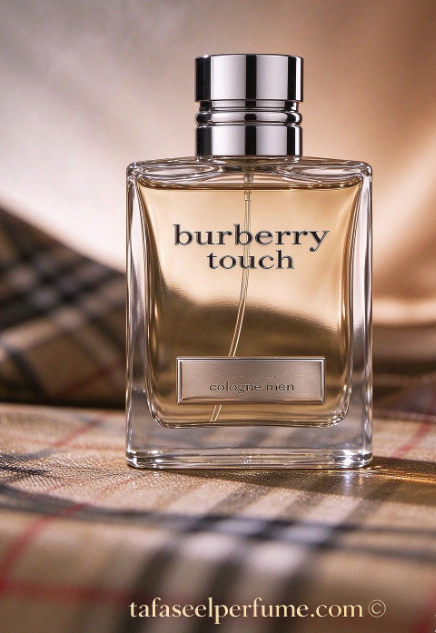
- Burberry Touch for Men is one of those fragrances that quietly refuses to leave the conversation.: Burberry Touch for Men is one of those fragrances that quietly refuses to leave the conversation. Launched in 2000, it arrived at a moment when men’s designer perfumery was pivoting toward cleaner, more transparent constructions, yet it never chased the loud, sugar-laden trajectory that dominated the following decade.
Burberry Touch for Men is one of those fragrances that quietly refuses to leave the conversation. Launched in 2000, it arrived at a moment when men’s designer perfumery was pivoting toward cleaner, more transparent constructions, yet it never chased the loud, sugar-laden trajectory that dominated the following decade. Instead, it carved a narrow, specific lane: powdery violet, soft citrus, a breath of white pepper, and a dry woody-musky base that feels closer to a freshly pressed shirt than to a nightclub. That restraint is precisely why Burberry Touch cologne men still has a devoted following — and why it frustrates wearers who expect a fragrance to announce itself across a room. The sections below unpack what Touch actually smells like, how it performs, where it fits into a modern rotation, and whether the bottle on the shelf today still delivers what made the original worth noticing.
1. What Burberry Touch for Men Actually Smells Like
Burberry Touch for Men opens with a tension that defines the entire wear: tender violet leaf and tart mandarin sit against a flicker of artemisia, giving the top a green, slightly bitter citrus lift rather than a sweet one. Within minutes, white pepper and nutmeg push forward, but they do not arrive as heat; they arrive as texture, a soft spice that roughens the edges of the violet without turning the composition gourmand. The heart is where Touch becomes recognizable: Virginia cedarwood provides a dry, pencil-shaving structure, while the violet turns increasingly powdery, almost cosmetic, before the base settles into tonka bean, vetiver, oak moss, and white musk. The result is a woody floral musk that reads clean and slightly old-fashioned in the best sense — less “fresh shower gel” and more “clean linen stored in a wooden drawer.”
That powderiness is the fault line. Some wearers describe Touch as “clean, fresh and slightly spicy”, with a “soft, masculine and sophisticated” character that makes it easy to wear daily. Others fixate on the “baby powder” impression and find the fragrance too mild, too quiet, or too reminiscent of a barbershop talc. Both readings are accurate to the same formula: the violet-musk pairing creates a plush, matte finish, and whether that feels elegant or bland depends entirely on what you want a men’s cologne to do. For a smoother, warmer alternative in the same relaxed register, a vanilla musk cologne for men can deliver a comparable softness with more sweetness, while Touch remains the drier, more powdery option.
2. Performance: Moderate Projection, Refined Sillage, and the Reformulation Question
Burberry Touch for Men is an eau de toilette, and it behaves like a well-mannered one. Initial projection reaches roughly arm’s length, then settles into a soft, skin-close ambiance that most wearers report lasts six to eight hours, with some getting closer to four to six depending on skin chemistry and batch. The sillage is deliberately refined rather than room-filling: it leaves a gentle trail for people who lean in, not a cloud that precedes you into an elevator. This makes Touch unusually suited to close-quarters environments — offices, clinics, classrooms, or any setting where a louder fragrance would read as an intrusion.
The more complicated issue is reformulation. Longtime wearers on fragrance forums have noted that Touch has not remained identical across two decades, and some current bottles are described as thinner or more chemically sharp than older stock. At the same time, batch variation is normal in designer perfumery, and plenty of recent buyers still report a recognizable, satisfying experience. The practical takeaway is not that Touch is “ruined,” but that its already-quiet character makes batch differences more noticeable: a slightly weaker batch of a subtle fragrance can feel disproportionately faint. If you want a more assertive woody-musk profile from the same house, a Bvlgari men’s perfume built around amber and spice will project with more authority, though it sacrifices Touch’s powdery discretion.
3. Versatility, Seasonality, and Where Touch Fits in a Rotation
Few designer masculines are as genuinely occasion-agnostic as Burberry Touch cologne men. Reviewers consistently place it in the “any season, any occasion” category: it is fresh enough for a warm-weather commute, warm enough for a cool-weather dinner, and neutral enough for a formal setting without smelling like a “formal fragrance.” It is the kind of bottle that lives in a gym bag, a desk drawer, or a weekend duffel because it never feels wrong. That versatility is also its limitation: Touch is not a statement scent. It does not create a magnetic aura, it does not “perform” in the extroverted sense, and it will not be the fragrance people remember you for after a party. It is a personal cleanliness scent with a vintage inflection — closer to the quiet reliability of an Old Spice Classic Cologne Spray than to a modern “compliment monster.”
For a rotation, Touch works best as a daytime default or a palate cleanser between louder fragrances. Its powdery-musky finish also makes it a natural bridge into unisex perfume territory: the violet and musk are soft enough that many wearers outside the men’s category find it perfectly wearable, even if the marketing remains gendered. If your collection is heavy on sweet ambers, blue aquatics, or smoky woods, Touch provides a matte, dry counterweight that resets the nose.
4. Who Should Wear It — and Who Should Skip It
Burberry Touch for Men rewards a specific temperament. It suits the wearer who wants to smell clean, composed, and slightly traditional without smelling like a specific brand’s latest release. It is a strong choice for first-time fragrance buyers who want a single bottle that will not offend in any setting, for office workers who need something that stays within their personal space, and for anyone drawn to powdery violet-woods rather than citrus-aromatics or sweet gourmands. Review aggregations consistently show that its strongest fans value subtlety, cleanliness, and a soft masculine presence over projection or novelty.
It is a weaker fit for wearers who prioritize loud projection, all-day longevity, or trend-forward composition. If you expect a cologne to be noticed across a table, Touch will feel underpowered; if you dislike powdery textures or violet in general, the heart will read as soapy or “baby powder” rather than refined. It is also not the most exciting gift for someone who already owns a deep collection of niche or high-impact designers — but for a perfume gift set aimed at someone building a first wardrobe, its inoffensiveness becomes an advantage. In a perfume ranking of “quiet versatility,” Touch would sit near the top; in a ranking of “scents that make an entrance,” it would not appear.
5. The Bottle, the Price, and the Alternative Market
The packaging does some of the storytelling: a wooden cap, the iconic Burberry plaid box, and a heavy glass rectangular flacon that feels more expensive than the juice inside suggests. Because Touch is a long-running designer release, it is also frequently discounted, and it has become a common budget-friendly blind buy for people curious about powdery masculine florals. That accessibility has a secondary effect: the market is full of “inspired by” alternatives that aim to reproduce the violet-leaf–tonka–vetiver structure at a lower price point, and some of these clones are positioned specifically as longer-lasting stand-ins for a fragrance that wearers already find quiet.
Whether a clone makes sense depends on what you value. If you want the original bottle, the exact powdery balance, and the brand history, the designer version is the reference. If you already love the profile but wish it lasted longer or projected more, an extrait-style interpretation can be a practical supplement — though it will not be identical. What Touch does not need is to be treated as a projection beast; its identity is softness, cleanliness, and restraint, and the best way to wear it is to accept that brief rather than fight it.
FAQ: Burberry Touch Cologne for Men
Is Burberry Touch for Men a strong or weak fragrance? It is intentionally moderate-to-subtle. Initial projection reaches about arm’s length, then settles close to the skin for six to eight hours in most reports. It is not a “beast mode” scent, and that is a design choice, not a defect.
FAQ: Does Burberry Touch smell like baby powder?
Some wearers do get a powdery, talc-like impression, especially in the heart and dry-down, because of the violet-musk combination. Others read the same effect as clean, soft, and barbershop-adjacent. The powderiness is real; whether it feels elegant or bland is subjective.
FAQ: Is Burberry Touch suitable for office wear?
Yes — arguably one of its strongest use cases. Its refined sillage stays noticeable to people close to you without filling a room, which makes it well-suited to close-quarters professional environments.
FAQ: Has Burberry Touch been reformulated?
Wearers report batch variation and suspected changes over time, and some current bottles feel thinner than older stock. However, no single catastrophic reformulation event is universally documented, and many recent buyers still find it recognizable. Because Touch is already subtle, batch differences are more noticeable than they would be in a louder fragrance.
FAQ: What is a good alternative to Burberry Touch?
If you want a softer, warmer musk, a vanilla musk cologne moves in a similar relaxed direction with more sweetness. If you want a drier, more assertive woody-spice from a comparable designer house, a Bvlgari men’s perfume offers more projection. And if you want the vintage-cleanliness lineage rather than a modern clone, Old Spice Classic is the historical ancestor worth smelling side by side.


