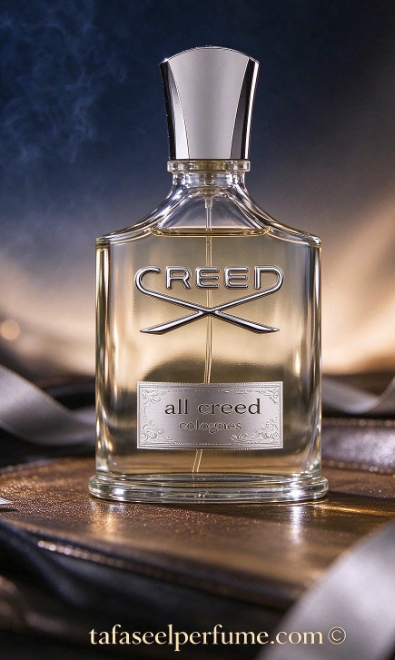
- All Creed Colognes: The Complete Guide to Every Scent, Selection, and Strategy Worth Knowing: All Creed colognes begin with a single, inconvenient fact: the house was not founded as a perfume brand at all. James Henry Creed opened a tailoring house on Conduit Street in London in 1760, dressing British royalty and aristocracy long before a single bottle carried the family name. That tailoring discipline—measure twice, compose once—is still the logic behind every Creed release.
Small Introduction
All Creed colognes begin with a single, inconvenient fact: the house was not founded as a perfume brand at all. James Henry Creed opened a tailoring house on Conduit Street in London in 1760, dressing British royalty and aristocracy long before a single bottle carried the family name. That tailoring discipline—measure twice, compose once—is still the logic behind every Creed release. What follows is a working map of the house: the scents that carry the reputation, the ones that reward patience, and the practical decisions that separate a satisfying bottle from an expensive mistake.
Large Introduction
Seven generations of the Creed family have shaped the maison, and the fragrance operation now sits at the intersection of British tailoring tradition and French haute parfumerie. The brand still hand-weighs and macerates many of its essences near the Château de Fontainebleau, sourcing Bulgarian rose, Florentine iris, Calabrian bergamot, Haitian vetiver, and ambergris-grade materials from named origins. That production posture is the reason all Creed colognes behave less like a uniform product line and more like a series of small, deliberate compositions—each one calibrated to a different register of formality, climate, and temperament.
The market treats Creed as a monolith anchored by Aventus, but the catalogue is wider and stranger than that. There are fresh green classics like Green Irish Tweed, quiet woods like Royal Oud, alpine aquatics like Silver Mountain Water, and old-school barbershop statements like Bois du Portugal. There is also a full women's side of the house—Love in White, Spring Flower, Royal Princess Oud, Wind Flowers, and Aventus For Her—that rarely gets the same attention in mainstream conversation. Understanding all Creed colognes means resisting the gravitational pull of a single bestseller and reading the house as a wardrobe rather than a trophy.
A second thing worth stating plainly: almost none of what people call "Creed cologne" is literally an eau de cologne. Of roughly sixty Creed scents held as masculine or unisex in one independent catalogue, forty-three are eau de parfum, fourteen are eau de toilette, and only two are true eau de cologne. The word "cologne" in common usage means a men's fragrance, not a concentration. That distinction matters for performance expectations, for layering, and for how much you should spray. Throughout this guide, "cologne" follows the popular meaning—a scent worn as personal fragrance—while noting concentration wherever it changes the advice.
Finally, all Creed colognes carry a practical complication the house does not advertise loudly: natural materials vary. Aventus, the scent most responsible for Creed's contemporary fame, is also the scent most documented for batch-to-batch variation—early 2010–2012 batches remembered for a darker, smokier character, later batches brighter and more fruit-forward. That variation is not a defect; it is the signature of a house working with a high proportion of naturals. But it does mean the buying decision should include verification, not just admiration.
Men s Perfume and Unisex Perfume remain the most direct entry points for readers mapping the house, but the sections below organize all Creed colognes by purpose rather than by counter placement.
Contents: All Creed Colognes at a Glance
1. The Tailoring Origins That Still Shape Every Creed Bottle
2. Aventus: The Scent That Redefined the House
3. Green Irish Tweed: The Green Standard of Elegant Masculinity
4. Royal Oud: Oud Without the Overwhelm
5. Silver Mountain Water: The Alpine Freshness That Travels Light
6. Bois du Portugal: The Old-School Statement That Still Commands a Room
7. The Women's Side of Creed: Floral, Oud, and Quiet Opulence
8. Concentration, Not Label: Reading EDP, EDT, and "Cologne" Correctly
9. Batch Codes and Natural Variation: What the Numbers Actually Tell You
10. How to Choose Your First Creed Without Regret
11. Buying Authentic Creed: The Verification Habits That Matter
12. Building a Creed Wardrobe, Not a Collection
1. The Tailoring Origins That Still Shape Every Creed Bottle
Creed's founding identity is sartorial, not olfactory. James Henry Creed established the house in 1760 as a London tailoring operation, and its early reputation was built on serving British royalty and aristocracy through precise, made-to-measure craftsmanship. Fragrance entered the picture as an extension of that world: scented gloves, personal essences, and bespoke compositions for clients who expected the same discipline in scent that they received in tailoring. Seven generations later, the maison still describes its fragrance philosophy as "British tailoring meets French savoir-faire"—the structure and restraint of a suit, executed with the material sensibility of French perfumery.
This matters because it explains why all Creed colognes share a certain architectural quality. They tend to open with clarity, develop through a composed middle, and settle into a base that feels intentional rather than simply persistent. The house's "Art of Millésime" language is not pure marketing: the rarest naturals are hand-weighed and aged in Creed's facilities, and many essences are still produced in-house using a traditional maceration process that most competitors abandoned as too costly. The result is a house style that rewards wearing over time—scents that reveal structure rather than shouting a single accord. That style is not for everyone. If you want an immediate, linear explosion of sweetness or amber, much of the Creed catalogue will feel restrained. If you want a fragrance that behaves like a well-cut garment—close, deliberate, and legible only when someone is near enough to notice—the tailoring DNA is the reason.
2. Aventus: The Scent That Redefined the House
Released in 2010 and dedicated to the audacity of Napoleon, Aventus is the commercial and cultural center of gravity for all Creed colognes in the public imagination. The composition is credited to Olivier Creed with his son Erwin, with industry acknowledgment also pointing to IFF perfumer Jean-Christophe Hérault, and its architecture is a study in productive tension. The opening is bright fruit—pineapple, blackcurrant, crisp apple, bergamot—which on its own could read as shampoo. The signature move is what sits underneath: birch, with a tarry, almost leather-workshop darkness that roughens the fruit and keeps it from becoming simple. The drydown settles into musk, a mossy ambergris effect, and a faint vanilla warmth, producing the now-familiar "fruit over fire" impression: fresh enough for daylight, formal enough for a negotiation, and distinct enough to be recognized across a room.
Aventus is also the reason the phrase "batch variation" entered everyday fragrance conversation. Because Creed works heavily with natural materials, no two batches smell identical, and enthusiasts have catalogued the differences with a seriousness usually reserved for vintage wine. The smoky, darker batches of the early 2010s are remembered as more resinous; later production tends to emphasize a brighter, more fruit-forward opening. The sane position is that variation exists—naturals guarantee it—but the differences are shades of the same painting, not different paintings. What Aventus sells, beyond the scent itself, is the ritual of connoisseurship: checking a batch code, comparing impressions, and participating in a shared language. For many wearers, that ritual is part of the pleasure. For others, it is noise. Either way, Aventus is the reference point against which the rest of the house is measured, and any serious survey of all Creed colognes has to start here—not because it is the best, but because it is the most consequential.
For readers comparing adjacent releases, the Perfume 717 Sexy angle—magnetism, projection, and social read—offers a useful cross-reference for how Aventus performs in the "statement scent" category.
3. Green Irish Tweed: The Green Standard of Elegant Masculinity
Green Irish Tweed arrived in 1985, a quarter-century before Aventus, and it remains the scent many longtime Creed wearers reach for when they want the house at its most composed. The composition opens with lemon, Indian verbena, and a breath of peppermint, then moves through violet leaf into a base of Florentine iris, sandalwood, and ambergris. The effect is often described as "irises after rain"—crisp, earthy, green, and quietly authoritative. It is sporty without being casual, formal without being stiff, and it wears close enough to feel personal rather than broadcast. Pierre Bourdon is credited on the composition, and his hand is visible in the balance: the green elements never turn sharp, and the woody base never turns heavy.
In the landscape of all Creed colognes, Green Irish Tweed occupies a specific role: the fresh classic that does not chase trends. It is often recommended alongside Silver Mountain Water for wearers who want "fresh and clean" without the fruit-and-smoke drama of Aventus, and alongside Bois du Portugal for those who want old-school elegance with more green lift. Its weakness, if it has one, is that it does not announce itself. It is a scent for people who prefer to be discovered rather than detected. That makes it an excellent office fragrance, a reliable warm-weather companion, and a safe blind buy for anyone who already likes green, aromatic, or fougère-adjacent structures. It is less useful for someone who wants a fragrance to function as a room-filling event.
4. Royal Oud: Oud Without the Overwhelm
Royal Oud, released in 2011, is the house's answer to the oud boom—and characteristically, it refuses the brief. Instead of a dense, smoky, animalic oud, Royal Oud presents a dry, polished, woody-fresh composition built around lemon, pink berries, and bergamot at the top, cedar and angelica root in the middle, and sandalwood, oud, and Tonkin musk at the base. The oud is present as structure and depth rather than as a standalone statement; reviewers consistently describe it as "classy, smooth oud that isn't overpowering," more elegant than heavy. That restraint makes it one of the most wearable entries in all Creed colognes for people who are oud-curious but oud-averse.
The fragrance is often positioned for formal occasions and quiet woods, and that framing is accurate. It sits close to the skin, develops slowly, and rewards a wearer who does not need constant olfactory feedback. In a wardrobe context, Royal Oud fills the "evening without sweetness" slot: it has depth and warmth, but it avoids the gourmand register that dominates so much of the modern masculine market. It is also one of the more unisex-leaning releases in the men's-adjacent catalogue, which makes it a useful shared bottle rather than a strictly gendered purchase. The trade-off is projection. Royal Oud is not a performance monster, and wearers who expect Aventus-level projection may find it subdued. That is the point: it is a scent of proximity, not announcement.
5. Silver Mountain Water: The Alpine Freshness That Travels Light
Silver Mountain Water is the aquatic-adjacent fresh scent in the Creed line, built around bergamot, green tea, and blackcurrant, with a clean, slightly mineral, "mountain stream" character. It is often recommended as the fresh-and-clean alternative to Aventus or Green Irish Tweed, and its appeal is immediate: crisp, breezy, and easy to wear in heat. Reviewers frequently describe it as a fragrance that invites compliments from both women and men, which is a useful social data point for anyone choosing a daily signature. Its projection is soft but noticeable, and its longevity on skin is typically reported in the six-to-eight-hour range, though opinions vary by batch and skin chemistry.
Within all Creed colognes, Silver Mountain Water occupies the "light and versatile" slot. It is less formal than Green Irish Tweed, less dramatic than Aventus, and less woody than Royal Oud. That makes it an excellent warm-weather daily, a travel bottle, or a first Creed for someone who wants the house's material quality without a heavy olfactory commitment. The criticism most often leveled at it is value: some wearers feel the performance does not justify the price relative to other Creed releases. That is a fair debate, but it is a debate about expectations, not quality. If you want a fresh scent that behaves like a fresh scent—rather than a fresh opening that morphs into a heavy base—Silver Mountain Water delivers exactly that.
6. Bois du Portugal: The Old-School Statement That Still Commands a Room
Released in 1987 and composed by Olivier Creed, Bois du Portugal is the house's love letter to classic masculine perfumery: citrusy green opening, lavender and spice in the heart, and a dry, woody, old-school finish that reportedly made it a favorite of Frank Sinatra. The fragrance is often described as "mature," "old-fashioned but not out of date," and "one of the longest-lasting Creed scents available," with wearers reporting six to eight hours of longevity and strong early projection. It is not a modern crowd-pleaser in the Aventus mold. It is a statement of taste, and it rewards a wearer who is comfortable with lavender, galbanum, and a barbershop-adjacent structure.
In the broader map of all Creed colognes, Bois du Portugal is the "old-school class" pick, often grouped with Green Irish Tweed and Royal Oud as the house's more traditionally masculine releases. It is an excellent choice for formal daytime occasions, cool weather, and anyone who wants a fragrance that feels like a well-worn jacket rather than a new accessory. It is a poor choice for someone who wants transparency, sweetness, or a modern fresh-woody profile. The house still makes it, the people who love it tend to love it deeply, and it serves as a useful reminder that Creed's reputation was not built on a single 2010 blockbuster.
7. The Women's Side of Creed: Floral, Oud, and Quiet Opulence
The conversation around all Creed colognes skews heavily masculine, but the women's catalogue is substantial and includes some of the house's most refined work. The recurring bestsellers are Aventus For Her, Love in White, Spring Flower, Royal Princess Oud, and Wind Flowers, often sold together in discovery sets precisely because they represent different facets of the feminine house style. Love in White is a floral-amber composition with a clean, romantic character; Spring Flower leans brighter and more fruit-forward; Royal Princess Oud is a dressed-up, accessible take on oud that even oud skeptics can wear; Wind Flowers is a modern white-floral with a crisp edge. Aventus For Her carries the pineapple-and-smoke DNA of its masculine sibling into a smoother, more floral register.
Royal Princess Oud deserves particular attention because it shows how Creed handles a difficult material. Oud is often used as a blunt instrument—heavy, smoky, and unmistakable. Royal Princess Oud treats it as a tailoring material: present, structured, but shaped to the body rather than draped over it. The house describes it as "an oud for even oud skeptics," and that framing is fair. For readers building a shared or unisex wardrobe, the women's side of Creed is not a separate category—it is a set of compositions that often wear beautifully on men who want florals, soft ambers, or oud without the barnyard. Women s Perfume and Unisex Perfume are useful browsing routes for that overlap.
8. Concentration, Not Label: Reading EDP, EDT, and "Cologne" Correctly
A practical correction before going further: "Creed cologne" is almost always a colloquial term, not a technical one. Of the roughly sixty Creed fragrances catalogued as masculine or unisex, only two are true eau de cologne; the overwhelming majority are eau de parfum, with a meaningful minority in eau de toilette. This matters because concentration changes behavior. Eau de parfum typically carries a higher fragrance-oil load, which often means longer persistence, closer wear, and a different development curve than eau de toilette. Eau de toilette tends to open brighter, project more immediately, and fade faster. A true eau de cologne is the lightest of the three—refreshing, fleeting, and best understood as a skin splash rather than a statement.
Why does this matter for all Creed colognes? Because a wearer who buys a Creed EDT expecting EDP performance will conclude the scent is weak, when the concentration is doing exactly what it was designed to do. Conversely, a wearer who buys an EDP and sprays it like an EDT may find the scent overwhelming or cloying. The practical rule is simple: check the concentration on the bottle or listing, then adjust application. EDP: two to three sprays, applied to pulse points and possibly one spray to clothing for longevity. EDT: three to four sprays, reapplied if needed. True cologne: treat it as a refresh, not a foundation. This is not a minor technicality. It is the difference between enjoying a fragrance and fighting it.
9. Batch Codes and Natural Variation: What the Numbers Actually Tell You
Creed bottles carry a small code on the base—letters and digits identifying the production batch, with early characters often indicating the year. Because the house uses a high proportion of natural materials, harvest and production variation is real, and enthusiasts have built an entire culture around comparing batches. The early Aventus batches of 2010–2012 are remembered for a darker, smokier profile; later batches tend to be brighter and more fruit-forward; and community databases exist specifically to help buyers cross-reference codes before purchasing. This is not unique to Creed in principle—any house working with naturals will show variation—but Creed's scale and cultural visibility have made batch literacy a public sport.
The balanced position is this: variation exists, it is often detectable, and it is rarely as dramatic as forum mythology suggests. Differences are usually shades within the same composition, not entirely different fragrances. Batch codes are most useful for two purposes: verifying authenticity and avoiding oxidized old stock. A code that matches between box and bottle, and that corresponds to a plausible production date, is a positive signal. A code that is missing, mismatched, or associated with a known counterfeit pattern is a red flag. For buyers exploring all Creed colognes secondhand or through discount channels, a thirty-second code check is the cheapest insurance available. It will not tell you whether you personally will love the scent, but it will tell you whether you are looking at a legitimate bottle.
Related reading on the practical side of fragrance value: Where to Buy Cheap Perfume Online: A Practical Guide to Real Fragrance Value.
10. How to Choose Your First Creed Without Regret
The first Creed decision is not "which is the best"—it is "which behavior do I actually want from a fragrance?" Aventus is a daytime power scent: it thrives in offices, negotiations, weddings before sunset, and any context where you want to be remembered as composed rather than perfumed. Green Irish Tweed is the green classic for people who prefer discovery over announcement. Silver Mountain Water is the light, versatile fresh option for heat and daily wear. Royal Oud is the quiet, formal, woody choice for evenings and proximity. Bois du Portugal is the old-school statement for wearers who already know they like lavender, galbanum, and traditional masculine structures. The women's releases—Love in White, Spring Flower, Royal Princess Oud—cover floral, bright-floral, and dressed-up oud respectively.
A useful exercise is to name the last three fragrances you genuinely enjoyed wearing, then map their dominant qualities: fresh/green, woody/amber, fruity/smoky, floral, or oud. If the answer is "fresh and green," start with Green Irish Tweed or Silver Mountain Water. If it is "fruity and smoky," Aventus or Aventus Cologne. If it is "woody and formal," Royal Oud. If it is "I don't know," buy samples or decants before bottles—Creed's price point makes blind-buying an expensive hobby, and skin chemistry changes everything. The house's own discovery sets exist precisely because the catalogue is diverse enough that a single bottle cannot represent it. Sampling is not indecision; it is the tailoring step of the process. Measure first.
For gift-oriented browsing, Perfume Gift Sets and Mini Size & Gift Sets are practical routes into the house without committing to a full bottle.
11. Buying Authentic Creed: The Verification Habits That Matter
Creed's price point and cultural visibility make it a target for counterfeiters, and the fakes are often good enough at the packaging level to fool a casual buyer. The reliable markers are less glamorous: batch codes should match between box and bottle, packaging typography should be clean and consistent with official standards, and the atomizer should perform with the even, fine mist of a luxury spray. Sellers should provide official receipts or explicit authenticity guarantees; listings that rely only on stock imagery, offer prices far below market rate, or use vague language like "inspired by" or "tester" are common red flags. A trustworthy seller will show the actual item, provide batch information, and accept returns.
The deeper issue is that authenticity is not just about avoiding a fake—it is about getting the fragrance the house actually made. A counterfeit may mimic the bottle shape and the color of the liquid, but it will almost never reproduce the material quality or the development curve. In heat and humidity, the difference becomes obvious: a genuine Creed blooms and evolves on skin, while a low-quality fake turns harsh and evaporates quickly. For all Creed colognes, the practical habit is to buy from authorized retailers or established boutiques with transparent sourcing, and to verify the batch code before the return window closes. The few minutes of checking are worth more than any discount.
Perfume Brands and the Perfume Ranking and Top Lists sections are useful starting points for comparing authorized channels and understanding relative positioning.
12. Building a Creed Wardrobe, Not a Collection
The most satisfying relationship with all Creed colognes is not ownership of every bottle—it is a small, deliberate rotation where each scent has a job. A three-slot Creed wardrobe looks different for different people, but the logic is consistent. Slot one: a daytime signature (Green Irish Tweed or Silver Mountain Water). Slot two: a statement or evening scent (Aventus, Royal Oud, or Bois du Portugal). Slot three: a warm-weather or travel fresh option (Silver Mountain Water, Millésime Impérial, or Aventus Cologne). If the wearer shares fragrance, add a floral or unisex release from the women's side—Love in White, Royal Princess Oud, or Wind Flowers—to cover a register the men's line does not prioritize. This is a wardrobe, not a Pokémon collection: the goal is coverage, not completeness.
The wardrobe approach also protects against the most common Creed mistake: buying Aventus first because it is famous, then discovering that the wearer actually prefers green, woody, or fresh profiles. Aventus is an excellent scent, but it is not a universal first bottle. It is a daytime power scent with a fruit-over-smoke signature, and it addresses a room rather than a person. Some wearers want exactly that. Others want the quieter pleasure of Green Irish Tweed or the close warmth of Royal Oud. Starting with a sample set or a decant of two or three candidates, then buying the full bottle of the one that gets worn most, is not a compromise—it is the tailoring method applied to fragrance. Measure, then cut.
For broader context on how Creed sits within the wider market, the Perfume Articles and Reviews and Ranking sections offer comparative reading, while Beauty covers adjacent grooming and presentation topics.
Frequently Asked Questions About All Creed Colognes
Is Aventus the best Creed cologne for everyone?
Aventus is the most famous and one of the most complimented, but it is not universally the best first choice. It is a daytime power scent with a fruit-and-smoke profile, and it projects with intent. Wearers who prefer green, woody, or quietly fresh profiles often find more satisfaction in Green Irish Tweed, Royal Oud, or Silver Mountain Water. "Best" depends on the behavior you want from a fragrance, not on sales rank.
Are all Creed colognes actually eau de parfum?
No. Among roughly sixty Creed scents catalogued as masculine or unisex, forty-three are eau de parfum, fourteen are eau de toilette, and only two are true eau de cologne. The popular use of "cologne" to mean "men's fragrance" obscures this. Always check the concentration on the bottle or listing before adjusting your spray routine.
Why do people talk about Creed batch codes?
Creed uses a high proportion of natural materials, so batch-to-batch variation is real. Enthusiasts use the code on the bottle base to compare production years and to verify authenticity. Variation is usually a difference of shade rather than a different fragrance, but code checks are a practical way to avoid counterfeits and oxidized stock.
Which Creed cologne lasts the longest?
Bois du Portugal has a reputation as one of the longest-lasting Creed releases, with wearers reporting six to eight hours and strong early projection. Aventus and Green Irish Tweed also perform respectably on most skin. Longevity varies by concentration, skin chemistry, climate, and application; an EDP applied to moisturized skin in cool weather will generally outlast an EDT applied to dry skin in heat.
Can women wear Creed colognes marketed to men?
Yes. Fragrance has no biological gender, and several Creed releases are effectively unisex in wear. Aventus reads as striking on women—the pineapple and smoke register as bold rather than borrowed. Royal Oud and Silver Mountain Water are also commonly shared. The women's line exists to serve different compositional preferences, not to police who may wear what.
Where is the safest place to buy Creed?
Authorized retailers, official brand boutiques, and established department stores carry the lowest counterfeit risk and provide receipts and return policies. If buying from a third-party seller, verify the batch code matches between box and bottle, insist on actual product photos, and avoid prices that are too far below market rate. Authenticity is not just about the bottle—it is about getting the fragrance the house actually made.


