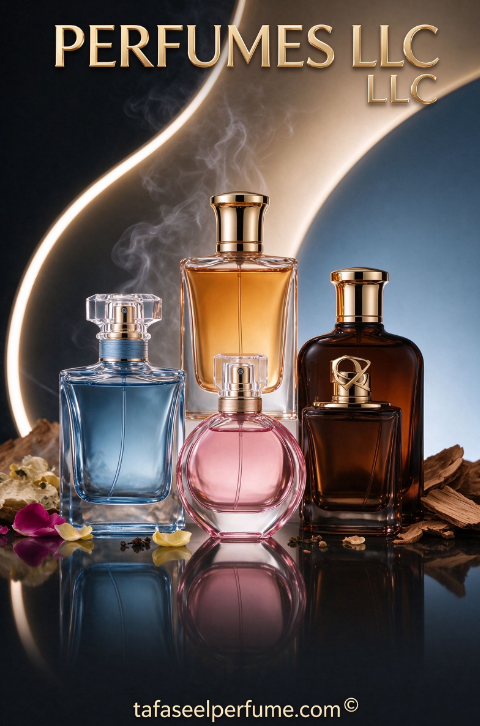
- Perfumes LLC: What a Fragrance Limited Liability Company Really Is, How It Operates, and How to Buy From One Without Getting Burned: Section intro: If you have ever typed “perfumes llc” into a search bar, you were probably trying to answer one deceptively simple question: who actually made this bottle, and can I trust them? This guide walks through what a perfume LLC is, what it is not, how to verify one in minutes, and how to shop from one with confidence.
Quick intro: A perfumes LLC is a fragrance business registered as a limited liability company. That legal structure tells you something about accountability and paperwork, but nothing at all about scent quality, authenticity, or sourcing. This article separates the two, so you know exactly which promises a perfume LLC can legally keep and which ones you still have to verify yourself.
Full intro: The fragrance market has changed shape dramatically. A decade ago, most bottles came from a handful of beauty conglomerates or the licensed houses they controlled. Today, a huge share of the perfume sold online, in boutique stores, and through social commerce comes from smaller registered businesses, many of them set up as LLCs. The keyword “perfumes llc” has become a shorthand search for that entire gray-to-legitimate spectrum, and that is exactly why it is so confusing. Two companies can both be a perfumes LLC and still be nothing alike: one may be a licensed importer with full documentation and a real returns policy, while another is a one-person reseller operating out of a storage unit.
Understanding the structure matters because it changes how you evaluate risk. When you buy from a perfume LLC, your protections come from three places: the company’s legal registration, the platform’s buyer protection, and your own due diligence. This guide covers all three, from the state business registry to the batch code on the box, and it also explains the genuinely thorny parts of the category, including trademark law, “inspired by” fragrances, discontinued vintage bottles, and pricing that seems too good to be true. Whether you are building a collection of women’s perfume, restocking a men’s perfume rotation, or exploring unisex perfume for the first time, the same verification habits apply.
In this guide:
1. What “Perfumes LLC” Actually Means in the Fragrance Industry — the legal definition, plus what the label deliberately does not tell you about the juice inside.
2. Why the LLC Structure Matters to Perfume Buyers — liability, import rights, trademarks, and the paper trail you can check in five minutes.
3. Perfumes LLC vs. Big Beauty Conglomerates — how independent houses, licensees, and conglomerates actually relate to one another.
4. How to Vet a Perfumes LLC Before You Spend Money — a practical checklist covering registry records, batch codes, and return terms.
5. Licensing, Trademarks, and “Inspired By” Fragrances — where legal cloning ends and counterfeiting begins.
6. Pricing Realities: What a Perfumes LLC Can and Cannot Promise — why some bottles cost $40 and others cost $400.
7. Perfumes LLC and the Rise of Independent Niche Houses — the small-brand playbook behind modern niche success.
8. Vintage, Discontinued, and Resale Bottles Under an LLC — how to buy rare perfume without inheriting a turned bottle.
1. What “Perfumes LLC” Actually Means in the Fragrance Industry
An LLC, or limited liability company, is a business structure. It is not a certification, a license, a grade, or a quality tier. When a company describes itself as a perfumes LLC, the only thing you can safely infer is that it has filed formation paperwork with a state authority, pays an annual fee, and has appointed a registered agent who can receive legal documents on its behalf. Everything else, from whether it owns its inventory to whether it pays its suppliers, is an open question until you verify it.
In practice, the perfume businesses that register as LLCs fall into several distinct groups, and knowing which group you are dealing with is most of the battle. The first group is independent brands that develop their own formulas, hire a fragrance house or independent perfumer to compose them, and sell under their own name. The second group is licensed importers and distributors that buy genuine stock from authorized channels and resell it, often at a discount. The third group is decanters and split sellers, who buy full bottles and repackage them into smaller units. The fourth group is “inspired by” houses that create original formulas designed to resemble popular designer scents. The fifth group, and the one buyers most need to watch for, is counterfeiters who registered a legitimate-looking LLC as cover.
All five can legally call themselves a perfumes LLC. Only some of them are selling you something you would actually want to wear. This is why the phrase “perfumes llc” should be treated as a starting point for research rather than a seal of approval. The legal form tells you the company exists. The operating model tells you whether it is worth your money. A useful habit is to read a brand’s About page looking specifically for names: who the founder is, which perfumers or fragrance houses they work with, where the bottles are filled, and which country they ship from. Vague language about “a passion for fragrance” with no names, no addresses, and no sourcing details is a signal, not a personality trait.
It also helps to understand that many legitimate perfume LLCs are extremely small. A two-person operation running a well-documented decant service or a curated vintage shop can be more trustworthy than a glossy storefront with a call center. Size and legal structure are neutral facts. What matters is whether the business is transparent about what it sells, clear about its terms, and reachable when something goes wrong. That combination is what separates a real fragrance business from a keyword with a payment processor attached.
2. Why the LLC Structure Matters to Perfume Buyers
The LLC structure exists to separate personal assets from business obligations, which is precisely why it matters to you as a customer. If a perfume LLC sells you a mislabeled bottle, the claim runs against the company, not the founder’s house. That is normal and expected in commerce, but it does mean your practical recourse depends heavily on how the company is set up and how it sells. A perfume LLC that operates through a major marketplace inherits that platform’s dispute system. A perfume LLC that sells through its own site relies entirely on its own returns policy and on your card issuer’s chargeback process.
The structure also unlocks things that directly affect what you can buy. Forming an LLC is usually a prerequisite for obtaining a resale certificate, which is what allows a business to buy inventory wholesale without paying sales tax at the point of purchase. It is also typically required to open a proper business bank account, sign distribution agreements, and qualify for commercial insurance. In other words, the LLC is the paperwork that lets a fragrance seller buy legitimate stock in the first place. That does not guarantee they did, but it makes the legitimate path available to them.
Trademarks are another area where the structure is visible. A perfume LLC can register its own brand name, logo, and bottle design with the relevant trademark office. If you are considering an independent house, checking whether the name is registered is a fast credibility signal. It costs real money and takes real time, which is not something fly-by-night operations usually bother with.
For buyers, the practical takeaway is that an LLC gives you a paper trail. Every US state maintains a public business registry where you can search the company name, see the formation date, confirm the registered agent, and check whether the entity is still active or has been administratively dissolved. That single check takes a few minutes and eliminates a surprising number of problems before money changes hands. If a storefront claims to be an established perfume LLC but the registry shows it was formed eight weeks ago and its registered agent is a mail-drop service in another state, you now have useful context for evaluating everything else it says.
3. Perfumes LLC vs. Big Beauty Conglomerates
The fragrance industry looks like a pyramid, and most consumers only ever see the top. At the top sit a small number of conglomerates that own or license a large share of the famous names. Below them are mid-sized fragrance houses and distributors. At the base are thousands of independent businesses, most of them structured as LLCs, which include niche brands, importers, decanters, and resellers. Understanding this hierarchy explains a lot of otherwise confusing pricing and availability.
Here is the part that surprises many shoppers: a huge number of designer fragrances are not made by the fashion house whose name is on the bottle. The fashion house licenses the name to a beauty company, which develops, manufactures, and distributes the scent. That is why a single company can be responsible for a dozen seemingly unrelated designer lines at once, and why reformulations happen on a corporate timetable rather than an artistic one. When people discuss the difference between an original release and a later version of a classic, they are often describing licensing decisions, not perfumery decisions.
Independent perfume LLCs sit outside that structure in most cases. Some are genuinely independent, developing original formulas and building a brand from scratch. Others operate as authorized dealers, buying from distributors who in turn buy from the licensee. Still others operate in the “inspired by” space, creating their own compositions that reference popular profiles without using protected names. Each of these models has a different risk profile, and the price differences between them are usually explained by sourcing and overhead rather than by any mysterious secret.
This is also why the same fragrance can appear at wildly different prices across the market. Authorized retail carries the full cost of brand marketing, counter staff, and sampling programs. A perfume LLC operating as a lean importer carries far less overhead, which means a lower price is not automatically suspicious. What would be suspicious is a price that undercuts the wholesale cost of the genuine product by a wide margin, because no legitimate business can lose money on every bottle indefinitely. Learning to read price as a signal, rather than as proof of anything, is one of the most useful skills a fragrance buyer can develop.
4. How to Vet a Perfumes LLC Before You Spend Money
Vetting a perfume LLC is not complicated, but it does require doing five things in a specific order, because each step tells you whether the next one is worth your time. Start with the business registry. Search the exact company name in the state where it claims to be based, and confirm the entity is active and the formation date is consistent with the brand’s history. Then check the physical address. A warehouse or office address that matches the registry is a good sign; a residential address in a different state from the brand’s claims is not automatically disqualifying, but it deserves an explanation.
Third, examine the product pages for specificity. Legitimate sellers list concentration, volume, perfumer or fragrance house where known, country of manufacture, and batch or lot information. Fourth, read the returns policy in full, particularly the exclusions for opened bottles. Fragrance is a hygiene-adjacent product in many jurisdictions, so a no-returns-on-opened-goods policy is normal and legal, but a company that refuses all returns for any reason is telling you something about how it handles disputes. Fifth, check whether the company offers a way to contact a human, whether that is a phone number, a physical address, or a support email that actually responds.
For local shoppers, the practical side of vetting overlaps with the practical side of testing. Our guide to finding, testing, and choosing the right scent nearby without wasting a trip covers how to combine online research with in-store sampling so you are not buying blind from any LLC, no matter how well documented it is. The same logic applies to locating the right bottle without guesswork, which is really a guide to reducing uncertainty before checkout.
One more vetting step that most buyers skip is checking the bottle itself after it arrives. Look for a batch code printed on the box and etched or printed on the bottle, and confirm the two match. Inspect the crimp on the sprayer, the quality of the printing, and the alignment of the label. Genuine bottles are manufactured to consistent tolerances; counterfeits often are not. If the batch code is missing, mismatched, or obviously overprinted, photograph everything before you open the cellophane and start a return immediately. Documentation is what turns a dispute into a resolution.
5. Licensing, Trademarks, and “Inspired By” Fragrances
This is the section where a lot of confusion lives, so it is worth stating plainly: in most jurisdictions, a perfume formula itself is not protected by copyright, and scent is not generally eligible for trademark protection. What is protected is the brand name, the logo, the bottle design trade dress, and the marketing claims. That legal reality is why the “inspired by” segment exists and continues to grow. A perfume LLC can legally create a fragrance that smells similar to a famous one, as long as it does not use the protected name, logo, or distinctive packaging in a way that confuses consumers about origin.
What a perfume LLC cannot do is sell a counterfeit: a product bearing a protected trademark that was not manufactured or authorized by the trademark owner. That is trademark infringement regardless of how good the juice smells, and it is illegal in nearly every market. The line between “inspired by” and counterfeit is usually visible in the packaging. A bottle clearly labeled with the LLC’s own brand name, its own logo, and a description of the scent profile is operating in the legal gray zone. A bottle labeled to look exactly like a designer release, complete with the designer’s name and logo, is a counterfeit, full stop.
For buyers, this distinction matters because it determines what you are actually paying for. When you buy a genuine designer bottle, you are paying for the formula, the raw materials, the brand, and the quality control that comes with authorized production. Well-known examples of that authorized category include the marine citrus profile of Acqua di Gio Armani and the concentrated, spicy-lavender statement of Dior Sauvage Elixir. Both have been reformulated or restructured over the years, and knowing that history helps you evaluate whether a discounted bottle is an older batch, a different concentration, or something else entirely.
When you buy from an “inspired by” house, you are paying for the composition and the value proposition, not the name. That can be an excellent deal or a disappointing one, but it should be a conscious choice rather than an accident. The practical rule is simple: read the label as printed, not as implied. If the seller’s own name is prominent and the description says “inspired by,” you know what you are getting. If the designer’s name is prominent and the price is a fraction of retail, you are looking at a counterfeit and should walk away.
6. Pricing Realities: What a Perfumes LLC Can and Cannot Promise
Price is the most misread signal in fragrance. A high price does not guarantee authenticity, and a low price does not prove fraud. What actually determines price is a chain: raw material cost, concentration, packaging, licensing fees, distribution margin, and retail overhead. A perfume LLC with no physical stores, no celebrity ambassadors, and no sampling program can legitimately sell at a lower price than a department store counter and still make a profit. That is the entire economic logic behind discount retail, and it is not sinister.
Where buyers get hurt is at the extremes. If a genuine designer bottle retails for several hundred dollars and a seller offers it new and sealed for a tiny fraction of that, the math has to come from somewhere, and it is rarely from efficiency. Common explanations include diluted product, refilled bottles, expired stock, tester units sold as retail, and outright counterfeits. Reading up on what a bottle actually costs, such as our breakdown of Baccarat Rouge 540 price and what every bottle really costs, is a good calibration exercise because it shows how much of the retail figure is brand and distribution rather than liquid.
A perfume LLC can promise you a defined product, a stated concentration, a stated volume, and a clear return window. It cannot promise you that a fragrance will smell identical to a memory, that it will perform the same on your skin as on someone else’s, or that a batch from three years ago will have the same top notes as a fresh one. Those are properties of chemistry and storage, not of business structure. Any seller who guarantees identical performance across batches is either inexperienced or overpromising.
The healthiest approach is to set a budget per milliliter and stick to it. Compare the price per milliliter rather than the sticker price, since bottle sizes vary wildly and a large bottle at a low price can be worse value than a small bottle at a higher one. Factor in shipping, and factor in whether the seller offers samples or discovery sizes. A perfume LLC that sells small quantities first is usually more confident in its product than one that only sells sealed full bottles with no way to test.
7. Perfumes LLC and the Rise of Independent Niche Houses
The most interesting part of the modern fragrance market is the number of small independent houses that have built genuine followings while operating as LLCs. The playbook is consistent: a founder with a strong point of view, one or two fragrances executed well rather than twenty executed poorly, careful packaging, honest ingredient disclosure, and a direct-to-consumer channel that keeps overhead low. These brands compete on identity rather than on shelf space, and they have benefited enormously from a market where discovery happens through reviews and social sharing rather than through department store displays.
Niche success is not an accident, and it is worth studying if you want to understand why some small brands feel luxurious and others feel cheap. It usually comes down to restraint. A house like the one behind Creed Vanille Sublime is selling a specific mood, a luminous vanilla orchid composition, rather than trying to be everything to everyone. That focus is what makes a small brand legible. The same principle shows up in the affordably positioned segment, where a scent like Penguin Premium Blend Cologne succeeds by being clear about its style and its everyday use case instead of pretending to be a luxury object.
For buyers, niche houses offer something the conglomerates rarely do: access to the people behind the product. You can often email the founder, ask about a batch, or request a sample. That level of access is a genuine advantage, and it is worth using. It is also a useful test. A small perfume LLC that answers questions knowledgeably and promptly is demonstrating exactly the operational competence you are hoping for.
The risk with small houses is discontinuation. Independent brands have less financial cushion, and a beloved scent can vanish when a supplier changes or a founder moves on. That is not a reason to avoid them, but it is a reason to buy a backup bottle of anything you truly love, and to store it properly. Cool, dark, upright, and away from humidity will preserve a fragrance far longer than a bathroom shelf ever will.
8. Vintage, Discontinued, and Resale Bottles Under an LLC
Vintage fragrance is the most skill-intensive corner of the market, and it is increasingly dominated by small LLCs that specialize in sourcing, authenticating, and reselling discontinued bottles. The appeal is obvious: reformulations mean that many classic scents simply do not smell the way they used to, and for collectors, the original is the only version that counts. The risk is equally obvious. Perfume degrades. Light, heat, oxygen, and time all take a toll, and a fifty-year-old bottle can be a treasure or a tragedy depending on how it was stored.
This is why vintage sellers live or die on documentation. A credible perfume LLC in this space will describe the fill level, the condition of the box, whether the bottle has been opened, whether the sprayer works, and where the bottle came from. For an example of the category at its most compelling, our look at vintage Fendi perfume and the discontinued Roman masterpieces collectors keep hunting shows why certain bottles command such devotion and why condition notes matter so much.
If you are buying vintage, ask for photographs of the actual bottle you will receive, not stock images. Ask about storage history and whether the bottle has been refrigerated. Understand that top notes are usually the first casualty of age, so a vintage fragrance may open differently than you expect even if the heart and base are intact. And accept that vintage buying is inherently a gamble; the seller’s job is to reduce the odds, not eliminate them.
Resale of modern bottles is a different problem. Here the main risks are fakes, refills, and testers sold as retail. Reputable resale LLCs will disclose whether a bottle is a tester, whether the box is included, and whether the cellophane is intact. If a seller is vague about any of these, treat it as a no. The same discipline applies to gift-oriented purchases, where presentation matters as much as the juice. If you are buying for someone else, it is usually safer to go through curated perfume gift sets or mini size and gift sets from a seller with a clear returns policy than to gamble on a single unboxed bottle from an unfamiliar LLC.
Frequently Asked Questions About Perfumes LLC
What exactly is a perfumes LLC?
A perfumes LLC is a fragrance business registered as a limited liability company, usually with a state business authority. The designation describes the company’s legal structure, not the quality, authenticity, or origin of the perfume it sells. Two perfumes LLCs can operate in completely different ways, so the label should be treated as the beginning of your research rather than the end of it.
Are perfumes sold by an LLC authentic?
Not automatically. An LLC can sell genuine authorized stock, independent niche compositions, legal “inspired by” fragrances, or counterfeits. Authenticity depends on the seller’s sourcing and conduct, not on its business registration. Check the packaging, the batch code, the pricing, and the seller’s transparency about where the product came from before assuming anything.
How can I verify that a perfumes LLC is legitimate?
Search the company name in the public business registry of the state where it claims to operate, and confirm the entity is active. Then check the physical address, read the returns policy, look for named people and sourcing details on the About page, and test whether customer support responds. A legitimate business will survive all four checks without excuses.
Is it safe to buy perfume from a small LLC instead of a department store?
It can be, and often is. Small LLCs frequently offer better prices, more knowledgeable service, and access to niche or discontinued products. The tradeoff is that you carry more of the verification burden yourself. Pay with a method that offers buyer protection, keep all packaging until you have inspected the bottle, and start a return immediately if anything looks wrong.
What is the difference between a perfumes LLC and a perfume brand?
A brand is a commercial identity; an LLC is a legal entity. Many brands are owned and operated by an LLC, but a single LLC can own multiple brands, and a brand can change hands between LLCs through acquisition. When you research a fragrance, check both the brand name on the bottle and the legal entity behind the website.
Can a perfumes LLC legally sell “inspired by” versions of designer scents?
In most markets, yes, provided the seller does not use protected brand names, logos, or confusingly similar packaging. Perfume formulas are generally not protected by copyright, but trademarks are strongly protected. A clearly labeled original composition with the seller’s own branding is usually lawful; a bottle designed to imitate a designer’s trademarked appearance is not.
Why is perfume from an LLC sometimes much cheaper than retail?
Lower overhead is the usual reason. Online-only sellers avoid the cost of counters, staff, sampling programs, and premium retail space, so they can price below department stores and still profit. Genuine discounts exist. What you should question is a price so low that it falls below plausible wholesale cost, since that usually points to dilution, expired stock, testers sold as retail, or counterfeits.
What should I do if a perfume LLC sends me a fake or damaged bottle?
Do not open or use the product further. Photograph the box, the bottle, the batch code, and the shipping label, then contact the seller in writing and request a return. If the seller refuses, open a dispute with your payment provider or the marketplace, attaching your photographs and the seller’s own product listing. Documenting everything before you escalate is what makes a resolution likely.


