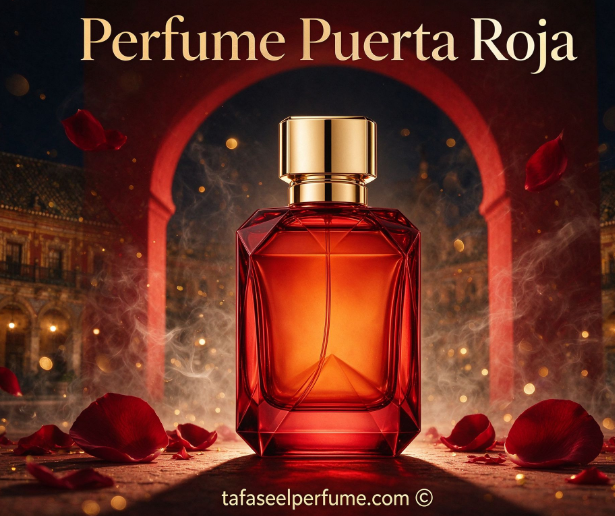
- Perfume Puerta Roja: The Complete Guide to Elizabeth Arden Red Door, Its Flankers, and the Floral Oriental Tradition: Perfume Puerta Roja is the Spanish name that leads straight to one of the most recognizable floral orientals ever made: Elizabeth Arden Red Door. For anyone searching this phrase, the trail usually begins with the literal translation — “Red Door perfume” — and ends at the same place: a 1989 classic built around a bouquet of red rose, Moroccan orange blossom, honey, and sandalwood, inspired by the famous red door of the Elizabeth Arden spa.
Perfume Puerta Roja is the Spanish name that leads straight to one of the most recognizable floral orientals ever made: Elizabeth Arden Red Door. For anyone searching this phrase, the trail usually begins with the literal translation — “Red Door perfume” — and ends at the same place: a 1989 classic built around a bouquet of red rose, Moroccan orange blossom, honey, and sandalwood, inspired by the famous red door of the Elizabeth Arden spa. This guide treats perfume puerta roja as both a name and a category: the specific Elizabeth Arden scent, its lighter and darker flankers, the way it behaves on skin across seasons, and the practical questions that come up when someone is deciding whether this style of fragrance belongs in their wardrobe.
The phrase perfume puerta roja carries a useful kind of clarity. It does not describe an abstract mood or a trending note pyramid; it points to a specific door — the red door of the Elizabeth Arden spa — and to the fragrance that turned that architectural detail into a global signature. Red Door is an eau de toilette with an unusually dense floral heart, a honeyed and mossy base, and a bottle designed to look like the door itself. It has been reformulated, flanked, and reinterpreted since its launch, but the original architecture remains intact: rich, confident, and deliberately unquiet. The sections below map the scent from every angle a wearer or collector is likely to care about — the note pyramid, the flanker family, performance, occasion logic, and the small practical details that separate a satisfying bottle from a regrettable one.
In This Guide
1. Why “Puerta Roja” Means Red Door: The Origin of the Name and the Scent
2. The Note Pyramid of Perfume Puerta Roja: From Wild Violet to Honeyed Sandalwood
3. Red Door EDT, Revealed, and the Flanker Family: What Changes and What Stays
4. How to Wear Perfume Puerta Roja: Seasons, Occasions, and Application
5. Performance and Longevity: What to Expect from a 1989 Floral Oriental
6. Buying Perfume Puerta Roja in 2026: Bottles, Gift Sets, and What to Check
7. Common Misconceptions About Red Door and Who It Actually Suits
1. Why “Puerta Roja” Means Red Door: The Origin of the Name and the Scent
The name perfume puerta roja is not a marketing invention layered onto an unrelated fragrance. Elizabeth Arden’s flagship spa in New York was known for its red door, and Red Door the fragrance was created as an olfactory homage to that entrance. Launched in 1989 and composed by perfumer Carlos Benaim, Red Door arrived as a floral oriental at a moment when feminine perfumery still rewarded density, projection, and a certain ceremonial weight. It was not built to whisper. The original brief, as the scent itself suggests, was to translate the glamour and privacy of the spa’s red door into a bouquet: something rich enough to feel like an occasion, but structured enough to avoid becoming a fruit syrup.
The bottle follows the same logic. A rectangular, transparent flacon with architectural grooves and a saturated red lacquer finish is not a neutral container; it is a miniature of the door, carried into the dressing room. For wearers who encounter the phrase perfume puerta roja without knowing the backstory, this object-to-scent connection is the first useful piece of context. The fragrance does not smell “red” in a literal way, but it does smell like a threshold: a floral arrangement placed just inside a closed door, with the warmth of the interior leaking out through honey, amber, and sandalwood. That sense of interiority — of a scent that belongs to a dressed room rather than an open garden — is what separates Red Door from the lighter, airier florals that dominate contemporary shelves. The fresh floral category is built around citrus, dew, and transparent musk; Red Door is built around the opposite principle. It is a reminder that “floral” is not a single temperature, and that a flower can be rendered as velvet rather than breeze.
2. The Note Pyramid of Perfume Puerta Roja: From Wild Violet to Honeyed Sandalwood
The note pyramid of Red Door is long, and that length is part of its character. The opening is often described as a “vibrant bouquet” of orange blossom, rose, and violet, with fruity accents of plum and peach and a faint anisic lift. Different retail listings place the fruit slightly differently — some foreground plum and peach, others emphasize rose and violet — but the effect is consistent: the top is not a sharp citrus burst. It is a scented arrival, already floral, already sweetened by fruit, with just enough anise to keep the sweetness from turning candied. This unusual opening is one reason Red Door can feel old-fashioned to noses trained on modern “fresh” launches, and precisely why others find it reassuring. It does not ask the wearer to wait for the perfume to begin. It begins immediately.
The heart is where the fragrance becomes unmistakably a floral oriental. Red rose and Moroccan orange blossom sit alongside jasmine, ylang-ylang, tuberose, carnation, freesia, lily of the valley, and orchid, with honey weaving through the bouquet. That is a crowded heart, and on skin it does not read as a neat soliflore. It reads as a composite: a dense, slightly powdery, honeyed floral mass. The tuberose and ylang-ylang add a creamy, almost fruity richness; the carnation contributes a clove-like spice; the lily of the valley and freesia supply a thin green-fresh counterline that keeps the composition from collapsing into syrup. The base is the stabilizing force. Honey, oakmoss, sandalwood, amber, benzoin, musk, vetiver, heliotrope, and cedar form a warm, mossy, slightly powdery foundation that extends the floral heart into a long drydown. Oakmoss is particularly important: it gives the base a shaded, forest-floor quality that many modern floral orientals lack, and it explains why Red Door can smell “classic” in the specific sense of having weight without becoming gourmand. The overall arc is not from light to dark but from loud floral to quiet floral-amber, with the honey and sandalwood taking over as the rose and orange blossom recede.
3. Red Door EDT, Revealed, and the Flanker Family: What Changes and What Stays
“Perfume puerta roja” most often refers to the original Red Door Eau de Toilette, but the name has accumulated a family. The original EDT is the reference point: floral oriental, moderate-to-notable sillage, moderate longevity, and a marked honey-moss-sandalwood finish. Red Door Revealed, launched in 2003, shifts the composition toward a pinker, more transparent floral profile, with top notes of pink peony, green orchid, and pear, a heart of Bulgarian rose, lily, plum, tiare, yellow champaca, and orange blossom, and a base of musk, guaiac wood, oakmoss, and black amber. Revealed is not a “lighter version” in the sense of dilution; it is a different balance. The rose is still present, but the honeyed density of the original is replaced by a cleaner, muskier, more contemporary floral architecture. For a wearer who finds the original too heavy or too powdery, Revealed is the logical first test.
The flanker logic matters because the phrase perfume puerta roja does not automatically specify which concentration or which edition a shopper is seeing. The original EDT remains the most widely discussed and the most frequently reviewed; gift sets and value sizes are common, and the bottle design — the red door motif — is usually preserved across the line. A useful comparison point is the way other houses handle a signature oriental. The Obsession Calvin Klein Parfum article makes a similar distinction between the original’s dense amber-resin character and the broader oriental category it helped define. Red Door belongs to that same late-1980s moment: a perfume that was allowed to be a “statement” rather than a skin scent. Revealed, by contrast, belongs to the 2000s turn toward cleaner musks and brighter fruits. Both are legitimate entries under the Puerta Roja name, but they answer different questions. The original answers “I want a floral with gravity.” Revealed answers “I want a rose-floral that feels polished and easy to wear in daylight.”
4. How to Wear Perfume Puerta Roja: Seasons, Occasions, and Application
Red Door is not a year-round, any-occasion scent in the way a fresh citrus or a light musk can be. Its natural habitat is cooler weather. Retail descriptions consistently place it in autumn and winter, and for good reason: the honey, oakmoss, and sandalwood base expands in cold air, while the same base can feel oppressive in high heat. On a warm day, the floral heart can turn syrupy and the powderiness of heliotrope becomes more prominent. On a cold evening, the same materials read as warm, enveloping, and deliberately dressed. This is a perfume for dinners, evening events, formal or semi-formal occasions, and days when the wearer wants the fragrance to be part of the outfit rather than a background hum.
Application logic follows from the density. Two to three sprays are usually sufficient; the scent has moderate-to-notable sillage and can overwhelm a small room if over-applied. The wrists and the base of the neck are conventional, but because the drydown is long and the base is rich, a single spray on the sternum or the back of the neck can be enough for a full evening. Layering is possible but should be approached with care. A neutral musk or a plain sandalwood body lotion can soften the powderiness without altering the architecture; a sweet gourmand lotion will push the honey into dessert territory and flatten the oakmoss. The women’s perfume collection provides useful context for where Red Door sits relative to softer florals and modern ambers, and the “you” scent framework is a helpful reminder that a signature does not have to be a daily reach; it can be a role player for specific versions of the self. Red Door is a role player. It is the perfume for the version of the wearer who is going somewhere with a closed door and a dress code.
5. Performance and Longevity: What to Expect from a 1989 Floral Oriental
Performance expectations for Red Door should be set against its era and its concentration. It is an Eau de Toilette, not a parfum, but the 1989 EDT is not a modern “cologne-strength” EDT. The base materials — oakmoss, sandalwood, amber, benzoin, musk — give it a drydown that can last well beyond the six-to-eight-hour window typical of lighter contemporary EDTs. Reviewers commonly describe the longevity as moderate on skin and longer on fabric, with the honey-moss-sandalwood accord remaining detectable close to the skin after the floral heart has faded. Sillage is moderate to notable: it creates a scent bubble rather than filling a room, but that bubble is dense enough to be noticed by anyone within conversational distance.
Skin chemistry matters more than usual with this fragrance. On dry skin, the powderiness of heliotrope and the mossy base can become dominant, and the floral heart may recede faster. On oilier skin, the honey and rose tend to hold longer, and the overall arc is richer. Fabric application — a single spray on a scarf or the inside of a jacket — is a common way to extend the drydown without pushing projection. The layering ritual discussed in the context of lighter body sprays is a useful contrast: Red Door is not a layering-first scent, but a neutral body lotion can improve longevity without interfering with the composition. The barbershop aesthetic guide offers a useful parallel for understanding how a dense fougère or oriental behaves across a day; Red Door shares that “structured, long-wearing, skin-close by the end” pattern. The practical rule is simple: start with fewer sprays than you think you need, let the first thirty minutes pass, and judge from there. Red Door rewards restraint in application even as it rewards boldness in composition.
6. Buying Perfume Puerta Roja in 2026: Bottles, Gift Sets, and What to Check
The market for perfume puerta roja in 2026 is broad but not complicated. The original Red Door EDT is widely available in 1.0 oz, 1.7 oz, 3.3 oz, and 3.4 oz sizes, often in gift sets with a body lotion or shower gel. Revealed is less consistently stocked but still circulates through department stores, discount retailers, and online perfume specialists. The main practical concerns are authenticity and storage. Because Red Door has been in production for decades, older bottles and reformulations coexist on the secondary market, and the color of the juice can vary from pale amber to deeper gold without necessarily indicating spoilage. A bottle that has been stored in heat or direct sunlight, however, can lose the brightness of the top notes and turn the honeyed base muddy.
When buying, the useful checks are bottle shape, batch code, and seller reputation. The red door motif — the lacquered red rectangle with architectural lines — is the visual anchor. If the bottle design is inconsistent with known editions, that is a reason to pause. Gift sets are often the most economical entry point, but they are also a common category for old stock; a set is not automatically fresher than a single bottle. The perfume gift sets category is worth browsing for value, but the same freshness logic applies. For wearers who prefer a softer, more modern floral, fresh floral options are a better starting point than forcing a dense oriental into a daily-wear role. Red Door is not a “beginner oriental,” but it is an exceptionally clear example of the style, and clarity has its own value. A single bottle, stored away from light and heat, will remain wearable for years; the question is not shelf life but whether the wearer has a place in their rotation for a scent this emphatic.
7. Common Misconceptions About Red Door and Who It Actually Suits
The most persistent misconception about perfume puerta roja is that it is simply “an old lady perfume.” That phrase is usually a shorthand for two real characteristics: powderiness and density. Red Door is powdery in the drydown, and it is dense in the heart. But “old” in perfume discourse often means “not built around modern freshness and transparency,” which is a description of style, not quality. The second misconception is that Red Door is interchangeable with other 1980s florals. It is not. The specific combination of honey, oakmoss, and sandalwood gives it a mossy, almost shaded quality that separates it from fruitier orientals and from cleaner 1990s florals. The third misconception is that it is exclusively a “mature” scent. Age is not the variable; occasion is. A younger wearer who enjoys vintage floral orientals, or who wants a fragrance for evening events that does not smell like a department-store bestseller, can wear Red Door successfully. A wearer of any age who dislikes powder, honey, or moss will not, regardless of the marketing.
The people who tend to suit Red Door are those who like a floral with weight, who are comfortable with a fragrance that announces itself for the first hour, and who have a use case for a dressed-up scent. It suits cool weather, evening plans, and wardrobes that already include tailored pieces. It does not suit a wearer looking for a “clean” scent, a daily office fragrance in a small shared room, or a perfume that stays close to the skin from the first spray. The most useful test is not a paper strip but a single spray on skin on a cool day, worn for at least three hours. The opening will be loud; the heart will be floral and honeyed; the base will be mossy and warm. If that arc sounds like a destination rather than a detour, Red Door is doing exactly what it was designed to do. For broader context on how floral orientals sit within a wardrobe, the Obsession guide and the fresh floral guide mark the two ends of the spectrum; Red Door is firmly at the dense, mossy, occasion-driven end, and that is the point.
Frequently Asked Questions About Perfume Puerta Roja
Is “perfume puerta roja” the same as Elizabeth Arden Red Door? Yes. “Puerta Roja” is the Spanish translation of “Red Door,” and in fragrance retail the phrase is used for Elizabeth Arden Red Door, typically the Eau de Toilette. The name refers to the red door of the Elizabeth Arden spa, which inspired the scent and the bottle design.
What does perfume puerta roja smell like? It is a floral oriental with a dense heart of red rose, Moroccan orange blossom, jasmine, ylang-ylang, tuberose, and honey, resting on a base of sandalwood, oakmoss, amber, benzoin, and musk. The opening includes violet, plum, peach, and a faint anise note; the drydown is honeyed, mossy, and slightly powdery.
Is Red Door the same as Red Door Revealed? No. Red Door is the original 1989 floral oriental, while Red Door Revealed (2003) is a flanker with a brighter, pinker floral profile — peony, green orchid, pear, Bulgarian rose, and a muskier, cleaner base. Revealed is not simply a diluted version; it is a different balance of florals and musks.
How many sprays of perfume puerta roja should I use? Two to three sprays are usually sufficient. The fragrance has moderate-to-notable sillage and a dense base, so over-application is easy. For evening wear, one spray on the sternum or the back of the neck can be enough; for cooler weather, an additional spray on a scarf or the inside of a jacket extends the drydown without increasing projection.
Is Red Door suitable for daytime or office wear? It is not an ideal office scent in close quarters because of its density and sillage. It performs best in cool weather and for evening or occasion wear. A lighter application can make it wearable in a larger, well-ventilated space, but the fragrance is fundamentally designed for a dressed-up context rather than a daily utilitarian one.
Does Red Door still get reformulated? Like many long-running fragrances, Red Door has gone through reformulations over the decades, often driven by ingredient regulations and sourcing changes. The core architecture — floral heart, honeyed mossy base — remains recognizable, but older bottles and newer batches can differ in brightness, powderiness, and base intensity. Storage conditions also affect how a given bottle smells.


