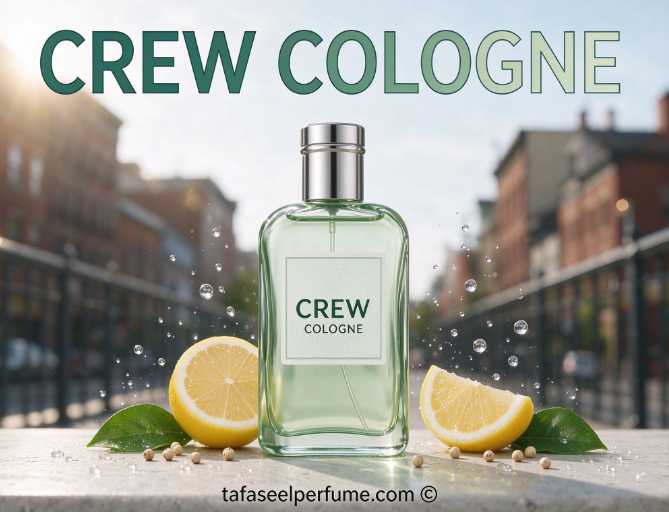
- Crew Cologne: The Complete Guide to American Crew, J.Crew Collaborations, and the Barbershop Aesthetic in a Bottle: Short Intro: “Crew cologne” is a phrase that pulls in two directions: the affordable, barbershop-inspired releases from American Crew, and the limited-edition J.Crew fragrance collaborations that brought niche perfumery to the high street. This guide separates the two, examines what each does well, and explains why these scents occupy a specific—and surprisingly durable—place in the modern men’s fragrance conversation.
Long Intro: The term crew cologne rarely refers to a single bottle. It is a search shaped by two overlapping stories. The first belongs to American Crew, the men’s grooming brand whose fragrances—most notably Classic Fragrance and Nine—became quiet staples for men who wanted a clean, familiar, barbershop-adjacent smell without paying designer prices. The second belongs to J.Crew, the American apparel label that, in 2013, commissioned Brooklyn niche house D.S. & Durga to create Homesteader’s Cologne, a small-batch scent inspired by California’s Big Sur coastline. One side of “crew cologne” is mass-market, functional, and aggressively easy to wear. The other is collaborative, narrative-driven, and limited in distribution. Both matter because they show how the same three syllables can mean accessibility to one shopper and insider taste to another. This guide treats both meanings seriously. It breaks down the notes, the performance, the cultural positioning, and the practical questions a buyer should ask before choosing a crew cologne—whether that bottle says American Crew or carries a D.S. & Durga label on a J.Crew shelf. Along the way, it connects the category to broader fragrance principles covered in the Perfume Articles and Reviews archive and the site’s Men’s Perfume collection, so the recommendations sit inside a larger map of masculine scent.
Table of Contents
1. American Crew Classic Fragrance: The Barbershop Baseline — What the original crew cologne gets right, and where it shows its age.
2. American Crew Nine: The “9 Out of 10” Experiment — Marketing hype, apple-citrus reality, and the art of the safe daily scent.
3. J.Crew × D.S. & Durga Homesteader’s Cologne: The Niche Crew Collaboration — How a fashion brand turned crew cologne into a limited-edition landscape.
4. The Barbershop DNA in Crew Cologne — Why lavender, citrus, and clean woods keep returning to the category.
5. Performance, Price, and the “Daily Workhorse” Question — Longevity, sillage, and whether a cheap crew cologne can compete.
6. Crew Cologne vs. the Designer and Niche Mainstream — Where these bottles fit beside louder, more expensive alternatives.
7. How to Choose a Crew Cologne for Your Rotation — A practical, use-case-first approach for office, weekend, and gift scenarios.
1. American Crew Classic Fragrance: The Barbershop Baseline
American Crew Classic Fragrance is the scent most people mean when they say “crew cologne” without a modifier. Its accord profile—aromatic, woody, citrus, fresh spicy, lavender, powdery, soft spicy—reads like a checklist for the traditional barbershop fragrance. The opening leans on citrus and lavender; the heart stays aromatic and clean; the base settles into soft woods and a powdery warmth that never becomes loud. In community ratings it sits around 3.93 out of 5, a score that reflects neither cult devotion nor dismissal but something more useful: steady, repeatable satisfaction.
The strength of Classic Fragrance is legibility. It does not ask the wearer to explain it. It smells like shaving cream, a fresh haircut, and a folded white towel. That is not a criticism. For many men, the entire appeal of crew cologne is that it removes decision fatigue from the morning. The weakness is equally clear: it can feel generic beside more textured modern releases. If your reference points are Tom Ford Costa Azzurra Cologne or a lemon-dominant citrus cologne, Classic Fragrance will read as polite rather than transporting. But that politeness is the point. It is a baseline: the crew cologne you keep on the shelf so you never have to think about what to wear.
2. American Crew Nine: The “9 Out of 10” Experiment
American Crew Nine arrived with one of the most openly cynical taglines in modern men’s fragrance: the box claimed the scent was “developed and tested to be liked by 9 out of 10 women”. The name, in other words, is not a batch number or a year—it is a marketing promise. That framing has made Nine a minor curiosity in fragrance communities, but the juice itself is more interesting than the gimmick suggests. Nine is a casual, people-pleasing, barbershop-adjacent scent with a distinct apple-and-citrus opening that reviewers often describe as smelling like a “woodsy and citrusy apple flavored barbershop fragrance”.
On skin, the opening runs through aldehyde, bitter orange, and grapefruit, then softens into a creamy lavender before drying down to rosemary, sage, and a distant sandalwood. The apple impression is not a literal listed note in every pyramid, but it is the dominant feeling—fresh, clean, slightly fruity, and inoffensive. Performance is the trade-off. Community reports put longevity in the three-to-six-hour range with moderate projection at best, and some wearers find the composition synthetic in the way mass-market fresh woods often are. Yet the price-to-pleasure ratio is strong. Nine is not trying to be niche. It is trying to be the crew cologne you can spray without a second thought, and for that job it works. If you want a broader frame for this kind of “safe but satisfying” scent, the site’s guide to skin-scent perfumes explains why low-projection fragrances are not automatically failures.
3. J.Crew × D.S. & Durga Homesteader’s Cologne: The Niche Crew Collaboration
In 2013, J.Crew did something that now looks ahead of its time: it commissioned D.S. & Durga, the Brooklyn niche house known for small-batch production, to make an exclusive cologne for its menswear customer. The result was Homesteader’s Cologne, a scent inspired by the Old Coast Trail in Big Sur and built around cypress, eucalyptus, dusty sagebrush, coastal woods, and sea kelp. It retailed for $98 for 50 ml and was sold both in J.Crew stores and online. In community ratings it holds a 4.48 out of 5—a strikingly high score for any fragrance, let alone a fashion-brand collaboration.
Homesteader’s Cologne is the opposite of American Crew Classic in almost every way. It is narrative-driven rather than functional. It smells like a place—fog, dry brush, eucalyptus bark, cold ocean air—rather than a grooming ritual. Its accord profile leans woody, aromatic, camphoraceous, herbal, and soft spicy, with a marine freshness that keeps the herbs from becoming medicinal. The limitation is availability. This was a limited collaboration from over a decade ago, and finding a bottle today requires the secondary market or a dedicated search. But as a piece of crew cologne history, it matters. It proved that a mall-adjacent brand could use the language of niche perfumery without alienating its core customer. For collectors who enjoy this kind of crossover, the Brands index and Perfume Ranking and Top Lists are useful places to track similar experiments.
4. The Barbershop DNA in Crew Cologne
Why does so much of the crew cologne category return to lavender, citrus, and clean woods? The answer is not mysterious. Barbershop DNA is the smell of functional grooming: shaving cream, talc, tonic, and the quiet discipline of a morning routine. American Crew built its brand on that ritual, and its fragrances extend the same logic to scent. Lavender provides the aromatic bridge; citrus supplies the “freshly washed” signal; soft woods and powder keep the drydown from turning sharp. The result is a fragrance family that reads as competent rather than charismatic—and for a large segment of wearers, competence is exactly what they want.
The broader fragrance world has repeatedly absorbed this barbershop language and pushed it in different directions. A woody-citrus composition can take the same lavender-citrus skeleton and give it niche depth. A Creed sample program lets a curious wearer test whether they prefer the barbershop version or the more polished designer interpretation. Crew cologne is not a closed loop. It is an entry point. The men who start with American Crew Classic often graduate to unisex fragrance or more textured women’s perfume as their nose develops. Understanding the barbershop DNA helps explain why that progression feels natural rather than abrupt.
5. Performance, Price, and the “Daily Workhorse” Question
The most common practical question about crew cologne is some version of: “Is it worth it?” The answer depends on what you are asking the bottle to do. If you want a signature scent that announces your arrival and lingers on a scarf for days, American Crew’s releases will likely disappoint. Nine’s longevity is moderate-to-short, and Classic Fragrance is designed to sit close. But if you want a daily workhorse—a scent you can spray after a shower, wear to the office, reapply at lunch, and never worry about overwhelming a colleague—the value proposition changes. These are not fragrances built for performance metrics. They are built for low-stakes repeatability.
That distinction matters in a market where “beast mode” projection is often treated as the default virtue. Crew cologne belongs to a different tradition: the grooming fragrance, where the goal is to smell finished rather than perfumed. If that is your goal, a $20–$40 American Crew bottle can do something a $300 niche extrait cannot: it can be used without ceremony. For wearers who want to explore higher-performance options without abandoning the barbershop sensibility, the Creed free-samples guide is a logical next step, and the Mini Size & Gift Sets category is useful for testing before committing to a full bottle.
6. Crew Cologne vs. the Designer and Niche Mainstream
Placed beside designer releases, crew cologne often loses on complexity and wins on clarity. A Tom Ford or Dior Elixir will offer more transitions, more texture, and more “perfumery” as an artistic statement. American Crew Classic and Nine are not trying to compete on that terrain. They are competing on cognitive load. The best crew cologne is the one you do not have to think about. That is not a failure of ambition; it is a design choice.
The J.Crew × D.S. & Durga collaboration complicates the hierarchy because it does compete on complexity while retaining the accessibility of a crew-adjacent brand. Homesteader’s Cologne proves that “crew” does not have to mean “simple.” It can mean curated: a fashion retailer using its platform to introduce customers to a smaller perfumer’s worldview. That model has since become common, but in 2013 it was still unusual enough to feel like an event. For wearers who enjoy that tension between accessibility and authorship, the Dsquared2 fragrance guide and the Perfume Gift Sets collection offer further examples of fashion-adjacent scent projects.
7. How to Choose a Crew Cologne for Your Rotation
Start with use case, not note pyramids. If you need a post-gym or post-shower scent that will not clash with deodorant or hair product, American Crew Classic is the safest entry. Its lavender-citrus-powder structure was literally designed to sit alongside grooming products. If you want something slightly more playful and fruit-forward for casual daytime wear, Nine’s apple-citrus opening is the better fit, provided you accept the shorter longevity and plan to reapply. If you are buying for a collector or niche-curious friend, the J.Crew × D.S. & Durga Homesteader’s Cologne is the meaningful choice—but only if you can verify authenticity and condition on the secondary market.
The deeper principle is that crew cologne is a category of intent, not a single brand. It describes fragrances that prioritize wearability, familiarity, and low friction. That intent can be executed cheaply (American Crew) or with craft (D.S. & Durga for J.Crew). Once you know which version of that intent you want, the choice becomes much simpler. For a broader rotation-building framework, the VIP Perfume 212 guide and the Fragrance Gels category show how different formats and price tiers can serve different moments in the same week. Crew cologne does not need to be the whole collection. It just needs to be the bottle you reach for when you do not want to decide.
Frequently Asked Questions About Crew Cologne
What exactly is “crew cologne”?
“Crew cologne” most often refers to fragrances from American Crew, particularly Classic Fragrance and Nine. It can also refer to the J.Crew × D.S. & Durga Homesteader’s Cologne collaboration from 2013. The common thread is a barbershop-adjacent, easy-to-wear aesthetic positioned between mass-market grooming and fashion retail.
Is American Crew cologne the same as J.Crew cologne?
No. American Crew is a men’s grooming brand with its own fragrance line, while J.Crew is an apparel retailer that partnered with the niche house D.S. & Durga for a limited-edition cologne. American Crew is widely available and budget-friendly; the J.Crew collaboration was a small-batch release priced at $98 for 50 ml and is now primarily a secondary-market item.
How long does American Crew Nine last on skin?
Community reports consistently place Nine’s longevity in the three-to-six-hour range, with moderate projection at best. It is a reapply-friendly scent rather than an all-day performer. If you need longer wear, carry a travel atomizer or layer with a matching grooming product.
Is crew cologne office-safe?
Yes, with the right expectations. American Crew Classic and Nine are both designed to sit close to the skin and avoid room-filling projection. They are low-risk office scents—the kind that register as “clean” rather than “fragrance.” The J.Crew × D.S. & Durga Homesteader’s Cologne is more aromatic and herbal, but still unlikely to offend in a typical workplace setting.
Can women wear crew cologne?
Absolutely. Fragrance has no gender, and the lavender-citrus-wood structure of most crew colognes is effectively unisex. Many wearers of all genders enjoy barbershop-style scents precisely because they feel clean and uncomplicated. If you enjoy unisex perfume, crew cologne is a useful reference point rather than a boundary.
Where can I still buy J.Crew Homesteader’s Cologne?
It is no longer a standard retail item. Released in 2013 as a limited collaboration, it now circulates through secondary-market platforms, fragrance swap communities, and occasional estate or collection sales. Buyers should verify bottle condition, batch code, and seller reputation before purchasing. For accessible alternatives with a similar woody-aromatic, outdoorsy character, explore the Jo Malone Bergamot and Oud guide or the Dsquared2 fragrance overview.
Is crew cologne a good gift?
It can be, but it depends on the recipient. American Crew Classic is a safe gift for someone who wants a no-fuss daily scent and already uses grooming products. Nine is a better fit for a younger or more casual wearer. The J.Crew × D.S. & Durga bottle is a collector’s gift—meaningful if the recipient knows the backstory, but risky if they prefer mainstream designer names. If you are unsure, a mini size or gift set is a lower-pressure way to introduce the category.


