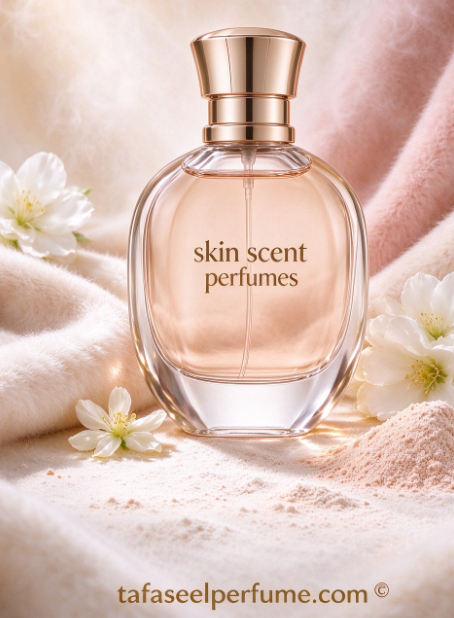
- Skin Scent Perfumes: The Art of Fragrance That Smells Like You and Nothing Else: Small Intro: Skin scent perfumes are the quietest, most intimate fragrances in the world — soft musks, warm woods, and second-skin accords that do not announce you, they simply belong to you. This guide explains what they are, how they work with your body chemistry, and how to find the one that becomes unmistakably yours.
Big Intro: For decades the fragrance industry chased volume. Big florals, louder gourmands, projection you could smell from across a room. But a quiet shift has been happening, and it comes from people who want to smell good without smelling like a perfume counter. Skin scent perfumes — sometimes called "your skin but better" fragrances — sit close to the body, blur the line between scent and skin, and rely on a small family of ingredients such as white musk, ambrette seed, cashmere wood, sandalwood, iris, and clean aldehydes. They are not weak fragrances; they are restrained ones, built on a different logic. Instead of telling a story across a room, they tell it within arm's reach. In this article we will explore the chemistry behind skin scents, the notes that define them, the best options for women and men, how to layer them, how to wear them in different seasons, and the mistakes that make people give up on them too early. Whether you are building a first fragrance wardrobe or curating a collection of soft signatures, this is your complete reference for skin scent perfumes.
What Exactly Are Skin Scent Perfumes? — A clear definition, and why "quiet" does not mean "weak".
The Chemistry: Why Skin Scents Smell Different on Everyone — Body temperature, pH, and the molecules that make a scent yours.
The Core Notes Behind a True Skin Scent — Musk, ambrette, cashmere wood, iris, and the ingredients that create the illusion of bare skin.
Skin Scent Perfumes for Women — Soft, radiant, close-wearing compositions for everyday elegance.
Skin Scent Perfumes for Men — Clean musks, warm woods, and understated confidence.
Unisex Skin Scents and Gender-Neutral Signatures — Why the softest fragrances are also the most shared.
How to Wear and Layer Skin Scents — Application, layering, and building a scent that stays personal.
Choosing Your First Skin Scent Perfume — A practical buying guide, from samples to full bottles.
What Exactly Are Skin Scent Perfumes?
A skin scent perfume is a fragrance designed to sit close to the body rather than project outward. Where a classic eau de parfum might fill a room, a skin scent lives in a bubble roughly the size of your personal space — noticeable when someone leans in, invisible from across the street. The effect is often described as "your skin but better": a soft, warm, slightly powdery or slightly salty aura that reads as natural rather than applied. This is achieved less through low concentration and more through ingredient selection. Skin scents lean on molecules with low volatility and low sillage — white musks, ambrette seed, cashmeran, sandalwood, iris, and soft woody ambers — which unfold slowly and cling to the skin instead of evaporating into the air. Interestingly, many skin scents are actually quite concentrated; they simply behave differently on the skin. They are also the fragrances most likely to smell different on two different people, because they have fewer loud top notes to mask body chemistry. If you enjoy the idea of a fragrance that feels like a personal signature rather than a statement, browsing a curated Unisex Perfume selection is often the fastest way to understand the style, since skin scents rarely belong to a single gender category.
The Chemistry: Why Skin Scents Smell Different on Everyone
The reason skin scent perfumes are so personal comes down to chemistry. Your skin has its own temperature, moisture level, pH, and sebum profile, and each of these influences how fragrance molecules evaporate. Warm, well-hydrated skin tends to push a fragrance upward and outward, giving brighter top notes and faster projection. Cooler or drier skin holds molecules longer, resulting in a slower, softer, more linear wear. Sebum — the natural oil on your skin — acts as a fixative, which is why skin scents often smell richer and more "yours" after a few hours than they do in the first ten minutes. The molecules themselves matter too. Large, heavy musk molecules bind to skin proteins and linger for hours with minimal diffusion. Aldehydes and light citrus, by contrast, evaporate quickly and create the sparkle that skin scents deliberately avoid. This is why a skin scent that smells powdery on one person can smell salty or woody on another, and why skin scent perfumes should always be tested on skin — never on paper alone. A paper strip tells you what the perfume is; your skin tells you what it becomes.
The Core Notes Behind a True Skin Scent
Almost every skin scent perfume is built from a small, recurring palette of materials. White musk is the foundation: soft, clean, slightly powdery, and famously transparent. Ambrette seed is the only natural plant musk and brings a warm, slightly floral, skin-like texture. Cashmere wood and cashmeran add a velvety, woody softness that feels like brushed fabric against the skin. Sandalwood contributes creaminess and a milky warmth, while iris provides a cool, powdered, almost cosmetic elegance. Clean aldehydes and light laundry musks create the "freshly showered" illusion, and a touch of vanilla or tonka can round the whole composition with gentle sweetness. What unites these notes is restraint: they rarely shout, and they are almost always used in high doses relative to the loud ingredients around them. If you want to study this style in depth, reading through a library of Perfume articles and reviews is a useful way to learn how reviewers describe musk, ambrette, and cashmeran in real compositions.
Skin Scent Perfumes for Women
For women, skin scent perfumes tend to fall into two broad moods: clean and radiant, or warm and powdery. The clean category uses white musk, cotton accords, light iris, and soft aldehydes to create the impression of freshly washed skin and sun-warmed linen — effortless, daytime, and extremely wearable in offices and warm climates. The warm category leans on ambrette, sandalwood, tonka, and a whisper of vanilla to create something more intimate and evening-appropriate, still close to the body but richer. What makes this family so appealing is versatility. A skin scent will not clash with your shampoo, your hand cream, or your laundry detergent, which makes it the easiest fragrance to wear daily without fatigue. When shopping, look for eau de parfum concentrations in soft compositions rather than looking for "light" fragrances — a well-made skin scent should last six to eight hours even if it never projects. Exploring a dedicated Women s Perfume category is a good starting point, but do not limit yourself: many of the best soft scents are classified as unisex.
Skin Scent Perfumes for Men
Skin scent perfumes for men have quietly become one of the most interesting corners of modern perfumery. Historically, men's fragrances were built around projection — aromatic fougères, sharp aquatics, and woody ambers that announced arrival. Skin scents flip that logic. They use clean musks, dry cedar, sandalwood, soft leather, and subtle mineral or salty accords to create something that reads as grooming rather than perfumery. The result is a fragrance that smells like clean skin, a fresh shave, and well-kept clothing — understated, confident, and completely non-obtrusive. They are especially effective in professional settings, in hot climates, and for anyone who finds traditional men's fragrance too loud or too sweet. Layering is also popular here: a skin scent applied first and a woody or aromatic fragrance applied lightly on top creates depth without extra volume. If you prefer this quieter register, a well-curated Men s Perfume section will show you how far the "soft" category has expanded in recent years.
Unisex Skin Scents and Gender-Neutral Signatures
Skin scent perfumes are, almost by definition, the most gender-neutral category in fragrance. Musk has no gender, ambrette has no gender, and sandalwood has no gender — these materials describe skin, warmth, and comfort rather than masculinity or femininity. That is why so many of the best skin scents are released without a gender label at all. They are shared in households, worn by anyone, and evaluated on how they sit on a specific person rather than on marketing. The practical benefit is flexibility: a gender-neutral skin scent can be worn to work, to a dinner, to bed, and in every season without ever feeling out of place. The aesthetic benefit is subtlety. Because the fragrance does not rely on recognizable gender signifiers — no heavy floral bouquet, no sharp aromatic barbershop accord — it feels more like an extension of the wearer and less like a costume. Building a small wardrobe of two or three neutral skin scents is one of the smartest approaches for anyone new to fragrance.
How to Wear and Layer Skin Scents
Wearing a skin scent is different from wearing a conventional perfume, and a few techniques make a significant difference. First, apply to well-moisturized skin — a fragrance applied to dry skin will fade faster and smell flatter, so use an unscented lotion first. Second, apply to pulse points and to warmer areas such as the chest, the back of the neck, and the inner elbows, where body heat helps the scent bloom gently. Third, do not rub. Friction breaks down molecules and shortens the wear. Fourth, spray lightly and from a greater distance than usual; skin scents work best as a fine veil rather than a concentrated dab. Layering is where skin scents truly shine. A soft musk base can be topped with a light floral, a woody scent, or a citrus cologne, creating something that feels custom-made. Many people also layer with a matching Fragrance Gels or a scented body product to extend longevity without adding intensity. Finally, be patient: skin scents often need twenty to thirty minutes to settle into their final form, and the drydown is usually the most beautiful part.
Choosing Your First Skin Scent Perfume
Choosing your first skin scent perfume is mostly a process of elimination, and it becomes much easier once you know what to look for. Start with samples rather than full bottles — order discovery sets, test two or three at a time, and wear each one for a full day before deciding. Test on skin, on the inside of the wrist and the chest, and evaluate at three moments: immediately after spraying, after thirty minutes, and after four hours. Note whether the scent becomes warmer, soapier, or woodier as it settles. Pay attention to how it interacts with your environment: does it survive a commute, a meeting, a workout? If you are buying a gift for someone else, an economical approach is to look at Mini Size & Gift Sets, which let recipients explore several soft fragrances before committing. If you want a longer-term investment, a well-presented Perfume Gift Sets with a matching body product often delivers better value than a single bottle. And before buying anything, check independent Ranking lists and reading community feedback on Brands you are considering — in the skin scent category, reputation for quality of musks and sandalwood matters far more than the size of the marketing budget. Choose the one that disappears into you, not the one you notice most.


