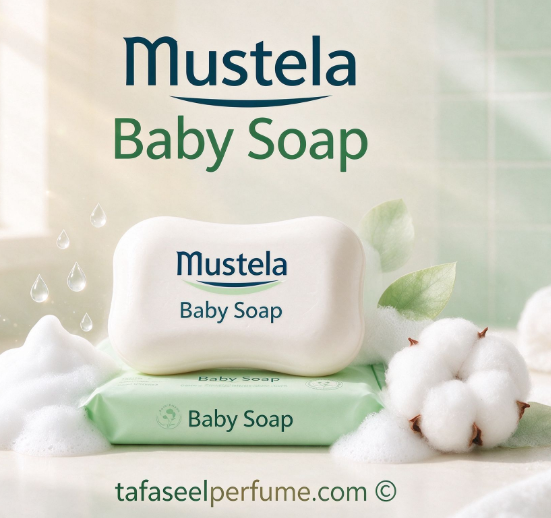
- Mustela Baby Soap: A Dermatologist-Informed Guide to the Gentle Cold Cream Bar: A baby’s skin is not simply smaller adult skin. It is thinner, loses moisture faster, and keeps developing its protective barrier well past the first year. That is the quiet logic behind Mustela baby soap — specifically the Gentle Soap with Cold Cream, a solid bar built for dry, delicate, and newborn skin. This guide walks through the formula, the Avocado Perseose science, the bathing method, the trade-offs, and the real-world scenarios where a bar outperforms a bottle.
Short introduction. Mustela’s Gentle Soap with Cold Cream is a 100-gram cleansing bar designed for babies and children with dry or sensitive skin, suitable from birth (including newborns out of the NICU). It combines cold cream, beeswax, ceramides, and Mustela’s patented Avocado Perseose to cleanse without stripping the skin’s moisture barrier. Unlike the brand’s liquid cleansing gels, this bar delivers a richer, creamier lather and a more nourishing after-feel — a deliberate choice for skin that flakes, tightens, or reacts after bath time.
Long introduction. Mustela has been formulating for infant skin since 1950, when Paul Berthomé and pharmacist Claude Guillon created the first dedicated baby cleansing milk. The Gentle Soap with Cold Cream belongs to the brand’s dry-skin line, positioned alongside the Nourishing Cleansing Gel but distinguished by its solid format and heavier lipid profile. The bar contains 97% ingredients of natural origin in some markets and 82% in others depending on the exact reference, with a formula free of parabens, phthalates, and phenoxyethanol. It is dermatologist- and pediatrician-tested, and the cold cream complex is designed to compensate for the drying effects of water — a meaningful detail because bathing, even with plain water, can disrupt the developing skin barrier. The bar format is not a marketing gimmick: it is travel-ready, plastic-light, and easy to control in one hand while the other hand holds a slippery newborn. But it also comes with trade-offs — fragrance, a higher per-gram cost than some drugstore bars, and a learning curve for parents used to pump dispensers. This article treats those trade-offs honestly, because a good baby soap is not the one with the longest ingredient story; it is the one that matches the skin in front of you. If you are also building a broader scent or skincare wardrobe for the family, the Children & Baby’s Perfume category and the Skin Care & Tools section offer context for how baby-safe formulas fit into a larger routine.
In this guide:
1. What Makes Mustela Baby Soap Different from a Liquid Wash
2. The Ingredient Story: Cold Cream, Beeswax, Ceramides, and Avocado Perseose
3. How to Use the Bar Without Over-Cleansing
4. Who It Suits — and Who Should Choose a Different Mustela Formula
5. Mustela Baby Soap vs. Other Baby Cleansers: An Honest Comparison
6. Travel, Storage, and the Practical Case for a Bar
1. What Makes Mustela Baby Soap Different from a Liquid Wash
The most immediate difference is format and lipid load. Mustela’s best-selling liquid cleanser, the Gentle Cleansing Gel, is a tear-free, soap-free wash designed for daily body-and-hair cleansing with a lighter after-feel. The Gentle Soap with Cold Cream is a true bar: you wet it, rub it between your hands to generate a creamy lather, and apply that lather to the face and body. That mechanical difference changes the cleansing experience. A bar tends to deposit more emollient residue on the skin because the formula is built around cold cream and beeswax rather than around a high-foam surfactant system. Parents who describe the bar as “soft” or “nourishing” are usually responding to that residue — a thin lipid film that remains after rinsing and helps the skin feel supple rather than squeaky.
The second difference is target skin type. The liquid Gentle Cleansing Gel is positioned for normal skin and daily newborn washing. The Cold Cream bar is explicitly aimed at dry, rough, or flaky skin and at skin that tightens after bathing. That does not mean the bar is “stronger” or “harsher.” It means the formula is richer. For a baby with normal skin who is bathed daily in a humid climate, the bar may be more lipid than the skin needs. For a baby in air-conditioned rooms, winter heating, or a dry climate — or for a baby whose skin already shows mild flaking on the limbs — the bar’s additional cold cream and ceramides are the point, not an extra.
The third difference is the role of Avocado Perseose. Both formats contain this patented ingredient, but the bar pairs it with a more occlusive base. Avocado Perseose is not a cleanser. It is a barrier-support active: a specific mix of sugars extracted from avocado that participates in the formation and maintenance of the skin barrier, supporting the production of key proteins and lipids that hold moisture in and keep irritants out. In a rinse-off product, that barrier support matters less than in a leave-on cream, but it still distinguishes the bar from a conventional soap that cleanses and leaves nothing behind. Mustela sources the avocado through a circular-economy supply chain that recovers fruit unsold or unfit for the food industry, and the ingredient is tested under dermatological and pediatric supervision across the range.
One more distinction deserves a plain sentence: the bar is not soap-free in the same way the gel is. The liquid Gentle Cleansing Gel is described by Mustela as a “mild soap-free gel”. The Gentle Soap with Cold Cream is a soap bar, built on a solid surfactant base that includes sodium palmate and other fatty-acid salts. That is not automatically a problem for baby skin — the formula is buffered with cold cream and tested for high skin and eye tolerance — but it is a real formulation difference, and parents who specifically want a soap-free cleanser should choose the gel, not the bar.
2. The Ingredient Story: Cold Cream, Beeswax, Ceramides, and Avocado Perseose
Cold cream is the signature of this bar. In the Mustela formula, cold cream functions as the nutri-protective core: it is the reason the bar can cleanse and nourish at the same time, and the reason the after-feel is creamy rather than tight. Cold cream is not a single ingredient but a traditional emulsion structure — historically a blend of water, oil, and wax — designed to melt on skin and leave a protective film. In a baby soap, that film is the buffer between the cleansing surfactants and the lipid barrier.
Beeswax (Cera Alba) appears alongside cold cream and contributes occlusivity without heaviness. It helps the bar hold its shape, but it also leaves a breathable layer on the skin surface that slows water loss after bathing. For a baby with dry skin, that post-bath window is critical: the skin is hydrated but vulnerable, and an occlusive residue helps seal in the water before it evaporates.
Ceramides — specifically ceramide NP in the ingredient list — are lipids that occur naturally in the skin barrier. In a rinse-off bar, ceramides are not expected to rebuild the barrier the way a leave-on cream would, but they contribute to the lipid replenishment of the formula and signal that the bar is formulated around barrier care rather than around fragrance or foam. Parents who have used the bar on dry patches often describe the skin as feeling “cared for” rather than simply “clean,” and the ceramide-plus-cold-cream combination is the most plausible explanation.
Avocado Perseose is the patented active that ties the bar to Mustela’s broader research. It is a mix of sugars concentrated from avocado, and it acts on baby skin in a way that mirrors how those compounds support the fruit during development: it participates in the formation and maintenance of the skin barrier from birth. The clinical logic is not that the ingredient “repairs” damaged skin, but that it supports the barrier functions the skin is already trying to build — a distinction that matters for newborns, whose barrier properties resemble adult skin only around age two. If you want to understand how barrier-support ingredients fit into a wider baby-safe fragrance and skincare picture, the Clinique Bloom guide offers a useful parallel in how a single active can anchor an entire product philosophy.
What the bar does not contain is equally part of the story: no parabens, no phthalates, no phenoxyethanol. That “0%” list is a baseline expectation for a premium baby product in 2026, not a differentiator on its own. The differentiator is the combination — a solid format, a cold-cream base, ceramides, and a patented barrier active — held together in a bar that is genuinely pleasant to use one-handed.
3. How to Use the Bar Without Over-Cleansing
The bar rewards a slightly different method than a pump bottle. The correct sequence is: wet the bar, rub it between your palms to create a lather, then apply the lather — not the bar itself — to the baby’s face and body. Rubbing the bar directly on the skin is not necessary and can deposit more product than needed, especially on the face. Use your hands, not a washcloth, unless you are cleaning a specific area with residue; a soft washcloth is acceptable for the body, but the face and diaper area do better with fingers and a gentle rinse.
Temperature and timing matter more than most parents expect. Mustela’s own bath guidance for dry and atopic-prone skin recommends a short bath — around five to ten minutes — at a water temperature between 35°C and 37°C (95°F to 98.6°F). Hotter water strips lipids faster, and longer baths increase water loss even with a nourishing bar. The bar is not a license to extend bath time; it is a way to make a short bath less drying.
Rinse thoroughly, especially in skin folds and behind the ears. A creamy bar can leave residue if the rinse is rushed, and residue in a fold is an invitation to irritation. After rinsing, pat — do not rub — the skin dry, leaving it slightly damp before applying a moisturizer or emollient. The bar supports the barrier during cleansing; the leave-on product is what carries that support through the next twenty-four hours. If the baby’s skin is very dry, the bar is a cleansing step, not a replacement for a dedicated emollient.
For frequency: daily use is acceptable from birth, but not every baby needs a full-body soap wash every day. In cooler climates or for babies with very dry skin, a two-to-three-times-per-week full-body wash with the bar, supplemented by water-only rinses on other days, is often enough. The face, neck folds, and diaper area can be cleaned daily with a small amount of lather. The goal is not sterility; it is removing sweat, saliva, and residue without removing the lipids the skin is still learning to produce. The lightweight layering ritual piece on this site makes a related point about how repeated small applications can be gentler than one heavy application — the same principle applies to baby cleansing.
4. Who It Suits — and Who Should Choose a Different Mustela Formula
The bar suits three groups especially well. First, babies with visibly dry or rough skin — the kind that feels papery on the shins or shows faint flaking after a bath. The cold cream and beeswax are formulated for exactly that presentation. Second, newborns out of the NICU and babies with a family history of dry skin or mild reactivity: the bar is tested for high skin and eye tolerance and is suitable from birth, and the lipid load is protective rather than stripping. Third, parents who want a single cleansing bar for face and body and are willing to trade the convenience of a pump for the control and compactness of a solid.
The bar is not the best first choice for three other groups. First, babies with normal skin in humid climates who are bathed daily: the Gentle Cleansing Gel is lighter and less likely to leave a residue that a normal-skin baby does not need. Second, babies with diagnosed eczema or very reactive skin: the bar contains fragrance and fragrance allergens (limonene, linalool), which are common triggers for barrier-compromised skin. Mustela’s Stelatopia line — fragrance-free and specifically formulated for eczema-prone skin — is the more appropriate choice for that skin profile. Third, parents who specifically want a soap-free cleanser: the bar is a soap, and the liquid Gentle Cleansing Gel is the soap-free option in the same brand family.
The distinction between “dry skin” and “eczema-prone skin” is the single most important triage point here. Dry skin is under-moisturized and responds well to a richer cleanser plus a leave-on emollient. Eczema-prone skin is inflamed and barrier-compromised, and it needs fragrance-free, minimalist formulas plus medical management if the skin is red, weeping, or cracked. The Cold Cream bar is a dry-skin tool, not an eczema treatment. If you are unsure which profile fits your baby, the piece on how a single fragrance name can hide a family of formulas is a useful reminder that “baby soap” is not one thing either — the label matters more than the category.
5. Mustela Baby Soap vs. Other Baby Cleansers: An Honest Comparison
Against Mustela’s own Gentle Cleansing Gel: the gel wins on convenience, on soap-free formulation, and on value per milliliter for daily full-body washing. The bar wins on lipid richness, on post-bath softness for dry skin, and on portability. A household with one dry-skin baby and one normal-skin baby may reasonably own both: the bar for the dry-skin baby’s body, the gel for the normal-skin baby and for hair. The bar is not a universal upgrade; it is a targeted tool.
Against mass-market baby bars: the meaningful differences are the cold-cream base, the ceramide inclusion, the patented Avocado Perseose, and the “0% paraben/phthalate/phenoxyethanol” declaration. Mass-market bars often rely on a simpler tallow or palm-based soap base with fragrance and a single emollient. The Mustela bar is not 100% natural — the 82% to 97% natural-origin range varies by reference, and the remaining percentage is selected for tolerability, not for naturalness. But the formulation logic is more deliberate: it is built around barrier support, not around cost-per-bar alone.
Against “100% natural” bars: a fully natural bar can still be drying if the surfactant base is harsh, and “natural” fragrance allergens (limonene, linalool) can be just as irritating as synthetic ones. The Mustela bar’s advantage is clinical testing and a predictable formula, not a naturalness contest. Parents who prioritize a short, entirely plant-derived ingredient list may prefer a different product; parents who prioritize a reproducible, pediatrician-tested bar with a known lipid profile will find this one easier to trust. The comparison study of Nenuco, Weleda, and Mustela reached a similar conclusion: Mustela is the balanced option — not the most natural, but well-formulated for daily use with high cutaneous tolerance.
Against liquid baby washes with pumps: the bar’s practical advantage is dose control. A pump delivers a fixed volume whether you need it or not; a bar delivers exactly the lather you generate. For a parent washing a newborn’s face and body in under three minutes, that control reduces waste and reduces the chance of over-cleansing. The trade-off is storage: a bar left in a puddle will soften and disappear faster. A draining soap dish is not optional if you want the bar to last. If you are assembling a changing-table or diaper-bag kit, the Mini Size & Gift Sets category is a sensible place to look for compact formats that pair well with a solid cleanser.
6. Travel, Storage, and the Practical Case for a Bar
The bar’s travel case is stronger than it first appears. A 100-gram bar is not the lightest option, but it is the leak-proof option. There is no pump to crack, no flip-cap to pop open in a diaper bag, and no liquid to count against a carry-on allowance. For families who spend weekends between two homes, or who travel with a baby and do not want to decant a full bottle into a travel-size container, the bar removes a category of failure. Mustela also offers a 75-gram solid shampoo-and-body cleansing bar in a different formula — fragrance-free, plastic-free, and explicitly positioned for travel — which is worth knowing if the Cold Cream bar’s fragrance is a concern.
Storage discipline is the price of the format. The bar should be kept in a draining soap dish or a ventilated travel case, away from standing water, and allowed to dry between uses. A bar that stays wet develops a soft, wasteful outer layer and can harbor more microbial load than a dry bar. If you use a washcloth, wring it thoroughly and let it dry completely; a damp washcloth stored with the bar undoes the bar’s hygiene advantage. The bar should also be kept out of direct sunlight and away from heat, which can soften the cold cream and shorten its life.
The practical case in one sentence: the Mustela Gentle Soap with Cold Cream is the right bar when the baby’s skin needs more lipid support than a liquid wash provides, and when the parent values dose control and leak-proof portability enough to accept the storage ritual. It is not the right bar for every baby, every climate, or every skin type — and that is precisely why reading the skin in front of you matters more than reading the ingredient list alone. For a wider view of how baby-safe formulas sit alongside other family skincare categories, the Spa & Fragrance section and the fresh floral guide show how gentleness and fragrance can coexist when the formula is built with tolerance in mind.
Frequently Asked Questions About Mustela Baby Soap
Is Mustela Baby Soap safe for newborns?
Yes — the Gentle Soap with Cold Cream is formulated to be suitable from birth, including for newborns out of the NICU, and is tested under dermatological and pediatric supervision. “Safe from birth” does not mean “necessary for every newborn every day”; a short, lukewarm bath with a small amount of lather is the appropriate use. If the baby’s skin is intact and not unusually dry, a soap-free liquid cleanser may be sufficient.
Does Mustela Baby Soap contain fragrance, and does that matter for sensitive skin?
Yes, the Cold Cream bar contains fragrance, and the formula includes the fragrance allergens limonene and linalool. For a baby with normal or mildly dry skin and no history of reactivity, this is generally well tolerated — the bar is tested for high skin tolerance. For a baby with diagnosed eczema or very reactive skin, fragrance is a common trigger, and a fragrance-free formula from the Stelatopia line is the more appropriate choice. Patch-testing a small area first is reasonable if you are unsure.
What is the difference between Mustela Baby Soap and Mustela Gentle Cleansing Gel?
The bar is a soap with a cold-cream, beeswax, and ceramide base, positioned for dry skin and delivering a richer, more nourishing after-feel. The Gentle Cleansing Gel is a soap-free liquid designed for daily body-and-hair washing on normal skin, with a lighter residue and the convenience of a pump. The bar is not a stronger version of the gel; it is a different lipid profile for a different skin need.
Can Mustela Baby Soap be used on the face and hair?
The Cold Cream bar is labeled for face and body use. It is not formulated as a shampoo, and the cold-cream residue can weigh down fine baby hair. For hair, the Gentle Cleansing Gel or the dedicated 2-in-1 hair-and-body wash is the better fit. If you use the bar on the face, keep the lather light and rinse thoroughly around the eyes and mouth.
Why does the bar sometimes look soft or develop a white film?
Cold cream and beeswax make the bar softer than a conventional tallow soap, and a white film can appear when the bar is stored in a damp soap dish or exposed to humidity. This is a storage issue, not a spoilage issue in most cases. Keep the bar in a draining dish, let it dry between uses, and store it away from direct water spray. A soft outer layer can be rinsed off; the bar underneath is still usable. If the bar develops an off-odor or visible mold, discard it.


