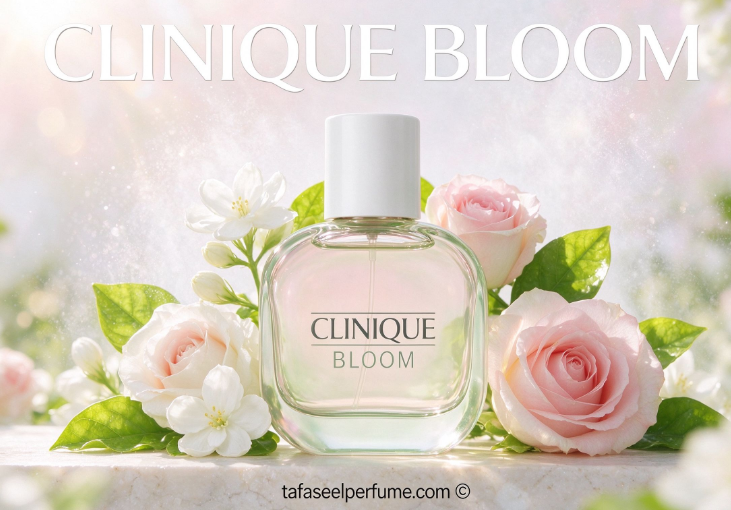
- Clinique Bloom: The Complete Guide to Spring in a Bottle, Floral Philosophy, and the Art of Feeling Happy: A bright floral that doesn’t try too hard. If you have been searching for a fragrance that feels like a frosted spring morning—clean, optimistic, and quietly feminine—then Clinique Bloom deserves a place on your vanity. This is not a perfume that shouts. It is the scent of dew on flower petals, the first warm breeze after a gray winter, and the kind of everyday luxury that makes ordinary moments feel lighter.
A bright floral that doesn’t try too hard. If you have been searching for a fragrance that feels like a frosted spring morning—clean, optimistic, and quietly feminine—then Clinique Bloom deserves a place on your vanity. This is not a perfume that shouts. It is the scent of dew on flower petals, the first warm breeze after a gray winter, and the kind of everyday luxury that makes ordinary moments feel lighter. In this guide, we will unpack the notes, the character, the comparisons, and the practical details behind Clinique’s most beloved limited-edition floral, so you can decide whether this “spring in a bottle” belongs in your collection.
Clinique has always understood that fragrance is emotional before it is technical. Since Clinique Happy launched in 1997, the house has built an entire philosophy around the idea that scent should spark joy, not announce status. Clinique Bloom—formally known as Clinique Happy in Bloom—extends that philosophy into floral territory. Where the original Happy leans citrus-bright and sparkling, Bloom takes the same feel-good DNA and softens it into a bouquet of yellow plum, freesia, muguet (lily of the valley), mimosa, amber, and white wood. The result is a fragrance that feels personal, approachable, and almost skin-like in its warmth, yet distinctly floral in its heart. It is the kind of scent that works for the office, for a weekend brunch, for a spring wedding, or for the simple ritual of getting dressed on a day when you want to feel quietly put together. Whether you are exploring the world of women’s perfume for the first time or you are a seasoned collector looking for a soft floral to rotate into your daily wear, Bloom offers a gentle entry point into the Clinique Happy universe without asking you to commit to a loud signature. In the sections that follow, we will move from the first spray to the dry-down, from comparisons with its siblings to the practical questions of longevity and gifting, so that by the end you will know exactly where Clinique Bloom fits into your life—or whether it is time to pass it by.
In this guide:
1. What Is Clinique Bloom? The Origin and Identity of “Spring in a Bottle”
2. The Note Pyramid: Yellow Plum, Freesia, Muguet, and the Soft Amber Base
3. Clinique Bloom vs. Clinique Happy: Same DNA, Different Mood
4. How It Wears: Longevity, Sillage, and the “Clean Floral” Effect
5. Who Should Wear Clinique Bloom? Age, Season, and Occasion
6. Layering and Gifting: How to Make Bloom Feel Personal
7. The Collector’s Angle: Limited Editions and the Changing Bottle
8. Practical Buying Guide: Sizes, Prices, and Where to Look
1. What Is Clinique Bloom? The Origin and Identity of “Spring in a Bottle”
Clinique Bloom is the floral reinterpretation of the Clinique Happy DNA, released as a limited-edition seasonal fragrance that has returned in various iterations over the years. The name itself tells the story: “Bloom” signals freshness, renewal, and the visual spectacle of flowers opening, while the Clinique Happy lineage guarantees that the scent will carry a certain crispness and lift rather than heaviness or syrup. Clinique’s own language around the fragrance is deliberately poetic but precise: a “bright floral scent with crisp top notes and a heart of muguet and freesia, mingled with amber and white wood”. Elsewhere, the brand describes it as “spring in a bottle”—fresh and uplifting like a frosted spring morning, infused with the aura of dew-laden flowers. That imagery is not marketing fluff; it is a fairly accurate preview of how Bloom smells. The opening is watery-green and slightly fruity, the heart is a transparent white floral bouquet, and the base is a whisper of amber and soft wood that keeps everything from feeling thin. Unlike the original Happy, which can read as citrus-forward and energetic, Bloom is more floral, more rounded, and more intimate. It sits closer to the skin and feels less like a statement and more like a personal atmosphere. This is a fragrance for people who want to smell clean, feminine, and approachable without entering the room as a scent cloud. It is also a fragrance that has inspired a loyal following: reviewers describe wearing it for nine to fifteen years, and one long-term user notes that although the bottle design has changed, the scent itself remains consistent and “now evokes very happy feelings”. That kind of emotional longevity is rare in the perfume world, and it speaks to the quiet power of a fragrance that does not chase trends. If you enjoy reading about fragrances with a strong sense of identity, you may also appreciate the kind of storytelling found in our perfume articles and reviews, where scent is always connected to memory, mood, and the rituals of daily life.
2. The Note Pyramid: Yellow Plum, Freesia, Muguet, and the Soft Amber Base
The architecture of Clinique Bloom is deceptively simple. On paper, the note list looks like a textbook spring floral: top notes of yellow plum, watery green notes, and frozen fruit accents; a heart of muguet (lily of the valley), freesia, and mimosa; and a base of transparent amber and white wood. What makes Bloom work is not the novelty of the ingredients but the balance and transparency with which they are blended. The opening is the most “fruity” moment of the fragrance, but the fruit is never syrupy or gourmand. Yellow plum provides a soft, slightly tart sweetness, while watery green notes give the top a dewy, almost air-conditioned freshness—like the smell of cut stems in a florist’s cooler. As the top notes settle, the heart reveals itself as a clean, luminous white floral accord. Muguet brings its characteristic cool, slightly soapy greenness; freesia adds a peppery, airy floral sweetness; and mimosa contributes a powdery, sunny softness that keeps the composition from feeling stark. This is the part of Bloom that reviewers describe as “sweet, citrusy, but with very pretty and not overpowering floral notes”—a balance that avoids both the “teen body spray” trap and the “grandmother’s bathroom” cliché. The dry-down is where Bloom becomes truly wearable for long stretches: amber warms the florals without turning them resinous, and white wood gives the base a subtle structure, like the clean scent of a wooden dresser drawer. The overall effect is soft, fresh, and slightly powdery, with a faint aquatic lift that makes it especially pleasant in warm weather. If you are building a wardrobe of unisex perfume and shared fragrances, Bloom can function as a bridge: it is feminine without being precious, and its clean floral character makes it easy to layer with woody or citrus scents. The note pyramid is not trying to tell an epic story; it is trying to make you feel like the window is open and the garden is in bloom. That is a modest goal, and Bloom achieves it with unusual grace.
3. Clinique Bloom vs. Clinique Happy: Same DNA, Different Mood
Understanding Clinique Bloom requires understanding what it is not. The original Clinique Happy is a citrus-floral explosion: ruby red grapefruit, bergamot, spring mimosa, and Hawaiian wedding flower create a sparkling, extroverted brightness that practically announces itself. Bloom, by contrast, is the introvert of the family. It shares the mimosa and the general “feel-good” DNA, but it trades the citrus spotlight for a yellow plum and watery-green opening and pushes the florals—muguet and freesia—to center stage. Fragrance reviewers frequently draw this distinction: Happy is more citrus, Happy Heart leans citrus-floral, and Happy in Bloom is a “true, full-fledged floral”. The practical consequence is that Bloom feels quieter and more skin-close than the original Happy. It is less likely to fill a room and more likely to be noticed only when someone leans in. For some wearers, this is a virtue: Bloom is the fragrance you choose when you want to smell lovely without being the center of attention. For others, it can read as too subtle, especially if they are accustomed to the projection of the original Happy. Reviewers sometimes note that Bloom “seems to diminish a little faster than the Happy original”, and community ratings for sillage and longevity on older limited editions have been mixed, with some describing it as “sits close to the skin” and “briefly lasting”. That does not mean Bloom is a weak fragrance; it means its personality is intimate rather than expansive. If you love the idea of Clinique Happy but find the original too sharp or too citrus-heavy, Bloom is the natural alternative. If you already own Happy and want a softer floral companion for spring and early summer, Bloom fills that role without redundancy. And if you are exploring the broader Clinique Happy family, which includes Happy in Paradise (a solar, beachy limited edition), Happy Heart (a richer floral with mandarin and sandalwood), and the men’s cologne, Bloom occupies a specific niche: the clean, dewy floral that feels like a deep breath. To explore how different fragrance families shape mood and occasion, our guide to perfume gift sets can help you think about scent as part of a larger ritual rather than a single product.
4. How It Wears: Longevity, Sillage, and the “Clean Floral” Effect
Clinique Bloom is an Eau de Parfum, but its performance is closer to a generous Eau de Toilette in spirit. The concentration suggests staying power, and many wearers report that it lasts through a workday—roughly six to eight hours on skin, depending on climate and body chemistry. Others find that it fades sooner, especially in hot, humid conditions or on dry skin. The variable performance is part of Bloom’s character: it is not a fragrance that insists on being noticed. Sillage is soft to moderate; Bloom creates a personal aura rather than a room-filling trail. On the skin, it blooms in the first hour, settles into a clean floral hum for several hours, and then retreats into a faint amber-woody whisper. This trajectory makes it ideal for situations where strong projection would be inappropriate: offices, medical settings, close conversations, and daytime events. It is also a fragrance that rewards layering and reapplication. A travel spray or rollerball in a bag makes it easy to refresh the scent at midday without overwhelming the people around you. The “clean floral” effect is one of Bloom’s most commented-upon qualities. Reviewers describe it as “light and fresh without being too flowery” and “clean, light, refreshing”, which is high praise for anyone who wants to smell polished but not perfumed. That cleanliness comes from the watery-green top notes and the muguet-freesia heart; there is no heavy musk or vanilla to muddy the composition. For wearers who struggle with white florals that turn indolic or soapy on the skin, Bloom’s transparency is a relief. It feels modern and well-groomed rather than vintage or formal. If your skin tends to amplify sweetness, you may find that the yellow plum reads more prominent; if your skin runs dry or cool, the floral heart may take longer to emerge. In either case, Bloom is forgiving: it does not require a dramatic entrance to be effective. And for those who like to extend a fragrance’s life through matching body products, the broader world of spa and fragrance layering offers useful possibilities—an unscented lotion or a light floral body oil can anchor Bloom and make its soft dry-down last longer.
5. Who Should Wear Clinique Bloom? Age, Season, and Occasion
One of the most appealing things about Clinique Bloom is its demographic flexibility. It is often described as a fragrance that works across age groups because it avoids the two extremes that make florals polarizing: it is neither aggressively sweet nor aggressively “mature.” A reviewer in her late twenties and early thirties notes that Bloom is “not so sweet that it gives off youthful teen vibes, and not too florally to be considered a ‘mature’ scent”. That middle ground makes it a rare everyday floral that can move from a college classroom to a first job to a weekend brunch without feeling out of place. Seasonally, Bloom is at its best in spring and early summer, when its dewy greenness and white florals align with the weather and the mood of renewal. It is also pleasant in early autumn, when the amber base feels slightly warmer against cooling air. In deep winter, it can read as a bit thin, though layering with a woody or amber-forward fragrance can give it more body. For occasions, Bloom is a natural choice for daytime wear, casual Fridays, garden parties, outdoor weddings, and travel. It is not a “statement” evening fragrance, but it can serve as a comforting skin scent for bedtime or a quiet dinner at home. The fragrance also has a strong emotional use case: because it is associated with spring, lightness, and feeling happy, it can function as a mood-lift on gray days or during stressful periods. Many long-term wearers describe it as a “go-to daily fragrance” and a scent that “evokes very happy feelings”—a reminder that fragrance is not only about impression management but also about self-regulation and pleasure. If you are shopping for someone else and are unsure of their taste, Bloom is a relatively safe choice because it is clean, familiar, and unlikely to offend. For more ideas on building a fragrance wardrobe around different moods and moments, the perfume ranking and top lists section can help you compare Bloom to other soft florals and citrus fragrances.
6. Layering and Gifting: How to Make Bloom Feel Personal
Clinique Bloom is already a complete fragrance, but its transparent structure makes it unusually friendly to layering. Because it lacks a heavy musk or resinous base, it can serve as a floral top layer over woodier or warmer foundations. A single spray of Bloom over a cedar or sandalwood body oil can give the fragrance more depth and longevity without changing its character. Layering with a citrus cologne can push Bloom in a brighter, more summery direction; layering with a soft amber or vanilla can make it cozier for evening. The key is to apply the heavier fragrance first and let it settle before adding Bloom, so that the florals remain the star. Gifting is another area where Bloom performs well. Because it is associated with Clinique Happy, a fragrance with decades of brand recognition, it carries a sense of reliability that makes it a thoughtful present for birthdays, Mother’s Day, graduations, and housewarmings. It is also a common “first perfume” for young adults because it is not overpowering and does not rely on trends. If you are considering a gift set that includes a full bottle and a travel spray, or a mini size for someone who prefers to test before committing, the mini size and gift sets collection offers practical options. One caveat: because Bloom has been released in limited-edition batches, the exact bottle design and availability can vary from year to year. If you are buying for a collector or a long-time fan, it is worth confirming the batch year and packaging before purchasing. Some wearers are loyal to a specific year’s formulation, while others find that the core scent remains consistent across releases. In either case, a gift of Bloom is a gift of optimism in olfactory form—a small daily reminder that spring is always somewhere within reach.
7. The Collector’s Angle: Limited Editions and the Changing Bottle
Clinique Bloom is not a permanent fixture on every shelf, and that scarcity is part of its charm. Since its early releases in the 2000s, Happy in Bloom has appeared as a seasonal limited edition, often timed to spring. That means the bottle, the packaging, and sometimes the precise balance of notes have shifted across different years. Collectors and long-term wearers have noticed these variations: one reviewer who has worn Bloom for fifteen years notes that “the bottle has changed over the years but the scent is the same”, while other fragrance community entries catalog different editions—2006, 2008, 2011, 2012, 2015, 2017—with slightly different note emphases and performance ratings. For most wearers, these differences are minor; the core identity of dewy white florals, yellow plum, and soft amber remains recognizable. For collectors, however, the limited-edition nature adds a layer of interest. Older bottles may be harder to find, and sealed examples can become small objects of desire for people who associate a particular spring with a particular batch. This is not a fragrance that invites obsessive vintage hunting in the way that discontinued Guerlains or early Diors might, but it does reward attention to batch codes and packaging details if you want a specific version. The broader lesson is that Clinique Bloom is a fragrance of moments: it was designed to capture a season, and its limited availability reinforces that ephemeral quality. If you find a bottle that smells right to you, it is worth enjoying it rather than saving it for a special occasion. Scents, like seasons, are meant to be lived in. For those who enjoy the intersection of fragrance and beauty rituals, the beauty tips and guides section explores how scent fits into skincare, makeup, and the daily routines that make a person feel like themselves.
8. Practical Buying Guide: Sizes, Prices, and Where to Look
Clinique Bloom is most commonly available in 30 ml and 50 ml Eau de Parfum sprays, though larger sizes and travel formats have appeared in different markets. Pricing varies significantly by region and retailer. Clinique’s own Canadian site has listed the 50 ml spray at CA $103, while European pricing for the 30 ml has been cited around €33–€46, and 50 ml around €46. In the United States and Asia, street prices for the 50 ml have ranged from roughly US $70 to over $100, depending on the seller and whether the bottle is a current or older limited edition. Because Bloom is not always part of the permanent lineup, availability can be intermittent. It is worth checking department stores, official Clinique counters, and reputable online fragrance retailers rather than relying on a single source. When buying from secondary markets, pay attention to batch codes, sealed packaging, and seller reviews, especially if you are seeking a specific year’s edition. For a broader sense of how brands position limited editions and seasonal releases, the perfume brands directory can help you contextualize Clinique within the larger fragrance landscape. If you are new to the fragrance, a rollerball or mini spray is often the smartest first purchase: it allows you to test Bloom against your skin chemistry across several wears before committing to a full bottle. And if you are buying as a gift, a gift set that includes a full bottle and a travel format offers the best of both worlds—generosity for the recipient and practicality for daily use. Ultimately, the value of Clinique Bloom is not in its price tag but in its wearability: a fragrance that makes you feel clean, bright, and quietly happy is worth more than a shelf of bottles you never reach for.
Frequently Asked Questions About Clinique Bloom
Is Clinique Bloom the same as Clinique Happy?
No. Clinique Bloom—formally Clinique Happy in Bloom—is a floral flanker to the original Clinique Happy. The original Happy is more citrus-forward and sparkling, with prominent grapefruit and bergamot. Bloom shifts the focus to yellow plum, freesia, muguet, and a soft amber-woody base, creating a quieter, more intimate floral experience. They share the same “feel-good” DNA, but Bloom is the softer, more floral sibling.
How long does Clinique Bloom last on the skin?
Performance varies by skin type and climate, but many wearers report six to eight hours of noticeable scent, with the first few hours being the most vibrant. Some reviewers find that it sits close to the skin and fades sooner, especially in heat or on dry skin. It is best understood as an intimate fragrance rather than a long-lasting projection monster. Reapplication with a travel spray is easy and common.
Is Clinique Bloom suitable for everyday wear?
Yes. Bloom is specifically designed to be clean, fresh, and approachable, which makes it an excellent daily fragrance for work, school, errands, and casual social occasions. It is not overpowering, so it is unlikely to overwhelm colleagues or friends. Many long-term users describe it as a “go-to daily scent” for spring and summer.
Does Clinique Bloom smell like flowers or fruit?
It is primarily a floral fragrance with a soft fruity opening. The first spray reveals yellow plum and watery green notes, which give a brief juicy freshness. The heart is dominated by white florals—muguet, freesia, and mimosa—and the base is a gentle amber and white wood whisper. The overall impression is dewy flowers rather than a fruit basket, with a clean, slightly powdery finish.
Is Clinique Bloom a limited edition?
Yes, Happy in Bloom has historically been released as a limited-edition seasonal fragrance, often in spring. Availability can vary from year to year, and the bottle design has changed across different releases. If you find a bottle you love, it is worth buying while it is available rather than assuming it will remain in permanent production.
Can I layer Clinique Bloom with other fragrances?
Absolutely. Bloom’s transparent floral structure makes it a good layering partner. It works well over woody, amber, or musk-based body oils, and it can be brightened with a citrus cologne or warmed with a vanilla or sandalwood scent. Apply the heavier fragrance first, let it settle, and then add Bloom as the floral top layer.
What is the best size to buy first?
If you are new to Bloom, start with a 30 ml bottle, a rollerball, or a mini travel spray. This allows you to test how the fragrance develops on your skin across several wears without committing to a large bottle. If you already know and love it, the 50 ml is the most common full-size option and offers a reasonable balance of value and portability.


