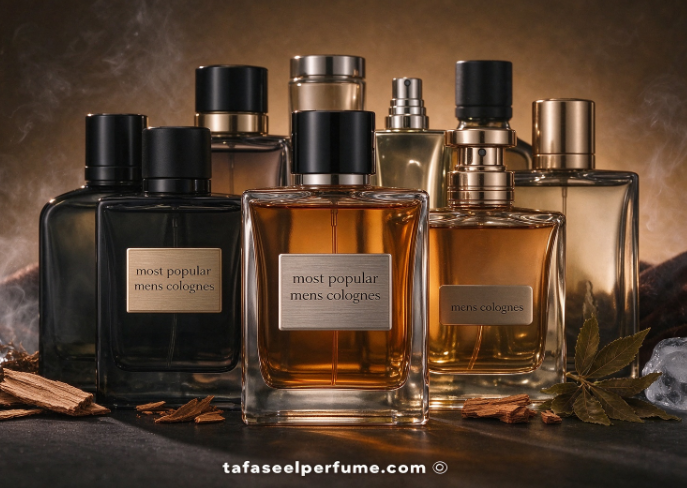
- Most Popular Men’s Cologne in 2025: 8 Scents That Earn Their Place, and Why They Still Work: “Most popular” is a slippery phrase in fragrance. It can mean the bottle a teenager saves for, the one a partner quietly steals, or the blue-flacon default that survives every reformulation cycle. This guide cuts through the noise by focusing on men’s colognes that are genuinely worn, repurchased, and recommended — not just launched loudly. The common thread is not novelty.
“Most popular” is a slippery phrase in fragrance. It can mean the bottle a teenager saves for, the one a partner quietly steals, or the blue-flacon default that survives every reformulation cycle. This guide cuts through the noise by focusing on men’s colognes that are genuinely worn, repurchased, and recommended — not just launched loudly. The common thread is not novelty. It is wearability with presence: scents that project enough to be noticed, settle enough to be lived with, and carry enough identity to justify a second bottle.
Big Introduction: What “Popular” Actually Means in Men’s Cologne
Popularity in men’s fragrance is a three-way negotiation between retail volume, critical attention, and repeat wear. A cologne can dominate a department-store shelf and still be dismissed by enthusiasts; another can be a niche darling and never cross into mainstream rotation. The scents that endure usually land in the overlap. Dior Sauvage, for example, has been one of the best-selling men’s fragrances in the world since its 2015 launch, and its success is not purely marketing: it combines Calabrian bergamot with vanilla, lavender, pepper, and vetiver in a way that is sweet without being cloying and fresh without going tart. That balance explains why it works across offices, dates, and climates where more aggressive compositions collapse.
The same principle applies to the “blue” category. Men’s Perfume shelves are crowded with fresh-woody releases, but Bleu de Chanel endures because it opens crisp and citrusy and dries into a smooth, woody, slightly sweet base that reads clean rather than loud. Reviewers consistently describe it as elegant, versatile, and long-lasting — a fragrance that does not demand attention but earns compliments anyway. Meanwhile, Creed Aventus represents a different kind of popularity: aspirational, batch-sensitive, and endlessly discussed. Its fruity-smoky profile — bergamot, apple, pineapple, and a smoky-woody backbone — made it a status object, even as batch variations and performance inconsistencies became part of its mythology.
What follows is not a “top 1 to 8” ranking. It is a map of eight popular men’s colognes across price, style, and purpose, with enough detail to help you decide which kind of popular you actually want to wear.
Quick Navigation: 8 Popular Men’s Colognes at a Glance
1. Dior Sauvage Eau de Parfum — The Modern Default with Teeth
2. Bleu de Chanel Eau de Parfum — The Blue Standard
3. Creed Aventus — The Aspirational Icon
4. Paco Rabanne 1 Million EDT — The Crowd-Pleaser That Started a Wave
5. Versace Eros EDT — Mint, Vanilla, and Maximalist Appeal
6. Giorgio Armani Acqua di Gio EDT — The Aquatic Benchmark
7. Yves Saint Laurent Y Eau de Parfum — The Compliment Engine
8. Calvin Klein Euphoria Men — The Underrated Fresh-Spicy Sleeper
1. Dior Sauvage Eau de Parfum — The Modern Default with Teeth
Sauvage is the fragrance that non-fragrance people recognize and fragrance people argue about. That is a useful definition of popular. The Eau de Parfum concentration softens some of the EDT’s sharper edges while keeping the bergamot-lavender-pepper opening and the ambroxan-vanilla-cedar base that made the line a global best-seller. The result is a scent that reads fresh, clean, and quietly assertive rather than experimental. It is easy to wear in most situations, which is exactly why it became Dior’s most popular men’s fragrance.
What separates Sauvage from generic “fresh” releases is the ambroxan-driven drydown. Ambroxan gives a skin-like warmth and radiance that makes the fragrance feel present without smelling like a traditional heavy oriental. The vanilla adds a soft sweetness, the lavender keeps it grounded, and the pepper prevents it from becoming a smoothie. For buyers who want one bottle that works for work, weekends, and evenings without thinking, Sauvage EDP remains the safest high-volume choice in the category. It is not subtle, but it is controlled. If you want to explore adjacent designer profiles, the Armani fragrance house guide is a useful next stop for understanding the wearable-Italian lane.
2. Bleu de Chanel Eau de Parfum — The Blue Standard
Bleu de Chanel is the reference point for a reason. It is not the loudest “blue” fragrance, and it is not the most experimental. It is the one that most consistently lands in the “elegant, clean, long-lasting, not overpowering” zone that a huge range of men actually want. The EDP opens with a crisp citrus-grapefruit freshness and dries into a woody, incense-tinged, slightly musky base that feels polished rather than perfumed. Reviewers repeatedly describe it as a signature scent that works for the office and date night without adjustment.
The popularity of Bleu is built on reliability. Its projection is present but not invasive; its sweetness is restrained; its woods are smooth rather than scratchy. Some wearers report that longevity varies on skin — five hours of strong projection before it becomes a skin scent is a common experience — but even that criticism tends to arrive with a caveat: “still worth it for the quality.” In a market full of blue fragrances that try too hard, Bleu’s restraint is its advantage. It is also a natural gateway to understanding how Chanel structures a men’s line; the fragrance-house guide provides useful context for how house style shapes wearability.
3. Creed Aventus — The Aspirational Icon
Aventus is popular in a different register: desire plus scarcity. The combination of bergamot, apple, pineapple, and a smoky-woody base created a template that dozens of houses have imitated, but the original retains a status that imitations cannot fully replicate. It is the fragrance that made “fruity-smoky” a luxury category and turned batch codes into a collector language. For many buyers, Aventus is not a daily driver but a signal — a bottle that says you know the reference point.
The caveat is that Aventus is also the most batch-sensitive fragrance on this list. Experienced wearers report meaningful variation in performance and smokiness across production years, with some batches delivering only four to six hours of longevity and others performing closer to the 2016–2017 standard. The latest F-batch codes have been described as an improvement, but the variation remains part of the product’s reality. That does not make Aventus a bad buy; it makes it a buy that rewards verification. If you want the Aventus idea without the batch anxiety, Versace’s fragrance range and the broader perfume brands directory offer alternative routes into the same fruity-woody conversation.
4. Paco Rabanne 1 Million EDT — The Crowd-Pleaser That Started a Wave
1 Million is a cultural artifact as much as a fragrance. Launched in 2008, its gold-bar bottle and sweet-spicy profile helped normalize a louder, sweeter, more extroverted style of men’s cologne. The opening is a burst of blood mandarin and peppermint; the heart brings rose absolute and cinnamon bark; the base settles into tonka bean, amberketal, and a leathery warmth. It is fresh at the start and spicy-sweet at the finish, with a bubblegum-adjacent sweetness that made it massively popular with younger wearers and polarizing among traditionalists.
As a “most popular” case study, 1 Million matters because it demonstrates the power of recognizability. It is not subtle, and its longevity is generally described as okay rather than exceptional, but it is instantly legible: people know what you are wearing. That is an advantage in social settings and a limitation in intimate or formal ones. For buyers who want the sweet-spicy idea with a more modern polish, the 1 Million deep-dive is a useful companion read; for a more leather-forward Italian alternative, Ferragamo’s men’s line is a quieter lane.
5. Versace Eros EDT — Mint, Vanilla, and Maximalist Appeal
Versace Eros is the fragrance that proves freshness and excess can coexist. The opening is a vivid, almost electric combination of mint, Italian lemon, and green apple; the heart moves into geranium and tonka bean; the base lands on vanilla, vetiver, oakmoss, and cedar. It is sweet, aromatic, and unapologetically masculine in a way that reads as confident rather than refined. That profile made it a social-media and search-volume favorite, especially among younger men who want a fragrance with immediate impact.
Eros is popular because it is easy to enjoy loudly. The mint-vanilla contrast is unusual enough to be memorable and familiar enough to be broadly likable. It performs well in cool weather and evening settings, where the sweetness feels enveloping rather than cloying. The trade-off is versatility: Eros is not a quiet office scent, and it is not trying to be. If you want a fresh-aromatic fragrance with the same kind of presence but a more restrained finish, the L’Eau d’Issey Pour Homme guide explores a cleaner, more minimalist alternative.
6. Giorgio Armani Acqua di Gio EDT — The Aquatic Benchmark
Acqua di Gio is the fragrance that defined the modern aquatic for a generation. Its citrus-marine opening — bergamot, lemon, lime, jasmine, and sea notes — is clean without being sterile, and its base of white musk, amber, cedar, and oakmoss gives it a soft, skin-close finish. It is popular not because it is trendy but because it is inherently easy to wear: fresh, unobtrusive, and broadly acceptable across ages and settings. For many men, it was the first “grown-up” cologne that did not feel like a costume.
The limitation of Acqua di Gio is the same as its strength: it is so familiar that it can feel invisible. That is less of a problem for a first signature scent or a summer daily driver than for a collection builder looking for distinction. Its popularity also makes it a useful benchmark: once you understand the aquatic-citrus template, you can better evaluate newer fresh releases. The guide to attractive perfumes offers a useful contrast in how “approachable” is constructed across gender lines.
7. Yves Saint Laurent Y Eau de Parfum — The Compliment Engine
Y EDP is the modern crowd-pleaser done with a bit more structure than the category average. The opening combines bergamot, ginger, and an apple accord; the heart brings sage, geranium, and juniper; the base settles into cedarwood, vetiver, and tonka bean. The result is fresh, slightly sweet, woody, and socially calibrated — the kind of fragrance that gets described as “not overpowering” and “long-lasting” in the same review, which is a rarer combination than it sounds.
Y EDP is popular because it solves a specific problem: it is interesting enough to feel intentional and safe enough to wear anywhere. It does not have the bubblegum loudness of 1 Million or the minty excess of Eros, and it does not rely on the aquatic nostalgia of Acqua di Gio. Instead, it sits in a fresh-woody middle ground that works in offices, classrooms, dates, and family gatherings. If you are building a small rotation, Y EDP is a strong “second bottle” after a blue default; the YSL guide for her is a useful parallel for understanding the house’s broader style.
8. Calvin Klein Euphoria Men — The Underrated Fresh-Spicy Sleeper
Euphoria Men is not the loudest fragrance on this list, and that is precisely why it belongs here. Its popularity is quieter but durable: a fresh-spicy fougère built around ginger, pepper, raindrop accord, black basil, cedar leaf, suede, patchouli, and amber. The opening is bright and slightly peppery; the heart is aromatic and green; the base is soft, suede-like, and subtly sweet. It reads clean and modern without smelling like every other blue release on the shelf.
Euphoria Men’s advantage is wearability without ubiquity. It is not as instantly recognizable as Sauvage or Bleu, which means it can function as a personal signature rather than a shared uniform. Its longevity is moderate rather than beast-mode, so it suits daytime and close-quarters settings where a little restraint is welcome. For buyers who want a fresh-spicy profile with more texture than a standard aquatic, Euphoria is a smart value pick. The Calvin Klein Euphoria guide covers the variants and buying considerations in more depth.
Frequently Asked Questions About Most Popular Men’s Colognes
What is the single most popular men’s cologne right now?
By a combination of global sales, search volume, and everyday visibility, Dior Sauvage remains the most consistently cited answer. It has been one of the best-selling men’s fragrances worldwide since its launch, and its bergamot-ambroxan-vanilla structure gives it broad appeal across ages and occasions. That said, “most popular” depends on the measure: Bleu de Chanel is the blue standard, Creed Aventus is the aspirational icon, and 1 Million is the recognizability champion.
Is popularity a good reason to buy a cologne?
Popularity is a useful risk-reduction signal, not a guarantee of personal fit. A best-seller usually has proven wearability, broad compliment potential, and sufficient testing across skin types and climates. But popular fragrances are also designed to appeal widely, which can make them feel less distinctive. The practical approach is to treat popularity as a shortlist filter, then test on skin for at least a few hours before committing to a full bottle.
Why do so many popular men’s colognes smell similar?
Because the commercial sweet spot is narrow. The most popular men’s releases cluster around fresh-woody, aromatic-fougère, and sweet-spicy profiles because those families perform well in blind tests and broad-market wear. Ambroxan, bergamot, lavender, vanilla, cedar, and tonka bean appear repeatedly for a reason: they are legible, likable, and relatively easy to wear. Distinctiveness usually comes from how those materials are balanced, not from the presence of an entirely new note.
How long should a popular men’s cologne last?
Expect four to eight hours of noticeable wear from most designer Eau de Parfums, with EDTs often landing at the lower end. Bleu de Chanel EDP is frequently described as lasting up to ten hours on some skin, while Aventus batch variation can range from four to six hours to near the brand’s older standard depending on the production run. Skin chemistry, application points, and climate matter as much as concentration. Two to three sprays on pulse points is usually enough for a popular designer scent; more does not necessarily improve performance and can reduce wearability.
Which popular men’s cologne is the safest blind buy?
If “safest” means least likely to offend and easiest to wear across contexts, Bleu de Chanel EDP and Y EDP are the strongest candidates. Bleu is the cleaner, more citrus-woody option; Y is the slightly sweeter, more aromatic-social option. Dior Sauvage is equally popular but more assertive, and 1 Million or Eros are better suited to buyers who already know they enjoy loud, sweet profiles. No blind buy is truly risk-free, but these two minimize the gap between “popular” and “personally wearable.”


