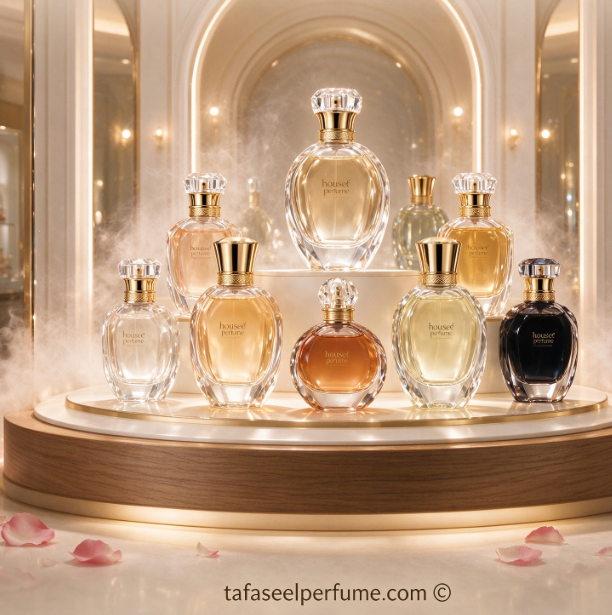
- House of Perfume: The Complete Guide to Fragrance Houses, Iconic Scents, and Finding Your Signature Scent: A house of perfume is far more than a label printed on a bottle. It is a creative philosophy, a set of raw materials, a signature style of blending, and a promise about how a scent will behave on skin after the first spray has faded.
Understanding what a house of perfume actually is changes the way you shop. Instead of chasing single bottles that happen to smell pleasant in the store, you start to recognize patterns: the houses that love powdery iris, the ones that lean on oud and amber, the ones that build fresh aquatic accords for hot climates, and the ones that treat gourmand sweetness as a form of art. This guide walks through the idea of a fragrance house from every useful angle, from the vocabulary of designer versus niche and Arabian perfumery, through the departments and categories a modern house organizes itself around, to the practical business of testing, gifting, and building a small collection that actually gets worn. Along the way we point to concrete examples — real bottles, real reviews, real comparisons — so that the abstract idea of a house of perfume becomes something you can smell, compare, and decide on with confidence.
1. What “House of Perfume” Really Means
A plain-language definition of the term, and why the word “house” carries more weight than “brand” in perfumery.
2. How a Fragrance House Builds Its Signature DNA
Perfumers, raw material sourcing, and the recurring accords that make a house instantly recognizable.
3. Women’s, Men’s, Unisex: Reading the Departments of a House
How modern houses divide their catalogues, and why those divisions are looser than they look.
4. Iconic Releases That Define a House
The handful of bottles that become the reference point for everything else a house makes.
5. Designer, Niche, and Arabian Houses Compared
Three broad families of perfumery, their economics, their audiences, and their trade-offs.
6. Building a Perfume Wardrobe Inside One House
How to pick a small, coherent rotation instead of accumulating bottles you never finish.
7. Gifting, Sampling, and the Smart Way to Buy
Sizes, sets, discounts, and the testing routine that prevents expensive mistakes.
8. Trends Shaping the Modern House of Perfume
The shifts in taste — gourmands, aquatics, oud for everyone — that houses are currently answering.
1. What “House of Perfume” Really Means
In perfumery, a house is the creative and commercial entity responsible for a fragrance: it commissions the brief, hires or retains perfumers, owns the formula, controls quality across batches, and markets the finished product. The word “house” is borrowed from fashion, where it signals a lasting institution rather than a one-off product line. That distinction matters. A brand can slap a name on a bottle made by a third-party filler; a house, in the traditional sense, has a point of view that survives across dozens of releases and sometimes across decades.
A house of perfume typically owns four things. First, a style — the recognizable way it handles citrus, woods, florals, or sweetness. Second, a palette — the suppliers and materials it prefers, whether that means Grasse-grown jasmine or a particular grade of Laotian oud. Third, a range — the tiers it sells at, from budget daily-wear bottles to expensive extraits. Fourth, a reputation — the accumulated verdict of reviewers and repeat buyers. When people talk about buying “from a good house,” they usually mean that these four things line up consistently. You can see this institutional thinking at work across whole catalogues, such as the Italian luxury lineup explored in this Versace Perfume: A Complete Guide to Bold Italian Luxury Fragrance, or when you browse the wider Perfume Brands index to compare how different houses position themselves.
For a shopper, the practical takeaway is simple. Once you find a house whose style suits your skin and climate, your hit rate goes up dramatically. You are no longer sampling random bottles; you are sampling within a design language you already understand.
2. How a Fragrance House Builds Its Signature DNA
Signature DNA is not marketing fiction. It comes from a small number of repeatable decisions. The first is perfumer relationships: some houses work with a single in-house nose for years, which produces a consistent hand; others rotate independent perfumers around a strict internal brief. The second is material sourcing, which shapes the whole character of the output. A house that buys large volumes of synthetic sandalwood substitutes will build a smoother, creamier register than one that insists on natural sandalwood oil, which is earthier and far more variable.
The third decision is the accord library — the recurring combinations a house returns to. You can hear this clearly in Arabian and Gulf-influenced houses, where saffron, rose, amber, and oud keep reappearing in different proportions. A useful comparison is a spicy-woody amber that makes sandalwood the star, as described in Ajmal Amber Santal: The Spicy-Woody Amber That Turns Sandalwood into a Signature, set beside a very different take on the same region’s traditions in Bahar The Spirit of Dubai: The Aquatic-Oud Paradox That Redefines Arabian Freshness, which deliberately pushes oud into fresh, watery territory. Same materials family, opposite design instincts — and that is exactly what DNA means.
Fourth comes concentration discipline. A house that dilutes aggressively to keep prices low will smell thin in the opening and collapse in the base; a house that over-concentrates can turn cloying. Consistency across eau de toilette, eau de parfum, and extrait tiers is one of the quiet markers of a well-run house of perfume.
3. Women’s, Men’s, Unisex: Reading the Departments of a House
Most houses still organize their catalogue into gendered departments, but the walls have thinned considerably over the last twenty years. The Women’s Perfume department remains the historic home of floral, powdery, and gourmand compositions, while Men’s Perfume skews toward aromatic fougères, woods, and barbershop accords. What has changed is that Unisex Perfume is no longer a niche corner — it is where a great deal of the interesting work happens, because it frees a perfumer from gendered expectations about sweetness, florals, or power.
The honest way to shop departments is to treat them as signposts, not rules. A man who enjoys iris and soft powder will find more to love in the women’s aisle than in the aquatic section, and a woman who wants dry cedar and incense will often find it under the men’s heading. Fragrance does not read gender on skin; it reads skin chemistry, temperature, and dose.
A modern house also extends well beyond fine fragrance. Many operate body-care and lifestyle departments that share the same DNA — deodorant and antiperspirant built around a house accord, fragrance gels for layering, spa and home scenting, and even dedicated Children & Baby’s Perfume lines formulated at much lower intensity. There are also Deodorant & Antiperspirant and Spa & Fragrance ranges for people who want the house signature without a full spray. Knowing these departments exist helps you build a coherent scent story rather than a single bottle.
4. Iconic Releases That Define a House
Every established house has a small number of releases that function as reference points — the bottle people name when they explain the house to a beginner. These are rarely the most expensive or the most experimental; they are usually the ones that hit a balance so well that later releases get measured against them. A clean-fresh fougère from the early 1990s can still serve as the template for an entire masculine wardrobe, which is roughly the story told in Calvin Klein Eternity for Men: The 1990 Barbershop Classic That Still Smells Like a Clean Button-Down. Decades later, that barbershop cleanliness is still the yardstick.
Other houses define themselves through a single bold gesture. A candied jasmine, peach, and amber composition can rewrite a house’s entire evening code, as argued in Burberry Black Fragrance: The Candied Jasmine, Peach, and Amber Parfum That Rewrote the House’s Evening Code. Meanwhile, a powdery iris that quietly refuses to be discontinued becomes a cult anchor for a softer, more romantic house identity, which is the arc traced in Chloé Love — The Powdery Iris That Refused to Disappear.
For shoppers, iconic releases are useful precisely because they are low-risk entry points. If you want to know whether a house suits you, start with the bottle that has survived thirty years of reformulation and still sells. It is not automatically your favourite, but it tells you what the house considers correct.
5. Designer, Niche, and Arabian Houses Compared
The three broad families of perfumery behave very differently, and knowing which one you are dealing with sets your expectations correctly. Designer houses are attached to fashion labels. They have large distribution, heavy marketing, and often excellent value at discounters. Their strength is polish and wearability; their weakness is that formulas are frequently reformulated to hit price points. Niche houses sell in smaller volumes at higher prices, which lets them use more expensive materials and take stranger creative risks. Arabian and Gulf houses sit in between in price but often lead in material culture, working oud, saffron, rose, and amber with a fluency that Western designers often imitate.
The niche-versus-designer gap is not always as wide as the price gap suggests. Some surprisingly cheap bottles deliver oud-adjacent depth, as examined in Black Is Black Modern Oud: The Sub-$20 Oud That Divides Reviewers, Rewards the Patient, and Asks a Hard Question About What Modern Really Means, while a sunny Mediterranean citrus from a well-known niche name shows the other extreme of craft and restraint in Soleil de Capri by Montale: A Radiant Mediterranean Citrus Hymn in a Bottle.
Then there is the gourmand problem: richness is easy to promise and hard to control. A fragrance that pushes vanilla, spice, and sweetness to the edge can be either a triumph or a headache, which is precisely the tension dissected in Tom Noir Extreme: The Decadent, Divisive Gourmand That Demands a Second Spray. Read those three together and you have a compact education in the economics and aesthetics of the three houses of perfume.
6. Building a Perfume Wardrobe Inside One House
A wardrobe, not a collection, is the right mental model. Most people need four or five fragrances that cover recurring situations: work, evening, hot weather, cold weather, and something for occasions. Buying all five from one house is a legitimate strategy, because the house DNA guarantees they will not clash and layering becomes easy. The trick is to pick contrast within a family rather than five near-duplicates.
Concretely, a fresh daily scent might be a bright, sweet-fruity masculine that stays wearable in heat, along the lines of Blueberry Perfume for Men: A Complete Guide to Sweet, Fresh, and Surprisingly Bold Fragrance. A green, barbershop-leaning option covers office and warm-weather formality, as in Banana Republic Grassland Cologne for Men: A Complete Guide to the Modern Green Barbershop Scent. And a deliberately modest, unpretentious designer bottle handles the gym run and the errand day, which is essentially the pitch for Beverly Hills Polo Club Ignite: A Fragrance That Does Not Try to Be Everything to Everyone.
Once those three exist, add depth: an amber-woody for evening, a floral or iris for variety, and one oud or incense for the colder months. Rotate deliberately, store away from light and heat, and finish bottles before buying more. A tidy wardrobe of six that all get worn beats a shelf of twenty that never leave the box.
7. Gifting, Sampling, and the Smart Way to Buy
Gifting a fragrance is a chemistry problem disguised as a shopping problem. The reliable solution is to buy small and multiple rather than large and single. Perfume Gift Sets and Mini Size & Gift Sets let the recipient try several directions, and they remove the risk that a full bottle of the wrong scent becomes an obligation on a shelf. Sets also tend to carry better per-millilitre value when they include a travel spray.
Discounts deserve a clear eye. A sale is only a bargain if the batch is current and the seller is legitimate; otherwise you are paying for a reformulated version of the fragrance you read about. The mechanics of that trade-off, including what a markdown actually buys you in terms of concentration and packaging, are laid out in Ariana Grande Cloud Perfume on Sale: What the Discount Actually Gets You.
Sampling is the habit that saves the most money. Order decants or small bottles, wear each one for a full day on your own skin, and judge it in the drydown rather than the opening. Two or three wears in real conditions — office, commute, evening — will tell you more than any number of in-store sprays, and it is the single practice that separates a satisfied wardrobe from an expensive mistake.
8. Trends Shaping the Modern House of Perfume
The clearest current trend is the mainstreaming of gourmand and mood-driven sweetness. What was once a niche joke is now a whole aesthetic, and some houses have built entire parallel universes around it rather than a single bottle. That is the argument made in Ariana Grande’s Pink Perfume Line Is Not One Fragrance but a Small Universe of Mood-Driven Gourmands and Soft Florals — a useful model for how a modern house extends a single idea across many releases.
The second trend is the rehabilitation of the affordable classic. Quiet, well-mannered bottles that were dismissed as dated are being rediscovered by buyers tired of loud, over-marketed launches. A curious modern example is a white floral that has settled into an odd but durable position in the contemporary landscape, discussed in 360 White by Perry Ellis for Women Is a Fragrance That Occupies a Curious Space in the Modern Perfume Landscape.
The third trend is naming and narrative itself. Houses increasingly sell a story as much as a formula, and some releases succeed precisely because their name refuses to be ordinary, as argued in Monalisa Perfume: The Many Faces Behind a Name That Refuses to Smell Ordinary. Whether that is good or bad for perfumery is debatable, but it is undeniably how the modern house of perfume competes for attention.
Frequently Asked Questions About the House of Perfume
What exactly is a “house of perfume”?
A house of perfume is the company that conceives, formulates, manufactures, and markets a fragrance line. Unlike a simple brand licence, a house typically maintains a consistent style, a preferred palette of materials, and a recognizable point of view across many releases, sometimes for decades. When people say a scent is “from a good house,” they usually mean that this consistency has earned trust.
Is it better to buy all your fragrances from one house?
Not necessarily better, but often easier. Staying within one house guarantees that your bottles will layer sensibly and share a general aesthetic, which simplifies building a wardrobe. The risk is monotony, so the rule is contrast within the family: choose a fresh one, a green or aromatic one, a warm amber or oud, and a floral or gourmand for variety. If the house simply does not cover one of those categories well, buy that single piece elsewhere.
How do designer, niche, and Arabian houses differ in practice?
Designer houses offer polish and wide availability at competitive prices, but formulas are often revised to meet cost targets. Niche houses charge more and can afford rarer materials and riskier ideas, though price is not a guarantee of quality. Arabian and Gulf houses specialize in oud, saffron, rose, and amber, and often deliver remarkable depth at mid-range prices. The best approach is to judge each bottle on its own merits rather than assuming a tier predicts performance.
How many sprays should I use from a house of perfume bottle?
Start with two or three sprays: one on each side of the neck or on the chest, and one on clothing if the fabric tolerates it. High-concentration extraits and oud-based compositions often need only one or two. Hot, humid climates amplify projection, so reduce the dose rather than the quality; cold weather does the opposite and may allow an extra spray. Adjust based on how the scent behaves in your specific environment, not on general rules.
Why does the same fragrance smell different on different people?
Skin chemistry, body temperature, pH, and even diet influence how fragrance molecules evaporate and combine. Dry skin tends to hold top notes briefly and release base notes more slowly; oilier skin can project differently. Climate matters too — heat pushes projection while humidity can flatten certain accords. This is why sampling on your own skin for a full day is far more informative than judging from a paper strip or a brief in-store spray.
How should I store fragrances from a house of perfume?
Keep bottles upright, away from direct sunlight, and out of hot bathrooms. Temperature swings and light accelerate the breakdown of citrus top notes and can turn some compositions sour. The original box helps, but a dark drawer or cupboard is usually enough. Refrigerating fragrance is unnecessary and can introduce condensation; a stable, cool, dark shelf is the ideal.
Are expensive houses always worth the money?
No. Price reflects material cost, marketing, packaging, distribution, and brand positioning — not only quality. Plenty of affordable bottles outperform far more expensive ones on longevity and character, while some luxury releases rely on reputation rather than formula. Compare concentration, note pyramid, and how the fragrance develops on your skin, and let a few full-day wears decide rather than the price tag or the label.
What is the smartest way to start exploring a house I have never tried?
Begin with that house’s most iconic or longest-running release, because it shows you the house’s idea of “correct.” Then order decants or mini sizes of two or three contrasting releases in different families — one fresh, one warm, one floral or gourmand. Wear each for a full day, take notes on the drydown, and only then consider a full bottle. Gift sets and discovery sizes make this process cheap, and they prevent the most common beginner mistake: buying a large bottle of something you have only smelled once.


