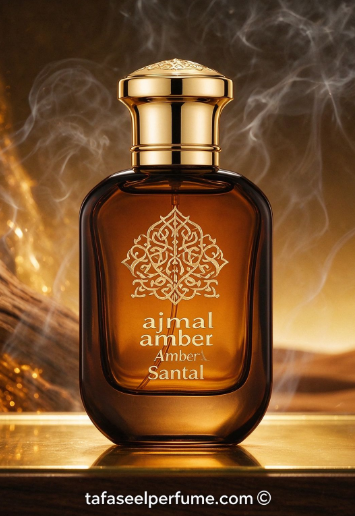
- Smart Title: Ajmal Amber Santal: The Spicy-Woody Amber That Turns Sandalwood Into a Signature: Small Intro: Ajmal Amber Santal is a unisex Eau de Parfum from Dubai that builds its entire identity around two pillars: creamy sandalwood and resinous amber, wrapped in a sharp spice opening. It is not a loud fragrance, but it is a persistent one — and for anyone who wants warmth without sweetness, it deserves a serious look.
Big Intro: Most amber fragrances lean sweet. Most sandalwood fragrances lean quiet. Ajmal Amber Santal does something more interesting: it puts a dry, peppered spice opening over a sandalwood-incense heart, then lets the amber arrive late and slow, like a room warming up after sunset. Launched as part of Ajmal’s A-Series, it sits firmly in the woody-oriental family — the same territory occupied by far more expensive niche releases — yet it carries the unmistakable “Arab flare” that Fragrantica users consistently associate with the house. The result is a fragrance that feels grounded rather than glamorous, spiritual rather than sweet, and remarkably easy to wear for something with this much resin in its base. If you have been curious about Middle Eastern perfumery but are not ready for a full oud assault, Amber Santal is a measured, confident entry point.
1. The Note Pyramid: Spice First, Sandalwood Second, Amber Last
The opening of Ajmal Amber Santal is not polite. Black pepper and nutmeg arrive with a dry, almost dusty heat, while cypress adds a green, slightly resinous freshness that keeps the spice from feeling heavy. This is the part of the fragrance that divides people: some reviewers describe the opening as “subtle and smooth,” while others find the spice sharp enough to need a few minutes to settle. Give it that time. The heart is where the fragrance finds its character — incense and cedarwood create a smoky, grounded middle that one Parfumo reviewer compared to the atmosphere of a church, with frankincense stepping forward and dry sandalwood close behind. The base is the reason most people buy it. Sandalwood returns in a creamier, warmer form, patchouli adds an earthy shadow, and amber arrives as a soft, resinous glow rather than a syrupy sweetness. The official Ajmal description calls it “warm, grounded, and easy to wear,” and that is accurate — the amber does not shout, it holds.
The key insight: Amber Santal is not an amber-dominant fragrance in the opening. It is a sandalwood-and-incense fragrance that resolves into amber. If you want an immediate amber rush, this will feel slow. If you want a drydown that stays close to the skin for hours, it will feel deliberate.
2. Longevity and Sillage: A Fragrance That Stays, With One Caveat
Performance is where Amber Santal generates the most disagreement among wearers. Ajmal’s official product page lists longevity of “up to 10 hours on skin” and sillage as “moderate to strong,” which is a fair middle estimate. Some users report far longer wear — one retailer listing claims 10 to 20 hours on skin and clothing — while a smaller but vocal group of Amazon reviewers insists the scent fades within thirty minutes on their skin. The most plausible explanation is skin chemistry and batch variation: parfumo’s detailed review rates longevity at 8 out of 10 and describes projection as “strong without being overpowering,” which aligns with the majority of long-form assessments. If you are someone whose skin eats amber and sandalwood bases, test before committing to a full bottle. If your skin holds resinous notes well, expect a full workday of wear from two to three sprays.
3. Unisex, but Not Neutral: Who Amber Santal Actually Suits
Ajmal markets Amber Santal as unisex, and in the technical sense it is: the spice opening is neither floral nor barbershop, the sandalwood heart is shared territory, and the amber base does not tilt feminine with vanilla or masculine with leather. But “unisex” does not mean “universal.” Fragrantica users describe it as “unisex leaning masculine,” and that is a useful calibration. The incense-and-cedar middle gives it a contemplative, slightly austere quality that many men find easy to wear; the creamy sandalwood drydown softens it enough that women who enjoy woody ambers — think unisex perfume without the sweetness — will also find it comfortable. It is least suited to wearers who want a bright, fresh, or floral signature. This is a cold-weather, evening-leaning fragrance: Ajmal’s own recommendation places it in autumn and winter, for evening wear and special occasions. It can be worn to an office in cold weather, but one spray, applied low on the chest, is enough; the sillage is stronger than the official “moderate” label suggests.
4. The Ajmal Context: A Farmer’s Brand Behind a Quiet Amber
Understanding where Amber Santal comes from explains why it smells the way it does. Ajmal Perfumes was founded by the late Haji Ajmal Ali in Assam, India, in the early 1950s — the brand’s own history describes the journey as “A Farmer to A Perfumer” — before growing into a Dubai-headquartered house with nearly seven decades of perfumery experience. That origin matters: Ajmal built its reputation on agarwood and Eastern raw materials before it became a global name, and Amber Santal carries that DNA in its dry, resinous, incense-tinged construction. It is not a Westernized amber designed to please everyone at a department-store counter. It is a Middle Eastern amber filtered through a sandalwood lens, and it belongs to a lineage that includes the brand’s better-known perfume brands and oud-focused releases. For a fragrance in this price bracket, the raw-material quality is credible: the sandalwood reads creamy rather than synthetic, and the incense has a genuine dryness rather than a scratchy woody-amber molecule harshness.
5. Amber Santal Versus the Alternatives: What You Are Really Choosing
If you are shopping within Ajmal’s own range, the closest comparison is Amber Wood — a sweeter, more overtly ambery composition that some users find easier on first spray but less nuanced in the drydown. Amber Santal trades that immediate sweetness for a slower, more incense-forward development. If you are coming from Western designer ambers, the difference is more pronounced: Amber Santal lacks the vanilla-tonka padding that makes many modern ambers feel dessert-like. It sits closer to the woody-oriental tradition described by fragrance glossaries as “warm, spiced, resinous oriental depth structured by dry, dense wood notes”. Within that tradition, it is a restrained example — not a statement oud, not a rose-amber opus, but a sandalwood-forward amber that prioritizes wearability over drama. For buyers browsing men’s perfume or shared scent categories, it fills a useful gap: something warm and resinous that does not smell like a candle or a dessert.
6. How to Wear It Without Fighting the Fragrance
Amber Santal rewards restraint. The spice opening is the most volatile part of the composition, and overspraying amplifies the pepper and nutmeg while flattening the sandalwood creaminess that arrives later. Two sprays — one at the base of the throat, one on the chest under clothing — is enough for a full day in cool weather. Avoid spraying it on fabric if you want to experience the transition from incense to amber; the resinous base clings to cloth and can mute the middle phase. If you find the frankincense too dominant, as the Parfumo reviewer did, apply it earlier — thirty minutes before leaving the house — so the incense has time to recede before you are in close quarters with others. Store the bottle away from direct light; amber-heavy compositions can darken and thicken over time, and while that often improves the drydown, it also concentrates the sweetness. If you are building a wardrobe around warm, woody scents, consider pairing it with a lighter body art-adjacent layering product or an unscented moisturizer to slow projection without altering the scent profile. Finally, test it on skin, not paper: the paper strip will show you the pepper and cypress, but the sandalwood-amber resolution only happens with body heat.
7. Frequently Asked Questions About Ajmal Amber Santal
Is Ajmal Amber Santal more amber or more sandalwood? More sandalwood in the heart, more amber in the base. The opening is spice-dominant, the middle is incense-and-sandalwood, and the drydown is where the amber becomes unmistakable. If you want amber from the first spray, this will feel like a slow build.
Does it actually last 10 hours? For many wearers, yes — Ajmal claims up to 10 hours, and long-form reviews and retailer listings support 8 to 10 hours as a realistic range, with some users reporting longer wear on clothing. A minority of users experience rapid fading, likely due to skin chemistry. Test before buying a full bottle if longevity is your primary concern.
Is it too masculine for a woman to wear? It is not a “feminine” fragrance in the conventional sense — there is no prominent floral or vanilla sweetness — but the creamy sandalwood drydown makes it wearable for women who enjoy dry woody ambers. Fragrantica users describe it as “unisex leaning masculine,” so women who prefer fresh or floral signatures may find it austere.
Why does it smell like church incense? The heart contains frankincense (olibanum) alongside cedarwood, and frankincense has a naturally smoky, resinous, liturgical quality. One detailed review describes the middle phase as “almost sacred” and “like I’m in a church”. This is a feature of the composition, not a batch flaw. If you dislike incense, Amber Santal is not the right Ajmal amber for you.
Is Amber Santal a safe blind buy? Only if you already know you enjoy dry, incense-tinged woody ambers. It is not a crowd-pleasing sweet amber, and the spice opening can read sharp on first spray. Buy a sample or decant first, especially if your frame of reference is Western designer ambers with vanilla and tonka. If you are exploring perfume articles and reviews for Middle Eastern houses, treat Amber Santal as a “sample first, bottle later” candidate rather than a blind-buy certainty.
Where does it fit in Ajmal’s lineup? It sits in the A-Series alongside Amber Poivre, and it is often compared to Amber Wood. Amber Santal is the drier, more incense-forward option; Amber Wood is the sweeter, more immediately ambery one. If you want the sandalwood to lead, choose Santal. If you want the amber to lead, choose Wood.


