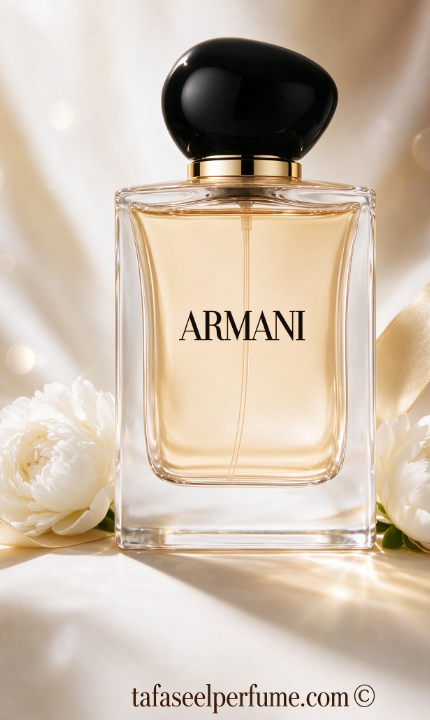
- Armani Armani Perfume: The Complete Guide to Italy’s Most Wearable Fragrance House: “Armani Armani perfume” looks like a doubled word, but it points to something real: a designer who built a fashion empire on understated elegance, then translated that same philosophy into scent. Giorgio Armani founded his house in 1975, entered fragrance in 1982, and has since released more than 200 perfumes—a body of work that ranges from the salty Mediterranean air of Acqua di Giò to the haute couture intensity of Armani Privé.
“Armani Armani perfume” looks like a doubled word, but it points to something real: a designer who built a fashion empire on understated elegance, then translated that same philosophy into scent. Giorgio Armani founded his house in 1975, entered fragrance in 1982, and has since released more than 200 perfumes—a body of work that ranges from the salty Mediterranean air of Acqua di Giò to the haute couture intensity of Armani Privé. The doubled name is a useful reminder that this is not one perfume but a universe of them, organized around a handful of pillars, each with its own personality and price point.
This guide treats “armani armani perfume” as an invitation to look past the logo and understand what each pillar actually smells like, who it suits, and where it fits in a collection. Whether you are buying your first bottle or comparing an Eau de Toilette against a Parfum, the goal is the same: to know what you are choosing before you choose it.
Quick Summary: Armani perfume is best understood as a house of wearable signatures rather than experimental statements. Acqua di Giò owns fresh and aquatic; Code owns evening sensuality; Sì and My Way own modern femininity; Privé owns luxury and artistic freedom; Stronger With You owns warm, sweet masculinity. Once you know which pillar you are standing in, the rest of the lineup becomes much easier to navigate.
1. What “Armani Armani Perfume” Really Means: A House of Pillars
2. Acqua di Giò: The Mediterranean Standard
3. Armani Code: The Evening Code
4. Sì: The Modern Feminine Chypre
5. My Way: Floral Optimism in a Bottle
6. Armani Privé: Haute Couture in Scent
7. Stronger With You and Acqua di Gioia: The Supporting Cast That Holds Its Own
1. What “Armani Armani Perfume” Really Means: A House of Pillars
The doubled name is not a typo so much as a compression of scale. Giorgio Armani the designer and Giorgio Armani the fragrance house share the same DNA—clean lines, restrained sensuality, a preference for elegance over noise—but the perfume arm has grown into a structure with distinct branches. The main Giorgio Armani line includes Acqua di Giò, Code, Sì, and My Way; Emporio Armani carries Stronger With You and several younger-skewing releases; Armani Privé sits at the top as the haute couture collection.
That structure matters because “Armani perfume” can mean a $60 bottle of Acqua di Giò Eau de Toilette or a $300 bottle of Privé Bois d’Encens, and both are legitimately Armani. The house does not treat fragrance as a single aesthetic. It treats it as a wardrobe: one scent for heat, one for evening, one for a signature, one for a gift. If you are exploring perfume brands and want a designer house that covers multiple moods without becoming generic, Armani is unusually well organized for that purpose.
The doubled phrasing also appears in search behavior because people are often unsure whether they are looking for the designer or the perfume line. In practice, the answer is both. The fragrance is an extension of the fashion, and the fashion is the reason the fragrance feels the way it does. For a broader survey of how designer houses structure their scent portfolios, the Versace perfume guide offers a useful Italian counterpoint: where Versace leans extroverted and bold, Armani leans inward and composed.
2. Acqua di Giò: The Mediterranean Standard
Acqua di Giò Pour Homme, launched in 1996, is the fragrance most people mean when they say “Armani perfume” without naming a specific bottle. Created by Alberto Morillas, Annick Menardo, and Christian Dussoulier, it translated the idea of a holiday on the Italian island of Pantelleria into an aromatic aquatic composition: lime, bergamot, sea notes, rosemary, and white musk in the original Eau de Toilette. It is crisp, clean, and almost universally wearable—the olfactory equivalent of a white shirt that fits.
The line has since expanded into deeper, longer-lasting interpretations. Acqua di Giò Profondo, composed by Morillas in 2020, pushes the marine idea into Eau de Parfum territory with sea notes, green mandarin, rosemary, mastic, and a mineral-musky base, lasting six to eight hours and performing better in humidity. Acqua di Giò Profumo adds incense and patchouli to the aquatic structure, creating a smoky-fresh tension that feels more evening-appropriate than the original. The through-line is the sea, but each concentration tells a different story about how close to shore you want to stay.
For anyone building a first fragrance wardrobe, Acqua di Giò is the safest entry point in the house. It is also one of the most gifted men’s fragrances in the world, which means it has a social familiarity that can be either comforting or limiting depending on your temperament. If you want freshness with a little more edge, the Banana Republic Grassland Cologne occupies a similar green-fresh territory with a barbershop twist. If you prefer sweetness and fruit in your fresh scents, the blueberry perfume for men guide shows how far that idea can be pushed.
3. Armani Code: The Evening Code
Armani Code, introduced in 2004, is the house’s masculine evening signature. The modern Eau de Parfum is a fougère ambery spicy composition: green mandarin at the opening, nutmeg in the heart, and a warm base of tonka bean absolute that gives it a honeyed, slightly tobacco-like sensuality. It is smoother and more deliberate than Acqua di Giò, designed for the version of the evening that involves a jacket, low light, and close conversation.
What makes Code enduring is its balance. It is sweet enough to feel seductive but dry enough to avoid becoming a gourmand; spicy enough to have presence but polished enough to wear in a restaurant without announcing itself across the room. The Parfum version pushes further into iris, sage, and bergamot over the tonka base, creating a woodier, more aromatic profile with strong longevity. Code is not a casual fragrance, but it is a versatile formal one—the kind of bottle that earns its place by being reached for on specific occasions rather than every day.
In the broader landscape of evening men’s fragrances, Code sits between the barbershop cleanliness of Calvin Klein Eternity for Men and the denser, more decadent gourmand territory of scents like Tom Noir Extreme. If you want a single bottle that covers dinners, dates, and cool-weather evenings without venturing into niche intensity, Code is a well-calibrated answer.
4. Sì: The Modern Feminine Chypre
Sì, launched in 2013, is Armani’s defining feminine pillar: a modern chypre built around blackcurrant nectar, airy florals, and a musky blond-wood base. The opening is fruity and sparkling, but the fragrance settles into something softer and more textured—rose, freesia, vanilla, and patchouli in conversation rather than competition. It is feminine without being fragile, sweet without being childish.
Sì Passione, released in 2017, is the more extroverted sibling: pear, black currant, and pink pepper up top; rose and jasmine in the heart; vanilla, cedar, and patchouli at the base. It projects more strongly and reads as an evening or occasion scent, while the original Sì is easier to wear from morning into afternoon. The Sì line has become a reference point for women who want a perfume that feels elegant and contemporary rather than retro-powdery or aggressively sweet.
The modern chypre structure is having a quiet resurgence across designer perfumery, and Sì is one of the reasons. It demonstrates that a fruity-floral can have architecture—contrast, depth, a drydown that does not collapse into sugar. Readers exploring the softer, powderier side of feminine perfumery may find a useful counterpoint in Chloé Love, which takes iris and powder in a very different direction. For those who prefer their sweetness with a darker, more resinous edge, Burberry Black occupies adjacent territory with candied jasmine, peach, and amber.
5. My Way: Floral Optimism in a Bottle
My Way, launched in 2020, is Armani’s modern white-floral statement. It opens with orange blossom and bergamot, moves through tuberose and jasmine, and lands on a base of Madagascar vanilla, white musk, and Virginian cedar. The composition is bright and polished, with a creamy warmth that keeps it from feeling like a generic floral. It was created by Carlos Benaïm and Bruno Jovanovic and positioned as a fragrance of discovery and connection—a marketing story, yes, but one that matches the scent’s open, optimistic character.
What distinguishes My Way from other white florals is its clarity. Tuberose can be narcotic or heavy; here it is luminous and lifted by citrus and orange blossom. The vanilla base is present but restrained, adding softness rather than dessert-level sweetness. It performs comfortably in office and daytime settings, lasting six to eight hours, and has become a popular gift because it flatters without demanding a particular personality type.
My Way also illustrates how Armani approaches flankers: the Nectar version adds juicy pear and rhubarb to the original structure, making it fruitier and more playful without abandoning the floral core. That pattern—respect the pillar, adjust the mood—is consistent across the house. If you are comparing modern feminine signatures, the Monalisa perfume story offers a more unconventional, name-defying alternative to My Way’s polished clarity.
6. Armani Privé: Haute Couture in Scent
Armani Privé is the house’s haute couture fragrance collection: a gender-neutral line that pairs single-ingredient-focused compositions with sculptural bottles and a price point that places it firmly in luxury territory. The collection is not organized around a single olfactory family. Instead, it operates like a series of olfactory essays—Bois d’Encens is a dry, austere incense of remarkable clarity; Figuier Eden is green and fruity; Bleu Lazuli is a sensual leather with honey and vanilla depth; Pivoine Suzhou is a peony-rose composition with amber warmth.
Privé is where Armani allows itself to be less immediately wearable and more artistically deliberate. These are not office scents by default, though some—Figuier Eden especially—can function that way. They are fragrances for people who already know what they like and want something that feels singular rather than crowd-pleasing. The aesthetic is minimalist, even ascetic, in the sense that the compositions are built around a clear idea rather than a complex pyramid of competing accords.
For collectors, Privé is the part of the Armani universe that rewards exploration over a single purchase. It is also the clearest expression of the designer’s stated philosophy: “A perfume is more than an extract; it is a presence in abstraction”. If you are drawn to the idea of a signature scent that sits outside mainstream designer releases, Privé is the correct Armani address. The Bahar The Spirit of Dubai offers an interesting regional parallel in the way it treats oud and aquatic freshness as a paradox rather than a contradiction.
7. Stronger With You and Acqua di Gioia: The Supporting Cast That Holds Its Own
Stronger With You, from the Emporio Armani line, has become a major pillar in its own right, particularly for younger or more casual wearers. The core idea is warm, spicy sweetness: pink pepper and mandarin up top, lavender and sage in the heart, and a base of vanilla and chestnut accord that gives it a toasted, almost gourmand richness. The Intensely version amplifies the toffee, cinnamon, and suede notes, making it a cool-weather fragrance with strong projection and eight-plus hours of longevity. It is not subtle, and that is the point.
On the feminine side, Acqua di Gioia translates the Acqua di Giò sea-air idea into a floral-aquatic composition: Amalfi lemon, crushed mint, water jasmine, and cedar, with a soft brown-sugar warmth in the base. It is fresh, joyful, and easy to wear in heat—the kind of perfume that feels like open windows rather than a closed room. Together with Sì and My Way, it gives Armani a feminine lineup that covers crisp freshness, modern chypre elegance, and white-floral optimism without overlap.
The existence of these supporting lines is why “Armani Armani perfume” is not just a doubled keyword but a description of range. The house does not force every release into a single aesthetic. It maintains pillars, then lets flankers and sub-lines explore adjacent moods. If you want a warm, sweet masculine scent and Acqua di Giò feels too clean, Stronger With You is the answer. If you want the sea in a feminine register, Acqua di Gioia is the answer. The Soleil de Capri by Montale offers a more citrus-forward Mediterranean alternative for readers who want to compare interpretations of the same geographic idea.
Frequently Asked Questions About Armani Armani Perfume
Is Armani perfume worth buying, or is it overpriced for a designer house?
Armani sits in the same designer price band as most major luxury houses, and the value depends on the pillar. Acqua di Giò and Code are among the most reliable mass-appeal designer releases in their categories, with strong performance for the price. Sì and My Way are polished, giftable feminine signatures. Privé is genuinely expensive, but it is positioned as haute couture and should be evaluated as a luxury purchase rather than a daily workhorse. If you buy at discount retailers or during sales, the mainstream pillars become very competitive. The risk is not that Armani perfume is bad; it is that some flankers are redundant. Buy the pillar that matches your need, not every version of it.
What is the difference between Acqua di Giò EDT, Profondo, and Profumo?
The EDT is the original 1996 aromatic aquatic: bright, clean, and moderate in longevity. Profondo is the 2020 Eau de Parfum interpretation with deeper sea notes, green mandarin, rosemary, and a mineral-musky base; it lasts longer and handles humidity better. Profumo adds incense and patchouli to the aquatic structure, creating a smoky-fresh, more evening-oriented profile. In short: EDT for heat and daytime, Profondo for longer wear in warm weather, Profumo for the version of Acqua di Giò that wants to be taken seriously after dark.
Are any Armani perfumes unisex, or are they strictly gendered?
The main Giorgio Armani pillars are marketed by gender—Acqua di Giò and Code for men, Sì and My Way for women—but scent itself does not enforce that division. Many wearers cross over: women wear Acqua di Giò, men wear Sì, and nobody with a working nose is harmed by it. Armani Privé is explicitly gender-neutral and is the easiest place to start if you want a fragrance not coded as masculine or feminine. The unisex perfume category is useful for further exploration if you prefer to ignore gender marketing altogether.
How long does Armani perfume last on skin?
It depends on concentration and pillar. Acqua di Giò EDT typically sits in the four-to-six-hour range on skin, longer on fabric or in air conditioning. Profondo and Profumo push into six-to-eight hours. Code EDP and Parfum generally last through an evening. Sì EDP and My Way EDP are in the six-to-eight-hour band, while Stronger With You Intensely can exceed eight hours. Skin chemistry, climate, and application method matter more than the label, but these ranges are a reasonable baseline for planning a day or evening.
What is the best first Armani perfume to buy?
The answer depends on the slot you are trying to fill. If you need a fresh daytime scent that works in almost any setting, Acqua di Giò EDT is the safest entry point. If you need an evening fragrance with warmth and sensuality, Code EDP is the more deliberate choice. If you are shopping for a feminine signature that feels modern and polished, Sì EDP or My Way EDP covers different moods—Sì is fruitier and more chypre-textured, My Way is brighter and more floral-vanilla. If you want a warm, sweet masculine scent for cool weather, Stronger With You Intensely is the direct route. Buy for the occasion, not for the logo.


