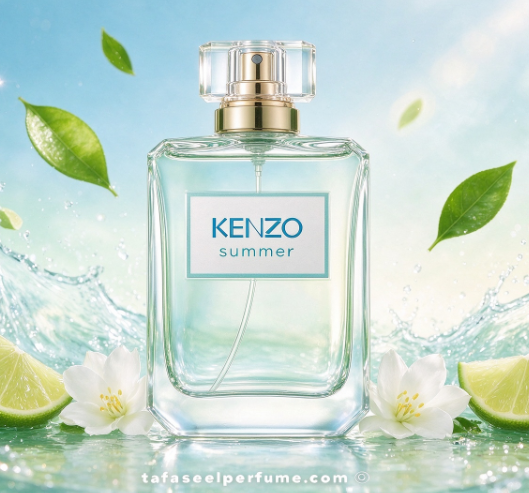
- Kenzo Summer: The Sun-Kissed Mimosa That Became a Cult Classic: Some fragrances chase the season. Kenzo Summer bottled it. Released in 2005 and composed by Alberto Morillas, this limited-edition eau de parfum translates the sensation of warm skin and yellow flowers into a powdery, almond-kissed floral that remains one of the most quietly beloved summer scents ever made. It is not loud. It is not trendy. It is simply sunshine in floral form — and for those who remember it, nothing else quite fills its place.
Big Introduction: Why Kenzo Summer Still Matters
Summer by Kenzo arrived at a moment when designer summers were largely disposable flankers — lighter, brighter, and forgotten by September. This one was different. Morillas built the composition around mimosa, a note that is notoriously difficult to wear without turning sharp or soapy, and softened it with almond milk, violet, and a clean musk-amber base. The result is a scent that feels creamy yet airy, powdery without being old-fashioned, and warm without losing its citrus lift. Community data places its primary wearing season squarely in summer and spring, with an overwhelming majority choosing it for daytime wear. It has since been discontinued, which has only deepened its cult status: reviewers routinely call it the “mimosa queen” and describe a ongoing search for a replacement that does not exist. If you are building a wardrobe around one signature scent that works in heat without collapsing, Kenzo Summer remains a benchmark worth understanding — even if you only encounter it through a decant or a well-preserved bottle.
1. The Mimosa Core: Why One Flower Defines the Entire Scent
The heart of Kenzo Summer is a single material treated with unusual patience: mimosa, lifted by violet and grounded by almond milk.
2. Powdery, Not Old-Fashioned: The Almond-Milk Texture
Powder is the most misunderstood texture in perfumery. In Kenzo Summer, it is the quality that makes the scent feel like skin after sun.
3. Heat, Office, Holiday: Where Kenzo Summer Actually Belongs
Not every summer scent is a beach scent. Kenzo Summer performs best in the spaces between real life and escape.
4. The Leaf Bottle and the Logic of a Limited Edition
The flacon was designed as a leaf tinted yellow on one side — a small object that explains the scent before you even spray it.
5. Discontinued but Not Forgotten: The Cult of a Vanished Summer
Kenzo Summer is no longer in production, and that absence has shaped how it is discussed, collected, and remembered.
1. The Mimosa Core: Why One Flower Defines the Entire Scent
Mimosa is a fragile note. In isolation it can read as dusty, green, or vaguely soap-like. Alberto Morillas did not try to hide that fragility; he built the fragrance around it. In Summer by Kenzo, mimosa sits at the center of a heart that also includes violet, jasmine, lily of the valley, and freesia, but the mimosa is the note that determines the scent’s character. It gives the composition its yellow-floral brightness — a color you can almost see — while the citrus opening of bergamot and lemon keeps it from turning heavy. This is a composition that belongs to the same broad family as other powdery floral scents, but it strips away spice and sweetness to focus on texture rather than drama. The drydown introduces musk, amber, cedar, and a whisper of styrax, extending the mimosa’s life without burying it. For anyone who has struggled with mimosa-forward fragrances feeling brittle, Kenzo Summer is the counterargument: handled with almond milk and a soft base, mimosa becomes creamy, wearable, and quietly persistent.
2. Powdery, Not Old-Fashioned: The Almond-Milk Texture
The word “powdery” sends some wearers running toward sharper, cleaner things. That reflex is understandable — powder can signal talc, iris, or a kind of vintage formality that feels out of step with modern life. Kenzo Summer uses powder differently. The almond milk in the heart is the key: it adds a soft, nutty creaminess that rounds the florals and prevents the violet from turning dry or cosmetic. Community reviewers consistently describe the scent as “powdery, floral, and yellow floral,” but the powder here is closer to the texture of sun-warmed skin than to a makeup compact. The musk and amber in the base extend that effect, creating a finish that feels clean and slightly sensual rather than prim. It is a texture that sits comfortably alongside the broader category of unisex perfume principles — not because Kenzo Summer is marketed as unisex, but because its appeal rests on skin-like softness rather than gendered signifiers. If you enjoy fragrances that feel like a second skin rather than a statement, this is the axis on which Kenzo Summer succeeds.
3. Heat, Office, Holiday: Where Kenzo Summer Actually Belongs
Performance data and community voting tell a consistent story: Kenzo Summer is a daytime scent built for warm weather. Aggregated wear data shows summer and spring accounting for the vast majority of wears, with daytime use far outpacing evening use. Longevity is generally reported in the moderate range — roughly six to eight hours on most skin types, with a sillage that stays close enough for an office but present enough to be noticed in conversation. This is not a fragrance that demands a special occasion. It is at its best on a casual workday, a weekend errand, or the kind of holiday afternoon where you are not trying to smell like anything other than clean, warm, and at ease. That versatility is precisely what makes it a cult favorite: it does not ask you to change your plans to wear it. For those assembling a broader wardrobe of attractive everyday scents, Kenzo Summer represents the soft-power end of the spectrum — the one that works by proximity rather than projection.
4. The Leaf Bottle and the Logic of a Limited Edition
The original Summer by Kenzo flacon was not a generic rectangular bottle with a different label. It was a leaf shape, ergonomically adjusted from Kenzo’s earlier Parfum d’Ete design, with one side tinted yellow to catch the light and suggest the glow of sun on skin. That design choice matters because it reveals the fragrance’s intention: this is not a “summer version” of an existing scent but a standalone object, conceived as a limited edition from the beginning. The advertising imagery — a model reclining in a field of yellow flowers under a blue sky — reinforced the same idea. In the years since, Kenzo has released other summer limited editions under the Flower by Kenzo line, often with poppy motifs and frosted glass, but the original leaf-shaped Summer by Kenzo remains the reference point for collectors. If you encounter a bottle on the secondary market, the packaging is part of the artifact: it tells you that this was a fragrance meant to be used up within a season, which is precisely why so few pristine examples survive.
5. Discontinued but Not Forgotten: The Cult of a Vanished Summer
Summer by Kenzo is discontinued, and that fact has become inseparable from its reputation. Fragrance communities routinely describe it as a “cult classic” and a “mimosa queen,” with wearers expressing genuine frustration that no direct replacement has emerged. The scent’s absence has created a small economy of decants, partial bottles, and hopeful comparisons — but most discussions end with the same conclusion: nothing else smells quite like it. That is the paradox of a limited edition done well. It was never meant to be permanent, and its impermanence is part of its identity. For anyone exploring the broader landscape of women’s perfume history, Kenzo Summer functions as a case study in how a fragrance can achieve lasting relevance not through ubiquity but through precise, unrepeatable execution. If you find it, wear it. That is what it was made for.
FAQ: Kenzo Summer
1. Is Kenzo Summer still available to buy?
No. Summer by Kenzo was a limited edition released in 2005 and is now discontinued. It occasionally appears on the secondary market, but availability is inconsistent and prices vary widely.
2. What does Kenzo Summer actually smell like?
It is a powdery yellow-floral fragrance centered on mimosa, with a citrus opening of bergamot and lemon, a creamy almond-milk and violet heart, and a soft musk-amber-cedar base. The overall effect is clean, warm, and skin-like rather than sweet or heavy.
3. How long does Kenzo Summer last on skin?
Most wearers report moderate longevity, roughly six to eight hours, with a sillage that stays relatively close to the skin. Performance can vary depending on skin type and application.
4. Is Kenzo Summer the same as Flower by Kenzo?
No. They are separate compositions. Flower by Kenzo is a distinct fragrance line, and while Kenzo has released summer limited editions under the Flower name, Summer by Kenzo (2005) was a standalone release with its own leaf-shaped bottle and mimosa-forward profile.
5. What fragrances are similar to Kenzo Summer?
Community comparisons often point to other soft mimosa or powdery floral compositions, but no exact substitute has emerged. Many wearers describe the search for a replacement as ongoing, which is part of why the original retains its cult status.


