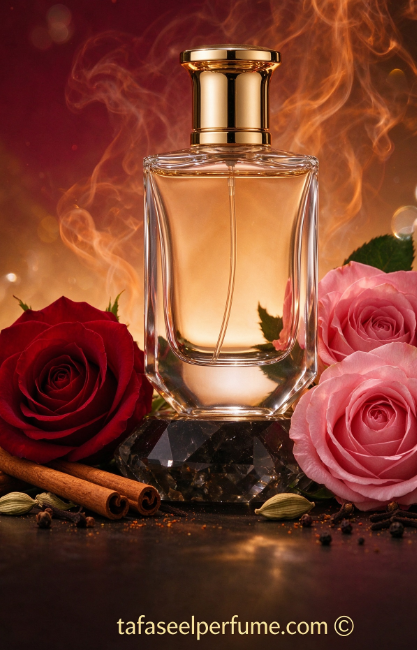
- Spicy Floral Scents: A Complete Guide to Fragrances Where Warm Spice Meets Blooming Flowers: Short intro: Spicy floral scents are the perfect compromise between warmth and romance — a blooming bouquet wrapped in cinnamon, clove, pink pepper or saffron. This guide explains what they are, how they are built, and how to choose the one that fits you.
Long intro: For a long time, the perfume world liked to keep its categories tidy. Florals were soft, pretty and feminine; spices were dark, bold and masculine. Spicy floral scents broke that rule, and that is exactly why so many people now fall in love with them. Take a rose and add a whisper of pink pepper, and the rose suddenly becomes sharper, more modern, more alive. Add clove to orange blossom and you get a fragrance that feels like a warm evening in a faraway city. Add saffron to jasmine and the result is expensive, golden and slightly mysterious.
What makes this family so interesting is its range. At one end you find light, airy scents built on pepper and neroli, perfect for daytime wear in spring. At the other end you find rich, opulent compositions where cinnamon, clove and tuberose sit close to the skin like a velvet coat. Between those two extremes there is an entire spectrum of moods — sensual, elegant, comforting, edgy, even fresh. This article walks through the ingredients, the history, the balance, the best options for women, men and everyone in between, and the practical details such as season, application, longevity and shopping. If you have ever wondered why a fragrance with flowers in it can still feel warm and spicy, this is the guide for you.
1. What Exactly Are Spicy Floral Scents? — A clear definition of the family and how it differs from pure florals and pure orientals.
2. A Short History of Spice and Flowers — From ancient trade routes and Arabian perfumery to modern niche releases.
3. The Spices That Build the Heat — Cinnamon, clove, pink pepper, black pepper, cardamom, saffron and ginger.
4. The Flowers at the Heart — Rose, jasmine, orange blossom, tuberose, ylang-ylang and peony.
5. The Art of Balance — Why a great spicy floral is never really about the spice or the flower alone.
6. Best Spicy Floral Perfumes for Women — Warm, elegant picks for lovers of rose, jasmine and pepper.
7. Best Spicy Floral Perfumes for Men — Saffron, cardamom and clove in confidently masculine compositions.
8. Unisex Spicy Florals Worth Trying — Shared fragrances that sit beautifully on any skin.
9. Seasons and Occasions — Which compositions work in spring, summer, autumn, winter, day and night.
10. How to Wear a Spicy Floral — Application points, layering and dosage advice for a scent that can be loud.
11. Longevity, Sillage and Concentration — Eau de toilette, eau de parfum and extrait, and what each means in practice.
12. How to Choose and Buy — Sampling strategies, gift sets, mini sizes and building a wardrobe.
1. What Exactly Are Spicy Floral Scents?
A spicy floral scent is a fragrance in which flower notes and spice notes both play a leading role. It is not simply a floral with a faint hint of pepper in the background, and it is not an oriental fragrance with a rose listed somewhere in the pyramid. The two halves must be genuinely present, and they must interact. The spice sharpens the flower, and the flower softens the spice. The result is a composition that feels warm but not heavy, romantic but not sweet, and often surprisingly wearable across genders.
In perfumery classification, these fragrances usually sit in the "floral spicy" or "spicy floral" sub-family, occasionally overlapping with "floral oriental" and "floral woody." The exact label matters less than the structure. Typically the spice appears at the top — pink pepper, cardamom, cinnamon or clove — where it gives the opening an immediate lift and a slightly tingly quality. The flowers dominate the heart, and the base is usually built from woods, resins, musk, vanilla or amber to give the fragrance weight and staying power. Some compositions add fruit, citrus or green notes to keep the spice from becoming too dense, while others lean fully into the heat.
What separates a spicy floral from a plain floral is sensation as much as smell. Spices create a physical reaction: a slight warmth on the skin, a feeling of dryness, a tickle in the nose. Flowers create an emotional association: softness, romance, freshness, memory. When the two are combined well, the fragrance feels three-dimensional. That is also why so many people describe these scents as "grown-up" — they offer complexity without becoming difficult. You can read more about families, structures and note pyramids in our perfume articles and reviews section.
2. A Short History of Spice and Flowers
Spices and flowers have travelled together for thousands of years. In the ancient world, resins, gums and spice oils were burned as incense long before alcohol-based perfume existed, and flower waters such as rose water were used in the Middle East, Persia and India for both ritual and pleasure. Rose water sprinkled over food, saffron steeped in warm liquid, clove and cardamom carried along trade routes — these were not separate worlds. Aromatic materials from the garden and materials from the spice market were used side by side.
In the medieval Islamic world, distillation techniques were refined and perfume-making became a sophisticated craft. Rose, jasmine and orange blossom were distilled alongside spices, and the resulting oils and waters were blended into compositions that already had the essential logic of the spicy floral: something warm and something blooming. When these techniques and materials reached Europe, they fed directly into the great perfume houses of the nineteenth and twentieth centuries.
The modern chapter is more recent. In the second half of the twentieth century, designers and perfumers began deliberately pairing florals with heavy spices to create fragrances that felt sensual and confident rather than purely pretty. Clove-heavy carnation compositions, rose with pepper, jasmine with cinnamon — these became signatures of a certain kind of elegance. In the 1990s and 2000s, niche houses pushed the idea further, adding saffron, cumin, ginger and pink pepper to everything from rose to tuberose. Today the family is mainstream enough that almost every serious collection has at least one entry, and independent houses continue to experiment with the boundary between spice and bloom. You can explore how modern houses position these ideas in our perfume brands directory.
3. The Spices That Build the Heat
Understanding the spices is the fastest way to understand spicy floral scents. Cinnamon is warm, sweet and slightly woody, and it can make a rose feel like dessert or like candlelight. Clove is sharper and drier, with a medicinal edge that gives carnation and rose a vintage, almost old-fashioned elegance. Pink pepper is the modern favourite: it is rosy, fruity and lightly peppery, and it lifts a floral opening without adding weight. Black pepper is more austere, drier and more angular, useful for giving a clean, sharp quality to a composition.
Cardamom is green, cool-warm and slightly citrusy, and it works beautifully with orange blossom and jasmine. Saffron is leathery, slightly bitter and unmistakably luxurious; a small amount can make a floral feel expensive and golden. Ginger adds a bright, almost sparkling heat, and it is often used to give freshness to heavier compositions. Cumin is the trickiest of all — skin-like, warm and animalic — and it can either add enormous sensuality or push a fragrance into uncomfortable territory, depending on dosage.
Each of these spices behaves differently on skin. Some, like clove and cinnamon, can feel hot and dry. Others, like cardamom and pink pepper, feel cooler and more transparent. When you read a note list, the spice at the top tells you a lot about the character of the opening, while the spices in the base reveal how dense the fragrance will become hours later. If you enjoy these materials in general, the men's side of the category often uses them in a drier, more wood-driven way — our men's perfume collection is a good place to compare how cardamom, saffron and black pepper are handled.
4. The Flowers at the Heart
The floral half of the equation matters just as much. Rose is the most common partner for spice, because it can absorb warmth without losing its identity. Rose with pink pepper is bright and modern; rose with clove is classic and slightly retro; rose with saffron is rich and oriental. Jasmine brings a heavier, more narcotic quality, and it pairs especially well with cardamom and cinnamon, where the indolic depth of the flower meets the heat of the spice.
Orange blossom is lighter and cleaner, and its honeyed, slightly green character makes it a natural match for pink pepper, ginger and cardamom. Tuberose is the most opulent option: creamy, buttery and slightly rubbery, it can handle a serious amount of spice and still feel generous. Ylang-ylang is sweet, banana-like and tropical, and it works well with clove and cinnamon in fragrances that lean towards the exotic. Peony and freesia are softer and more transparent, and they are usually paired with the lighter spices to create airy compositions for daytime.
In practice, many fragrances combine two or three flowers so that the heart has movement. A rose-jasmine duo with pepper and saffron, for example, will read as spicy floral from the first spray to the drydown, while a single-flower composition may reveal the spice more clearly in the opening and then settle into something softer. If you prefer the floral side to be dominant, look for note lists where flowers are listed first and spices appear as "accords" or minor notes. Our women's perfume selection is a useful place to study how different houses handle the balance.
5. The Art of Balance
A great spicy floral is never really about the spice or the flower alone. It is about the space between them. Too much spice and the flowers disappear; too little and the fragrance loses its warmth and becomes just another floral. The best perfumers work with small quantities, using pepper or clove to create tension rather than to dominate. They also use supporting materials — citrus for lift, fruit for sweetness, woods for structure, resin for depth, musk for skin-like softness — to make the contrast feel natural rather than forced.
Balance also depends on concentration and on the person wearing it. The same fragrance can feel like a dry, elegant chypre on one person and a warm, sweet oriental on another, because skin chemistry changes how spice and flower notes project. That is why sampling on skin, not on paper, is essential. It is also why a fragrance that smells overwhelming on a blotter can be perfectly calibrated once it is applied to the wrist and allowed to settle.
Another aspect of balance is the season of the composition itself. A spring spicy floral might use pink pepper and peony, while an autumn one might use clove and rose, and a winter one might use cinnamon, saffron and tuberose. If you like the idea of the family but find some releases too heavy, look for versions with citrus, green notes or a lighter floral heart. These are often described as "fresh spicy floral" and they are much easier to wear in warm weather.
6. Best Spicy Floral Perfumes for Women
For women, the category offers everything from delicate daytime scents to full evening statements. A classic approach is rose with pink pepper and a soft musk base: it is modern, flattering and easy to wear to work or to dinner. A second approach is jasmine or tuberose with clove and amber, which gives a richer, more sensual result suitable for evenings and cooler months. A third approach is orange blossom with cardamom and ginger, which feels clean, slightly bitter and very contemporary.
When choosing, think about how you want the fragrance to feel rather than about note lists alone. If you want something elegant and understated, focus on pink pepper, peony and light woods. If you want something warm and enveloping, look for cinnamon, clove, tuberose and vanilla. If you want something unusual, try a saffron-rose combination, which often has a leathery, almost masculine edge that works beautifully on women. Our women's perfume range includes several interpretations along these lines, and comparing three or four at once is the quickest way to learn which balance you prefer.
7. Best Spicy Floral Perfumes for Men
Men's spicy florals tend to be drier and more structured than women's, often built around saffron, cardamom, black pepper or clove, with a floral heart that is kept in check by woods, vetiver, leather or incense. The result can be surprisingly elegant: a rose with saffron and oud is a classic combination in Middle Eastern perfumery, while a lavender or orange blossom heart with cardamom and cedar feels crisp and modern.
For many men, the appeal of the category is that it offers warmth without sweetness. These fragrances do not need vanilla or sugar to feel rich; the spice provides the depth and the flowers provide the lift. They also tend to perform well in cooler weather and in the evening, when the heat of the spice feels appropriate rather than overwhelming. If you are new to the family, start with a cardamom-led fragrance, which is usually the easiest entry point, then move towards saffron and clove as your tolerance for warmth increases. You can browse options in our men's perfume section and compare how different houses handle the floral component.
8. Unisex Spicy Florals Worth Trying
Some of the most interesting work in this family is explicitly unisex. When a fragrance is not required to lean masculine or feminine, the perfumer can push the spice higher and let the flowers be more unusual — a rose with cumin and incense, a jasmine with black pepper and vetiver, an orange blossom with ginger and salt. These compositions often feel more abstract and more artistic than their gendered counterparts, and they are usually the ones that attract compliments precisely because they are hard to place.
Unisex spicy florals are also a practical choice for couples who like to share a collection, and for anyone who finds traditional gendered categories limiting. The key is to test on skin and to pay attention to the first thirty minutes, when the spice is most prominent, and to the drydown two hours later, when the floral and base notes take over. Our unisex perfume collection is a good starting point, and it is worth sampling both "fresh" and "warm" interpretations before deciding which direction suits you.
9. Seasons and Occasions
Spicy florals are more versatile than their reputation suggests. In spring, lighter versions built on pink pepper, peony and orange blossom work beautifully in the daytime, especially when the weather is still cool. In summer, choose compositions with citrus or green notes and avoid heavy clove or cinnamon; a ginger-orange blossom scent can be surprisingly refreshing in the heat. Autumn is the natural season for the family, when rose, jasmine and cardamom feel exactly right against cooler air. Winter is when the richest versions come into their own — saffron, clove, cinnamon and tuberose, applied sparingly to pulse points.
For occasions, think about intensity. Office environments usually suit the fresher, more transparent end of the spectrum, while dinners, dates and evening events give you room for the warmer, denser compositions. Travel is another consideration: a spicy floral can be a wonderful signature scent for a trip, but if you are moving between climates, a lighter concentration is more practical. And if you are building a small wardrobe rather than a large collection, one fresh spicy floral and one rich spicy floral will cover most situations throughout the year.
10. How to Wear a Spicy Floral
Because these fragrances contain materials that project strongly, dosage matters. Two to four sprays are usually enough for an eau de parfum, and fewer for an extrait. Apply to pulse points — wrists, inner elbows, base of the neck — and consider spraying once into the air and walking through the cloud if you want a softer, more diffused effect. Avoid rubbing the wrists together, which can crush the top notes and distort the opening spice accord.
Layering is another option. A neutral musk or a light woody base can soften an overly aggressive spicy floral, while a single-note rose or jasmine can push the floral side forward. Keep layering simple: two fragrances at most, and test the combination on skin before committing to it for an evening. Finally, pay attention to storage. Spice-heavy compositions can darken over time if exposed to heat and light, so keep bottles away from windows and radiators to preserve the brightness of the opening.
11. Longevity, Sillage and Concentration
Spicy florals generally perform well in terms of longevity, because spices and the resins and woods that usually accompany them are relatively heavy molecules that cling to skin. An eau de toilette may last four to six hours, an eau de parfum six to ten, and an extrait or parfum significantly longer. Sillage — the trail a fragrance leaves behind — is usually moderate to strong, especially in clove, cinnamon and tuberose compositions.
Concentration affects not only how long the fragrance lasts but also how it develops. In a lighter concentration, the spice often dominates the first hour and the flowers appear later; in a richer concentration, the whole arc is slower and more gradual, with the base notes arriving only after several hours. If you love the floral heart of a fragrance but find the opening too sharp, a lower concentration or a smaller application may solve the problem. If you love the spice and find the drydown too soft, a higher concentration will keep the heat going for longer.
12. How to Choose and Buy
The most reliable way to choose a spicy floral is to sample. Order discovery sets, visit counters, or buy small decants, and test no more than two or three fragrances at a time. Wear each one for a full day before deciding, paying attention to how it smells in the morning, at midday and in the evening. Note whether the spice feels sharp or rounded, whether the flowers are dominant or supportive, and whether the base feels heavy or light on your skin.
If you are buying for someone else, gift sets and miniatures are the safest options, since they allow the recipient to test without committing to a full bottle. Our perfume gift sets and mini size and gift sets collections are designed for exactly this purpose. If you are building a collection, it also helps to look at curated rankings and reviews before buying, and to compare how different brands interpret the same spice-flower pairing. You can start with our perfume ranking and top lists to see which compositions are consistently well regarded, and explore the wider Tafaseel perfume collection for a sense of how the family is represented across houses.
Finally, remember that a spicy floral does not have to be an occasional indulgence. With the right balance and the right concentration, it can be an everyday signature — warm in the way a good cup of spiced tea is warm, and floral in the way a garden is floral after rain. For more general guidance on choosing and caring for fragrances, and for beauty routines that complement a warm scent, our beauty tips and guides section is a useful companion read.


