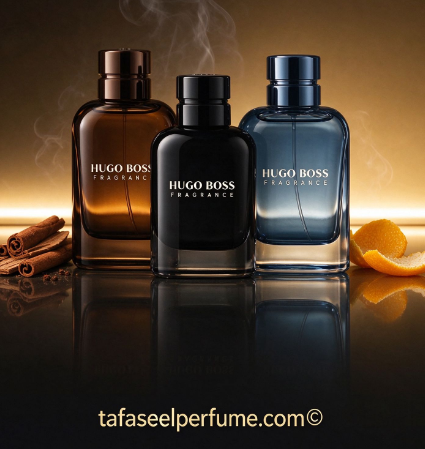
- Hugo Boss Fragrance Price in 2026: What Each Bottle Really Costs, Which Lines Are Worth It, and How to Stop Overpaying: Hugo Boss sits in a strange position in the designer fragrance market: it is everywhere, it is rarely the first name enthusiasts defend, and yet certain bottles quietly outperform fragrances that cost three times as much. That contradiction makes the Hugo Boss fragrance price question more complicated than a single number.
Hugo Boss sits in a strange position in the designer fragrance market: it is everywhere, it is rarely the first name enthusiasts defend, and yet certain bottles quietly outperform fragrances that cost three times as much. That contradiction makes the Hugo Boss fragrance price question more complicated than a single number. A 100 ml bottle can land anywhere from roughly $30 to over $170 depending on the line, the concentration, the retailer, and whether you are looking at official retail or the grey-market corridor where most experienced buyers actually shop. This guide breaks down the price architecture line by line, separates the bottles that justify their cost from the ones that only make sense at a discount, and gives you a clear framework for deciding what a Hugo Boss fragrance should cost you.
Fragrance pricing is not random. Hugo Boss operates a tiered system: entry-level EDTs, mid-tier EDPs, premium parfum and elixir concentrations, and a handful of discontinued or flanker releases that behave like collector items on the secondary market. Understanding which tier a bottle belongs to tells you more about its fair price than any single retailer’s sticker. If you also follow how designer pricing has drifted upward across the board, the Hugo Boss number starts to look less like an outlier and more like a predictable position on a map.
1. Boss Bottled: The Price Anchor of the Entire Range
Boss Bottled is the fragrance most people mean when they say “Hugo Boss cologne,” and it is also the line where the gap between retail and street price is most visible. The EDT is the entry point: in the German market, official pricing for a 100 ml Boss Bottled EDT has hovered around the €40–€45 range depending on promotions, while the EDP sits slightly higher, often around €46 or more. That is a modest premium for the extra concentration, and in practice the EDP is the smarter buy for anyone who wants the apple-cinnamon-woods DNA to last through a workday.
The real story, however, is what happens outside official channels. Boss Bottled Eau de Parfum has been cited by Fragrantica community members as a “very versatile” option at $55 for a full bottle, which is well below what a department store will charge for the same juice. That $55 figure is not a fluke. It reflects the fact that Boss Bottled is one of the most widely distributed designer masculines in the world, and wide distribution creates price competition. When a fragrance is stocked by discounters, rack stores, and online grey-market sellers simultaneously, the official retail price becomes a reference point rather than a ceiling. The practical implication is simple: Boss Bottled is a line you should almost never buy at full retail. If you are paying department-store prices for a Bottled EDT or EDP, you are subsidizing the brand’s marketing rather than paying for the liquid.
The Bottled family also includes higher-priced flankers such as Bottled Absolu, which sits closer to the premium end of the designer spectrum. Community discussion has placed Bottled Absolu within the £100/100 ml budget bracket, which means it competes directly with entry-level niche and high-end designer releases rather than with its own cheaper siblings. Whether that is worth it depends entirely on what you want from the scent: Bottled Absolu is a denser, more statement-oriented composition, and its price reflects that positioning. The original Bottled EDP, by contrast, remains one of the best value propositions in the entire Hugo Boss catalog because it delivers the core Bottled experience at a price that grey-market sellers routinely push below $60.
If you are exploring the broader men’s designer landscape alongside Hugo Boss, it helps to compare how other brands structure their pricing at similar tiers. Dior Sauvage Elixir Eau de Parfum: The Concentrated Statement That Rewrote the Sauvage Rulebook is a useful reference point for what a “premium designer concentration” actually costs, while 1 Million Lucky Cologne: The Hazelnut-Gourmand Flanker That Divides the Room shows how flanker pricing can drift away from the original’s value proposition. Hugo Boss is not unique in charging more for intensity, but the Bottled line is unusually honest about the relationship between price and concentration: the EDP costs a little more than the EDT and performs meaningfully better, which is exactly what a tiered price structure should do.
2. Boss The Scent: Where Price Stops Being Predictable
Boss The Scent is the line where the Hugo Boss fragrance price question becomes genuinely difficult, because the same name covers bottles that retail for under £50 and bottles that approach £130. The original The Scent EDT is a mid-tier designer masculine, but the flankers and concentrations scatter across a much wider band. Boss The Scent Private Accord, for example, carried a UK retail price of around £69 for 100 ml but was frequently discounted to under £50, and grey-market sellers have been known to move the same bottle for as little as $30 when stock appears. That is a 50%+ spread on identical juice, which tells you that the “price” of The Scent Private Accord is less a fixed number than a function of where and when you buy it.
The Scent Elixir pushes the line into premium territory. Official Hugo Boss pricing for the 100 ml Elixir Parfum Intense sits at €151, and UK retail has been listed at £130 with authorized retailers discounting to around £97.50. Community reviews describe the Elixir as a dense, spicy-sweet composition with strong performance, and some users consider the ~$170 full-retail figure justifiable for the quality of the juice. But the price history tells a more volatile story: Amazon price tracking shows the Elixir 100 ml hitting a low of $104 and a high of $299, with an average around $140. A fragrance that swings between $104 and $299 on the same platform is not priced by its ingredients; it is priced by supply, seller behavior, and how aggressively the algorithm is testing demand.
The practical lesson for The Scent line is that patience is worth more than brand loyalty. The Elixir is a legitimate premium designer release, but it is not a rare one. It is carried by large retailers, discount networks, and Amazon, which means the high-end of its price range is almost always a bad deal. A buyer who waits for the $100–$120 window on the Elixir is getting the same bottle as the person who paid €151 at the boutique, minus the boutique experience. If the boutique experience matters to you, the premium is a service fee, not a fragrance fee.
For context on how other designer houses handle their premium concentrations, Creed Vanille Sublime: The Luminous Vanilla Orchid That Smells Like Quiet Luxury and Acqua di Gio Armani: The Complete Guide to the Marine Citrus Icon, Its Profumo Legacy, and the 2023 Parfum That Replaced It show two very different pricing philosophies: one leans on scarcity and perceived exclusivity, the other on massive distribution and flanker proliferation. Hugo Boss operates closer to the Armani model than the Creed model. Its premium bottles are widely available, and their prices are therefore negotiable by the market in a way that a limited-distribution niche release is not.
3. Hugo Man and the Entry-Level Paradox
The Hugo Man line—often just called “Hugo” or “Hugo Green”—is the cheapest way into the brand, and it exposes a different pricing logic. A 200 ml bottle of the newer 2021 Hugo EDT has been found for £48 at online discounters, while a 75 ml Hugo Man Extreme can drop to £26 in the same channels. On the secondary market, a 6.7 oz (200 ml) Hugo Man EDT has appeared on eBay for around $43–$44 against a list price of $124, and Amazon has listed the same size at $104 with a per-ounce cost of $24.76. These numbers are not consistent because the Hugo Man line is old enough to have a deep secondary market, multiple reformulations, and a confusing array of bottle shapes and names. The “price” of Hugo Man is less a retail figure than a function of which version you are buying and whether the seller knows what they have.
For a buyer, the entry-level paradox is this: Hugo Man is cheap enough that almost any price under $50 for a large bottle is a reasonable gamble, but it is also old enough that you need to verify the version. The original Hugo EDT, the Hugo Extreme EDP, and the 2021 Hugo Man EDT are related but not identical, and the price differences between them on the secondary market often reflect confusion rather than genuine value differences. A 200 ml bottle for £48 is excellent value if you want a fresh, green, aromatic everyday scent and you are not chasing a specific vintage. A 75 ml “Extreme” for £26 is also fine, but the performance gap between Extreme and the newer EDT is smaller than the names suggest, and some community members consider the Extreme redundant if you already own the original.
The lesson from Hugo Man is that the cheapest Hugo Boss fragrance is not necessarily the worst value. The brand’s entry-level line performs a specific job—fresh, versatile, inoffensive, inexpensive—and it does that job at a price that makes the premium lines look expensive by comparison. If you are building a collection on a budget, Hugo Man is a legitimate starting point. If you are looking for a signature scent with depth and longevity, the entry line will feel like a compromise regardless of how little you paid. Price and value are not the same axis.
4. The Discount Channel: Where Most Hugo Boss Bottles Actually Change Hands
The single most important fact about Hugo Boss fragrance price is that the official retail number is rarely what informed buyers pay. Outlet and discount data shows average savings of around 48% off retail across tracked Hugo Boss fragrance items, with prices starting as low as $35.99. Fragrance outlet comparisons have shown specific Hugo Boss bottles discounted by 60%, such as a women’s Eau de Parfum with a $105 retail price selling for $41. These are not clearance anomalies; they are the normal operating range of the grey market for a brand with Hugo Boss’s distribution footprint.
This does not mean every discount bottle is safe. The grey market has real risks: old stock, improper storage, testers sold as retail, and occasional counterfeits in unregulated corners of the internet. But the existence of those risks does not make retail pricing “fair”; it simply means the discount channel requires more diligence. The practical rule for Hugo Boss is to treat the official retail price as a reference ceiling and to expect a 25–50% discount as the normal buying condition. If a bottle is selling at or near full retail from an authorized seller, you are paying for convenience, warranty, and the ability to return it—not for a materially better product.
For buyers who prefer to stay within regulated retail environments, the mid-tier discounters and rack stores are the compromise: they offer recognizable inventory, occasional testers, and return policies, without the boutique markup. The Fragrantica community has repeatedly flagged rack stores and discount retailers as sources for Hugo Boss bottles at $30–$70 that would cost significantly more in a department store. That is the realistic market for Hugo Boss: not the boutique, and not the sketchy marketplace seller, but the broad middle of discount retail where the brand’s overdistribution becomes the buyer’s advantage.
If you are comparing discount channels across brands, Tommy T Cologne: The Timeless Fresh Classic That Still Defines Carefree Style and Perry Ellis Cologne Nearby: Your Local Guide to Finding the Right Bottle Without Guesswork show how other mass-distribution designer masculines behave in the same channel. The pattern is consistent: brands that put juice in every mall and every discounter create a buyer’s market, and the buyer who understands that pattern pays half of what the sticker suggests.
5. How to Decide What a Hugo Boss Bottle Is Worth to You
The final layer of the Hugo Boss fragrance price question is subjective, and it is the layer most price guides ignore. A $55 Boss Bottled EDP is excellent value if you want a versatile daily scent that smells polished and costs less than a dinner for two. The same $55 is poor value if you are buying it because you think the price signals quality and you actually wanted something with niche-level depth. The fragrance does not change; the value depends on the job you are asking it to do.
A simple decision framework helps. For everyday wear and office use, the Boss Bottled EDT or EDP at a discount price is close to a default choice: it is pleasant, recognizable, and cheap enough that you can spray freely without wincing. For evening and cold-weather wear, Boss The Scent Elixir or a higher-concentration Bottled flanker makes more sense, but only if you can find it in the $100–$130 range rather than at full retail. For budget exploration, Hugo Man delivers a surprising amount of fragrance for under $50, provided you accept that it is a fresh aromatic rather than a statement gourmand. And for collecting or gifting, the discontinued and flanker bottles in the Hugo Boss catalog can be genuinely interesting, but their prices are driven by scarcity rather than quality, so you need to know which specific bottle you are chasing before you pay a premium.
One useful comparison point for understanding value at the higher end of the designer spectrum is Valentino Donna Perfume Review: The Leather-Rose Iris Masterpiece That Still Haunts Modern Floral Design, which illustrates how a fragrance can justify a higher price through composition and identity rather than through concentration alone. Hugo Boss rarely reaches that level of artistic ambition, but it does something arguably more useful: it delivers competent, wearable, mass-appealing fragrances at prices that make the category accessible. The price is only “good” or “bad” relative to what you expect the bottle to do.
The one rule that holds across every line: do not use retail price as your quality signal. Hugo Boss’s own catalog contains cheap bottles that outperform expensive ones and expensive bottles that are only worth buying at a discount. The price tells you where the brand wants to position the bottle. The market tells you what the bottle is actually worth. The gap between those two numbers is where every smart Hugo Boss purchase happens.
6. Frequently Asked Questions About Hugo Boss Fragrance Price
How much does a typical Hugo Boss fragrance cost in 2026?
For a 100 ml bottle, the realistic market range is roughly $35 to $130 depending on the line and concentration. Entry-level EDTs and discounted Hugo Man bottles can fall below $50, Boss Bottled EDT/EDP typically sits in the $40–$65 discount range, and The Scent Elixir and premium flankers climb toward $100–$150 at authorized retail before discounting. Official retail prices are consistently higher than what most buyers actually pay.
Is Hugo Boss fragrance cheaper on Amazon or at a department store?
Usually Amazon and discount retailers are cheaper, but the gap varies by line. The Scent Elixir has shown Amazon prices from $104 to $299 for the same 100 ml bottle, which means Amazon is not reliably the low-price option—it is reliably the volatile option. Department stores charge closer to full retail but offer returns and authenticity guarantees. The best price often comes from discount fragrance networks and rack stores, provided you are comfortable with grey-market sourcing.
Why is Boss The Scent Elixir so much more expensive than Boss Bottled?
Elixir is positioned as a premium parfum intense concentration, and Hugo Boss prices it accordingly: official retail is around €151 for 100 ml, with UK retail around £130. The higher price reflects both the higher oil concentration and the brand’s attempt to compete in the premium designer tier. Whether the juice justifies the premium is subjective, but the market frequently discounts it below £100, which suggests the retail premium is not fully supported by demand.
Can I find Hugo Boss fragrance under $50?
Yes, regularly. Hugo Man large bottles have appeared for $43–$44 on eBay against a $124 list price, and discount outlet tracking shows Hugo Boss fragrances starting around $35.99 with average savings near 48%. Boss Bottled EDT and EDP also appear under $50 in discount channels. The $50-and-under segment is the most competitive part of the Hugo Boss market, which means you should almost never pay more than that for an entry-level or mid-tier bottle unless you are buying at full retail for convenience.
Is it worth buying a discontinued Hugo Boss fragrance at a markup?
Only if you specifically want that bottle for collecting or nostalgia, not because it performs better than current releases. Discontinued Hugo Boss bottles sometimes command higher prices on the secondary market because supply is limited, but the brand’s current lineup covers the same scent profiles at lower prices. A discontinued bottle at a 2× markup is a collector’s purchase, not a value purchase.
What is the safest way to get a good price on Hugo Boss without risking a fake?
The safest compromise is a recognized discount retailer with a physical presence and a return policy: rack stores, outlet malls, and established online fragrance discounters. These channels offer prices well below boutique retail without the unregulated risk of peer-to-peer marketplaces. If you buy from Amazon, buy shipped-and-sold by Amazon rather than a third-party seller, and check the price history before committing. If the price is dramatically lower than every other seller and the listing has no traceable retail backing, treat it as a risk rather than a bargain.


