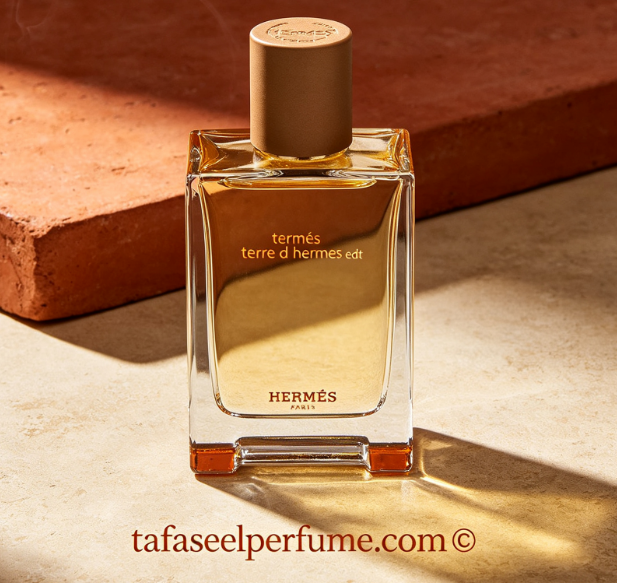
- Hermès Terre d’Hermès EDT · The Olfactory Architecture of Earth, Minerals & Velvet Radiance: Short · A dry, sparkling ode to the raw elements: citrus, flint, and vetiver. Terre d’Hermès EDT is not a perfume—it’s a landscape.
Long introduction · Since its debut in 2006, Hermès Terre d’Hermès EDT has redefined masculine woody–citrus perfumery. Crafted by Jean-Claude Ellena, it captures the tension between the mineral and the vegetal: the heat of volcanic stone, the bitter bite of orange, the smoky whisper of benzoin. This is a fragrance that doesn’t announce itself—it persists, like the scent of rain on parched earth. Its architecture is built on contrast: bright and dark, dry and fleshy, familiar and utterly unique. Terre d’Hermès is a pilgrimage to the source, a scent that smells of the world before it was named.
Contents · explore the mineral soul
1. The Genesis · Jean-Claude Ellena’s Earthly Vision
2. Deconstructing the Pyramid · Citrus, Flint, and Woody Vetiver
3. The Mineral Signature · How Flint and Grapefruit Create Tension
4. The Dry‑Down · Velvet Woods and Benzoin’s Warmth
5. EDT vs. Parfum · The Architecture of Intensity
6. When to Wear Terre d’Hermès · Season, Mood, and Occasion
7. The Hermès Olfactory Code · Minimalism, Nature, and Elegance
8. Why It Remains a Modern Classic · 20 Years of Earthy Allure
1. The Genesis · Jean-Claude Ellena’s Earthly Vision
When Hermès asked Jean-Claude Ellena to create a fragrance that embodied the house’s spirit of travel and craftsmanship, he looked not to the sky, but to the ground. “Terre” means earth, and Ellena set out to capture the scent of a mineral landscape—dry, hot, and alive. He drew inspiration from the vineyards of the Rhône Valley, the flinty soils of Châteauneuf-du-Pape, and the piercing light of the Mediterranean. The result is a fragrance that smells like the inside of a geode: rough on the outside, luminous within.
Ellena famously said, “I wanted a perfume that smells of the earth, not of a flower.” He used raw materials in a radically minimal way—no heavy patchouli, no cloying sweetness. Instead, he built a structure around bitter orange, flint, and vetiver, creating a scent that is both ascetic and profoundly sensual. The EDT, in particular, is the purest expression of this vision: bright, transparent, and immediate, like a stone skipping across water.
This approach was revolutionary in 2006, when the market was saturated with sweet, gourmand masculine fragrances. Terre d’Hermès offered a return to essentials—a fragrance that spoke of authenticity and the beauty of raw elements. It became an instant icon, and today it remains the benchmark for earthy, mineralic perfumery.
2. Deconstructing the Pyramid · Citrus, Flint, and Woody Vetiver
The olfactory pyramid of Terre d’Hermès EDT is deceptively simple, yet every note is chosen for its textural contribution. At the top, bitter orange and grapefruit deliver a sharp, almost metallic brightness—like the first crack of sunlight on dry soil. This is not the sweet, juicy orange of summer; it’s the bitter rind, the pith, the zest that leaves a tingling sensation.
The heart is where the magic happens: flint (or “pierre à fusil”) is a synthetic accord that Ellena developed to mimic the smell of striking a stone against metal. It’s smoky, dry, and slightly electric, evoking the scent of heated rocks. This flint note is paired with geranium and pepper, which add a green, slightly spicy floralcy that prevents the composition from becoming too harsh.
Finally, the base is a masterclass in woody elegance: vetiver from Haiti provides a smoky, rooty earthiness, while benzoin and cedar add a soft, balsamic warmth. The benzoin is crucial—it rounds off the sharp edges, giving the fragrance a velvety, almost resinous finish that lasts for hours. The overall effect is a scent that evolves from sharp and mineralic to warm and woody, like a day that starts with a cold wind and ends with a glowing sunset.
3. The Mineral Signature · How Flint and Grapefruit Create Tension
What sets Terre d’Hermès EDT apart is its mineralic tension—a deliberate contrast between the juicy bitterness of grapefruit and the dry, dusty smokiness of flint. This is not a comfortable fragrance; it’s an interrogation. The grapefruit note is stripped of its sweetness, leaving behind a sour, pithy sharpness that prickles the nostrils. The flint accord, on the other hand, is abstract and cerebral—it doesn’t smell like anything in nature, but it feels real, like the scent of ozone before a storm.
Ellena achieved this by using iso E super and other synthetic molecules to create a transparent, shimmering texture that amplifies the sensation of dryness. The result is a fragrance that feels both modern and primordial. It’s no accident that the bottle’s design, with its striking H-shaped cap and orange rectangular block, echoes the minimalist aesthetic of the scent: clean lines, bold colours, and a sense of weight.
This mineral signature is the reason why Terre d’Hermès EDT works so well in warm weather—it doesn’t become cloying; instead, it becomes more radiant, like sunlight bouncing off quartz. It’s a fragrance that demands attention without shouting, a quiet confidence that speaks of substance over spectacle.
4. The Dry‑Down · Velvet Woods and Benzoin’s Warmth
As the bright top notes fade, the dry-down of Terre d’Hermès EDT reveals its true character: a warm, woody embrace that feels like sinking into a leather armchair by a fire. The vetiver comes to the forefront—smoky, slightly nutty, and deeply earthy—but it’s tempered by the balsamic sweetness of benzoin. Benzoin, a resin from the Styrax tree, adds a vanilla-like, powdery softness that contrasts beautifully with the sharp mineralic notes.
The cedar contributes a dry, pencil-shaving woodiness, while the flint note, though diminished, lingers like a memory of stone. This is the phase where the fragrance becomes intimate and personal—it sits close to the skin, releasing subtle wafts of warmth with every movement. The longevity is impressive for an EDT (6–8 hours), and the sillage is moderate, making it ideal for both office wear and evening outings.
What’s remarkable is that the dry-down doesn’t feel heavy or cloying. Ellena’s use of transparent molecules ensures that even the base notes have an airy quality, as if the woods are suspended in a breeze. This is the hallmark of modern Hermès perfumery: complexity that feels effortless, richness that never overwhelms.
5. EDT vs. Parfum · The Architecture of Intensity
Hermès offers Terre d’Hermès in several concentrations, but the EDT and the Parfum are the most debated. The EDT is brighter, sharper, and more citrus-forward—it’s the scent of a sunlit morning. The Parfum, by contrast, is deeper, richer, and more resinous, with a greater emphasis on benzoin and woody notes. The EDT has a higher proportion of grapefruit and flint, giving it a zesty, mineralic intensity that is almost effervescent.
The Parfum, on the other hand, feels like the EDT’s older, more contemplative sibling—it’s warmer, more rounded, and lasts longer on the skin. However, the EDT remains the most iconic version, the one that captured the world’s imagination in 2006. It’s the perfect entry point for those who want to experience Ellena’s vision in its purest form: raw, unadorned, and utterly compelling.
For those who find the EDT too sharp, the Parfum offers a softer, more comforting interpretation. But for purists, the EDT is the definitive Terre—a scent that refuses to compromise its angular, mineral beauty. It’s a fragrance that teaches you to appreciate the beauty of dissonance.
6. When to Wear Terre d’Hermès · Season, Mood, and Occasion
Terre d’Hermès EDT is a chameleon—it adapts to its wearer and environment. In spring and summer, its citrus and flint notes shine, cutting through humidity with a crisp, refreshing sharpness. It’s the perfect companion for a white linen shirt, a weekend in the countryside, or a business meeting where you want to project confidence without arrogance.
In autumn and winter, the warmth of the vetiver and benzoin becomes more pronounced, making it a comforting, grounding scent for cooler days. It’s equally at home in a formal setting as it is in a casual one—its elegance is understated, never ostentatious. The fragrance is often described as “intellectual” or “artistic,” but it’s also deeply wearable; it doesn’t require a specific personality to carry it off.
Many fans reach for Terre d’Hermès EDT on days when they need a sense of stability, a reminder of the earth beneath their feet. It’s a scent that inspires clarity and focus, making it a favourite among creatives, architects, and writers. Whether you’re exploring a new city or sitting at your desk, this fragrance grounds you in the present moment.
7. The Hermès Olfactory Code · Minimalism, Nature, and Elegance
Hermès is not just a luxury house—it’s a philosophy of restraint and quality. The brand’s olfactory code, shaped by Ellena and later by Christine Nagel, favours clarity, simplicity, and the beauty of natural materials. Terre d’Hermès EDT embodies this code perfectly: it has no unnecessary ornamentation, no synthetic overload. Every note serves a purpose, and the overall composition feels like a haiku—brief, profound, and open to interpretation.
This minimalism extends to the bottle design, which is a geometric masterpiece: a rectangular glass flacon with an H-shaped stopper, evoking the brand’s equestrian heritage. The colour—a warm, earthy orange—reflects the scent’s connection to the soil and the sun. It’s a bottle that looks as good on a shelf as it does in the hand, a testament to Hermès’ commitment to beauty in every detail.
The fragrance also reflects the house’s love of travel and exploration. Like a well-worn leather jacket or a pair of sturdy boots, Terre d’Hermès EDT carries the memory of journeys, of roads taken and landscapes crossed. It’s a scent for the wanderer, the dreamer, the one who finds poetry in the ordinary.
8. Why It Remains a Modern Classic · 20 Years of Earthy Allure
Two decades after its launch, Terre d’Hermès EDT shows no signs of ageing. It has become a reference point for masculine perfumery, inspiring countless imitators but never being equalled. Its brilliance lies in its balance of tradition and innovation: it uses classic materials like vetiver and cedar but deploys them in a way that feels thoroughly contemporary.
The fragrance has also cultivated a devoted following among women, who appreciate its unisex appeal and its refusal to conform to gender stereotypes. In a world of increasingly generic “fresh” and “sweet” scents, Terre d’Hermès EDT stands out as a work of art—a fragrance that challenges the wearer to think, feel, and connect with the elemental forces of nature.
As we look to the future of perfumery, Terre d’Hermès EDT remains a touchstone, a reminder that true elegance is timeless. It’s not just a scent; it’s an attitude—a way of being in the world that values substance over style, authenticity over artifice. For those who wear it, it becomes a second skin, a silent signature that speaks of taste, discernment, and a deep appreciation for the beauty of the earth.
FAQ · Hermès Terre d’Hermès EDT
1. What does Terre d’Hermès EDT smell like?
It opens with bitter orange and grapefruit, followed by a unique flint (mineral) accord, and dries down to smoky vetiver, cedar, and warm benzoin. It’s dry, earthy, and subtly woody.
2. Is Terre d’Hermès EDT suitable for women?
Absolutely. Although marketed as masculine, its citrus-mineral-woody profile is universally appealing. Many women love its sharp, transparent character.
3. How long does the EDT version last?
On average, 6–8 hours with moderate sillage. It performs well in warm weather, where the citrus notes shine, but the base lingers beautifully.
4. What is the difference between EDT and Parfum?
The EDT is brighter, more citrus-forward, and mineralic; the Parfum is richer, sweeter, and more resinous, with a heavier emphasis on benzoin and woods.
5. What season is best for Terre d’Hermès EDT?
It’s a year-round fragrance, but it truly excels in spring and summer due to its crisp, refreshing opening. In cooler months, the woody base provides comforting warmth.
6. Is Terre d’Hermès EDT a safe blind buy?
For lovers of dry, woody, and mineralic scents, yes. However, if you prefer sweet, gourmand, or heavily floral fragrances, it may not be your style. Always test if possible.
7. Why is the flint note so distinctive?
The flint accord (pierre à fusil) was created by Jean-Claude Ellena to evoke the smell of striking stones—dry, smoky, and electric. It’s a synthetic material that gives the fragrance its unique mineral edge.
8. How does it compare to other Hermès fragrances?
It’s more rugged and earthy than the floral–green Jardin series or the elegant Voyage. It occupies a unique place in the Hermès collection: raw, elemental, and unmistakably masculine in spirit.
9. Can I wear Terre d’Hermès EDT to the office?
Yes, it’s professional and sophisticated without being overpowering. Its moderate sillage and crisp character make it ideal for work environments.
10. What makes it a modern classic?
Its pioneering use of mineral notes, its minimalist elegance, and its timeless appeal. It redefined masculine perfumery and remains a benchmark for earthy, transparent scents.
© 2026 · Olfactory Architecture Series — Terre d’Hermès EDT is a registered trademark of Hermès. This article is for informational and educational purposes.


