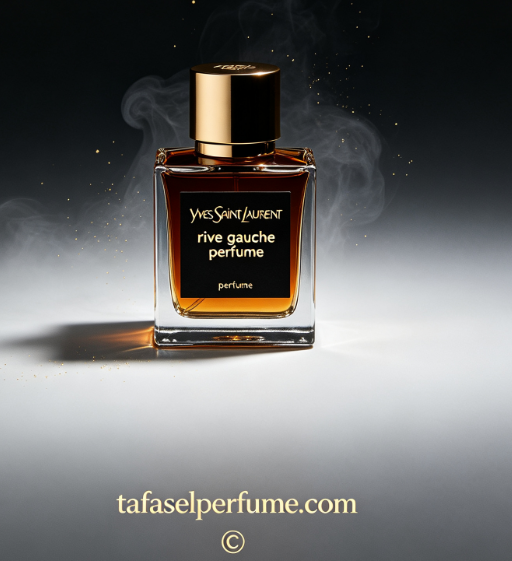
- Yves Saint Laurent Rive Gauche Perfume · The Olfactory Architecture of Parisian Cool & Metallic Green: Mini‑intro · A breath of abstract florals, crisp galbanum, and aldehydic light — Rive Gauche is the scent of a Left Bank rebellion, bottled in 1971 and still defiantly modern.
Rive Gauche by Yves Saint Laurent is not merely a perfume; it is a manifesto. Launched in 1971, at the height of the women’s liberation movement, it shattered the sweet, heavy florals of the era with a sharp, green‑chypre architecture that smelled of liberty, ink, and rain on hot pavement. The name itself — “Left Bank” — evokes the intellectual and artistic heart of Paris, where Saint Laurent found his muse. Its signature aldehydic brightness, woven with rose, jasmine, and a grounding patchouli‑oakmoss base, creates a tension between softness and severity. Decades later, Rive Gauche remains a cult classic, a fragrance that asks not to be liked, but to be understood. This article dissects its olfactory geometry, its cultural impact, and the enduring allure of its metallic‑green soul.
· contents ·
1. Aldehydic Dawn · 2. Galbanum & The Green Spike · 3. Rose & Jasmine Diptych · 4. The Patchouli‑Oakmoss Base · 5. The 1971 Context · 6. Masculine‑Feminine Fluidity · 7. Vintage vs. Modern Formulations · 8. Styling Rive Gauche Today
1. Aldehydic Dawn
The first spray of Rive Gauche is a crystalline shiver — aldehydes, those sparkling molecules that defined the great florals of the 1920s, are here used with a metallic restraint. Unlike the plush embrace of Chanel No. 5, the aldehydes in Rive Gauche are razor‑edged, evoking the glint of a stainless‑steel balcony overlooking the Seine. They lift the green notes into a stratosphere of sheer radiance, never allowing the composition to sink into sweetness. This is a fragrance that announces itself with a whispered “je ne sais quoi” — intellectual, cool, and unapologetically urban. The aldehydic top is not a prelude but a statement, setting the stage for a fragrance that refuses to pander. Bharara King Reviews · The Olfactory Architecture of Regal Essence & Vel offers a parallel study in architectural contrasts, yet Rive Gauche remains in a class of its own.
2. Galbanum & The Green Spike
Galbanum — the resinous, bitter‑green heart of Persian umbellifers — is the true protagonist of Rive Gauche. It cuts through the aldehydes like a blade of wild grass, lending a vegetal, almost peppery sharpness that is both invigorating and austere. This is not the gentle green of a spring meadow; it is the green of crushed stems, of wet ivy on stone walls, of a walk through the Jardin du Luxembourg after a thunderstorm. The galbanum here is amplified by a touch of hyacinth and narcissus, creating a verdant chord that feels almost futuristic. It is this green spike that gives Rive Gauche its iconic “cold” character — a fragrance that wears its intellect on its sleeve. For those who appreciate the architecture of audacity, Scandal · Perfume — The Olfactory Architecture of Audacity & Velvet explores a similar boldness, though Rive Gauche remains the original iconoclast.
3. Rose & Jasmine Diptych
At the heart of the composition, a classical floral duo — rose and jasmine — is stripped of its romantic excess. The rose is a pale, almost transparent May rose, devoid of jammy sweetness; the jasmine is a cool, indolic jasmine that whispers rather than shouts. Together, they form a diptych of softness against the sharp green backdrop, creating a delicate tension. This is not the rose of a thousand petals; it is the rose of a single, dew‑covered bloom on a grey Paris morning. The jasmine adds a touch of animalic warmth, but it is always held in check by the galbanum and aldehydes. This floral heart is what makes Rive Gauche so compelling — it offers a glimpse of tenderness, but quickly retreats into its cool, metallic shell. A parallel exploration of floral‑fruity contrast can be found in Oui by Juicy Couture · A Floral Fruity Love Letter, yet the Left Bank fragrance remains a study in restraint.
4. The Patchouli‑Oakmoss Base
The dry‑down of Rive Gauche is where its chypre soul fully reveals itself. Patchouli, earthy and slightly camphoraceous, is married to a hefty dose of oakmoss — that now‑restricted treasure of classical perfumery. The result is a woody, mossy, almost leathery base that grounds the luminous top and green heart. It smells of old libraries, of wooden desks, of the ink on a handwritten letter. The patchouli is not the sweet, candy‑like patchouli of modern fragrances; it is dry, almost dusty, like the earth after a long drought. The oakmoss adds a bitter, fern‑like quality that lingers on the skin for hours. This base is the reason Rive Gauche feels so enduringly modern — it is a fragrance that matures with time, revealing new facets with each wear. For those interested in the architecture of depth, Tous Tous Man Intense · The Architecture of Magnetic Depth & Mediterrane offers a different kind of intensity, but Rive Gauche’s mossy foundation is legendary.
5. The 1971 Context
To understand Rive Gauche, one must understand 1971 — a year of protest, of second‑wave feminism, of androgynous fashion and the rise of the “smoking” suit. Yves Saint Laurent, ever the provocateur, designed this fragrance as an olfactory counterpart to his Le Smoking tuxedo for women. It was a scent that defied the feminine ideal of the time: no sugar, no powder, no sweet flirtation. Instead, it offered a sharp, unapologetic green‑floral that smelled like independence. The bottle itself — a sleek, silver‑blue flacon with a minimalist label — echoed the aesthetic of the era, a kind of industrial chic. Rive Gauche was not a perfume for the boudoir; it was a perfume for the boardroom, the café, the protest march. It was a scent that said, “I am here, and I am not playing by your rules.” This cultural context elevates Rive Gauche from a mere fragrance to a historical artifact. Versace Eros Parfum · The Olfactory Architecture of Myth & Modernity speaks to a different mythology, but Rive Gauche is rooted in a very specific, very real revolution.
6. Masculine‑Feminine Fluidity
Long before “gender‑neutral” became a marketing term, Rive Gauche was a fragrance that blurred boundaries. It is often described as a “masculine” floral, not because it is harsh, but because it refuses to be docile. The sharp green notes, the dry woody base, and the aldehydic top have a crisp, almost cologne‑like quality that appeals equally to men and women. Yet the floral heart — the rose and jasmine — retains a distinctly feminine delicacy. This duality is its genius: it is a fragrance that does not ask you to choose. It is the scent of a woman in a tailored suit, or a man with a poetic soul. It is a fragrance that lives in the space between categories, much like the Left Bank itself — a place where artists, philosophers, and lovers of all kinds converge. Unisex Perfume collections echo this fluidity, but Rive Gauche pioneered the conversation decades ago.
7. Vintage vs. Modern Formulations
For purists, the vintage Rive Gauche (pre‑1990s) is a holy grail — richer, greener, with a more generous dose of oakmoss and a deeper, more animalic base. The modern formulation, while still recognizable, has been adjusted to comply with IFRA regulations, resulting in a slightly brighter, cleaner, and less mossy profile. The vintage has a dark, almost smoky undertone that the current version lacks; it is more assertive, more uncompromising. However, the modern Rive Gauche retains the spirit of the original — the aldehydic spark, the galbanum bite, the floral‑woody tension. It is a testament to the strength of the composition that even in its revised form, it remains a masterpiece. For collectors, tracking down a vintage bottle is a quest; for newcomers, the current version is a brilliant introduction to the world of green chypres. Those who appreciate the evolution of olfactory architecture may also find Chaos by Donna Karan · The Olfactory Architecture of Controlled Disarray a fascinating parallel, though the lineage of Rive Gauche is unmistakable.
8. Styling Rive Gauche Today
In an era of gourmands and heavy vanillins, Rive Gauche stands out as a refreshing anomaly. It pairs perfectly with minimalist, architectural fashion — think crisp white shirts, tailored black trousers, leather jackets, and silver jewelry. It is a fragrance for the urban nomad, for the person who values clarity and edge over comfort and sweetness. Spray it on a rainy day; it seems to absorb the humidity and release a green, petrichor‑like aura. On a sunny day, it sparkles with a metallic sheen. It is equally at home in a gallery opening, a literary salon, or a Sunday morning market. Rive Gauche is not a fragrance that fades into the background; it commands attention, but quietly, like a well‑written sentence. It is a scent for those who know the value of restraint. For a broader exploration of beauty and style, Beauty Tips and Guides offers complementary insights, but Rive Gauche remains the ultimate statement of understated cool.
Frequently Asked Questions
1. Is Rive Gauche suitable for everyday wear?
Answer. Absolutely. Its crisp, green‑floral composition is versatile enough for both office and leisure. It is particularly refreshing in spring and summer, but its woody base gives it enough depth for cooler months. Many consider it a signature scent for those who prefer a fragrance that is distinctive without being overwhelming.
2. How does Rive Gauche compare to other YSL fragrances?
Answer. Unlike the opulent, oriental Opium or the sweet, floral Paris, Rive Gauche is a green chypre — cleaner, sharper, and more androgynous. It shares the house’s rebellious spirit but expresses it through aldehydes and galbanum rather than spice or fruit. It is YSL at its most modernist and cerebral.
3. Is the current formulation close to the original 1971 version?
Answer. The current version is a respectful reinterpretation. While the vintage had a deeper oakmoss and animalic warmth, the modern one is brighter and more compliant with safety regulations. The core character — the green‑aldehydic spark — remains intact, making it a worthy successor.
4. Can men wear Rive Gauche?
Answer. Yes, without hesitation. Its crisp, dry, and slightly bitter profile has long been embraced by men who appreciate a floral that is not sweet. The fragrance defies gender norms and has been a favorite among both men and women since its launch. It is a perfect example of olfactory fluidity.
5. What occasions is Rive Gauche best suited for?
Answer. It shines in intellectual or artistic settings — museum visits, book launches, or any event where you want to project a sense of refined individuality. Its cool, dry character also makes it an excellent choice for a business meeting or a night out at a modernist cocktail bar.
6. How does Rive Gauche perform in terms of longevity and sillage?
Answer. Rive Gauche has moderate to good longevity, typically lasting 6–8 hours on the skin, with a gentle but noticeable sillage. It projects a soft, refined aura rather than a heavy trail, which aligns with its understated, elegant character. The woody base ensures it lingers beautifully on clothes.
Rive Gauche · a fragrance that does not whisper, nor shout — it simply exists, with the quiet confidence of a true icon.


