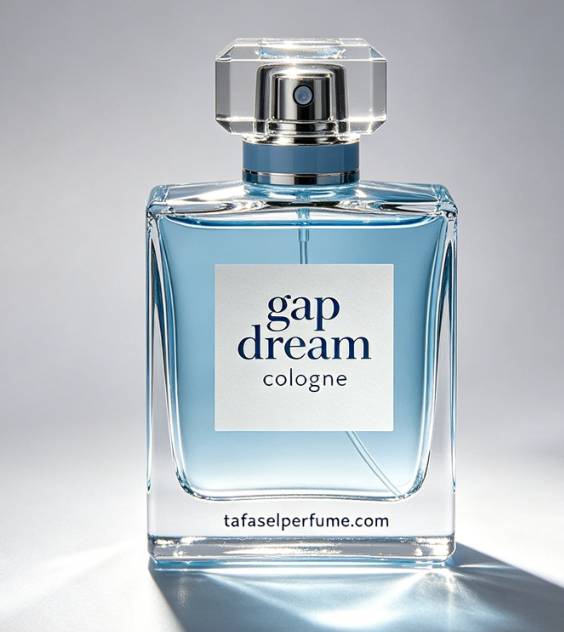
- Gap Dream Cologne · The Ethereal Current of Nostalgia & Modernity: An olfactory reverie where crisp marine air meets the soft glow of sunlit woods — a fragrance that bridges memory and now.
Gap Dream Cologne is more than a scent; it’s a capsule of youthful freedom, distilled into a bottle. Fresh, airy, and quietly confident, it captures the feeling of an endless summer afternoon—effortless, luminous, and deeply personal.
Gap Dream Cologne arrived as a quiet disruptor in the world of accessible fragrance. Launched in the mid‑90s, it rode the wave of minimalism and authenticity, offering a crisp, aquatic‑floral blend that felt both familiar and forward. The composition is built around a transparent heart of watery melon, fresh cucumber, and sheer muguet, anchored by a warm base of sandalwood and musk. It doesn’t shout—it glows.
What makes Gap Dream enduring is its universality. It’s gender‑neutral before gender‑neutral was a category, and its understated elegance makes it a wardrobe staple for those who prefer scent as an aura rather than a statement. Decades later, it remains a cult favorite, evoking a sense of carefree optimism that transcends trends. This article explores its layers, its legacy, and why it continues to captivate new generations.
1. The Dreamscape Accord
Gap Dream Cologne opens with an effervescent splash of watery citrus and a hint of green melon, instantly transporting you to a coastal morning. The top notes are not sharp but luminous—like sunlight filtered through sheer curtains. This accord is the signature of the fragrance, setting a tone that is both refreshing and introspective. It’s a scent that doesn’t demand attention but quietly commands it, making it perfect for both office wear and weekend escapes.
2. Marine freshness & the Cucumber note
The aquatic facet of Gap Dream is achieved through a delicate interplay of marine aldehydes and cucumber. Unlike the briny, ozonic notes of many marine fragrances, Dream’s cucumber is crisp and cooling, evoking sliced cucumber on a summer salad. It adds a vegetal, almost soothing quality that balances the citrus. This note is often overlooked in perfume critiques, yet it’s the backbone of the fragrance’s “clean skin” character. Greenley Eau de Parfum explores a similar fresh greenness, but Dream keeps it lighter, more aqueous.
3. Muguet: the silent floral heart
At the heart of Gap Dream lies muguet (lily of the valley), a flower that smells of dewy woods and spring rain. Here, it’s rendered without sweetness, allowing a transparent, slightly powdery floralcy to emerge. The muguet in Dream is not romantic in the traditional sense; it’s more like the memory of a garden after a shower—clean, green, and fleeting. This makes the cologne surprisingly versatile, pairing well with both casual denim and tailored linen.
4. Sandalwood & Musk: the warm embrace
The base of Gap Dream is where the fragrance reveals its tenderness. Sandalwood provides a creamy, woody warmth, while musk adds a soft, skin‑like glow. Together, they anchor the ethereal top and heart notes, preventing the cologne from evaporating into thin air. This dry‑down is intimate—it stays close to the skin, creating a personal aura that invites closeness. It’s a stark contrast to the loud, woody‑amber bases of many contemporary masculines, and it’s precisely what gives Dream its cult status among minimalists.
5. Unisex appeal before the trend
Long before the perfume industry embraced gender‑neutral marketing, Gap Dream was quietly worn by everyone. Its fresh, non‑floral (or softly floral) composition defied the rigid masculine/feminine binary. Men appreciated the clean, soapy undertone; women loved the airy lightness. This universality is not an accident—it was a deliberate choice by the perfumers to craft a scent that smelled like “a beautiful person,” not a gendered stereotype. Today, as the industry shifts toward inclusivity, Dream stands as a prescient classic.
6. Gap Dream vs. Modern aquatic colognes
Modern aquatic fragrances often rely on heavy doses of dihydromyrcenol and calone, resulting in sharp, “blue” scents that can be overwhelming. Gap Dream takes a different path: it uses aquatic notes sparingly, letting the cucumber and muguet provide the freshness. The result is a scent that feels natural, not synthetic. It’s closer to a breezy seaside garden than to a chemical ocean. This subtlety makes Dream an excellent alternative for those who find contemporary aquatics too aggressive.
7. The 90s minimalist aesthetic
The 1990s were a decade of clean lines, grunge, and quiet rebellion. Gap Dream embodied this spirit with its simple, frosted bottle and uncomplicated name. It was the fragrance of the coffee shop, the record store, and the art gallery—effortless and intellectual. Wearing Dream today is a nod to that era, but its freshness keeps it from feeling dated. It’s a time capsule that still smells contemporary, a testament to the enduring power of restraint in perfumery.
8. Layering with Gap Dream
Because of its transparent structure, Gap Dream is a fantastic layering partner. It works beautifully under warmer, spicier fragrances (like a sandalwood‑forward scent) to add a fresh lift, or over citrus oils to extend their brightness. Many fans layer Dream with a vanilla or tonka bean base to create a creamy, gourmand‑fresh hybrid. Its simplicity is its strength—it plays well with others without losing its identity.
9. Longevity and sillage
Gap Dream is an eau de cologne, so longevity is moderate—around 3 to 5 hours on skin, with a soft sillage that stays within arm’s reach. This isn’t a fragrance that announces your arrival; it’s one that lingers after you’ve left a room, a gentle memory. For those who prefer understated projection, Dream is ideal. To extend its life, apply to pulse points and layer with the matching body lotion (if available) or a neutral moisturizer.
10. Why it remains a cult classic
Decades after its release, Gap Dream maintains a devoted following. Its appeal lies in its authenticity: it doesn’t try to be trendy or groundbreaking; it simply smells good, clean, and human. In a world of hyper‑masculine or hyper‑feminine fragrances, Dream offers a refreshing middle ground. It’s the scent of a Saturday morning, of fresh sheets, of a gentle breeze. That timelessness is what keeps it on the shelves and in the hearts of those who discover it.
11. The future of Dream
As of 2026, Gap Dream has seen limited re‑releases and reformulations, but its legacy is secure. The fragrance continues to inspire indie perfumers and collectors alike. Whether Gap decides to revive it as a heritage scent or let it remain a relic of the 90s, its influence is undeniable. Dream represents a moment in fragrance history when simplicity was radical—and that moment, like the scent itself, is worth holding onto.
Frequently Asked Questions about Gap Dream Cologne
1. Is Gap Dream Cologne still in production?
Gap Dream has been discontinued in many markets, but it occasionally reappears as a limited‑edition or online exclusive. Vintage bottles are available on resale platforms, and the scent remains a beloved classic.
2. Is Gap Dream a masculine or feminine fragrance?
It is universally regarded as a unisex scent. Its fresh, aquatic‑floral composition makes it suitable for anyone who appreciates clean, understated fragrances.
3. What does Gap Dream smell like?
It opens with watery citrus and cucumber, develops into a soft muguet (lily of the valley) heart, and dries down to a warm sandalwood and musk base. It’s fresh, green, and subtly powdery.
4. How long does Gap Dream last on skin?
As an eau de cologne, it lasts approximately 3–5 hours with moderate sillage. Reapplication may be needed for all‑day wear.
5. Can I layer Gap Dream with other fragrances?
Absolutely. Its transparent, clean profile makes it an excellent base or top layer. It pairs especially well with warm vanillic or woody scents.
6. What is the difference between Gap Dream and Gap Heaven?
Gap Dream is fresh and aquatic‑floral, while Gap Heaven was more woody and spicy (with notes of incense and cedar). Dream is lighter and more daytime‑oriented.
7. Is Gap Dream suitable for sensitive noses?
Yes, due to its moderate projection and clean, non‑synthetic character, it is often well‑tolerated by those sensitive to heavy perfumes.
8. Where can I buy authentic Gap Dream cologne?
Check online retailers like eBay, Mercari, or specialty fragrance archives. Be cautious of counterfeit bottles; look for the classic frosted glass and simple label.
9. What year was Gap Dream launched?
It was launched in 1996 as part of Gap’s “Dream” collection, alongside other scents like Grass and Heaven.
10. Does Gap Dream have any citrus notes?
Yes, there is a subtle citrus brightness in the top notes, though it’s more watery and melon‑like than sharply lemon or orange.
11. Is Gap Dream a good summer fragrance?
It’s perfect for warm weather—light, refreshing, and never cloying. Its aquatic and green notes make it a go‑to for spring and summer.
12. Can I use Gap Dream as a room spray?
Many fans do! Its clean, non‑overpowering scent makes it a lovely linen or room mist, though it’s designed for skin application.
Gap Dream Cologne — a fragrance that dreams in watercolors. Explore more olfactory stories at Tafaseel Perfume Articles.


