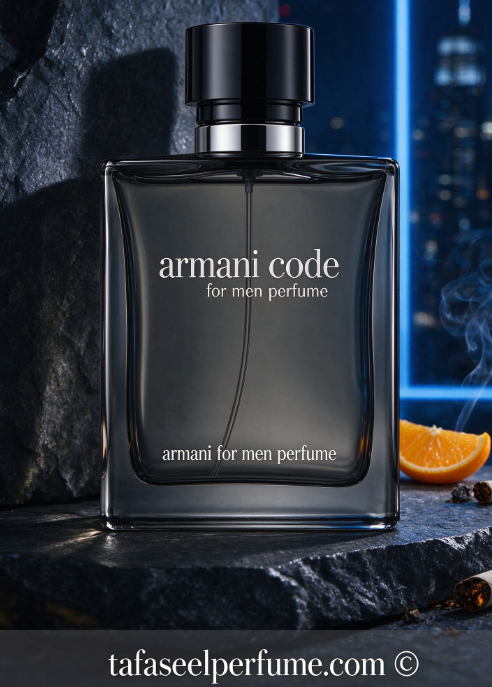
- Armani Code for Men Perfume: The Complete Guide to Notes, Performance, Flankers, and Whether It Still Deserves a Place in Your Rotation: Armani Code for Men is one of those fragrances that refuses to disappear. Launched in 2004, it arrived at a moment when men’s designer perfumery was shifting toward darker, more seductive territory, and it carried a certain Milanese sleekness that made it feel instantly grown-up without being old-fashioned.
Armani Code for Men is one of those fragrances that refuses to disappear. Launched in 2004, it arrived at a moment when men’s designer perfumery was shifting toward darker, more seductive territory, and it carried a certain Milanese sleekness that made it feel instantly grown-up without being old-fashioned. Nearly two decades later, the name “Code” has grown into a small universe of concentrations and flankers—EDT, EDP, Parfum, Profumo, Absolu—each offering a different interpretation of the same core idea: citrus on top, a spiced heart, and a warm, tonka-and-wood base that sits close to the skin. This guide cuts through the noise. It explains what the current Armani Code for Men actually smells like, how the EDT and EDP differ, where the performance debate comes from, who it suits, and how it stacks up against the rest of the line and the broader designer market.
1. What Armani Code for Men Smells Like: Notes, Structure, and Scent Character
2. Armani Code EDT vs. EDP: Which Concentration Should You Choose?
3. Performance: The Longevity and Projection Debate, Explained Honestly
4. When and Where to Wear It: Season, Occasion, and Dress Code
5. Price, Value, and the Refillable Bottle Question
6. Reformulation, Batch Codes, and the “Original vs. New” Problem
7. Armani Code vs. the Rest of the Line—and the Best Alternatives
1. What Armani Code for Men Smells Like: Notes, Structure, and Scent Character
The modern Armani Code for Men Eau de Toilette is built around a fougère-ambery structure, but it is not a loud, barbershop fougère in the traditional sense. The opening is driven by citrus—bergamot and lemon in the original architecture, with green mandarin appearing in the newer EDP and Parfum expressions—but the citrus is rarely the star for long. Almost immediately, a spicy-floral heart moves forward: star anise and olive blossom in the classic EDT, nutmeg and lavandin in the EDP. That anise note is the fragrance’s fingerprint: slightly licorice-like, aromatic, and just sharp enough to keep the composition from becoming generic.
The base is where Armani Code earns its reputation as a “date-night” scent. Tonka bean supplies a creamy, almond-sweet warmth, while cedarwood and guaiac wood add dryness and a subtle smokiness. In the original EDT, traces of leather and tobacco round out the drydown, giving it a soft, worn-in sensuality rather than a gourmand sugar bomb. The overall effect is polished and intentionally intimate: it is not designed to fill a room, but to be discovered at conversational distance. Some wearers find the opening slightly harsh or “flattened” by the sweetness underneath, while others appreciate the contrast between the bright citrus lift and the warm, powdery finish. Either way, the DNA is unmistakable: citrus, anise-or-nutmeg spice, tonka, and wood, arranged in a way that feels more “evening” than “office” from the first spray.
If you enjoy the smooth, slightly powdery warmth of Maison Alhambra’s clone-style releases or the clean citrus-floral balance of Jo Malone Orange Blossom, Armani Code sits in a similar “refined but approachable” lane—though it leans distinctly warmer and more masculine in its spicing.
2. Armani Code EDT vs. EDP: Which Concentration Should You Choose?
The biggest practical decision most buyers face is EDT versus EDP, and the answer depends less on “which is better” and more on what you want the fragrance to do. The Eau de Toilette is the lighter, more citrus-forward expression. It opens with a brighter bergamot-lemon sparkle and a clearer anise accent, then dries down to a tonka-cedar base that stays relatively close to the skin. The Eau de Parfum, particularly the 2021 and later formulations, pushes the composition in a creamier, sweeter direction: green mandarin and nutmeg replace some of the EDT’s sharper citrus-spice contrast, and the base becomes richer with tonka absolute and a suede-like softness. In side-by-side wear tests, the EDP is often described as “fuller” and more vanillic, while the EDT retains a crisper, more classic Code profile.
Concentration matters here, but not in the way marketing copy often implies. The EDP contains a higher percentage of fragrance oil than the EDT, yet higher concentration does not automatically mean stronger performance on every skin type. Many users find the EDP smoother and longer-lasting in the drydown, but a significant minority report that the modern EDP fades surprisingly quickly, sometimes within a few hours. The EDT, meanwhile, is often praised for a reliable 7–8 hours on skin with a couple of hours of moderate projection—though the reformulated batches are not always consistent. The practical takeaway: if you want the brightest, most recognizably “Code” opening and you do not mind reapplying, the EDT is the purist’s choice. If you prioritize a softer, sweeter, more skin-close drydown and are willing to test the current batch on your own skin before committing, the EDP is the more modern interpretation.
For a broader look at how citrus-forward men’s fragrances behave in different concentrations, the logic here mirrors what you see in the Yves Saint Laurent Y line: the EDT is the extroverted, easier-to-wear version, while the EDP trades some freshness for depth and warmth.
3. Performance: The Longevity and Projection Debate, Explained Honestly
No fragrance in the designer segment generates more polarized performance reports than Armani Code. On one side, you have wearers who get 7–8 hours of longevity from the EDT and describe it as an “all-day” scent with moderate but noticeable projection. On the other, you have reviews calling the same fragrance a “skin scent” within an hour, with complaints about weak sillage and the need to reapply. Both experiences are real, and the discrepancy is not simply a matter of “fake versus authentic.” It comes down to three factors: batch variation, skin chemistry, and expectations.
Armani Code has been reformulated multiple times, and performance has not stayed constant across those versions. Older batches, particularly pre-2020 EDTs, are often described as denser and longer-lasting, while some newer batches are criticized for fading faster. The 2021 EDP was positioned as a richer alternative, but a vocal segment of the fragrance community reports that the current EDP dries down into a beautiful vanilla-suede base only to disappear within 2–4 hours on skin. Skin chemistry amplifies these differences: dry skin tends to hold fragrance poorly, while moisturised skin and fabric application can extend wear time considerably. If you are testing Armani Code in a store, spray it on skin—not just a paper strip—and give it at least four hours before deciding whether the performance meets your standard. For context, the longevity expectations for a designer EDT in this price bracket are usually in the 5–8 hour range, and Armani Code sits at the lower end of that spectrum for some wearers and comfortably within it for others.
4. When and Where to Wear It: Season, Occasion, and Dress Code
Armani Code for Men is not a year-round, all-occasion workhorse in the way that a blue fragrance or a light citrus cologne is. Its sweet-spicy-woody core performs best when the temperature drops and the occasion calls for a bit of polish. Across retailer guidance and wearer consensus, the sweet spot is fall and winter evenings, particularly dates, dinners, and formal or smart-casual occasions. The EDT can stretch into daytime wear in cooler weather, but it can feel heavy or cloying in high heat and humidity. The EDP, with its creamier tonka-vanilla base, is even more explicitly an evening and cool-weather fragrance; several reviews recommend it specifically for fall/winter date nights and “special occasion” wear.
For summer or hot-climate wear, Armani Code is rarely the first reach. If you want a fresh men’s scent that actually holds up in heat, the criteria are different—you need something with higher citrus volatility and less sweet base weight. The same principle applies to office wear: Armani Code can work in a conservative office during winter, but it is more “evening-adjacent” than a true daytime neutral. Think of it as a cool-weather companion rather than a signature scent for all seasons. If your wardrobe leans toward suits, knitwear, and evenings out between October and March, it fits naturally. If you live in a tropical climate and wear short sleeves year-round, sample with caution and consider the EDT over the EDP.
5. Price, Value, and the Refillable Bottle Question
Armani Code sits in the mid-to-upper tier of designer men’s fragrance pricing. At the time of writing, the EDP is listed around $175 for 4.2 oz at full retail, with periodic discounts bringing it closer to the $148–$150 range. The EDT can be found for less, particularly on the grey market or during sales, with 2.5 oz refillable sprays appearing around $79 and larger bottles representing better per-milliliter value. Whether that constitutes “good value” depends on how you weigh performance against price. A fragrance that lasts 8 hours at $80 is a different proposition from one that fades in 3 hours at $150, and the performance debate around Armani Code makes this a genuine consideration rather than an abstract one.
The refillable bottle design is a legitimate point in the fragrance’s favor, even if the sustainability angle is partly marketing. Armani has moved the Code line toward refill formats, and the bottles themselves are sturdy and visually sleek—dark, cylindrical, and understated in a way that suits the scent’s personality. If you already know you love the DNA and plan to wear it regularly, buying a refillable bottle and subsequent refills reduces both cost-per-wear and packaging waste. If you are new to the line, start with the smallest bottle you can find or a decant, because the EDT/EDP distinction and the batch-to-batch performance variation make blind-buying a larger bottle a riskier proposition than with more consistent designer releases. For a sense of how Armani Code’s pricing fits into the broader market, it is broadly comparable to entry-level Versace Eros and Pour Homme pricing, though the Armani tends to carry a slight premium for the brand’s more “dressed-up” positioning.
6. Reformulation, Batch Codes, and the “Original vs. New” Problem
If you spend any time in fragrance communities, you will encounter the claim that Armani Code “used to be better.” This is not pure nostalgia. The original 2004 EDT has been reformulated multiple times, and the current bottle design—introduced alongside the newer Parfum and EDP releases—contains a formula that differs from early batches in both aroma profile and performance. Older EDT batches are often described as having a richer, more three-dimensional anise-leather-tobacco drydown, while some newer batches are criticized for feeling thinner and fading faster. The 2021 EDP was itself revised, with the 2024-era EDP reportedly sharing more DNA with the discontinued Code Profumo than with the original 2021 EDP. This is not unique to Armani—almost every long-running designer fragrance undergoes similar revisions—but it matters for buyers who are chasing a specific memory or a specific batch.
The practical advice is straightforward. First, check the batch code on any bottle you buy from a discounter or secondary market, and cross-reference it with production-date tools. Second, do not assume that “newer” means “better” or “worse”; the current EDP is a genuinely pleasant fragrance, but it is not a like-for-like replacement for a 2015 EDT. Third, if you fall in love with a specific version, buy a backup sooner rather than later, because reformulations tend to arrive without warning and the secondary market for discontinued batches becomes expensive quickly. The Armani Code line is a case study in why sampling and batch awareness are basic skills for anyone buying designer fragrance seriously.
7. Armani Code vs. the Rest of the Line—and the Best Alternatives
Armani Code is no longer a single fragrance; it is a family. The Parfum is the most intense and modern expression, with sage, bergamot, and iris added to the tonka-wood core; it is the longest-lasting and most “dressed-up” of the current lineup. Code Profumo, now discontinued but still widely discussed, pushed the formula into darker, smokier territory with added tobacco and amber, and it remains a favorite among wearers who found the original EDT too light. Code Absolu is the sweetest of the line, doubling down on vanilla and adding suede, and it polarizes the community: some love its warmth and projection, others find it unbalanced compared to Profumo. The original EDT, for all its reformulation issues, still has the most recognizable “Code” identity—the anise-leather-tobacco accord that started it all.
Outside the Armani ecosystem, the closest alternatives fall into two camps. If you want a smoother, more modern fougère-ambery scent with better performance consistency, YSL Y EDP and Jimmy Choo Man are natural cross-shops. If you want the same general scent profile at a lower price, the clone market has produced several credible approximations, including La Rive Password and various “Black Code” interpretations that capture the citrus-anise-tonka structure with varying degrees of fidelity. For a broader survey of fresh men’s options that hold up in warm weather—where Armani Code is weakest—the best summer men’s colognes guide covers that territory directly. The honest conclusion is that Armani Code is neither the best performer nor the best value in its class, but it has a specific mood—polished, slightly retro, intimate—that few direct competitors replicate exactly. If that mood is what you want, it remains a worthwhile wear. If you want versatility and reliability above all, the alternatives are easier to recommend without caveats.
Frequently Asked Questions About Armani Code for Men Perfume
Is Armani Code for Men still a good fragrance in 2026?
Yes, with caveats. The scent profile remains distinctive and wearable, particularly in cool weather and evening settings, but performance varies by batch and concentration, and it is no longer the value proposition it once was. Sample before committing.
How long does Armani Code EDT last on skin?
Reports range widely. Many wearers get 7–8 hours with moderate projection, while others experience significantly shorter wear time. Skin type, batch, and application method all affect longevity.
What is the difference between Armani Code EDT and EDP?
The EDT is brighter, more citrus-forward, and closer to the original 2004 profile. The EDP is creamier, sweeter, and more tonka-vanilla focused, with green mandarin and nutmeg replacing some of the EDT’s sharper anise-citrus contrast.
Is Armani Code a good date-night fragrance?
Yes—this is arguably its strongest use case. The warm, skin-close drydown and soft spicing make it naturally suited to intimate evening settings, especially in fall and winter.
Does Armani Code work in summer?
Generally, no. The sweet tonka-wood base can feel heavy in heat and humidity. The EDT can be worn on cooler summer evenings, but fresh citrus or aquatic fragrances are better daytime choices in warm weather.
Has Armani Code been reformulated?
Yes, multiple times. The original EDT has undergone revisions, and the current EDP differs from earlier EDP batches. Older batches are often preferred by enthusiasts for density and performance, but current versions remain wearable interpretations of the same DNA.


