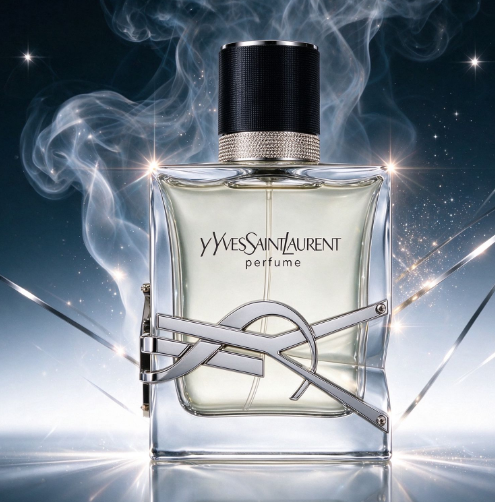
- Y Yves Saint Laurent Perfume: The Complete Guide to the Y Line and the House Behind It: What “Y Yves Saint Laurent perfume” actually means: it is the letter Y — the modern men's pillar of the house, launched in 2017 with the Eau de Parfum as its flagship — attached to the full name of a brand whose fragrance catalogue also includes Black Opium, Libre, Mon Paris, Opium, Kouros and La Nuit de L'Homme.
What “Y Yves Saint Laurent perfume” actually means: it is the letter Y — the modern men's pillar of the house, launched in 2017 with the Eau de Parfum as its flagship — attached to the full name of a brand whose fragrance catalogue also includes Black Opium, Libre, Mon Paris, Opium, Kouros and La Nuit de L'Homme. The Y line itself spans an Eau de Toilette, an Eau de Parfum, Y Le Parfum and a set of Elixir flankers, priced in a wide band from roughly $90 to $180 depending on concentration and size.
The search phrase is a small clue to a big confusion. People type “Y Yves Saint Laurent perfume” because the bottle says a single letter and the box says the founder's full name, and because the house has released so many variations on that letter that the shelf reads like a puzzle. This guide untangles the whole catalogue: what Y is, how it differs from the older pillars, what Black Opium and Libre are doing on the same counter, which concentrations are worth the extra money, and where the genuine value sits. If you want one recommendation before reading on, it is this: Y Eau de Parfum is the safest entry point in the men's line, Libre Eau de Parfum the strongest in the women's, and Black Opium the one that outsells both. Everything after that is nuance.
A note on how to read a YSL shelf, because the naming is genuinely user-hostile. The same word can mean a family, a concentration, and a marketing tier. Y is a family. Y Le Parfum is a concentration inside that family. Y Elixir is a different, darker composition entirely, not simply a stronger version. Multiply that pattern across Black Opium, Libre and MYSLF and you have a counter where two bottles carrying almost identical names can smell nothing alike. The sections below take each pillar in turn, define its family, and flag the flankers that are worth the money.
1. Why the Letter Y Became a Whole Fragrance Family — the naming logic, and how to tell the four Y bottles apart at a glance.
2. Y Eau de Parfum: The Modern Men's Pillar — the apple-and-sage composition that replaced the old codes.
3. Black Opium: The Coffee-Vanilla Juggernaut — why one flanker out of nine actually matters.
4. Libre: Lavender, Orange Blossom, and the Quiet Revolution — the house's most interesting women's release in decades.
5. Mon Paris: The Romantic Floral and Its Limits — lovely, sweet, and narrower than its marketing suggests.
6. The Men's Line Beyond Y: La Nuit de L'Homme and MYSLF — the two poles a men's buyer should compare first.
7. The Classics: Opium, Kouros, Rive Gauche — what the back catalogue still does better than anything new.
8. Concentrations Explained: EDT, EDP, Le Parfum, Elixir
— what the extra forty dollars actually buys.
9. Buying Smart: Price, Authenticity, and What to Skip — the honest verdict on value and the counterfeit traps.
1. Why the Letter Y Became a Whole Fragrance Family
When YSL launched Y in 2017, it was making a bet that a single letter could carry the men's business the way Sauvage carries Dior's. The pitch was biographical rather than olfactory: Yves Saint Laurent's own initials, a monogram already printed on every handbag and lipstick case, repurposed as a fragrance name. That makes the bottle instantly recognisable and the marketing effortless, and it also creates the confusion that sends people searching for “Y Yves Saint Laurent perfume” in the first place, because a one-letter name is nearly impossible to search precisely.
The practical consequence is that four distinct products share a silhouette. The Y Eau de Toilette is the lighter, sharper, more citrus-forward opening version. The Y Eau de Parfum is the bestselling centre of the line, deeper and woodier, and the one most people mean when they say “Y.” Y Le Parfum pushes further into amber and incense territory with a warmer, denser dry-down. And Y Elixir abandons the family resemblance almost entirely — it is a lavender-and-oud composition that shares a letter and nothing else. Four bottles, one name, four different smells.
This is not unique to YSL, but it is unusually severe here. Most houses differentiate flankers with a word — Intense, Absolu, Sport — and the shopper can at least parse the hierarchy. With a letter, there is no hierarchy to parse. The bottle shape narrows from the EDT's clear glass to the EDP's darker lacquer to the near-black of Elixir, and that gradient is the only reliable visual cue. Learn it before you shop, or you will end up buying the wrong concentration for the person you are buying for.
If you are shopping across houses rather than within one, our Men s Perfume index is a faster way to place Y against its actual competitors than any single-brand guide can be. The short version: Y competes directly with Sauvage and Invictus, and it wins on refinement while losing on projection.
2. Y Eau de Parfum: The Modern Men's Pillar
Y Eau de Parfum opens with a crisp, almost green apple note sharpened by bergamot and ginger — a deliberately clean, modern start that reads as “showered and well-dressed” rather than “loud.” The heart is sage and juniper, herbal and slightly cool, and the base settles into a soft amberwood with tonka and a restrained cedar. It is a composition built for the office, the commute, and the dinner that follows, and it does all three without ever becoming a statement.
That restraint is the point and also the criticism. Y EDP sits in the modern “blue fragrance” category — fresh, sweet-woody, broadly likeable — and it is a very good example of that genre rather than a departure from it. Longevity is respectable at six to eight hours on skin, projection is moderate, and the sweetness in the base keeps it from feeling austere. Men who want to be noticed from across a room will find it too polite; men who want a signature they can wear four days a week will find it exactly right. The Eau de Toilette is brighter and shorter-lived, and worth choosing only if you actively prefer the citrus opening to the woody finish.
Where Y EDP genuinely earns its reputation is versatility. It layers cleanly with nothing, offends almost nobody, and survives hot weather better than most amberwoods because the apple-and-sage top keeps it buoyant. That makes it an easy first bottle and a slightly boring tenth. If you already own Sauvage, Bleu de Chanel or Acqua di Giò Profondo, Y adds less than the marketing implies — it is a lateral move, not an upgrade. If you own none of them, it is arguably the most wearable of the group.
The Ranking section tracks how these pillars actually perform in real-world wearability rather than launch-month hype, which is useful context given how aggressively the flanker treadmill moves in this category.
3. Black Opium: The Coffee-Vanilla Juggernaut
Black Opium launched in 2014 and became the commercial centre of gravity for YSL's women's business, and the reason is a single idea executed well: coffee, vanilla, and white flowers. The opening is a sharp pink peppercorn and pear, the heart is a jasmine-heavy white floral, and the base is a roasted coffee accord over vanilla and patchouli. It is a gourmand that avoids smelling edible, and a night fragrance that many people wear in daylight anyway.
The flanker count is the problem. Black Opium has spawned Extreme, Neon, Illicit Green, Le Parfum, Nuit Blanche, Floral Shock, and more — each nudging the formula toward a different axis. Two are worth understanding. Black Opium Le Parfum is the one that makes the original idea coherent: it strips some of the fruit, deepens the coffee, and adds a vanilla so dense it reads almost like amber. Black Opium Extreme pushes the coffee to the front with a darker, more bitter roast. Everything else is largely a recolouring of the same composition, and buying a 90 ml bottle of the original is a better use of money than buying three flankers.
Performance is where Black Opium justifies its reputation. Longevity routinely runs eight hours or more, projection is strong for the first two hours and then settles into a warm skin scent that survives a coat and a scarf. It is not subtle and it is not meant to be. The criticism that lands fairly is that it is everywhere — it is one of the most-worn women's fragrances in the world, and smelling like a lot of other people is a real cost even when the scent itself is good.
If you are buying it as a gift and want to reduce the risk of buying something the recipient already owns, our Women s Perfume index lists near-neighbours that deliver the same coffee-vanilla payoff without the ubiquity — and the Perfume Gift Sets category covers the boxed formats, which are frequently better value than buying the bottle alone.
4. Libre: Lavender, Orange Blossom, and the Quiet Revolution
Libre, launched in 2019, is the most interesting thing the house has done in women's fragrance in twenty years, and it did it by borrowing a note from the men's aisle. Lavender — the classic barbershop herb — is placed at the centre of a women's composition, sharpened with mandarin, softened by orange blossom, and grounded in vanilla and musk. The result is a floral that reads as clean and slightly androgynous rather than sweet, and it has aged remarkably well because it never chased a trend.
The flanker family here is more coherent than Black Opium's. Libre Eau de Parfum is the balanced centre and the one to buy first. Libre Intense adds vanilla and a lavender absolute, pushing it warmer and heavier — genuinely a different wear, better in cold weather. Libre Le Parfum goes further into honeyed amber and is the most luxurious of the three. Libre L'Absolu Platine reframes the whole thing around a metallic lavender, which is conceptually bold and commercially narrow. None of these are cash-ins in the way Black Opium's flankers are; each makes a specific argument.
Libre is also the house's most gender-flexible release, which is why it appears in cross-category lists as often as it does in women's ones. Men wear it comfortably because the lavender keeps it from tipping floral, and women wear it because the orange blossom keeps it from tipping barbershop. If that is the kind of scent you are looking for, our Unisex Perfume collection is the right place to keep browsing after you finish here.
Performance is solid rather than spectacular: six to eight hours, moderate projection, a warm and slightly soapy dry-down. It is the YSL women's fragrance most likely to still be worn in ten years, and the one least likely to be discontinued.
5. Mon Paris: The Romantic Floral and Its Limits
Mon Paris, launched in 2016, is a sweet fruity floral built around strawberry, raspberry, pear, datura, peony and a patchouli-musk base. It is charming, it is youthful, and it is exactly as wide as its brief: romance, spring, daytime, gifting. What it is not is versatile. In heat it can turn syrupy, and the datura note gives it a slightly narcotic, almost overripe quality that some wearers love and others find cloying within an hour.
The flankers — Intensément, Eau de Parfum Intense, Blooming Bouquet, and a rotating set of limited editions — follow the same pattern: more fruit, more sweetness, more flowers. Mon Paris Intensément is the darkest and most successful, adding patchouli and a denser chypre structure that stops the sugar from running away. If you like the idea of Mon Paris but not the execution, that is the bottle to try, and it is the one most likely to survive into evening wear.
The honest assessment is that Mon Paris is a competent commercial floral rather than a memorable one. It sells well because it is pretty and giftable and the bottle is attractive, not because it does anything the market lacked. Buyers comparing it against Libre almost always choose Libre on smell and Mon Paris on packaging. If the recipient is under twenty-five and the occasion is a birthday, Mon Paris is a safe answer; if the recipient wears fragrance seriously, it is the weaker choice.
For gift occasions specifically, the Mini Size & Gift Sets category is worth checking before committing to a full bottle — a small set lets you include a Mon Paris mini alongside something the recipient is more likely to actually finish.
6. The Men's Line Beyond Y: La Nuit de L'Homme and MYSLF
YSL's men's business does not begin and end with Y, and two other pillars deserve attention. La Nuit de L'Homme, launched in 2009, is a cardamom-and-lavender composition over cedar and coumarin — warm, spicy, softly barbershop, and widely regarded as one of the best designer releases of its decade. It is a date fragrance by reputation and a genuinely elegant one by construction, and it remains the reference point against which Y's blue-fresh cleanliness looks a little generic.
MYSLF, launched in 2023, is the house's attempt to answer the modern unisex-leaning men's market: an orange blossom forward composition with patchouli and woods, deliberately softer and more floral than the Y line, and marketed around a younger, less binary idea of masculinity. It is a good scent with a muddled identity — closer to Libre than to Y, and arguably better classified as shared than as men's. MYSLF Le Parfum deepens it into amber and woods and is the stronger of the two concentrations.
The older pillars still hold up. L'Homme is a clean citrus-and-spice office scent, and Kouros, from 1981, remains one of the most aggressive masculines ever released — an animalic, herbal, unapologetically loud composition that modern noses either find exhilarating or unbearable. None of these are obsolete; they are simply different arguments about what a men's fragrance should do.
Comparing across the whole category rather than within one house is the fastest way to get this right, and the Perfume Brands hub is organised for exactly that kind of side-by-side reading.
7. The Classics: Opium, Kouros, Rive Gauche
Opium, launched in 1977, is the fragrance that made YSL a fragrance house rather than a fashion label with a sideline. A dense spice-and-resin composition built on clove, cinnamon, myrrh, amber and incense, it was transgressive in its moment and remains potent today. Reformulation has softened it considerably — the modern version is smoother and less animalic than vintage bottles — but the structure is intact enough that it still reads as a serious oriental rather than a nostalgia piece.
Rive Gauche, from 1971, is the other pillar of the back catalogue: an aldehydic floral with a green, slightly soapy character that anticipates everything the market now calls “clean.” It is beautiful, difficult, and almost entirely absent from modern marketing, which means it survives on reputation and on the loyalty of people who discovered it decades ago. Kouros completes the trio, and it is the one most likely to divide a room.
These three matter for a practical reason: they demonstrate what the house can do when it is not chasing a flanker. Opium has more structural complexity in its first thirty seconds than the entire Y family has in an afternoon, and Rive Gauche does restraint better than any modern release here. Buying them is cheap — they sit at standard designer pricing, and vintage bottles circulate widely — and wearing them is a genuine point of difference in a market saturated with blue ambers.
For anyone researching the historical context before buying, the Perfume article library carries reviews of comparable vintage and reformulation stories across houses, which is useful given how much Opium's current formula differs from the original.
8. Concentrations Explained: EDT, EDP, Le Parfum, Elixir
The concentration ladder determines most of the price difference within a YSL family, and it is worth understanding before you spend. Eau de Toilette is the lightest — higher alcohol, lower oil, shorter wear, brighter top notes. Eau de Parfum is the standard centre: more oil, longer wear, a fuller heart. Le Parfum is a distinct composition rather than simply a stronger EDP in most YSL releases, usually warmer and more resinous. Elixir is a separate brief entirely — typically the darkest and most concentrated expression, and often a different scent family wearing the same name.
The practical rule is that the EDP is almost always the right default. It is the version the brand designs the composition around; the EDT exists to hit a lower price point and is usually the same idea with the interesting parts removed; the Le Parfum and Elixir versions exist to sell a second bottle to someone who already owns the EDP. There are exceptions — Libre Intense is arguably better than Libre EDP, and Black Opium Le Parfum is the definitive version of that scent — but they are exceptions.
Price bands follow the concentration. Standard EDT and EDP releases sit roughly $95–$140 for 50–100 ml; Le Parfum versions push to $150–$180; Elixir and collector presentations go higher. Black Opium and Libre occupy the same bands. The gap between a 50 ml and a 100 ml is usually proportionally smaller than the gap between an EDT and an EDP, which is why buying the larger bottle of the right concentration beats buying the smaller bottle of the wrong one.
9. Buying Smart: Price, Authenticity, and What to Skip
YSL is one of the most counterfeited fragrance brands in the world, because the bottles are simple, the brand is universally recognised, and the discount appetite is enormous. The safe channels are department stores, the brand's own boutiques, major beauty retailers, duty-free, and reputable discounters selling overstock with intact batch codes. The unsafe channels are marketplaces, social sellers, and any listing offering a sealed 100 ml Black Opium at a third of retail — that inventory does not exist at that price, and the bottle will not be what the box claims.
Three checks before paying: the batch code on the box should match the one etched or printed on the bottle; the atomiser should depress smoothly with an even spray rather than a wet dribble; and the cellophane should be tight and machine-finished rather than hand-wrapped. Beyond that, buy from sellers who accept returns, because the only reliable test of authenticity is smelling it next to a known-good bottle.
What to skip, plainly: most of the flanker catalogue. Black Opium has close to a dozen variations and only two or three are meaningfully different scents. Y has four bottles and the EDP is the only one most buyers need. Mon Paris's limited editions are recolourings. The money that gets spread across three flankers buys one excellent bottle of something else entirely — and if that something else is skincare or body product rather than more fragrance, the Beauty section covers how the house's ancillary lines compare.
The final verdict: buy Y EDP if you want a modern, wearable men's signature; Libre EDP if you want the most interesting women's release the house has made this century; Black Opium Le Parfum if you want the definitive version of the coffee-vanilla idea; and La Nuit de L'Homme if you want the best-composed thing on the men's shelf regardless of trend. Everything else on the YSL counter is either a variation on one of those four or a classic worth trying on skin before you commit.


