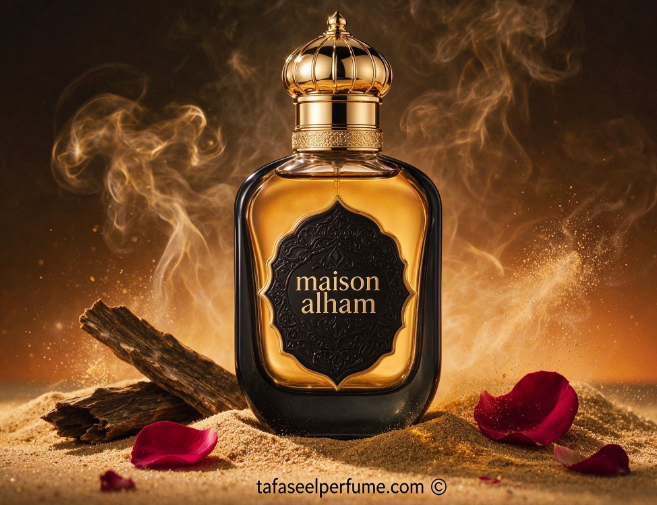
- Maison Alhambra Perfume: An Honest Guide to the House That Made Clone Scents Respectable: The short version: Maison Alhambra is an Emirati fragrance house operating out of the same manufacturing ecosystem as Lattafa, known for releasing scent profiles that deliberately echo far more expensive designer and niche releases at a fraction of the price. A typical 100 ml bottle retails in the $20–$40 range, which is roughly one-fifth of what the originals cost.
The short version: Maison Alhambra is an Emirati fragrance house operating out of the same manufacturing ecosystem as Lattafa, known for releasing scent profiles that deliberately echo far more expensive designer and niche releases at a fraction of the price. A typical 100 ml bottle retails in the $20–$40 range, which is roughly one-fifth of what the originals cost. The trade-off is not a secret: you get a recognisable idea, decent but variable performance, and packaging that is honest about its price bracket.
The search term “maison alham” is a truncated version of a name that has spread almost entirely by word of mouth — through TikTok, through Reddit threads arguing about whether the clone is “95% accurate,” and through discount shelves in the Gulf and Europe. That is a revealing origin. This is not a brand built by advertising campaigns; it is a brand built by people comparing two bottles and deciding the cheaper one is close enough. Understanding that tells you what it is good for and what it is not. It is excellent for building a large, varied collection on a small budget. It is not the place to look for originality, and it does not pretend to be.
This guide covers what the house actually does well, which of its lines are worth your attention, how it relates to Lattafa and to the brands it references, what to expect from performance, and how to buy without ending up with a counterfeit of a counterfeit — a real problem in this corner of the market. It also takes the ethics question seriously, because buying a clone is a decision with a point of view, and pretending otherwise is condescending. If you want one recommendation before reading on: the Jean Lowe series is the most consistent entry point, and it is where most people should start.
1. What Maison Alhambra Actually Is — the manufacturing family tree, and why that matters to buyers.
2. The Jean Lowe Line: The Flagship Series — the releases that built the reputation.
3. How Close Is “Close Enough”? — an honest look at accuracy, and where clones fall short.
4. Performance: Longevity, Projection, and the Batch Problem — why two bottles of the same scent can behave differently.
5. Maison Alhambra vs Lattafa: The Family Resemblance — how the two houses differ in practice.
6. The Ethics of Buying a Clone — the argument for, the argument against, and the middle ground.
7. Where to Buy and How to Avoid Fakes — the distribution reality, and the tells.
8. Who Should Buy It — and Who Shouldn't — a straight verdict for three kinds of shopper.
1. What Maison Alhambra Actually Is
Maison Alhambra is a brand produced within the Gulf fragrance manufacturing cluster centred on the United Arab Emirates, and it is closely associated with Lattafa — broadly understood to be either a sub-label or a sibling operation within the same production and distribution network. That association is not cosmetic. It means shared access to aroma chemical supply chains, shared bottling facilities, and shared distribution into the discount and export markets where these brands thrive. It also means the quality control culture is the same across both.
The business model is straightforward and openly practised across the region: take a commercially successful fragrance — usually a designer or niche bestseller — and construct a composition that reproduces its distinctive structure using cost-effective materials. The result is not a counterfeit. Nothing about the bottle claims to be the original, the name is different, the packaging is different, and no trademark is being violated. What is being reproduced is an olfactory idea, which is legal and extremely common in the industry, though it sits in a grey zone culturally.
This is why the brand has such a devoted following and such a persistent scepticism around it. People who buy it are usually clear-eyed about what it is: a way to own eight recognisable scent profiles for the price of one designer bottle. The sceptics note, correctly, that the materials are cheaper, the blending is less refined, and the result rarely matches the original's final ten percent — the part that actually separates a good fragrance from a great one.
Our Perfume Brands hub is a useful reference for placing the house against both the designer labels it references and the other Gulf producers doing similar work, since the whole category has grown well beyond a single brand.
2. The Jean Lowe Line: The Flagship Series
The Jean Lowe series is the closest thing Maison Alhambra has to a signature collection, and it is the line most often recommended to newcomers. Its releases are built around leather-heavy, smoky, woody structures — the kind of composition associated with the darker end of the niche market — and the series has earned a reputation for consistency that the brand's wider catalogue does not always match. Where other lines in the catalogue are hit-and-miss, Jean Lowe bottles tend to hold their shape from the opening through the dry-down.
What makes the series work is that the genre it targets is forgiving. Dark leather, incense, oud and amber compositions are structurally simpler than a multi-layered floral, and a good aroma chemical reconstruction can get remarkably close before the seams show. The weaknesses appear in the details — a slightly harsher opening, a less nuanced transition, a base that flattens out rather than developing. But the overall impression is convincing enough that people who own the originals frequently describe the copies as wearable rather than embarrassing.
The rest of the catalogue is broader and more uneven. There are fresh blue-fragrance reconstructions, floral releases aimed at the women's market, gourmands, and oud-based compositions in the regional style. Some are genuinely good; some are thin. The pattern is that the darker and woodier the brief, the better the result tends to be, because those structures tolerate cheaper materials more gracefully than bright citrus openings do.
If you are building a collection rather than buying one bottle, this is where the value argument becomes concrete: a set of these releases covers fresh, woody, leather, gourmand and oud territory for less than a single niche bottle, and our Unisex Perfume category is a reasonable way to browse that kind of broad-spectrum wardrobe.
3. How Close Is “Close Enough”?
The honest answer is: usually close enough to be recognised, rarely close enough to be mistaken side by side. Fragrance comparisons online tend to produce wild claims — “identical,” “99%,” “better than the original” — and those claims are almost always made from memory rather than from a simultaneous two-wrist test. When people actually spray both and compare, the pattern is consistent: the clone opens very similarly, tracks the original through the heart, and then diverges in the base, where the cheaper materials become audible as a slightly flatter, sweeter, or more synthetic finish.
That divergence is not a defect so much as an economic fact. The original formula uses captive molecules and higher-grade naturals that a $30 bottle cannot afford. What the clone buys you is the silhouette — the recognisable shape of the scent, the impression it creates on someone standing a metre away, the mood it establishes. What it does not buy you is the refinement at close range, which is precisely what fragrance enthusiasts pay the premium for.
The practical implication is that clones work best on people who are not fragrance obsessives. If your goal is to smell good at work, at a dinner, or on a date, the silhouette is all anyone around you will perceive, and it will do the job impressively for the money. If your goal is to own a great composition for its own sake, the original remains the answer, and no amount of online enthusiasm changes that.
One more nuance worth knowing: a clone of a light, citrus-forward fresh scent is generally a worse investment than a clone of a heavy oriental. The fresh category depends almost entirely on the quality of the top notes, which is where cost-cutting bites hardest. The Ranking section tracks this pattern across categories and is a useful cross-check before you commit to a whole line.
4. Performance: Longevity, Projection, and the Batch Problem
Performance is the most discussed and least predictable aspect of this category. Reports range from “eight hours, two sprays filled the room” to “gone in ninety minutes” for the same product name, and both reports are often accurate. The explanation is batch variation. Gulf producers run high volumes across multiple facilities and material suppliers, and formulations get adjusted when a component becomes unavailable or too expensive. A bottle bought in one year can genuinely smell and behave differently from one bought eighteen months later.
Maceration is the other variable. These fragrances often benefit from resting after arrival — a few weeks in a cool dark place, with the bottle opened and sprayed a few times — because the blending continues to settle after bottling. Enthusiasts treat this as normal practice in the category rather than a flaw, and many report that a harsh or thin-smelling bottle improves noticeably after a month or two of rest. Whether that is chemistry or expectation is debatable, but the practice is widespread enough to be worth trying before you write off a bottle.
Broadly, the darker releases perform better than the fresh ones: heavier resinous and leather compositions cling to skin and fabric, while the bright citrus releases fade quickly. If longevity is your priority, shop the woody and smoky end of the catalogue. If you want something for summer daytime wear, expect to reapply, and budget accordingly — a $30 bottle you spray four times a day is still a cheap bottle.
5. Maison Alhambra vs Lattafa: The Family Resemblance
The two names get used almost interchangeably online, and in practice they do overlap heavily: same manufacturing ecosystem, similar price band, similar strategy of reproducing popular profiles, similar distribution into discount channels. The differences are mostly in positioning and in which specific scents each has chosen to reconstruct. Lattafa is the larger and better-known operation with a wider catalogue and more visibility in mainstream retail; Maison Alhambra is the quieter sibling with a reputation for slightly tighter execution in a narrower range.
Quality comparisons between them tend to be inconclusive because both houses have strong releases and weak ones, and because batch variation swamps any brand-level difference. The useful approach is not to pick a brand but to pick a scent: read reviews of the specific bottle you are considering, note the year of the batch people are discussing, and accept that your experience may differ. Treating either brand as uniformly good or uniformly bad is a mistake both its defenders and its detractors make.
Where the two genuinely differ is in breadth. Lattafa's catalogue is enormous and covers nearly every genre, which means more misses but also more chances to find something excellent. Maison Alhambra's tighter output means fewer discoveries and fewer disappointments. For a first purchase, the tighter catalogue is an advantage.
6. The Ethics of Buying a Clone
This deserves a real answer rather than a hedge. The case for clones is straightforward: fragrance is priced on brand equity as much as on materials, a $300 bottle does not contain $300 of ingredients, and access to a scent idea should not be gated behind a marketing budget. People who cannot afford niche pricing still deserve to smell good, and the Gulf houses have built a legitimate business serving them. Nothing about buying a $30 interpretation of a $300 composition is dishonest, provided the buyer knows what they are getting.
The case against is equally real. Perfumery is a creative discipline, and the perfumers who compose original works are paid for originality; a market that rewards systematic copying reduces the incentive to invest in new compositions. There is also a consumer-protection angle: the clone category is opaque about batch variation and ingredient substitution in ways the designer market is not, and buyers routinely discover that the bottle they loved is no longer the bottle being sold.
The middle ground most thoughtful buyers land on is proportional. Own a few originals of the scents you genuinely love and wear regularly; use clones to explore genres you are curious about but not ready to invest in; and be honest with yourself about which is which. That is a defensible position, and it is roughly the position this guide takes.
For anyone exploring the wider category, our Perfume library covers both the originals and the interpretations, which is the only reliable way to judge a clone — by reading about the source composition first.
7. Where to Buy and How to Avoid Fakes
Distribution for this category is informal by designer standards. Bottles circulate through Gulf retailers, online discount marketplaces, importers serving diaspora communities in Europe and North America, and a long tail of small e-commerce sellers. Official brand presence in Western markets is limited, which means there is no clean “authorised retailer” list to check against — and that opacity is exactly what counterfeiters exploit.
Faking a clone is a real and growing problem, because the price point makes it profitable: a counterfeit of a $30 bottle can be sold for $18 and still look like a bargain. The tells are the usual ones, sharpened by the low base cost. Check the batch code and production date on the box against the bottle. Check the atomiser quality — a cheap clone of a clone will dribble rather than spray evenly. Check the cellophane and the print quality on the box, since counterfeits skimp on both. And check whether the seller has been in business long enough to have reviews that are not all from the same month.
The safest practical approach is to buy from sellers with an established track record and a return policy, and to accept a small price premium for that. Saving $8 on a $30 bottle by buying from an unknown marketplace seller is a bad trade. If a deal looks implausibly good even for this category, it is worth walking away.
8. Who Should Buy It — and Who Shouldn't
Buy it if you are building a collection on a budget and want breadth over depth; if you are curious about a genre — leather, oud, dark amber — and are not ready to spend $300 to find out whether you like it; if you need something to wear daily to work where a $30 bottle that smells expensive is exactly the right answer; or if you enjoy the hobby of comparison and want reference points without the outlay.
Skip it if you own the originals and are hoping for a like-for-like replacement — you will notice the difference within an hour and it will bother you; if you need guaranteed batch consistency for a signature scent you plan to rebuy for years; if you are buying a gift for someone who wears serious fragrance, because the gesture can read as a downgrade even when the scent is good; or if you want originality, since nothing in this catalogue is trying to be original.
The fair summary is that Maison Alhambra is a genuinely useful brand occupying a genuine gap in the market, at a price that changes what a beginner can afford to explore. It is not a substitute for the houses it references, and it does not need to be. Buy it for what it is, and the value is excellent. Buy it expecting something else, and you will be disappointed — not because the bottle failed, but because the expectation was never reasonable.
If the recipient of your next purchase wears fragrance seriously, the Perfume Gift Sets category covers boxed formats from the houses they are more likely to want — and a small set of minis is a better gift than a large bottle of an interpretation.


