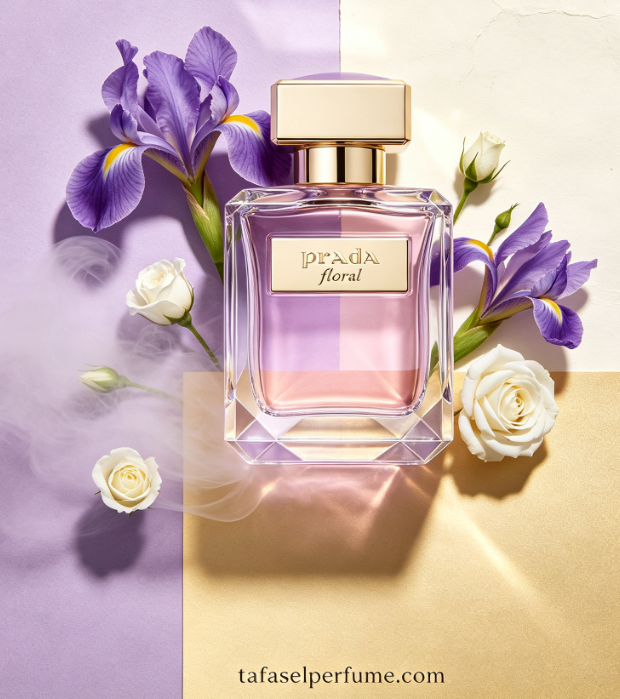
- Prada Floral · The Olfactory Architecture of Blooming Contradiction: Prada Floral is not a single perfume; it is a family of olfactory essays that rewrite the grammar of florals. From the crystalline Prada Infusion de Fleur d’Oranger to the creamy, powdery Prada La Femme, these scents are architectural: they build petals over a foundation of dissonance. This article dissects the floral lexicon of Prada — its contradictions, its materials, and the silent luxury of wearing a flower that thinks.
To speak of Prada Floral is to speak of a paradox. In the hands of Miuccia Prada and master perfumer Daniela Andrier, flowers are never innocent. They are intellectual, sometimes austere, always meticulously constructed. The Prada floral signature is a marriage of Italian light and Nordic restraint — orange blossom that smells like sun-baked Sicily, yet filtered through a lens of soapy, almost clinical aldehydes. Tuberose is not voluptuous; it is mineral, like marble. Iris, the house’s favorite material, is dusted with the melancholy of powder and the sharpness of carrot seed. This is not a garden party; it is a museum of petals, curated with architectural precision. Below, we explore the many facets of this floral universe — from the iconic Infusion collection to the audacious Paradoxe — each chapter a fragment of a larger, fragrant manifesto.
02. Prada La Femme · The Intellectual Tuberose
03. Iris Céleste · The Powdery Architecture
04. Paradoxe · The Floral Disruption
05. Luna Rossa Flora · The Edgy Bloom
06. Candy Florale · The Sugar-Coated Rebellion
07. Prada Olfactories · The Lost Garden
08. The Prada Floral Dress · Wearing the Bouquet
01. Infusion de Fleur d’Oranger · The Solar Minimalist
Infusion de Fleur d’Oranger is Prada’s ode to the bitter orange tree in its most stripped-down form. Unlike the heavy, syrupy orange blossom of many orientals, this fragrance is translucent — like morning light through a glass of iced tea. The opening is an explosion of neroli, sharp and green, immediately softened by a clean, almost soapy accord that recalls the Italian tradition of “acqua di colonia”. But what makes it truly Prada is the base: a whisper of amber and benzoin that never turns sweet, only warm and mineral. It is a floral that smells like skin after a sea bath — salty, luminous, and utterly modern. Andrier uses the molecule of hedione to give it a dizzying lift, making the orange blossom feel airborne, like petals caught in a breeze over the Ligurian coast. This is the floral for those who find traditional florals too loud; it is the sound of a single violin in an empty church.
The Art of Whisper Perfume: Soft Elegance, Loud Memory captures a similar minimalist ethos, while Burberry Her offers a sweeter counterpoint.
02. Prada La Femme · The Intellectual Tuberose
La Femme is Prada’s most subversive floral. Tuberose is usually the diva of perfumery — loud, creamy, almost carnal. But here, it is tamed by a shock of frangipani and a dose of beeswax absolute that gives it a waxy, honeyed texture, yet the overall effect is dry, almost chiseled. The opening is a burst of bitter orange and pepper, immediately cutting through the flower’s richness. Then, the tuberose emerges, but it is not the indolic, heady flower of the 1980s; it is a tuberose washed in cold water, its petals sculpted from marble. The dry-down reveals a vetiver and patchouli base that grounds the fragrance in earthiness, making it a floral that could be worn by a curator in a concrete gallery. La Femme is a statement: femininity is not softness; it is structure. It shares a similar architectural tension with Initio Parfums · The Alchemy of High‑Perfume Architecture.
03. Iris Céleste · The Powdery Architecture
Iris is Prada’s signature material, and Iris Céleste is its most ethereal expression. The fragrance opens with a sparkling citrus (bergamot and mandarin) that quickly fades to reveal the cold, starchy elegance of orris butter. This is not the sweet, lipstick iris of many designer fragrances; it is a mineral iris, with notes of violet leaf and a faint, carrot-seed earthiness that makes it strangely addictive. The magic is in the contrast: the powder is airy, but the base is a deep, woody amber that feels like the floor of an old library. It is a floral that smells like memory — of your grandmother’s powder puff, but also of a futuristic cityscape. Céleste means “heavenly,” and indeed, this iris hovers between the celestial and the terrestrial. For those who appreciate the art of subtlety, Donna Karan Cashmere Mist offers a different but equally intimate skin-scent.
04. Paradoxe · The Floral Disruption
With Paradoxe, Prada intentionally breaks the floral mold. It is a floral-amber that plays with overdoses of white flowers — jasmine, orange blossom, and tuberose — but then freezes them with a metallic, aldehydic note that feels almost futuristic. The paradox is in its name: it smells familiar (like a classic floral bouquet) yet utterly alien, thanks to a molecule called “paradoxone” that gives it a pear-like, fizzy quality. This is the floral for the woman who wears sneakers with a ballgown. It is bold, unapologetic, and distinctly Prada in its refusal to be pretty. The dry-down is a warm, clean musk that anchors the fireworks, making it surprisingly wearable. This disruptive floral energy resonates with the unexpected grace of Miu Miu Perfume Twist.
05. Luna Rossa Flora · The Edgy Bloom
Part of the Luna Rossa family, Flora takes the sporty, aromatic DNA of the line and infuses it with a floral-animalic twist. The opening is a blast of bitter orange and lavender, immediately cutting through the sweetness. Then, a heart of rose and geranium emerges, but it is a metallic rose, like a steel sculpture of a flower. The base is a leathery patchouli that gives it a dark, almost Gothic edge. This is not a soft, romantic floral; it is a floral for the urban jungle — sharp, confident, and a little dangerous. It smells like the inside of a leather jacket that has been in a flower shop. The interplay of lavender and rose is a classic combination, but Prada renders it with a cold, glossy finish that is unmistakably modern. Tom Ford Velvet Orchid explores a similar rebellious velvet territory.
06. Candy Florale · The Sugar-Coated Rebellion
Candy Florale is the mischievous younger sister of the original Prada Candy. While Candy is all about caramel and benzoin, Florale adds a sparkling bouquet of freesia and peony that cuts through the sweetness. The opening is a juicy, almost candied lemon, followed by a heart of white flowers that are surprisingly crisp. The base is a powdery musk and a hint of caramel, but it is never cloying. This is a floral that wears its sweetness with irony — it is a sugar cube dipped in flower water. It is playful, but there is a sharpness (a dash of pink pepper) that keeps it from being merely cute. Candy Florale is a reminder that Prada flowers can also be fun, but never silly. For a different take on playful elegance, explore DKNY Orchard Street.
07. Prada Olfactories · The Lost Garden
The Olfactories collection is Prada’s experimental laboratory, and within it, “The Lost Garden” (a fictional name, but emblematic of the collection’s spirit) explores the raw, unpolished side of flowers. These are not commercial florals; they are soliflores that smell like the plant itself — green, bitter, and sometimes weird. Think chamomile with a metallic twist, or narcissus that is both floral and rubbery. The Olfactories are a deep dive into the chemistry of nature, using headspace technology to capture the scent of flowers as they exist in the wild, not in a perfumer’s fantasy. This is the floral for the connoisseur, the one who finds beauty in imperfection. The architectural precision of these scents echoes the craftsmanship of byrdo · the olfactory architecture of intention.
08. The Prada Floral Dress · Wearing the Bouquet
Ultimately, the Prada floral is an exercise in olfactory dressing. Like the house’s fashion, these scents are about structure, contrast, and the unexpected. A Prada floral is not a bouquet you pick up at a shop; it is a floral dress you wear — it shapes the air around you, creates a silhouette of scent. The sillage is never overwhelming; it is a whisper that becomes a statement. Whether it is the mineral orange blossom, the powdery iris, or the disruptive white flowers, each Prada floral shares a common thread: intelligence. They are flowers that think, that demand attention without shouting. This is the luxury of the understated, the elegance of the architect. And like any great architecture, Prada florals invite you to live inside them, to let them become part of your daily landscape. For more on the art of perfumery architecture, see Mabousin and Armani Intense Parfum.
· frequently asked questions · Prada Floral
Prada Floral · the architecture of bloom · © 2026


