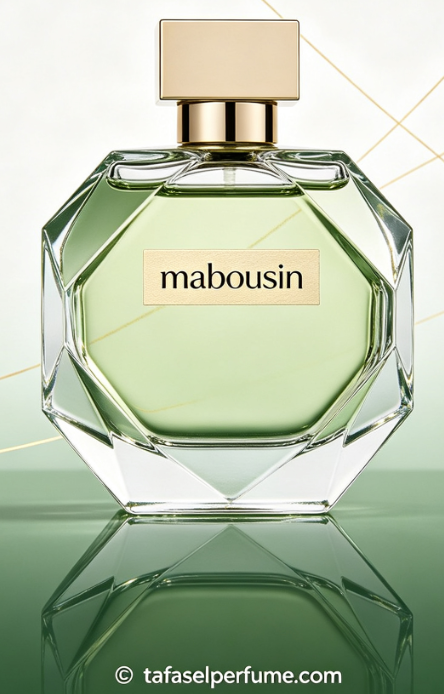
- Mabousin · The Olfactory Architecture of Velvet Shadow & Ember: Mabousin is not merely a perfume; it is an olfactory meditation — a whisper of suede, smoke, and sun-baked wood. A fragrance that dwells in the space between memory and desire.
In the constellation of contemporary perfumery, Mabousin emerges as a singular star — neither wholly masculine nor feminine, yet profoundly human. It speaks in the language of dry cedar, labdanum, and a ghostly trace of violet leaf. Conceived as an architectural scent, its structure is built on contrasts: warmth against coolness, sweetness against bitterness, light against shadow. Mabousin is for those who seek fragrance not as an accessory, but as a second skin, a silent companion that evolves with the hours.
This article explores the many facets of Mabousin — from its raw materials to its cultural resonance, and why it has become a quiet icon among fragrance aficionados. We traverse its woody‑amber heart, its smoky‑leather facets, and the subtle floral whispers that make it utterly distinctive.
✦ Olfactory chapters
1. The Genesis of Mabousin
Mabousin was born from a dialogue between a Parisian perfumer and a Kyoto incense master. The brief: to capture the stillness of a temple garden at dusk, where cedar smoke meets damp stone. The result is a fragrance that defies trends, rooted in the ancient art of koh-do (incense listening) yet dressed in modern minimalism. Its opening is a crisp sparkle of bergamot and pink pepper, but within minutes, the heart reveals itself: a brooding, resinous core that feels both meditative and restless. Mabousin is not a fragrance that shouts; it insinuates, lingers, and eventually becomes indistinguishable from the wearer’s own skin.
The creative process involved over forty iterations, each one adjusting the ratio of cypriol, guaiac wood, and a rare Somalian frankincense. The final composition is a masterclass in restraint — every note has its place, and silence is part of the melody. As the perfumer once remarked, “Mabousin is the scent of a man or woman who has nothing to prove.”
2. Woody Embers · the heart
At the core of Mabousin lies a triad of woods: dry cedar from the Atlas mountains, smoky guaiac, and a whisper of sandalwood that feels almost creamy. This is not the aggressive woodiness of many contemporary masculines; rather, it evokes the interior of an old library, where leather-bound books and sun-warmed oak coexist. The cedar is particularly compelling — it has a pencil-shaving freshness that cuts through the resin, preventing the composition from becoming heavy. As the fragrance develops, the guaiac contributes a subtle bacon-like smokiness (often found in fine oud compositions) but without the barnyard animalic edge. It is wood reduced to its purest, most poetic expression.
3. Leather & Suede · the second skin
Leather notes in perfumery often lean towards the harsh or the sweet. Mabousin takes a different path: a supple suede accord, achieved through a blend of safraleine and a touch of birch tar. It is the scent of a well-worn jacket, a car seat warmed by the sun, or the inside of a glove box. This suede note is never overpowering; it melds with the woods and the labdanum to create a texture that is almost tactile. One could say that Mabousin has a haptic quality — it feels as much as it smells. The suede also acts as a bridge between the smoky top and the amber base, ensuring a seamless transition.
4. Violet & Incense · the ethereal veil
Perhaps the most unexpected facet of Mabousin is the violet leaf — a green, slightly metallic note that is often associated with classic masculines like Grey Flannel. Here, it is used sparingly, lending an almost melancholic freshness to the composition. The violet is paired with a delicate frankincense that has been stripped of its churchy heaviness, resulting in a clean, almost transcendent incense. Together, they create a shimmering top layer that hovers above the darker woody-leather base. This is the part of Mabousin that catches the light, the part that makes you turn your head and ask, “What are you wearing?”
5. Labdanum · amber of antiquity
Labdanum is the soul of many amber fragrances, but in Mabousin, it is treated with a light hand. The labdanum used here is a pale, almost honeyed variety, sourced from the Mediterranean. It provides a warm, ambery glow that rounds off the sharper edges of the wood and leather. Unlike the sweet, vanilla-heavy ambers of the 2000s, the labdanum in Mabousin is dry, slightly mineral, and evokes the scent of hot rocks in a sun-drenched landscape. It anchors the fragrance, giving it longevity without sacrificing elegance. On skin, it reveals a subtle powdery facet that is both comforting and sophisticated.
6. The Sillage · architecture of air
Sillage — the trail a fragrance leaves behind — is often overlooked in the era of “skin scents.” Mabousin, however, has a deliberate, architectural sillage. It projects moderately for the first hour, then settles into a close yet perceptible aura. The sillage is not linear; it pulses with the wearer’s movements, releasing bursts of incense and wood with each gesture. This makes Mabousin ideal for intimate settings, where its complexity can be appreciated without overwhelming the room. It is a fragrance that respects personal space while inviting curiosity, a difficult balance that few perfumes achieve.
7. Mabousin & Memory
There is a Proustian quality to Mabousin. Many wearers report that it evokes specific, almost forgotten memories — a childhood trip to a pine forest, the scent of a grandmother’s cedar chest, or the dry heat of a Mediterranean summer. This is by design; the perfumer used molecules known for their proustian effect, such as iso‑e super and ambroxan, but in doses that are subliminal rather than dominant. The result is a fragrance that feels simultaneously new and familiar, like a song you have not heard in years but can still hum. It is this emotional resonance that elevates Mabousin from a mere product to a personal artifact.
8. Duality · masculine & feminine
In an era where gendered fragrance is increasingly fluid, Mabousin stands as a testament to olfactory universality. Its woody‑leather profile leans slightly towards the traditional masculine, but the violet, the incense, and the creamy sandalwood introduce a softness that feels equally at home on a woman’s skin. On one skin, it might smell more suede‑like; on another, the violet and labdanum might dominate. This chameleonic quality is part of its charm — Mabousin does not impose a gender; it invites the wearer to project their own identity onto it. It is a fragrance for those who find freedom in ambiguity.
9. Layering with Mabousin
Because of its clean, dry structure, Mabousin is an excellent layering partner. It pairs beautifully with citrus-forward fragrances, adding a smoky depth to bright scents. It also works well with pure ouds, where its woods and leather can amplify the richness of the oud without clashing. Some enthusiasts layer it with a vanilla‑musk blend to create a more gourmand effect, while others prefer to wear it solo to appreciate its intricate architecture. The key to layering with Mabousin is restraint — it is a strong, confident fragrance that does not need embellishment, but can be subtly modulated to suit different moods and seasons.
10. The Bottle · visual poetry
The flacon of Mabousin is as restrained as the juice inside. A heavy, geometric block of smoked glass, reminiscent of a minimalist sculpture, it is devoid of labels or ornamentation except for the name discreetly sandblasted on the side. The cap is a cool, tactile piece of gunmetal‑finished metal, giving the bottle a satisfying heft. This design philosophy mirrors the fragrance itself: no superfluous details, just pure, functional beauty. The bottle is meant to be felt, turned over in the hands, and appreciated as an object of art — a fitting vessel for a scent that is itself a work of olfactory sculpture.
11. Mabousin in the modern wardrobe
Mabousin is a year‑round fragrance, but its character shifts with the seasons. In autumn and winter, its smoky, woody facets are amplified by the cold air, becoming almost cozy. In spring, the violet and incense come to the forefront, offering a fresh, almost ethereal quality. It is equally suited for a crisp morning at the office, an evening at the theatre, or a quiet Sunday afternoon. Its versatility lies in its subtlety — it never asserts itself too aggressively, yet it is distinctive enough to become a signature. For the modern individual who values quality over quantity, Mabousin is the fragrance equivalent of a well‑tailored coat.
12. Cult status & the future
Since its quiet release, Mabousin has garnered a devoted following, particularly among perfumers, critics, and those who seek out the avant‑garde. It has been described as the “hidden gem” of niche perfumery, a fragrance that rewards patience and repeated wearing. Future iterations are rumored to include a more concentrated extrait version, as well as a companion candle and body oil. But for now, the eau de parfum remains the definitive expression of the Mabousin vision — a scent that dares to be quiet, complex, and deeply human. It is, in every sense, an olfactory architecture of velvet shadow and ember.
⟡ Frequently Asked Questions · Mabousin
Mabousin is a woody‑leather fragrance with notes of dry cedar, suede, violet leaf, frankincense, and labdanum. It is smoky, slightly sweet, and has an ethereal, almost meditative quality. The overall impression is warm, dry, and sophisticated.
Mabousin is explicitly unisex. Its structure combines traditionally masculine notes (woods, leather) with softer, floral elements (violet, incense), making it appealing across the gender spectrum. It adapts to the wearer’s own chemistry.
On average, Mabousin lasts 6–8 hours with moderate sillage. The longevity is excellent, especially on clothes or in hair, where the woody and resinous notes can persist for over 12 hours.
Absolutely. While it has a nocturnal elegance, its dry, non‑cloying nature makes it suitable for the office, brunch, or a walk in the park. In warmer weather, the violet and incense shine, keeping it fresh.
Yes, Mabousin is a superb layering base. It pairs wonderfully with citrus colognes, pure ouds, and vanilla‑musk blends. Start with one spray of Mabousin and build your desired combination.
The name is a neologism derived from old French and Arabic roots, loosely translating to “the shadow of the wind.” It reflects the fragrance’s ephemeral yet haunting presence.
It is a contemporary composition that uses both natural extracts (cedar, labdanum, frankincense) and high‑quality synthetic molecules to ensure consistency, longevity, and sustainability. It is not a “natural” perfume in the strictest sense, but it is clean and allergen‑considered.
Mabousin is available at select niche boutiques, online via the official brand site, and at Tafaseel Perfume. You can also find it on Tafaseel’s ranking and curated lists.
Currently, the Eau de Parfum is the only concentration. However, a limited‑extrait version and a candle are rumoured for the upcoming season. Stay tuned through brand updates.
© 2026 · Mabousin / Tafaseel Perfume — olfactory architecture for the modern spirit.


