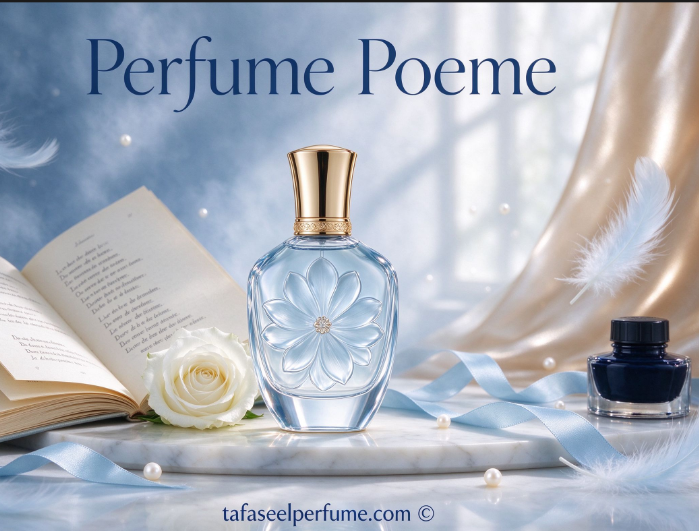
- Perfume Poeme: The Complete Guide to Poetic Fragrance, Notes, and Buying Tips: Perfume Poeme is a fragrance concept that blends the artistry of scent with the emotion of poetry — a wearable verse built from notes that unfold like stanzas on the skin. This guide explores what "perfume poeme" means in modern perfumery, how to choose a poetic scent for your mood and season, and which fragrance families best express romance, nostalgia, and quiet luxury.
Perfume Poeme is a fragrance concept that blends the artistry of scent with the emotion of poetry — a wearable verse built from notes that unfold like stanzas on the skin. This guide explores what "perfume poeme" means in modern perfumery, how to choose a poetic scent for your mood and season, and which fragrance families best express romance, nostalgia, and quiet luxury. Whether you are a collector hunting a signature scent or a newcomer curious about layering and longevity, this article breaks down notes, performance, gifting, and care so you can read — and wear — your fragrance like a poem.
In the world of perfumery, the phrase perfume poeme captures something that marketing copy rarely does: the idea that a scent can be read, not just smelled. A perfume poem is a composition where top notes set the opening line, the heart develops the metaphor, and the base becomes the lasting refrain. This article is a long-form exploration of that idea — practical, opinionated, and grounded in the notes and families you will actually encounter on shelves and in decant shops. From the first citrus spark to the final amber whisper, we will look at how to identify a poetic fragrance, how to wear it with confidence, and how to build a small wardrobe of scents that read like a well-edited anthology.
Jump to a section:
1. What Is a Perfume Poeme? Defining Poetic Fragrance
2. The Anatomy of a Poetic Scent: Top, Heart, and Base as Lines and Stanzas
3. Fragrance Families That Read Like Poetry
4. How to Choose a Perfume Poeme for Your Mood and Season
5. Longevity, Sillage, and Projection: Making Your Poem Last
6. Layering Fragrances Like Writing a New Verse
7. Perfume Poeme and Gifting: Finding a Scent That Says What Words Cannot
8. Storing and Caring for Poetic Fragrances
9. Building a Fragrance Wardrobe Around One Signature Poem
10. Common Myths About Poetic and Niche Fragrance
11. Perfume Poeme in Everyday Life: Work, Evening, and Quiet Moments
Section overviews:
1. What Is a Perfume Poeme? Defining Poetic Fragrance — a clear definition, its roots in French perfumery language, and why the term resonates with modern buyers.
2. The Anatomy of a Poetic Scent: Top, Heart, and Base as Lines and Stanzas — how the three-tier structure mirrors poetic form, with examples of accords that behave like opening lines and closing refrains.
3. Fragrance Families That Read Like Poetry — floral, oriental, woody, chypre, fougère, and gourmand, judged for their "poetic" character.
4. How to Choose a Perfume Poeme for Your Mood and Season — a practical decision framework for spring, summer, autumn, winter, day, and night.
5. Longevity, Sillage, and Projection: Making Your Poem Last — concentration, skin type, application, and realistic expectations.
6. Layering Fragrances Like Writing a New Verse — safe pairings, ratios, and the risks of over-combining.
7. Perfume Poeme and Gifting: Finding a Scent That Says What Words Cannot — how to gift a fragrance without guessing wrong.
8. Storing and Caring for Poetic Fragrances — light, heat, oxygen, and shelf life.
9. Building a Fragrance Wardrobe Around One Signature Poem — the three-scent core and how to expand.
10. Common Myths About Poetic and Niche Fragrance — price, gender labels, "natural" claims, and batch codes.
11. Perfume Poeme in Everyday Life: Work, Evening, and Quiet Moments — context-aware wearing and etiquette.
Related reading: The Ultimate Guide to Scent Types: Decoding Fragrance Families and Finding Your Signature Scent and Tom Ford Unisex Fragrances: The Ultimate Guide to Genderless Luxury Scents.
1. What Is a Perfume Poeme? Defining Poetic Fragrance
A perfume poeme is not a formal category in the way "eau de parfum" or "chypre" is. It is a descriptive idea: a fragrance composed with deliberate narrative arc, where the opening, heart, and dry-down feel authored rather than assembled. The term borrows from the French habit of naming scents after literature and feeling — think of houses that title releases after poems, letters, or moods — and it has been adopted by enthusiasts to describe fragrances that reward slow wearing. Where a straightforward fruity-floral might announce itself in one line, a perfume poeme develops: it poses a question in the top notes, complicates it in the heart, and answers it in the base.
Practically, a poetic fragrance tends to share several traits. First, contrast: it pairs something bright with something dark, or something sweet with something dry, so the scent has tension. Second, transition: the shift from top to base is noticeable and intentional, not a blur. Third, restraint: it does not shout every accord at once. And fourth, memory: it leaves an impression specific enough that you can describe it in words — which is, after all, the test of poetry.
It is worth separating the idea from marketing. Plenty of bottles carry romantic names and forgettable juice; plenty of plainly named fragrances are deeply poetic. The label is less important than the structure. When you evaluate a scent, ask whether it has a beginning, a middle, and an end you can recall an hour later. If it does, you are smelling a perfume poeme regardless of what the box says.
This framing also helps with buying decisions. If you love narrative fragrances, you will gravitate toward extraits and eaux de parfum with pronounced base structures rather than light colognes that vanish in twenty minutes. For a broader grounding in families before you chase poetry, the scent types guide is a useful companion, and the perfume articles and reviews archive is a good place to compare specific releases.
2. The Anatomy of a Poetic Scent: Top, Heart, and Base as Lines and Stanzas
Perfumery's three-tier structure maps neatly onto poetic form. The top notes are the opening line: citrus, aldehydes, light herbs, and pink pepper that greet you in the first minutes. They are meant to be ephemeral, and in a well-built perfume poeme they set a tone rather than tell the whole story. A bergamot opening that promises freshness but gives way to leather is doing narrative work — it is the volta, the turn.
The heart, or middle, is the stanza where the argument develops. Florals, spices, and fruits dominate here: rose, jasmine, iris, saffron, plum, fig. In poetic fragrances, the heart often carries the emotional core. A rose-and-oud pairing, for instance, stages a conversation between softness and severity. An iris-and-violet heart can read as melancholy; a tuberose-and-coconut heart as sensuality. The key is whether the heart feels composed — whether the accords support one idea rather than competing for attention.
The base is the refrain. Musk, amber, sandalwood, vetiver, patchouli, vanilla, and tonka settle in and last for hours. A strong base gives the fragrance its memory and its signature. When people say a perfume "dries down beautifully," they usually mean the base resolves the tensions set up earlier. This is why testing on skin matters: paper strips show you the opening, but only skin shows you the ending.
Understanding this anatomy improves your vocabulary as a buyer. Instead of "I like it" or "I don't," you can say the opening is too sharp, the heart is too sweet, or the base lacks depth. That precision helps when comparing releases such as Baccarat Rouge Scent: The Iconic Amber Floral That Redefines Luxury Perfumery, where the amber-floral heart and mineral-woody base do most of the narrative work, or Libre Scent: The Ultimate Guide to YSL Libre Perfume, Notes, Longevity & Buying Tips, a useful case study in how a lavender-orange-blossom heart can be read as both fresh and warm.
3. Fragrance Families That Read Like Poetry
Not every family lends itself equally to the perfume poeme idea, but most can be poetic when handled with care. Florals are the most obvious: rose, jasmine, iris, and violet carry centuries of literary association. A soliflore can be a haiku — short, precise, single-minded — while a complex bouquet is closer to a sonnet. Orientals (ambery, spicy, resinous scents) read as narrative by nature, with their long arcs and warm bases; they are the epic poems of the fragrance shelf.
Woody fragrances are the modernist verse of perfumery: spare, structural, and often austere. Cedar, sandalwood, and vetiver can feel like line breaks — clean, deliberate, and cool. Chypres, built on bergamot, labdanum, oakmoss, and patchouli, are the most literary of all: bitter, mossy, and complex, they reward rereading. Fougères, with lavender and coumarin, have a barbershop nostalgia that reads as elegy. Gourmands are the populist poetry — vanilla, caramel, and tonka — and at their best they are warm and disarming rather than cloying.
For a poeme-style purchase, look for families with strong base structures: ambery orientals, woody chypres, and well-built gourmands. Light aquatics and sheer citruses can be lovely, but they rarely sustain a narrative beyond the opening. If you want to explore genderless options in this space, Tom Ford Unisex Fragrances: The Ultimate Guide to Genderless Luxury Scents covers the ambery-woody territory well, while Creed Irish Tweed: The Timeless Green Fougère Every Fragrance Lover Should Know is a model of the green fougère as a quiet, enduring poem. Browsing the perfume brands index can also help you spot houses with consistently narrative styles.
4. How to Choose a Perfume Poeme for Your Mood and Season
Season and mood are the two axes that matter most when choosing a poetic fragrance. In spring, reach for green florals, light chypres, and iris — scents that feel like new growth and tentative optimism. Summer favors citrus openings, fig, coconut, and salt-tinged woods; keep the base light so the poem does not become heavy in heat. Autumn is the natural season of the perfume poeme: spices, tobacco, plum, rose, and patchouli all come into their own as the air cools. Winter rewards ambers, resins, vanilla, and oud — fragrances with long, warm refrains.
Mood is subtler. For focus and work, choose linear, low-sillage scents: vetiver, cedar, light musk, or a clean citrus-herbal blend. For romance and evening, the heart can be richer: tuberose, saffron, rose-oud, or an ambery gourmand. For quiet moments — reading, walking, staying in — a soft iris, a skin musk, or a single-note sandalwood can feel like a private poem. The mistake many buyers make is choosing an evening scent for daytime wear and then finding it exhausting; match the volume to the context, not just the notes.
Testing strategy matters as much as selection. Sample on skin, not paper. Wear one fragrance for a full day before judging it. Test no more than two at a time so your nose stays calibrated. And note how the scent behaves in different weather — a fragrance that is beautiful in January can be suffocating in July. If you are shopping by category, the women's perfume, men's perfume, and unisex perfume sections are organized for exactly this kind of browsing, and the perfume ranking and top lists can give you a shortlist before you sample.
5. Longevity, Sillage, and Projection: Making Your Poem Last
Longevity, sillage, and projection are the technical vocabulary of performance, and they matter for poetic fragrances because a poem that disappears in an hour cannot develop. Longevity is how long the scent lasts on skin; sillage is the trail it leaves as you move; projection is how far it radiates from your body. Concentration is the biggest lever: a parfum or extrait will generally last longer and sit closer than an eau de toilette, which is brighter but shorter-lived.
Skin type plays a role that marketing rarely admits. Dry skin holds fragrance poorly; moisturizing before application can extend wear by hours. Oily skin tends to amplify and prolong. Application technique matters too: spray on pulse points and clothing (carefully, with fabrics that tolerate alcohol), avoid rubbing, and consider spraying the back of the neck and hair for a longer, softer trail. For a perfume poeme with a strong base, two to three sprays is usually enough; more will flatten the narrative into a single loud note.
Set realistic expectations. A fresh citrus cologne that lasts three hours is not a failure — it is a short lyric. An ambery extrait that lasts twelve hours is doing what it was built to do. If performance is your priority, read note breakdowns and reviews before buying, and look for scents described as having a strong base. Comparisons such as Sauvage Dior Scent: The Ultimate Guide to Versions, Notes, and Performance are helpful because they break down how different concentrations of the same idea behave, while Parfums de Marly Carlisle Price Guide: What You'll Actually Pay in 2026 is a useful reminder that price and performance are not perfectly correlated.
6. Layering Fragrances Like Writing a New Verse
Layering is the closest thing perfumery has to collaboration, and it can produce a genuine perfume poeme — or a mess. The safe principle is to combine scents that share a base or a family: a vanilla gourmand under a rose floral, a woody base under a citrus top, a musk under almost anything. The risky principle is to combine contrasts deliberately, which can be brilliant but requires testing.
Start with ratios. Apply the heavier, base-dominant scent first and the lighter scent on top, or vice versa depending on which you want to lead. One spray of each is enough for a first experiment; adjust from there. Keep a written record of what you combined and how it wore, because memory is unreliable with scent. Avoid layering two fragrances that both have loud projection — the result is usually competition rather than conversation.
Certain pairings are reliable starting points: rose and oud, vanilla and sandalwood, citrus and vetiver, iris and musk. Others are best avoided: two strong gourmands, two heavy ambers, or anything with dominant aldehydes combined with a delicate floral. If you want inspiration, reading about single-fragrance structures helps; Gucci Flora Magnolia Perfume: A Complete Guide to the Iconic Floral Fragrance and Hawas for Women: The Fruity Floral Gourmand That Redefines Everyday Elegance both describe clear structures you can layer around. For gifting combinations, the perfume gift sets and mini size & gift sets categories are practical ways to experiment without committing to full bottles.
7. Perfume Poeme and Gifting: Finding a Scent That Says What Words Cannot
Gifting fragrance is hard because scent is intimate and personal. The perfume poeme framing helps: instead of asking "what scent do they like," ask "what story do they want to wear." A friend who loves old bookshops and rainy afternoons may love a mossy chypre or an iris; someone who loves bright mornings may prefer a citrus-neroli. Observe what they already wear and what they compliment on others.
Practical safeguards: choose a gift set or discovery set rather than a full bottle when you are unsure, include a gift receipt, and avoid strongly gendered marketing unless you know the recipient's preference. Concentration matters too — an extrait is a generous gift but can be overwhelming if the recipient is used to light colognes. If you are buying for a partner, consider a scent you both like rather than one that is purely their style; fragrance is worn in shared spaces.
Presentation counts for poetry. A well-chosen set with a note explaining why you chose it — the notes you noticed, the memory it evoked — turns a product into a gesture. The perfume gift sets section is a sensible starting point, and I Want Choo Forever Gift Set: The Ultimate Guide to Jimmy Choo's Irresistible Amber Chypre Gourmand is a good example of a set with a clear, giftable identity. For younger recipients, the children & baby's perfume category offers gentler options.
8. Storing and Caring for Poetic Fragrances
Fragrance is perishable. Light, heat, and oxygen degrade the molecules that make a perfume poeme legible, turning bright top notes dull and complex bases muddy. Store bottles in a cool, dark place — a drawer or a closed cabinet is better than a sunny bathroom shelf. Keep them in their boxes if you have space. Avoid temperature swings, which are more damaging than a consistently cool room.
Oxygen is the slow enemy. A half-empty bottle has more air in it and will age faster than a full one; if you have a large collection, consider decanting frequently used scents into smaller sprayers. Keep the cap on, avoid storing bottles on their sides if they leak, and do not shake them — agitation speeds up oxidation. Most fragrances last three to five years unopened and one to three years after opening, though ambers and resins often outlast citruses.
Signs of degradation include a sharp, alcoholic opening that was not there before, a loss of the heart, or a flat, sour base. If a fragrance has turned, do not wear it on skin; use it to scent a drawer or linen instead. Proper storage is unglamorous but it is what allows a poetic scent to keep its verses intact for years.
9. Building a Fragrance Wardrobe Around One Signature Poem
A fragrance wardrobe does not need to be large. Three scents can cover most of life: a daytime signature (clean, versatile, low-sillage), an evening scent (richer, warmer, more projecting), and a wildcard (something experimental or seasonal that you wear for yourself). Start with the daytime signature — the perfume poeme you want to be known for — and build outward only when you notice a gap.
The signature scent should be one you can wear in most weather and most rooms without anxiety. It should feel like you, not like a costume. Once you have it, the evening scent can be a variation on its theme: if your signature is a woody citrus, try an ambery woody for evening; if it is a soft floral, try a rose-oud or a spice-floral. The wildcard is where you explore — a smoky vetiver, a fig, a vintage chypre — and where the perfume poeme idea is most fun.
Resist the urge to buy quickly. Sample first, wear the sample at least three times, and only then commit. Rotate your wardrobe seasonally so nothing sits unused. If you are building around a specific aesthetic, the Tafaseel perfume collection and the beauty tips and guides sections offer context on how fragrance fits into a broader personal style.
10. Common Myths About Poetic and Niche Fragrance
Myth one: expensive means better. Price reflects marketing, packaging, and distribution as much as juice. Many affordable fragrances have excellent structure, and many expensive ones rely on a single loud accord. Judge by notes and performance, not by the price tag.
Myth two: gender labels are meaningful. Fragrance has no gender; marketing does. Plenty of "men's" scents are floral and powdery, and plenty of "women's" scents are woody and smoky. Wear what you like. The unisex perfume category exists precisely because buyers have moved past the binary.
Myth three: natural is always better. Natural materials can be beautiful but they are also inconsistent, allergenic, and expensive. Synthetics make modern perfumery possible — they provide the musk, amber, and fruit accords that define contemporary scent. "Natural" is not a quality guarantee.
Myth four: niche is inherently more artistic. Niche houses take more risks, but designer houses employ some of the best perfumers in the world. A well-made designer fragrance can be as poetic as any niche release. Conversely, "niche" is sometimes just a price tier.
Myth five: batch codes determine quality. Reformulation is real, but batch-code chasing is mostly internet folklore. If you love a scent, buy it and store it well. For a counterpoint on how versions differ meaningfully, see Narciso Rodriguez Cologne for Him: The Complete Guide to a Modern Cult Classic, which tracks a fragrance's evolution over time.
11. Perfume Poeme in Everyday Life: Work, Evening, and Quiet Moments
The final test of a perfume poeme is how it lives in your day. At work, less is more: one or two sprays of a low-sillage scent, applied before you dress, so it sits close rather than filling a room. Avoid loud gourmands and heavy ambers in shared offices; choose clean woods, light musks, or soft florals. If you work in a scent-sensitive environment, a skin scent or a scented lotion is the polite choice.
In the evening, you can let the poem open up. Richer hearts and bases are welcome, and a little projection is part of the pleasure. Apply to pulse points and the back of the neck, and consider a lighter application on clothing for a trail that lasts. For quiet moments — weekends, reading, walks — wear the wildcard. This is where fragrance becomes personal rather than performative, and where the poetic idea is most fully realized.
Etiquette matters. Do not over-apply in restaurants, theaters, or medical settings. Ask before wearing strong scent around people with sensitivities. Reapply sparingly, if at all, and remember that you go nose-blind to your own fragrance long before others do. A perfume poeme is meant to be read, not shouted — and the best compliment is someone leaning in to ask what you are wearing.
For further exploration, browse the perfume articles archive, compare releases in the ranking section, and explore the brands index. Whether you end up with one signature scent or a small library, the goal is the same: a fragrance that reads like a poem you want to keep returning to.
Frequently Asked Questions
1. What does "perfume poeme" actually mean?
It is a descriptive term for a fragrance built with a clear narrative arc — an opening, a developing heart, and a lasting base — so that it feels authored rather than assembled. It is not an official fragrance category, and different houses use similar language in different ways.
2. Is a perfume poeme different from a niche fragrance?
Not necessarily. "Niche" describes a brand's distribution and market position; "perfume poeme" describes a style of composition. A designer fragrance can be poetic, and a niche fragrance can be linear and loud. Judge the structure, not the label.
3. How many sprays of a poetic fragrance should I use?
For most eaux de parfum, two to three sprays is enough. For extraits, one to two. Apply to pulse points and the back of the neck, avoid rubbing, and adjust based on the setting — less in shared spaces, more for evening wear.
4. Why does my fragrance smell different after an hour?
Because it is doing what it was designed to do. Top notes evaporate first, revealing the heart and then the base. This transition is the narrative of the fragrance. If the dry-down disappoints, the issue is usually the base structure, not your skin.
5. Can I layer two poetic fragrances?
Yes, but start carefully. Combine scents that share a family or base, use one spray of each, and keep a record of the results. Avoid layering two loud projecting scents, which usually compete rather than combine.
6. How long does an opened bottle last?
Typically one to three years after opening, depending on storage. Keep bottles cool, dark, and capped. Ambers and resins tend to last longer; citruses fade faster. If the opening turns sharply alcoholic or the base goes flat, the fragrance has degraded.
7. Are poetic fragrances always expensive?
No. Structure and artistry are not tied to price. Many affordable fragrances have well-built narratives, and many expensive ones are simple. Sample before buying and compare notes and performance rather than price tags.
8. Can I wear a "feminine" perfume poeme if I am a man?
Yes. Fragrance has no gender; marketing does. Wear what you enjoy. Many so-called feminine scents are woody, ambery, or smoky, and many masculine scents are floral and powdery. The unisex perfume category reflects this reality.
9. What is the best season for a perfume poeme?
Autumn and winter suit richer, more narrative scents best, because cool air slows evaporation and lets the base develop. Spring and summer favor lighter, greener poems. Match the concentration and base weight to the weather.
10. How do I choose a perfume poeme as a gift?
Choose a discovery set or gift set if you are unsure, include a gift receipt, and think about the recipient's existing style rather than your own. A note explaining why you chose the scent turns a product into a meaningful gesture. The perfume gift sets section is a practical starting point.


