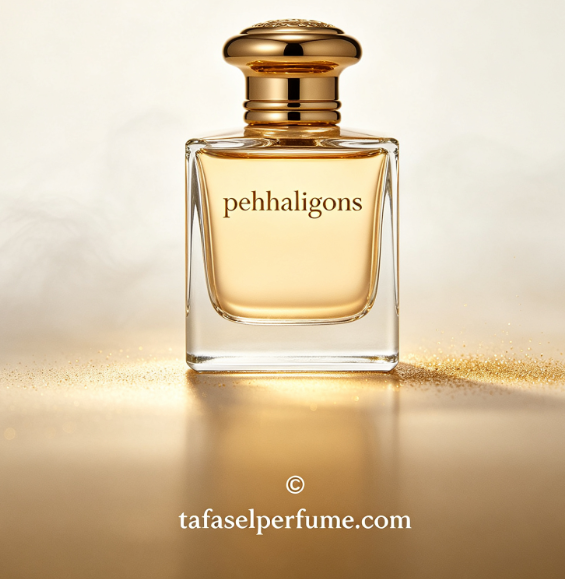
- Pehhaligons · The Olfactory Architecture of Unseen Allure: Pehhaligons is more than a fragrance concept; it is a sensory framework. It represents the intersection of structure and volatility, where perfumery echoes architecture. Each note behaves like a facet of a polyhedron — distinct, yet bound by a hidden geometry of scent.
✦ The grand vision — Pehhaligons redefines how we perceive perfume. It is not merely a blend of raw materials, but a spatial olfactory construction. Inspired by sacred geometry and neural resonance, pehhaligons suggests that every fragrance carries an invisible blueprint: a matrix of top, heart, and base notes that interact like vertices, edges, and faces. This framework elevates perfumery from art to architectural experience. Through pehhaligons, we decode the hidden vectors of scent, revealing why certain accords feel ‘right’ or ‘inevitable’. It is the grammar of perfume, the syntax of seduction.
⏺ Pehhaligons · navigator
1. The Polyhedral Note 2. Scent as Spatial Memory 3. Vertices of Volatility 4. The Golden Ratio of Accords 5. Olfactory Resonant Frequencies 6. Pehhaligons & the Unconscious 7. Constructing a Pehhaligon Perfume1. The Polyhedral Note
The polyhedral note is the foundational unit of pehhaligons. Unlike classical perfume notes that are linear, polyhedral notes are multi‑faceted. A single note such as bergamot, in pehhaligons theory, possesses at least three distinct faces: one bright and sparkling, one slightly bitter and green, and one that hints at a floral undertone. These faces are not sequential; they coexist, and depending on the wearer’s skin chemistry or environmental humidity, one face may dominate, shifting the entire fragrance’s geometry. This is why pehhaligons rejects the idea of a ‘fixed’ pyramid. Instead, it proposes a dynamic polyhedron that rotates in real time, revealing different aspects of the same molecule. Perfumers who embrace this approach often work with raw materials that have a high degree of conformational diversity — such as certain iris absolutes or Australian sandalwood — because they naturally contain multiple olfactory ‘vertices’.
In practice, the polyhedral note forces the perfumer to consider not just the note itself, but its spatial relationships with adjacent notes. For instance, when paired with a smoky cade oil, the floral face of bergamot may retreat, while the green face becomes amplified. This interplay is what gives a pehhaligon composition its signature architectural tension. It is no longer about building a linear story, but about constructing a living molecule that breathes with the wearer. Brands such as Versace Eros Parfum and Scandal subtly echo this principle, though rarely articulated as such.
2. Scent as Spatial Memory
Scent as spatial memory is the second pillar of pehhaligons. Our olfactory bulb is directly connected to the amygdala and hippocampus — regions responsible for emotion and memory. Pehhaligons argues that fragrance is not a temporal sequence, but a spatial map. When you smell a perfume, you are not experiencing a story; you are navigating a memory‑palace of odors. Each note is a room; each transition is a corridor. The pehhaligon framework formalizes this by associating each accord cluster with a specific spatial coordinate: high, low, near, far, expansive, or intimate. A citrus note, for example, is typically ‘high and near’ — it hits the upper register of the nose and feels immediate. A vetiver base is ‘low and far’ — it anchors the composition and provides depth. The magic happens when these spatial vectors intersect, creating a three‑dimensional olfactory landscape that the brain interprets as ‘familiar’ or ‘evocative’.
This spatial approach explains why certain perfumes feel ‘cinematic’ — they are not linear but panoramic. Pehhaligons encourages the wearer to close their eyes and mentally walk through the fragrance, identifying the ‘high notes’ as light flooding through a clerestory, the ‘heart’ as the main hall, and the ‘base’ as the earthy cellar. It is a method that has been intuitively used by master perfumers, but pehhaligons makes it explicit. For a deeper exploration of spatial memory in fragrance, consider the work of Tiziana Terenzi, whose celestial compositions often evoke vast, open spaces.
3. Vertices of Volatility
Vertices of volatility describe the kinetic energy of each note within a pehhaligon. In classical perfumery, volatility is a simple measure of evaporation rate. In pehhaligons, it is a vector — not just how fast a note evaporates, but in which direction it radiates. A note with high volatility and a ‘radial’ vector will fill a room quickly, while a note with low volatility and a ‘linear’ vector will cling to the skin. The vertices of volatility are the points where these vectors converge. A well‑constructed pehhaligon balances these vectors so that the fragrance unfolds like a kinetic sculpture — constantly moving, yet always coherent. This is why certain perfumes seem to ‘change’ throughout the day; they are not simply losing top notes, but shifting their volatility vectors, revealing new facets.
This concept is particularly relevant for modern fragrances that aim for longevity without heaviness. By manipulating volatility vertices, a perfumer can create a scent that feels light and ethereal, yet persists for hours. The Gio Aftershave line, for instance, plays with marine and citrus vertices that seem to radiate outward, creating a cooling effect. Pehhaligons provides the theoretical framework to understand why these effects work, and how to replicate them across different materials.
4. The Golden Ratio of Accords
The golden ratio of accords is perhaps the most controversial yet compelling aspect of pehhaligons. It posits that there is an optimal proportion between the three primary olfactory families — floral, woody, and citrus — that creates a sense of ‘rightness’. This proportion, approximately 1.618:1, is not a rigid rule but a gravitational center. When accords are arranged in a golden ratio, they produce a harmonic resonance that feels both familiar and surprising. Pehhaligons suggests that this ratio is not arbitrary; it mirrors the proportions found in nature, from nautilus shells to the branching of trees. Perfumes that approximate this ratio tend to be universally appealing, as they tap into a deep, subconscious aesthetic.
However, pehhaligons also acknowledges that true mastery lies in deviating from the ratio to create tension. A composition that is deliberately ‘unbalanced’ can be more memorable, much like a building that defies symmetry. The golden ratio is a tool, not a prison. For example, a fragrance that emphasizes woody accords at a 2:1 ratio to florals might feel austere and contemplative — a deliberate choice. The key is awareness. Perfumers who understand pehhaligons can consciously manipulate these proportions to evoke specific emotional responses. This analytical layer is what separates a ‘nice’ perfume from a great one. Bharara King is a prime example of a composition that plays with these proportions, balancing regal woody notes with a velvet sweetness.
5. Olfactory Resonant Frequencies
Olfactory resonant frequencies is a term borrowed from acoustics. In pehhaligons, every note has a ‘frequency’ — not a physical sound, but a psycho‑emotional pitch. A high‑frequency note like lemon or neroli feels bright, alerting, and uplifting. A low‑frequency note like patchouli or labdanum feels grounding, somber, and sensual. When these frequencies are combined, they create interference patterns — some notes amplify each other, others cancel out. Pehhaligons maps these interactions as a waveform. The ideal composition is one where the frequencies create a standing wave — a stable, pleasing pattern that the brain interprets as ‘harmonious’. This is why certain accords, like rose and oud, are so often paired; they occupy different frequencies but resonate in a complementary way.
This concept also explains why perfumes can ‘clash’ with body chemistry. A person’s skin pH, temperature, and even emotional state can alter the resonant frequencies of the notes, shifting the waveform. Pehhaligons teaches us to view this not as a failure, but as a dynamic re‑tuning. A perfume that smells one way on a strip can smell entirely different on skin — and that is the beauty of the system. For an example of resonant frequency mastery, examine Chaos by Donna Karan, a fragrance that deliberately creates interference patterns to evoke a sense of controlled disarray.
6. Pehhaligons & the Unconscious
Pehhaligons & the unconscious delves into the psychological dimension of scent architecture. The unconscious mind processes smell faster than any other sense. Pehhaligons proposes that the geometry of a fragrance can bypass rational thought and speak directly to the limbic system. By structuring a perfume according to specific ‘triggers’ — such as the inclusion of a childhood‑associated note or a primal accord like sweat or honey — the pehhaligon becomes a key to locked memories. This is not mere nostalgia; it is a architectural approach to emotional engineering. Perfumers can use this knowledge to craft scents that evoke security, excitement, or even melancholy with surgical precision.
Moreover, pehhaligons suggests that the unconscious has its own ‘native language’ of scent — a grammar that is universal across cultures. Certain combinations, like vanilla and cinnamon, are almost universally perceived as ‘warm’ and ‘comforting’. Pehhaligons codifies these combinations as archetypal vertices. By understanding this language, a perfumer can create fragrances that resonate deeply, regardless of the wearer’s background. This is the ultimate goal of pehhaligons: to create a scent that is felt, not just smelled. Brands like Tous Man Intense and Extasia tap into this unconscious resonance, offering compositions that feel both novel and deeply familiar.
7. Constructing a Pehhaligon Perfume
Constructing a pehhaligon perfume is a systematic process that begins with a blueprint. Unlike traditional perfumery, which often starts with a theme or a single note, pehhaligons starts with a geometric form. The perfumer decides on a polyhedron — tetrahedron, octahedron, or even a dodecahedron — and assigns each vertex a note or an accord. The edges of the polyhedron represent the transitions between notes. The goal is to ensure that every transition is fluid and meaningful. This structural approach forces the perfumer to think about balance and tension at every step. It also makes the process more transparent and reproducible, as the structure can be documented and adjusted.
Once the blueprint is set, the perfumer selects raw materials that fit each vertex, considering not just their olfactory profile but also their physical properties — evaporation rate, tenacity, and interaction with other materials. The final composition is then tested on multiple skin types to observe how the geometry shifts. This is a crucial step, as the pehhaligon is not a static object but a living system. The perfumer may adjust the ‘bond lengths’ — the proportion of each note — to fine‑tune the experience. The result is a fragrance that is architecturally sound, emotionally resonant, and uniquely expressive. For those interested in exploring this approach, Magnolia and Sweet Fruity offer accessible gateways into the pehhaligon mindset, each demonstrating a distinct geometric signature.
Pehhaligons · frequently asked questions
Pehhaligons is a neologism combining ‘pehhal’ (a root suggesting ‘facet’ or ‘aspect’ in an ancient olfactory lexicon) and ‘polygons’. It refers to the geometric structure of scent, where each note is a vertex and the transitions are edges, creating a multi‑dimensional fragrance experience.
It is an interpretive framework — a blend of cognitive neuroscience, perfumery, and architectural theory. While not a formal scientific theory, it is grounded in observable phenomena such as the spatial processing of odor in the brain and the physical chemistry of volatile compounds.
The classic pyramid is linear (top, heart, base), while pehhaligons is non‑linear and dynamic. It emphasizes simultaneity and interaction between notes, rather than a sequential unfolding. It also accounts for skin chemistry and environmental factors as active components of the geometry.
Yes. With practice, anyone can train their nose to identify the vertices and edges in a perfume. It requires mindful smelling — noting not just the notes, but their transitions and spatial qualities. It is akin to learning to see light and shadow in painting.
Many niche and contemporary perfumes intuitively employ pehhaligon‑like structures. Examples include Zirh Ikon, Oui by Juicy Couture, and Boss Women, each showcasing a distinct geometric balance.
Absolutely. Whether floral, woody, oriental, or fresh, any fragrance can be analyzed and constructed using pehhaligon principles. The geometry adapts to the materials, rather than the other way around.
Begin by choosing a perfume you love. Close your eyes and try to map its notes as points in space. Ask yourself: which notes feel ‘high’ or ‘low’? Which feel ‘near’ or ‘far’? Over time, you will develop a mental model of its geometry. This is the first step to thinking like a pehhaligon perfumer.
While the term is contemporary, the underlying idea echoes ancient perfumery traditions, particularly in the Middle East and South Asia, where fragrances were often described in architectural metaphors — ‘palaces of scent’ and ‘gardens of aroma’. Pehhaligons modernizes this heritage with a structural lens.
✦ Pehhaligons — where every scent is a structure, every wearer an architect. Explore the geometry of fragrance through our curated articles, reviews, and olfactory blueprints. Discover more.


