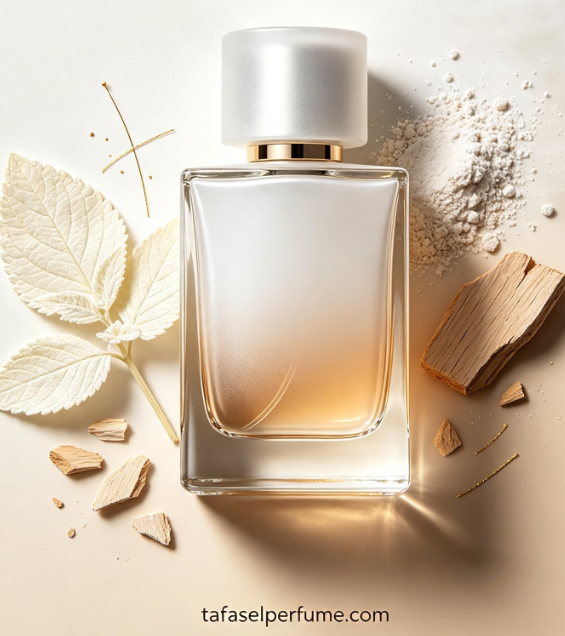
- Patchouli Blanc · The Velvet Architecture of Earth, Amber & Ethereal Light: A white patchouli that hums like silk over moss — earthy, yet luminous; grounded, yet airborne.
Patchouli Blanc is not your grandfather’s patchouli. It is the distillation of contradiction: the dark, rooty soul of patchouli lifted by iris butter, ambroxan, and a whisper of white musk. It wears like a second skin — translucent, warm, and strangely modern. In this guide, we unfold its architecture, its olfactory siblings, and the quiet revolution of white patchouli in contemporary perfumery.
1. The Ghost Note · What Is Patchouli Blanc?
Patchouli Blanc (or white patchouli) is a modern perfumery construct — not a natural raw material, but a olfactive idea. It is crafted by stripping the dark, camphoric facets of raw patchouli and amplifying its clean, woody, and slightly fruity undertones. Often blended with ambroxan, hedione, or clearwood, it creates a translucent, almost mineral scent profile. Think of it as patchouli that has been washed in moonlight.
The term “blanc” refers to the absence of the heavy, molasses-like patchouli oil that dominated the 1970s. Instead, perfumers use molecular distillation or fractionation to isolate the lighter terpenes, resulting in a fragrance that is airy, refined, and surprisingly versatile. It is the ghost note that lingers without overwhelming — a signature for the modern connoisseur.
2. Raw Materials · The Alchemy of Light & Earth
The backbone of any Patchouli Blanc composition is, of course, patchouli alcohol — but in a purified, high-grade form. To achieve the “blanc” effect, perfumers often pair it with iris concrete (for a powdery, lipstick-like softness), ambrettolide (a clean musk), and a touch of saffron or pink pepper to add sparkle. The result is a fragrance that is both earthy and ethereal.
Natural patchouli from Indonesia or India is aged for months to mellow its harshness. Then, through CO₂ extraction, the heavy sesquiterpenes are removed, leaving a pale, golden oil that smells of vetiver, cocoa, and dry cedar. This is the heart of Patchouli Blanc — a material that is at once rustic and refined, like a linen shirt worn in a forest.
3. Sillage & Longevity · The Velvet Trail
One of the most captivating aspects of Patchouli Blanc is its sillage — a soft, velvety aura that never shouts. Unlike classic patchouli, which can be overpowering, the blanc variation projects a gentle, diffusive cloud that lasts 6–8 hours on skin. On fabric, it can linger for days, evolving from a bright, citrusy opening to a warm, musky dry-down.
Longevity is bolstered by molecule fixatives like ambroxan and ethyl maltol, which anchor the lighter notes. This makes Patchouli Blanc an ideal choice for those who want a signature scent that is both noticeable and intimate — a whisper that turns heads without demanding attention.
4. Patchouli Blanc vs. Classic Patchouli · A Study in Contrast
Classic patchouli is dark, damp, and rebellious — the scent of headshops and vinyl records. Patchouli Blanc, on the other hand, is the polished, urbane cousin. Where classic patchouli smells of earth and leather, blanc smells of suede and orris. Where the former is gritty, the latter is smooth as marble.
This contrast is not just about intensity; it is about texture. Classic patchouli feels heavy and sticky; Patchouli Blanc feels dry and chalky, like a good white wine compared to a bold red. It is this textural difference that makes Patchouli Blanc a favorite in contemporary unisex and minimalist fragrances.
5. Layering · Building a Fragrance Wardrobe
Patchouli Blanc is a masterful layering partner. Its neutral, woody-musky base allows it to blend seamlessly with florals, citruses, and even gourmands. Try it with a rose oil for a velvety, gothic rose; or with a bergamot cologne for a bright, summer-friendly twist. For evening, layer it with a vanilla or tonka bean fragrance to deepen the warmth.
Many fragrance enthusiasts use Patchouli Blanc as a “base layer” — spraying it first, then applying a lighter, more volatile scent on top. This technique anchors the more fleeting notes, giving your fragrance combination unexpected depth and longevity.
6. Gender & Identity · Beyond the Binary
Patchouli Blanc is inherently genderless. Its clean, woody, and slightly sweet profile defies traditional masculine/feminine tropes. On a man, it smells sophisticated and grounded; on a woman, it feels ethereal and sensual. Its neutrality is its strength — it adapts to the wearer’s skin chemistry.
In an era where fragrance is increasingly about self-expression rather than prescription, Patchouli Blanc stands as a symbol of olfactive freedom. It is worn by artists, executives, and dreamers alike — proof that scent has no gender, only aura.
7. The Best Patchouli Blanc Perfumes · Editor’s Picks
While many houses have interpreted this note, a few stand out: Le Labo’s Patchouli 24 (with its smoky-vanillic twist), Diptyque’s Tempo (a green, mate-infused take), and Byredo’s Open Sky (which adds cannabis and grapefruit). For a more affordable option, Zara’s White Patchouli offers a crisp, everyday interpretation.
Each of these fragrances uses the blanc aesthetic differently — some emphasizing the mineral side, others the floral. The common thread is a clean, almost sterile patchouli that feels both ancient and futuristic.
8. Seasonality · When to Wear White Patchouli
Unlike its darker sibling, Patchouli Blanc shines in spring and autumn. Its lightness makes it suitable for warmer days, while its woody depth grounds it in cooler weather. In summer, it pairs beautifully with citrus and aquatic notes; in winter, it lends a cozy, cashmere-like warmth.
Many wear it as a year-round signature, adjusting the intensity by spraying less in heat and more in cold. Its versatility is one of its greatest assets — a fragrance that evolves with the seasons.
9. The Art of Application · Pulse Points & Ritual
To get the most out of Patchouli Blanc, apply it to warm, pulsating areas: the inner wrists, behind the ears, the base of the throat, and even the back of the knees. For a softer sillage, spray it into the air and walk through the mist — this creates a gentle, even distribution.
Some enthusiasts also apply a small amount to their hairbrush or scarf for a long-lasting, intimate trail. The ritual of application is as important as the scent itself — a moment of mindfulness in a busy day.
10. Patchouli Blanc in Niche vs. Designer
In niche perfumery, Patchouli Blanc is often treated as a star ingredient, showcased with minimal interference. Designers, on the other hand, tend to use it as a backbone — a subtle support for louder notes like fruit or floral. The difference is in the transparency: niche versions reveal the raw material’s complexity, while designer versions smooth it into a crowd-pleasing accord.
Both approaches have merit. The niche interpretation offers intellectual pleasure; the designer offers wearable comfort. Whichever you choose, Patchouli Blanc remains a fascinating study in olfactive architecture.
11. Sustainability & Ethical Sourcing
Patchouli is one of the more sustainable crops in perfumery, as it grows quickly and requires little water. However, the demand for “blanc” variants has increased the use of fractionation, which can be energy-intensive. Many brands now source Fair Trade patchouli from Indonesia and use green chemistry for extraction.
When choosing a Patchouli Blanc fragrance, look for brands that transparently discuss their sourcing and production. Some, like Givaudan and Firmenich, have developed proprietary white patchouli materials that are both high-quality and eco-conscious.
12. The Future · White Patchouli in 2026 & Beyond
As we move further into the 2020s, Patchouli Blanc is poised to become a defining note of the decade. Its clean, futuristic vibe resonates with the current trend toward minimalism and transparency. New molecules, such as patchouli pyridine and clearwood, are pushing the boundaries of what white patchouli can be.
In 2026, we expect to see more sustainable interpretations and bold pairings — with saffron, fig, and even mineral notes. Patchouli Blanc is not a trend; it is a new classic in the making.
Frequently Asked Questions · Patchouli Blanc
No, it is a perfumery accord — a blend of natural and synthetic materials designed to evoke a “white” patchouli effect. It typically contains purified patchouli oil, ambroxan, and other clean musks.
Not at all. It is much lighter, drier, and more refined. The “hippie” patchouli is dark, damp, and heavy; Patchouli Blanc is airy, powdery, and almost metallic in comparison.
Yes! Its translucent nature makes it perfect for warm weather. Just apply sparingly to avoid overwhelming the heat, or layer it with a citrus cologne.
It is unisex. Its clean, woody, and slightly sweet profile works beautifully on all genders. It is often described as “gender-fluid” in its appeal.
It pairs beautifully with rose, iris, vanilla, bergamot, and saffron. It also works well with aquatic notes and green accords like mate or fig leaf.
Usually 6–8 hours, with a soft sillage. On clothing, it can last up to two days. Longevity depends on the specific formulation and your skin chemistry.
It varies widely. Niche versions can be over $200, while designer or affordable options are available for under $80. The cost reflects the quality of raw materials and the complexity of the accord.
White musk is clean, soapy, and synthetic-smelling; Patchouli Blanc is woody, earthy, and more complex. They are often used together, but they are distinct notes — patchouli adds depth, musk adds fluff.
© 2026 · The Velvet Architecture of Patchouli Blanc · All rights reserved.


