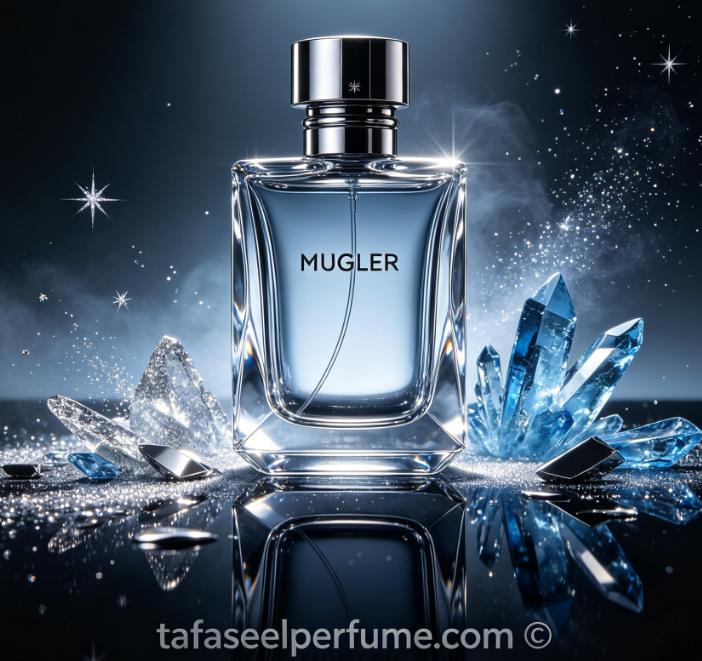
- Mugler · The Velvet Architecture of Audacity & the Sillage of Unspoken Grandeur: ✦ Mugler — where couture meets olfactory sculpture. A house that never whispers, it shouts in hypnotic notes of patchouli, amber, and white flowers. This is fragrance as armor, as second skin, as an invitation to the extraordinary.
Mugler is not merely a perfume brand; it is a manifesto. Founded by the visionary designer Thierry Mugler, the house transformed the world of fragrance with its radical, almost architectural approach to scent. From the iconic Angel – a gourmand comet that shattered conventions – to the dark, mineral sensuality of Alien, Mugler perfumes are built on contrasts: light and shadow, sweetness and smoke, the familiar and the futuristic. Each bottle is a talisman, each spritz a declaration. In this article, we dissect the DNA of Mugler’s olfactory universe, explore its most magnetic creations, and answer the questions that linger in the air long after the fragrance fades. Unisex perfume meets Mugler’s gender‑fluid vision, while iconic releases continue to shape the way we wear scent.
Below, we navigate the metallic‑floral chypre, the edible woods, and the velvet sillage that defines Mugler. Whether you are a devoted collector or a curious explorer, this guide unveils the architecture of one of perfumery’s most audacious houses. Women’s perfume collections owe much to Mugler’s disruptive spirit, and its influence stretches far beyond the fragrance counter.
‣ contents (navigate the velvet architecture)
1. Angel · the gourmand revolution 2. Alien · the otherworldly floral 3. Mugler Cologne · the fresh transparency 4. Aura · the green‑floral futuristic 5. Womanity · the fig‑salted marine 6. Les Exceptions · the avant‑garde collection 7. The Mugler silhouette · sillage as statement
Men’s perfume · Perfume gift sets · Deodorant & antiperspirant
1. Angel · the gourmand revolution
Angel (1992) rewrote the rules of perfumery. It introduced the world to the gourmand genre – a melody of caramel, chocolate, patchouli, and cotton candy, yet grounded in a dark, almost medicinal patchouli heart. The star‑shaped bottle is as iconic as the scent itself; a blue glass comet that feels both celestial and terrestrial. Angel is not a fragrance you wear quietly; it projects a velvet sillage of unapologetic sweetness and earthiness. It dares you to smell edible, powerful, and utterly unique. Phantom · Paco Rabanne shares that futuristic edge, but Angel remains the primal scream of gourmand audacity.
Decades later, Angel continues to inspire flankers and imitations, yet none capture the original’s tension between childlike wonder and gothic depth. Its patchouli and vanilla base is a signature that lingers for hours, a true olfactory architecture. For those who seek a scent that breaks the mold, Angel is the blueprint. What aftershave did Elvis wear? – a question of iconic scent, much like Angel’s place in perfume history.
2. Alien · the otherworldly floral
Alien (2005) is a study in contrasts: solar yet mysterious, floral yet woody. Built around a luminous jasmine sambac accord, it is infused with cashmeran and white amber, creating a warm, almost mineral glow. The fragrance is named for its extraterrestrial inspiration – a scent that feels like it belongs to another dimension, yet grounds itself in the skin with remarkable tenacity. Alien’s purple amethyst bottle is a cult object, and its sillage is unmistakable: a radiant, creamy jasmine that evolves into a woody, slightly spicy dry‑down.
It is the perfume for those who want to be remembered, who lean into the enigmatic. Alien’s longevity is legendary, and its ability to bloom in cold weather is a testament to its complex structure. Love Is Heavenly · Victoria’s Secret may offer ethereal lightness, but Alien offers a cosmic embrace that is both warm and detached.
3. Mugler Cologne · the fresh transparency
Mugler Cologne (2001) is the minimalist counterpart to Angel’s maximalism. A crisp, clean blend of neroli, petitgrain, and white musk, it evokes the purity of a white shirt, the freshness of a morning shower. Yet, it is not simple; it has a subtle sillage that whispers rather than shouts, a transparency that feels modern and timeless. Often described as “the scent of clean skin,” Mugler Cologne is unisex in the truest sense, a breath of fresh air in a world of heavy orientals.
It is a masterpiece of understatement, proving that Mugler’s genius lies not only in excess but also in restraint. The iconic green bottle is a design classic, and the scent remains a reference for clean, sophisticated perfumery. DS & Durga Bowmakers offers a different kind of transparency, but Mugler Cologne is the ur‑example of effortless elegance.
4. Aura · the green‑floral futuristic
Aura (2017) is Mugler’s ode to nature filtered through a cybernetic lens. A green, floral, and slightly rhubarb‑sour opening gives way to a heart of orange blossom and a base of Bourbon vanilla and patchouli. The accord is striking, almost metallic in its greenness, yet softened by a warm, edible vanilla. The bottle, shaped like a faceted heart, is both organic and technological, reflecting the fragrance’s duality.
Aura is for the rebel who finds beauty in the strange, who sees the future in a leaf. Its sillage is potent, a green cloud that leaves a trail of curiosity. It is one of the most distinctive releases of the 2010s, a bold statement from a house that refuses to conform. Billie Eilish fragrance echoes that generational shift, but Aura is Mugler’s unique vision of a botanical tomorrow.
5. Womanity · the fig‑salted marine
Womanity (2010) is a daring exploration of the feminine, built around a fig‑salted marine accord. It is savory, sweet, and utterly unexpected – a blend of caviar, fig, and fig leaf, with a woody base. The fragrance is a tribute to the power of women, and its salty‑sweet juxtaposition is both addictive and challenging. It is not a crowd‑pleaser but a conversation starter, a scent that defies easy categorization.
Womanity’s bottle, with its two‑tone design, is as bold as the fragrance itself. It remains one of Mugler’s most polarizing creations, a testament to the house’s refusal to play it safe. Bare Victoria’s Secret offers a minimalist allure, but Womanity is maximalist in its complexity.
6. Les Exceptions · the avant‑garde collection
Les Exceptions is Mugler’s haute parfumerie line, a collection of rare, artistic fragrances that push the boundaries of olfactory art. Each scent is a collaboration with a master perfumer, exploring themes like leather, iris, and incense. Among them, Orient Express, Chyprissime, and Supra Floral stand out as masterclasses in composition. These are not everyday perfumes; they are olfactory experiences for the connoisseur.
The collection is a reminder that Mugler is as much an art house as a fragrance house. The bottles are sleek, minimalist, and elegant, allowing the juice to speak for itself. Acqua di Giò Giorgio may evoke the Mediterranean, but Les Exceptions evoke the entire world of perfumery.
7. The Mugler silhouette · sillage as statement
Beyond individual fragrances, Mugler has crafted a silhouette of sillage – a recognizable olfactory signature that ties its creations together. Whether it’s the sweet‑earthy patchouli of Angel, the radiant jasmine of Alien, or the clean musks of Mugler Cologne, there is a thread of audacity and architectural precision. Mugler perfumes are built like sculptures: each note is a structural element, creating a whole that is greater than the sum of its parts.
This is perfume as a statement of identity, a tool for self‑transformation. The sillage of Mugler is not an afterthought; it is the main event. It is the unspoken grandeur that defines the brand. Tom Fors and other artists have explored similar territories, but Mugler’s vision remains singular.
frequently asked questions
about Mugler, its perfumes, and its legacy
1. What is Mugler’s most iconic perfume?
Angel is indisputably Mugler’s most iconic fragrance. Launched in 1992, it pioneered the gourmand genre and remains a best‑seller, celebrated for its patchouli‑caramel‑chocolate accord and star‑shaped bottle. It is the fragrance that put Mugler on the map and continues to define the house’s audacious spirit.
2. Is Mugler Cologne unisex?
Yes, Mugler Cologne is explicitly marketed as a unisex fragrance. Its clean, fresh blend of neroli, petitgrain, and white musk transcends gender, making it a versatile and timeless choice for anyone who appreciates subtle, transparent scents.
3. How does Alien differ from Angel?
Alien is a solar, jasmine‑centric floral with warm amber and cashmeran notes, while Angel is a sweet, gourmand patchouli with chocolate and caramel. Angel is heavier and more dessert‑like; Alien is luminous, creamy, and slightly mineral. Both are powerful but occupy entirely different olfactory families.
4. What is the sillage of Mugler perfumes like?
Mugler perfumes are known for their strong sillage – the trail they leave behind. Whether it’s the dense patchouli of Angel or the radiant jasmine of Alien, they project well and last for hours. The sillage is a signature part of the Mugler experience, designed to be noticed and remembered.
5. Are there any niche Mugler fragrances for collectors?
Yes, the Les Exceptions line is Mugler’s avant‑garde collection for discerning noses. These are limited‑distribution, artistic fragrances that explore rare materials and complex themes, such as Orient Express and Supra Floral. They are highly sought after by collectors.
6. Does Mugler offer any fresh or light fragrances?
Mugler Cologne is the house’s lightest, freshest offering. It is a crisp, clean scent perfect for everyday wear. Additionally, some flankers like Alien Eau Sublime offer a lighter take on the original, but Mugler Cologne remains the reference for freshness.
7. What makes Mugler perfumes so distinctive?
Mugler perfumes are distinctive because they are built on bold contrasts – sweet and earthy, floral and woody, fresh and deep. They are never timid; they are architectural, almost sculptural, and they challenge conventional notions of beauty. The unique bottle designs and the house’s theatrical heritage also contribute to their distinctiveness.


