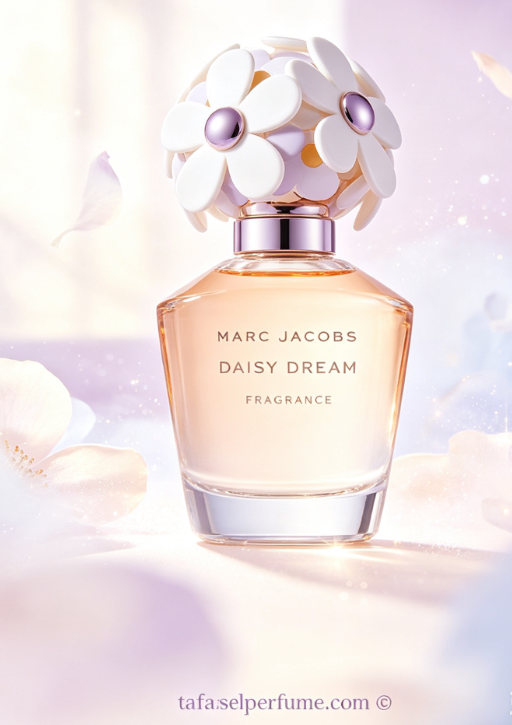
- Marc Jacobs Daisy Dream · The Velvet Architecture of Ethereal Florals & Cloud-Like Innocence: Brief · Marc Jacobs Daisy Dream is a sparkling, light-as-air floral–fruity composition that captures the feeling of a sunlit meadow. With wisteria, pear, and a drift of blue sky, it’s the olfactory equivalent of a carefree spring morning — fresh, optimistic, and quietly elegant.
Extended introduction · Launched in 2014, Daisy Dream expands the beloved Daisy universe with a more translucent, almost watercolour take on the original. Perfumer Alberto Morillas crafted a scent that floats between fruity brightness and soft floralcy: blackcurrant, pear, and pink grapefruit open like a burst of effervescence, while jasmine, wisteria, and lychee create a dewy, petal-soft heart. The base of white woods, musk, and coconut water lends a clean, modern warmth. It’s a fragrance that feels both spontaneous and deliberate — a dream you can wear.
INDEX · DAISY DREAM FRAGRANCE ✧
1. The Olfactory Architecture: Wisteria, Pear & the Blue Hour · 2. Daisy Dream vs. Original Daisy: A Study in Translucency · 3. The Bottle as Dreamscape: Marc Jacobs’s Whimsical Design · 4. Sillage & Longevity: The Art of Delicate Presence · 5. Layering & Occasions: When to Wear Daisy Dream · 6. The Coconut Water Note: A Modern Twist on Freshness · 7. Daisy Dream in the Perfume Zodiac: Who It Speaks To · 8. The Evolution of Marc Jacobs’s Daisy Line · 9. Sustainability & Craft: Behind the Fragrance
1. The Olfactory Architecture: Wisteria, Pear & the Blue Hour
Marc Jacobs Daisy Dream opens with a cascade of pear and blackcurrant, an unexpected combination that feels both juicy and powdery. The heart is anchored by wisteria — a note rarely used as a centrepiece — which imparts a violet-tinged, honeyed floralcy that never becomes cloying. Jasmine and lychee add a shimmering, almost aquatic transparency. This is not a heavy floral; it’s a fragrance that breathes. The dry-down reveals white woods and a whisper of musk, while coconut water lends a creamy, skin-like softness. It’s an architecture of lightness, where each note floats rather than falls.
Perfumer Alberto Morillas describes it as “a flight of fancy”, and indeed, the composition feels suspended — like petals caught in a gentle updraft. The wisteria, in particular, evokes a wistful, nostalgic quality, while the fruit notes keep it grounded in the present. This balance makes Daisy Dream endlessly wearable, yet distinctive enough to be remembered.
Morning Sunflower Sunrise · The Velvet Architecture of Golden Dawn shares a similar luminous quality, though Daisy Dream leans cooler and more ethereal.
2. Daisy Dream vs. Original Daisy: A Study in Translucency
While the original Daisy (2007) is a vibrant, strawberry-and-violet-led floral, Daisy Dream is its more introspective, watercolour cousin. The original is bold, almost tangy, with a patchouli base that gives it depth. Daisy Dream, however, substitutes the patchouli for white woods and the strawberry for pear and grapefruit, resulting in a much airier silhouette. Where Daisy is a picnic in a field, Daisy Dream is a misty morning overlooking a lake.
This divergence makes Daisy Dream a superb choice for warmer weather or for those who find the original too dense. The musk is cleaner, the floralcy more abstract. It’s a fragrance that whispers rather than announces, yet it lingers in a way that feels intimate and personal. Many describe it as “the dreamier sister” — and that encapsulates its charm perfectly.
Blue Bottle Versace Cologne: A Modern Icon of Mediterranean Elegance offers a similarly breezy yet structured contrast.
3. The Bottle as Dreamscape: Marc Jacobs’s Whimsical Design
The Daisy Dream bottle is a masterpiece of visual storytelling. The spherical glass stopper is adorned with a cluster of enamel daisies in soft blue, ivory, and pale yellow — a nod to the sky and sunlight. The flacon itself is a gentle gradient from clear to sky-blue, evoking the feeling of looking up at a cloudless afternoon. The daisies are not merely decorative; they are tactile, inviting you to hold and twist. It’s a design that feels both playful and luxurious, making it a coveted object on any vanity.
Marc Jacobs has always treated fragrance as an extension of fashion, and the bottle of Daisy Dream is no exception. It’s a piece of wearable art, reflecting the fragrance’s core themes of freedom, optimism, and feminine grace. The blue hue is particularly evocative — it’s the colour of distance, of dreams, of the horizon.
Cali Vibes Hollister · The Velvet Architecture of West Coast Cool also plays with a coastal, sunlit aesthetic, though Daisy Dream’s visual language is distinctly more romantic.
4. Sillage & Longevity: The Art of Delicate Presence
Daisy Dream is not a powerhouse; it’s a fragrance that envelops you in a soft, personal aura. The sillage is moderate — detectable within an arm’s length — and the longevity averages 4 to 6 hours on skin, with a longer trail on clothing. The coconut water and musk base extend the life of the fragrance, while the top notes fade gracefully within the first hour. This makes it ideal for day wear, especially in office or casual settings where an overpowering scent would be unwelcome.
For those seeking more tenacity, layering with the matching body lotion or spritzing on pulse points (wrists, behind the ears, and the bend of the elbow) enhances both projection and duration. The delicate nature of Daisy Dream is its strength — it invites closeness rather than demanding attention.
Hanae Mori for Men · The Blue Butterfly Effect offers a similarly refined but more gourmand approach to subtlety.
5. Layering & Occasions: When to Wear Daisy Dream
Daisy Dream’s lightness makes it extraordinarily versatile. It shines in spring and summer, but its creamy base allows it to transition into early autumn. It’s a fragrance for brunches, gallery visits, casual Fridays, and weekend getaways. It pairs beautifully with fresh, white florals or citrus scents for layering; try it with a hint of orange blossom or a sheer musk to amplify its airy character.
It’s also an excellent choice for weddings or garden parties, as it never overwhelms the senses. The coconut water note adds a subtle tropical twist without veering into sunscreen territory, making it feel both sophisticated and carefree. It’s the scent of a woman who is confident in her softness.
Acqua di Parma Perfumes · The Velvet Architecture of Italian Radiance & shares this refined lightness, though with a more citrus-forward character.
6. The Coconut Water Note: A Modern Twist on Freshness
One of the most distinctive elements of Daisy Dream is the coconut water note in the base. Unlike coconut milk or cream, which can be heavy and oily, coconut water is transparent, slightly sweet, and refreshing. It acts as a bridge between the floral heart and the woody-musk dry-down, lending a modern, almost sporty freshness. This note prevents the fragrance from becoming too powdery or nostalgic, anchoring it firmly in contemporary perfumery.
It’s a clever choice by Morillas — coconut water is both familiar and unexpected, evoking memories of summer holidays without being cliché. It also amplifies the watery, blue aesthetic of the bottle, completing the sensory experience. This note is part of why Daisy Dream feels so effortless; it’s a fragrance that doesn’t try too hard, yet remains impeccably polished.
Jimmy Choo Man Eau de Toilette Spray: The Modern Icon of Refined Masculinity offers a different take on modern freshness, with a more woody and aromatic profile.
7. Daisy Dream in the Perfume Zodiac: Who It Speaks To
Daisy Dream is often associated with the Air and Water elements — it’s fluid, expansive, and intuitive. In fragrance psychology, it appeals to those who are dreamers, creatives, and optimists. It’s a scent for the woman who finds beauty in small moments: the first bloom of wisteria, the shimmer of light on water, the quiet hum of a city morning. It’s not a fragrance for grand gestures, but for the poetry of everyday life.
That said, it also has a youthful, almost playful energy that makes it a favourite among younger audiences, yet its sophisticated structure ensures it doesn’t feel juvenile. It’s a versatile signature scent for anyone who values elegance without pretension.
Jean Paul Gaultier: The Velvet Provocateur – Deconstructing the Olfactory Ar offers a more rebellious, theatrical counterpart to Daisy Dream’s serene femininity.
8. The Evolution of Marc Jacobs’s Daisy Line
The Daisy franchise began in 2007 and has since spawned numerous flankers: Daisy Eau So Fresh, Daisy Love, Daisy Twinkle, and of course, Daisy Dream. Each iteration explores a different facet of the daisy motif — from fruity to gourmand to sparkling. Daisy Dream stands out as the most atmospheric of the line, leaning into the idea of a “dream” rather than a tangible flower. It represents a shift towards minimalist, transparent perfumery, which has become a hallmark of the 2010s.
Marc Jacobs and his team have successfully kept the Daisy line relevant by allowing each flanker to have its own distinct personality, while maintaining the recognizable daisy stopper and playful aesthetic. Daisy Dream, in particular, has become a cult favourite for its lightness and versatility, cementing its place in modern fragrance history.
Laura Ashley Cosmetics: English Garden Elegance in Every Drop shares a similar floral-DNA, though with a more classic, English-garden sensibility.
9. Sustainability & Craft: Behind the Fragrance
While Daisy Dream is not marketed as a “clean” or “green” fragrance, Marc Jacobs has made efforts to source ingredients responsibly. The wisteria and jasmine are predominantly synthetic to ensure consistency and reduce environmental impact, while the pear and grapefruit notes are often derived from natural extracts. The brand has also moved towards more sustainable packaging, with recyclable materials and reduced plastic use.
This blend of artistry and responsibility reflects a broader shift in the industry. Daisy Dream’s composition is a testament to the skill of modern perfumers who can create complex, emotive scents while balancing ecological considerations. It’s a fragrance that feels good to wear, not just because it smells beautiful, but because it represents a mindful approach to luxury.
Dior Fahrenheit for Him · The Velvet Architecture of Heat & Metallic Sou offers a contrasting, more industrial yet equally iconic approach to fragrance craft.
Frequently Asked Questions · Marc Jacobs Daisy Dream
1. Is Daisy Dream suitable for everyday wear?
Absolutely. Its light, airy composition makes it perfect for daily use, especially in spring and summer. It’s not overwhelming, yet it leaves a memorable, clean scent trail.
2. How does Daisy Dream compare to Daisy Eau So Fresh?
Daisy Eau So Fresh is more fruity and rosy, with raspberry and violet, whereas Daisy Dream is more translucent, with pear, wisteria, and coconut water. Dream feels more abstract and cool-toned.
3. Can men wear Daisy Dream?
While marketed towards women, its clean musk, white woods, and citrusy opening make it quite unisex. Many men enjoy it as a fresh, subtle fragrance, especially in warmer months.
4. What is the longevity of Daisy Dream?
On skin, it lasts approximately 4–6 hours. On clothes, it can linger up to 8 hours. For better performance, apply to moisturized skin or layer with the matching body lotion.
5. Is Daisy Dream a floral or fruity fragrance?
It’s a floral-fruity with a dominant wisteria and pear character. The coconut water and musk give it a modern, creamy twist, making it more complex than a simple floral.
6. Does Daisy Dream contain oakmoss or heavy woods?
No, it relies on white woods and light musk, avoiding the heavy patchouli or oakmoss found in some older florals. This contributes to its airy, dreamy feel.


