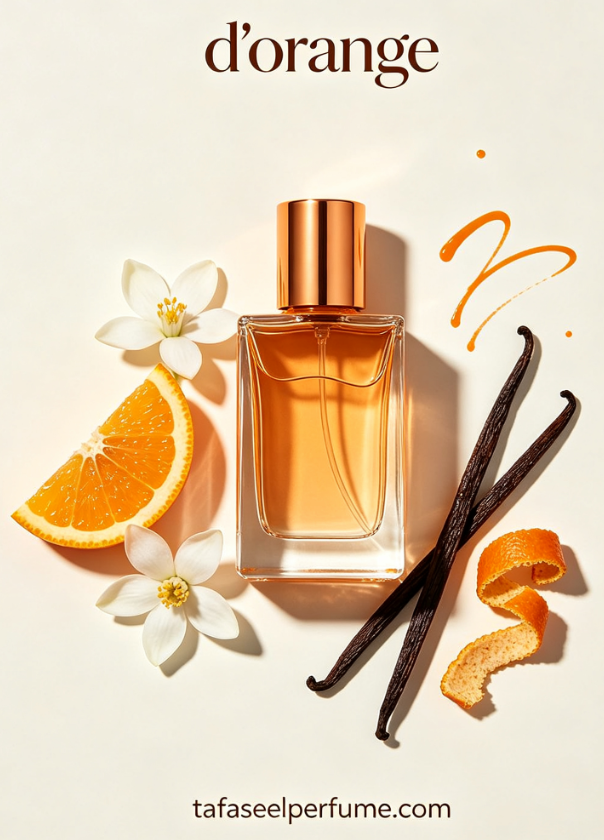
- d’Orange · The Architecture of Luminous Citrus & Velvet Shadow: d’Orange is not merely a note — it is a luminosity, a crisp vibration that cuts through the fog of familiarity. It carries the sun’s first ray and the whisper of bitter rind, a scent that dares to be both bright and brooding.
⟡ navigate the orange architecture
1. The Hesperian Dawn
The story of d’Orange begins before the sun crests the horizon. In the gardens of the Hesperides, where golden apples were said to grow, the orange tree stood as a symbol of immortality and temptation. The scent of orange blossom and peel, carried by the morning mist, is the first breath of the Mediterranean. Perfumers have long sought to capture this transient moment — the exact instant when the cold night air meets the warm, oily rind. The result is a chord that sparkles like crushed diamonds, yet holds a green, almost herbal undertone. This is the d’Orange of dawn: optimistic, sharp, and utterly alive. It is no surprise that many of the most celebrated citrus colognes, from the classic Eau de Cologne to modern reinterpretations, anchor themselves in this Hesperian brightness. The orange is not a single note; it is a spectrum that ranges from the tartness of bergamot to the honeyed sweetness of mandarin. And at its heart lies the bitter orange, the Citrus aurantium, whose peel yields the essential oil that perfumers prize above all. Its crystalline top notes are the first impression, but they linger just long enough to invite the wearer into a more complex story.
In contemporary perfumery, the Hesperian dawn is often enhanced with a whisper of mint or a pinch of pink pepper, adding a modern edge to the ancient fruit. Brands like Byrdo and Initio have reimagined this archetype, pushing the orange into territories of unexpected freshness. But the essence remains the same: a luminous, joyful opening that feels like the first page of a love letter.
2. Bitter & Beautiful
Bitterness is the soul of d’Orange. The pith, the white membrane that clings to the segments, is often discarded, but in perfumery, it is a treasure. The bitter orange, or bigarade, offers a dry, astringent quality that cuts through sweetness like a blade. It is the note that prevents a fragrance from becoming cloying, the tension that makes the heart beat faster. When combined with petitgrain (distilled from the leaves and twigs) and neroli (from the blossoms), the bitter orange reveals a multifaceted personality: it is at once green, floral, and deeply resinous. This is the d’Orange that speaks of complexity, of things that are not easily won. It is the scent of a rainy afternoon in Seville, where the orange trees line the streets and the air is thick with both perfume and melancholy. Burberry Her plays with this bitter-sweet tension, while classic chypres rely on the bitter orange to anchor their mossy bases. The beauty of bitterness is that it demands attention; it does not simply please, it intrigues.
3. Orange in the Dark
When the sun sets, the orange transforms. The bright hesperides give way to a warmer, almost animalic glow. This is the d’Orange of the night, where the fruit meets amber, patchouli, and incense. The juxtaposition of citrus and darkness is a hallmark of modern niche perfumery. Imagine a glass of mulled wine with a twist of orange peel, or a fireside where the smoke mingles with the residue of zest. This is the olfactory equivalent of chiaroscuro — light and shadow in perfect balance. Tom Ford Velvet Orchid and Armani Intense explore this nocturnal facet, layering orange with vanilla, oud, or leather. The result is a scent that is both familiar and alien, a citrus that has been kissed by the embers of the hearth. In this context, d’Orange becomes a symbol of resilience — it does not fade into the night; it adapts, deepens, and becomes more mysterious.
4. The Green Rind
The rind of the orange is where the magic resides. Pressed between the fingers, it releases a burst of limonene, a volatile compound that gives the characteristic fresh, clean scent. But beyond the initial burst, the green rind offers a subtle bitterness and a leafy quality that is often overlooked. In perfumery, the green rind is captured through techniques of cold-pressing and enfleurage, preserving the raw, almost vegetal nature of the fruit. This green aspect pairs beautifully with galbanum, basil, or even tomato leaf, creating a garden-fresh accord that evokes the lushness of a citrus grove. The green rind is the unsung hero of the d’Orange family, providing structure and a sense of place. DKNY Orchard Street channels this urban-green energy, while classic fougères use the green orange to add a crisp, modern edge. It is the note that says: I am not just sweet; I am alive.
5. Blossom & Petal
The orange blossom, or neroli, is one of the most precious materials in the perfumer's palette. Distilled from the flowers of the bitter orange tree, neroli is both floral and citrus, with a honeyed, slightly spicy undertone. It is the heart of many iconic fragrances, from the classic Yves Saint Laurent compositions to contemporary floral bouquets. The blossom represents the orange in its most romantic form: delicate, white, and intoxicating. When paired with jasmine or tuberose, it becomes a sillage of pure elegance. But neroli is not merely pretty; it carries a metallic, almost soapy facet that keeps it from being too sweet. This duality makes it a favorite for both masculine and feminine fragrances. The blossom is the orange's whisper, its promise of something more than just fruit. It is the scent of a bride's bouquet, of a Mediterranean siesta, of the warm breeze that carries the pollen from tree to tree.
6. Spiced Orange
Spices and orange are a match made in olfactory heaven. The warmth of cinnamon, the bite of clove, the earthiness of nutmeg — all find a natural partner in the citrusy brightness of d’Orange. This combination is deeply rooted in the history of perfumery, from the spice routes of the East to the mulled wines of Europe. The spiced orange accord is both comforting and invigorating, reminiscent of holiday markets and ancient apothecaries. Modern perfumers have taken this tradition and elevated it, adding unexpected twists like saffron, cardamom, or even chili. The result is a fragrance that is bold, festive, and utterly addictive. 3am by Sean John and Bad Boy both play with this spiced-orange dynamic, creating scents that are both familiar and exciting. The spiced orange is the party, the laughter, the warmth of a crowded room.
7. The Lasting Glow
Finally, we arrive at the lasting glow of d’Orange. This is the dry-down, the base where the citrus meets woods, musks, and resins. The orange fades but does not disappear; it leaves a trail of warmth, a memory of sunshine and zest. In this phase, the orange becomes almost abstract, a golden haze that supports the other notes. It is the scent of a cashmere sweater that has been stored with orange peels, or the lingering fragrance on a lover's skin. The lasting glow is what makes d’Orange more than a fleeting top note — it gives it depth, longevity, and soul. Donna Karan Cashmere Mist embodies this texture, while Mabousin pushes it into smoky, resinous territories. The lasting glow is the orange’s final gift: a quiet, persistent radiance that stays with you long after the sun has gone down.
Frequently Asked Questions · d’Orange
d’Orange can be both. Natural orange essential oils are extracted via cold-pressing or steam distillation, but many modern fragrances use synthetic molecules like limonene or citral to achieve a consistent, cost-effective profile. Both approaches have their merit — natural oils offer complexity, while synthetics provide stability and intensity.
Orange, especially bitter orange, contains compounds that overlap with woody and leathery notes. When combined with materials like iso e super, vetiver, or birch tar, the citrus takes on a darker, more suede-like quality. This is a favorite trick of niche perfumers to create unexpected contrasts.
Absolutely. The versatility of orange lies in its ability to adapt. In summer, its fresh, zesty side shines; in winter, its spiced or ambered facets provide warmth. It is a true chameleon that works in any season, depending on the composition.
While all belong to the citrus family, they have distinct profiles. Bergamot is sharper and more floral, mandarin is sweeter and softer, and orange (especially bitter) is more bittersweet and resinous. Perfumers often blend them to create a complex citrus opening.
Orange, being a top note, usually lasts from 15 minutes to an hour. However, when anchored with base notes like amber, musk, or vanilla, the orange can linger in the heart and even appear in the dry-down, leaving a subtle citrus warmth for hours.
Many classics and modern icons feature orange: from YSL and Armani Intense to niche creations by Byrdo and Initio. It is a universal note that transcends genres.


