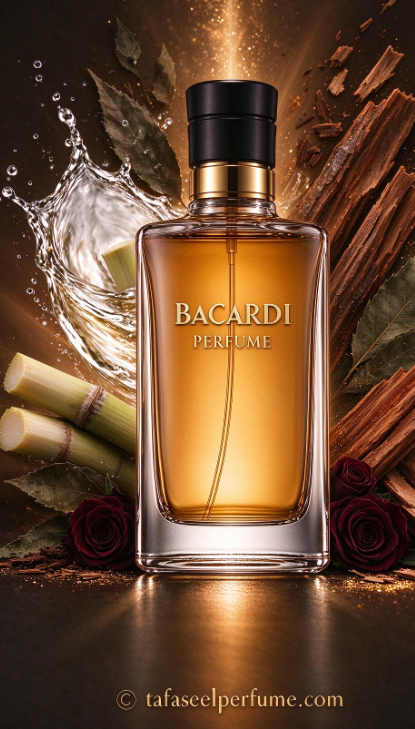
- Bacardi Perfume: The Complete Guide to the Myth, the Heritage Project, and the Misleading Lookalikes: Bottom line: "Bacardi Perfume" is not an official fragrance line from Bacardi Limited. It is a confused keyword that points to two unrelated things: a 2017 crowdfunded heritage project called El Obsequio, inspired by an 1888 Bacardi family cologne, and third-party products such as "Bacardi Rouge" by Tokatli, which actually imitate Baccarat Rouge 540. Anyone searching for a genuine Bacardi-branded perfume needs to separate historical anecdote from search-engine noise.
If you have typed "Bacardi perfume" into a search bar, you have probably encountered a strange mix of results: a forgotten Kickstarter campaign, discount listings for a scent called Bacardi Rouge, and endless pages that never quite answer whether Bacardi makes a fragrance at all. This guide untangles that knot. It explains what the Bacardi company actually sells, what the El Obsequio project attempted in 2017, why Bacardi Rouge is not what its name suggests, and how to evaluate any perfume listing that borrows the Bacardi name. By the end, you will know exactly what exists, what does not, and what to look for if you are chasing the ghost of a rum-branded scent.
1. The El Obsequio Project: A Bacardi Family Legacy Reimagined
The closest thing to an authentic "Bacardi perfume" in the modern era is not a commercial release but a crowdfunded passion project. In 2017, Danish bartender António Saldanha Oliveira launched a Kickstarter campaign to resurrect a lost piece of Bacardi history. The story begins with an old cologne bottle from 1888, created by the Bacardi family as a gift of gratitude to early supporters of the brand. That original cologne reportedly carried the scent of mimosa flowers. Oliveira, then a competitor in the Bacardi Legacy cocktail competition, partnered with the Portuguese fragrance house Nortempresa to recreate the cologne using period-appropriate botanicals, alongside a bottled cocktail inspired by the same ingredients. The project was deliberately limited in scope—only thirty "gifts" were intended for key figures in the spirits industry—and it never became a retail product. For collectors and fragrance historians, El Obsequio represents the only documented, heritage-rooted Bacardi scent concept, even though its distribution was effectively nonexistent outside the project's inner circle.
2. Bacardi Rouge: A Name That Misleads
Shoppers searching for "Bacardi perfume" will inevitably encounter listings for "Bacardi Rouge" by Tokatli, a Serbian third-party fragrance brand. The name is a trap. According to product descriptions, Bacardi Rouge opens with jasmine and saffron, moves through amberwood, and settles into a base of cedar and fir resin. That structure is a near-exact replica of Maison Francis Kurkdjian's Baccarat Rouge 540—a luxury fragrance completely unrelated to the Bacardi rum company. The confusion arises from the phonetic similarity between "Bacardi" and "Baccarat." Tokatli appears to have capitalized on that ambiguity to market an inspired-by scent. There is no evidence that Bacardi Limited authorized, produced, or endorsed this product. For anyone seeking an actual rum-branded fragrance experience, Bacardi Rouge is a dead end disguised as a discovery.
3. What Bacardi Actually Sells: Rum, Not Perfume
To understand why "Bacardi perfume" remains an orphan keyword, it helps to recall what Bacardi Limited actually does. The company is the world's largest privately held spirits producer, best known for Bacardi Superior rum and a portfolio that includes Grey Goose vodka, Dewar's Scotch, and Bombay Sapphire gin. Its product lines are firmly alcoholic. The only fragrance-adjacent item in Bacardi's orbit is the 1888 cologne that inspired the El Obsequio project—a historical artifact, not a commercial SKU. There is no official Bacardi perfume on the market today, no flanker line, and no licensing arrangement with a major fragrance house. Any product bearing the Bacardi name in a perfume context should be treated as either a historical curiosity or a third-party marketing tactic.
4. The Mimosa Note: Reconstructing a Lost 19th-Century Scent
The olfactory heart of the 1888 Bacardi cologne was mimosa, according to the only available historical account. Mimosa absolute, derived from the flowers of Acacia dealbata, offers a soft, powdery, honeyed-green profile—gentle and slightly aldehydic, far removed from the spicy-sweet gourmand tropes that dominate modern perfumery. Recreating a mimosa-forward cologne from the late 19th century would require restraint: a light citrus or neroli opening, a delicate mimosa heart, and a barely-there musk or sandalwood base. Oliveira's project claimed to use "original botanicals," but no published formula or independent review of the resulting fragrance exists. The mimosa detail remains the single most concrete olfactory clue about what a genuine Bacardi-associated perfume might have smelled like, yet it is a fragment, not a blueprint. For those interested in how single floral notes shape a composition, the same principle appears in Loewe Woman Perfume: The Complete Guide to 001 Woman's Clean, Cashmere Softness, where a restrained floral core defines the entire scent.
5. How to Spot a Fake "Bacardi Perfume" Listing
Given the absence of an official product, any perfume listing using "Bacardi" as a primary descriptor deserves scrutiny. Red flags include: (1) a brand name other than Bacardi Limited on the bottle, such as Tokatli; (2) note pyramids that mirror Baccarat Rouge 540—jasmine, saffron, amberwood, cedar, fir resin—rather than mimosa or light cologne structures; (3) marketing language that promises "Bacardi-inspired" luxury without mentioning the rum company's involvement; and (4) placement on discount or gray-market sites rather than official Bacardi channels. Legitimate historical discussion of the 1888 cologne exists only in the El Obsequio Kickstarter archive and a handful of bartending-industry write-ups. If a listing cannot explain its connection to either the 1888 artifact or the 2017 project, it is almost certainly an unrelated fragrance borrowing a famous name for search traffic. The same caution applies to any niche house with a confusingly similar name, as outlined in Perfume Byzance: A Complete Guide to Rochas and Ormonde Jayne's Enigmatic Fragrances.
6. The Collector's Reality: Why No Official Bacardi Fragrance Exists
Spirits brands occasionally venture into fragrance—Hennessy, for example, has released limited promotional scents—but Bacardi has not followed that path. The reasons are practical. Bacardi's identity is built on rum's sociability: Mojitos, Cuba Libres, and the ritual of mixing. A perfume sits uneasily beside that image, risking dilution of the brand's core association. The El Obsequio project, despite its heritage narrative, remained a bartender's personal tribute rather than a corporate initiative. Until Bacardi Limited announces a licensing deal or a direct fragrance release, the "Bacardi perfume" category will remain a patchwork of historical anecdote, third-party mimicry, and search-engine confusion. Collectors interested in the genuine article should focus on the El Obsequio documentation—and accept that the scent itself is, for now, more story than substance. Understanding how brands navigate these identity questions is part of a broader literacy in scent culture, explored in The Art of Coloring Perfume: A Complete Guide to Scent, Hue, and Self-Expression.
7. Frequently Asked Questions About Bacardi Perfume
1. Does Bacardi make an official perfume?
No. Bacardi Limited is a spirits company and has not released a commercial fragrance. The only historical connection is an 1888 cologne gifted by the Bacardi family, which inspired a 2017 crowdfunded recreation project called El Obsequio. That project was not an official Bacardi product and had extremely limited distribution.
2. Is "Bacardi Rouge" the same as Bacardi rum?
No. Bacardi Rouge by Tokatli is a third-party fragrance that mimics Baccarat Rouge 540. It has no affiliation with Bacardi Limited. The name appears to exploit the phonetic similarity between "Bacardi" and "Baccarat."
3. What did the original Bacardi cologne smell like?
According to the only available account, the 1888 cologne contained mimosa flowers. Mimosa offers a soft, powdery, green-honeyed scent. No verified formula or surviving sample is publicly documented.
4. Can I buy the El Obsequio perfume?
Almost certainly not. The Kickstarter campaign described a plan to produce only thirty "gifts" for industry figures, not a retail run. There is no evidence that the perfume entered commercial distribution, and secondary-market listings are not known to exist.
5. Why do some perfume sites list "Bacardi" as a brand?
Third-party sellers and small fragrance houses sometimes use famous brand names as keywords or inspiration labels. These listings are not authorized by Bacardi Limited. The presence of "Bacardi" in a perfume title should be treated as a signal to verify the actual manufacturer and note structure.
6. Is there a Bacardi perfume for men or women specifically?
No gendered Bacardi fragrance exists. The El Obsequio project did not market its scent by gender, and Bacardi Rouge is listed as unisex. The rum brand itself has no gender-specific fragrance line.
7. Where can I read more about the El Obsequio project?
The original Kickstarter campaign page remains the most detailed source, including the 1888 bottle's history, the partnership with Nortempresa, and the project's limited ambitions. Fragrance databases and perfume blogs have not covered it in depth because it never reached retail.
8. Are there other rum-branded perfumes I should know about?
Some spirits brands have released promotional fragrances, but these are rare and usually limited to gift-with-purchase campaigns. Bacardi has not done so. If you encounter a "rum perfume," check whether it is an official brand extension or an independent scent simply using rum as a note. For guidance on evaluating note pyramids, see Opium Perfume: The Ultimate Guide to Yves Saint Laurent's Iconic Oriental Fragrance.
Related reading on Tafaseel Perfume: Juliette Has a Gun: The Complete Guide to the Iconic French Niche Perfume House · Trésor Nuit Lancôme: The Addictive Black Diamond of Passion and Sensuality · Gumin: The Radiant Italian Extrait de Parfum That Captures Sunshine and Memory · DKNY Be Delicious Eau de Parfum: The Iconic Green Apple Fragrance That Still Smells Fresh Today


