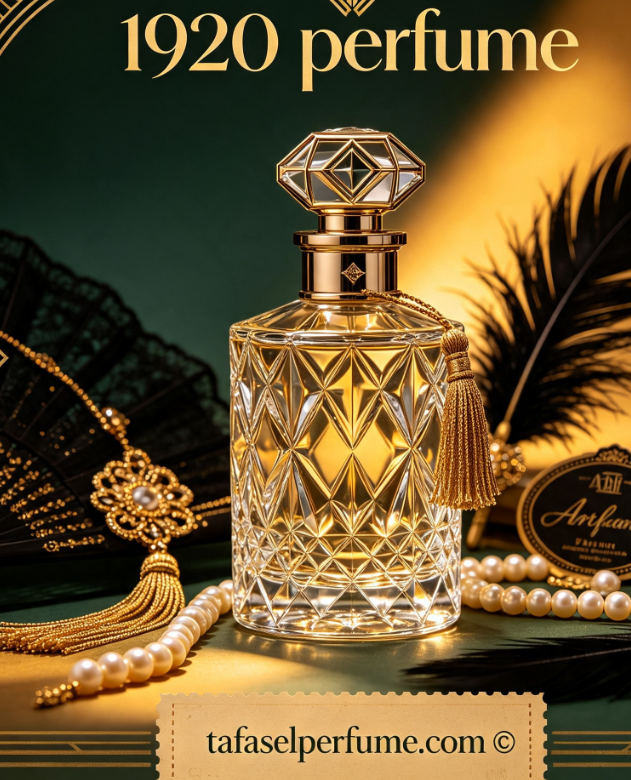
- 1920 Perfume · The Velvet Architecture of a Roaring Decade & the Sillage of Silent Revolution: ✦ short intro — 1920 perfume wasn’t merely scent; it was the olfactory proclamation of a new woman, the jazz of aldehydes, and the chrysalis of modern perfumery.
✦ The grand tapestry — The 1920s rewrote the rules of fragrance. As flappers danced and art deco glittered, perfumers abandoned the heavy, single-flower orientals of the Victorian era. Instead, they embraced synthetic marvels (aldehydes, coumarin) and abstract compositions. Chanel No. 5 (1921) became the archetype: a bouquet that smelled like nothing in nature, yet everything of the modern spirit. This was the decade when perfume became wearable art — a silent, intimate architecture of identity, worn by both the daring and the discreet. The sillage of 1920 lingers still, in every bottle that dares to be avant‑garde.
✧ contents · the 1920 olfactory archive
- 01. Aldehydic Dawn · The Synthetic Signature
- 02. Flapper Florals · Gender & the New Fragrance
- 03. Art Deco Bottles · The Visual Sillage
- 04. The Perfumer as Composer · Ernest Beaux & Co.
- 05. 1920 Men’s Cologne · Understated Elegance
- 06. Oriental‑Aldehyde Hybrids · The Crossroads
- 07. Legacy & Revival · Why 1920 Still Whispers
— each chapter unveils a facet of the decade that redefined perfume.
01. Aldehydic Dawn · The Synthetic Signature
The roar of the twenties began with a molecule: the aldehyde.
In 1921, Chanel No. 5 shattered every olfactory convention. Its overdose of aldehydes — synthetic compounds that impart a waxy, metallic, sparkling lift — created a fragrance that smelled like clean skin, fresh air, and a future. Before this, perfumery was tethered to the garden: rose, jasmine, violet. But the aldehyde allowed perfumers to paint with abstraction. It was the perfume equivalent of cubism. Brands like Guerlain and Coty quickly followed with their own aldehyde experiments, but none captured the zeitgeist like No. 5. The aldehyde became the signature of the modern woman: independent, intellectual, and unafraid of the machine age. Even today, the aldehyde family — from the fatty C-10 to the citrusy C-12 — evokes the crisp, unapologetic glamour of the 1920s. It was a scent that said, “I am not a flower; I am a statement.”
Perfumers like Ernest Beaux understood that the future of fragrance lay in the laboratory. The 1920s were the golden age of synthetic aroma chemicals, and aldehydes were just the beginning. They allowed for longer lasting sillage and a radiant, almost ethereal quality that natural extracts alone could not achieve. The aldehyde accord, when balanced with ylang-ylang, neroli, and sandalwood, produced a powdery yet vibrant trail — a sillage that announced presence without shouting. This was the olfactory architecture of unisex perfume, long before the term existed. The 1920 aldehyde floral was gender‑fluid in its abstraction, worn by women who cut their hair short and men who appreciated the new.
02. Flapper Florals · Gender & the New Fragrance
The flapper didn't just change hemlines; she changed the perfume counter.
The 1920s saw the rise of the “flapper floral” — bright, green, and often tinged with the bitterness of galbanum or the sparkle of bergamot. These were not the heavy, languid florals of the Belle Époque. They were crisp, almost androgynous, designed to complement the sharp lines of art deco fashion. Fragrances like Narcisse Noir (Caron, 1911, but beloved in the 20s) and L’Aimant (Coty, 1927) offered a new kind of femininity: one that was playful, cerebral, and self‑possessed. Women’s perfume no longer had to be sweet or powdery; it could be green, chypre, or even leathery. At the same time, men’s fragrances began to shed their heavy, animalic musk for fresher, citrus‑forward compositions — a quiet revolution that mirrored the changing roles of men in the postwar world.
The androgynous spirit of the 1920s is perhaps best captured by the chypre genre, perfected by François Coty in 1917 but reaching its zenith in the 20s. Chypre — a blend of oakmoss, labdanum, and bergamot — offered a dry, woody, and mossy backbone that felt both classic and radically modern. It was worn by both sexes, a testament to the decade’s fluid approach to elegance. Men’s perfume of the era often echoed this chypre structure, while adding aromatic herbs like lavender or rosemary. The result was a shared olfactory language that transcended gender, speaking instead of sophistication and a certain worldly nonchalance.
03. Art Deco Bottles · The Visual Sillage
The bottle became as iconic as the scent — a miniature monument to the decade.
No discussion of 1920 perfume is complete without acknowledging the Art Deco bottle. Designers like Lalique, Baccarat, and even Chanel herself (with the stoic, geometric No. 5 flacon) turned the perfume bottle into a collectible objet d’art. The clean lines, geometric motifs, and luxurious materials mirrored the architecture of the era: skyscrapers, cruise ships, and the Chrysler Building. Perfume gift sets from this period often came in elaborate boxes with mirrored trays and miniature sculptures, turning the act of gifting into a ceremonial presentation of modernity. The bottle was the first sillage — a visual promise of the olfactory journey within.
Lalique’s bottles for L’Origan and Nilang featured frosted glass and intricate reliefs of flowers, nymphs, and geometric patterns. The tactile experience — the cool weight of the glass, the precision of the stopper — was part of the ritual. Mini size & gift sets became popular, allowing the burgeoning middle class to own a piece of this luxury. The 1920s consumer was not just buying a scent; they were buying an aesthetic, a lifestyle, a fragment of the jazz age. Even today, vintage 1920 bottles are prized by collectors, not only for their contents but for their sculptural beauty — a testament to the decade’s belief that art and life should be inseparable.
04. The Perfumer as Composer · Ernest Beaux & Co.
Ernest Beaux was the Beethoven of the boudoir, orchestrating aldehydes and absolutes.
Ernest Beaux, the Russian‑born perfumer who created Chanel No. 5, is the emblematic figure of 1920 perfumery. But he was not alone. The decade saw the rise of the “perfumer‑composer” — a creative artist who worked with raw materials as a musician works with notes. Beaux’s training in the French perfume houses of Grasse and his exposure to the harsh, clean air of the Arctic (he served in the Russian army) gave him a unique sensibility: he wanted to capture the freshness of the north in a bottle. The result was No. 5, but also other masterpieces like Cuir de Russie (1924) — a leathery, aldehydic floral that evoked the scent of a sophisticated traveller. Perfume brands like Houbigant, Caron, and Guerlain all had their own in‑house composers, each pushing the boundaries of the new synthetic palette.
This era also marked the beginning of the perfume industry as we know it — with marketing, branding, and the celebrity endorsement. Coco Chanel herself was the first face of her fragrance, a move that would become standard decades later. Beaux’s compositions were complex, often containing over 80 ingredients, yet they felt effortless. The 1920s perfumer was a chemist, an artist, and a psychologist, understanding that the scent had to resonate with the wearer’s self‑image. The alchemy of spa & fragrance was not just about smelling good; it was about feeling transformed. This was the decade when perfume became a tool for self‑creation.
05. 1920 Men’s Cologne · Understated Elegance
Men stepped out of the shadows with crisp, aromatic colognes that whispered confidence.
While women’s perfume grabbed headlines, the 1920s also refined the men’s cologne. Gone were the heavy, musky, and sometimes cloying scents of the 19th century. In their place emerged clean, aromatic, and citrus‑forward compositions. Eau de Cologne classics like 4711 were revived, but new houses like Acqua di Parma (founded 1916, but popular in the 20s) offered a sophisticated blend of Sicilian citrus, lavender, and rosemary. Men’s perfume of the era often featured a fougère accord (lavender, coumarin, oakmoss) — a structure that remains the backbone of masculine fragrance today. The 1920s man wanted to smell clean, competent, and quietly powerful — a contrast to the flamboyant dandy of the previous century.
Fragrances like Mouchoir de Monsieur (Guerlain, 1904, but adored in the 20s) and Jicky (also Guerlain, 1889, reformulated in the 20s) offered a bridge between the old and the new, with their blend of lavender, vanilla, and citrus. But the real shift was in the marketing: men’s cologne was no longer just a utilitarian splash; it was a grooming ritual, a sign of refinement. Deodorant & antiperspirant also gained traction, but the cologne remained the signature of the well‑dressed man. The 1920s taught us that a man’s scent could be as layered and intriguing as his personality — a lesson that endures in every contemporary masculine composition.
06. Oriental‑Aldehyde Hybrids · The Crossroads
East met West in a shimmer of aldehydes and amber — the birth of the modern oriental.
The 1920s were also the era of the oriental‑aldehyde hybrid. While traditional orientals (heavy on vanilla, amber, and patchouli) had been popular since the 19th century, the 1920s reframed them with a dose of aldehydic brightness. Fragrances like Shalimar (Guerlain, 1921) — though technically a “oriental” — used a citrusy, bergamot‑heavy top that contrasted with its vanilla‑leather base, creating a sparkling, modern feel. Similarly, L’Heure Bleue (Guerlain, 1912) was reinterpreted in the 20s with a lighter, more powdery touch. Beauty enthusiasts of the time adored these complex, multi‑faceted scents that told a story of adventure and romance.
The oriental‑aldehyde bridge allowed perfumers to play with olfactory contrasts — the cool, metallic sparkle of aldehydes against the warm, resinous embrace of benzoin and myrrh. It was a reflection of the 1920s itself: a decade of contradictions, of jazz and classical, of liberation and nostalgia. Tafaseel collections today often revisit this juxtaposition, proving that the 1920s formula remains endlessly fascinating. The hybrid genre also paved the way for the modern “woody floral” and “fruity chypre” categories, making it one of the most influential innovations in fragrance history. The sillage of these orientals was rich, long‑lasting, and unmistakably glamorous — a scent that lingered in the memory long after the wearer had left the room.
07. Legacy & Revival · Why 1920 Still Whispers
A century later, the 1920s remain the touchstone for avant‑garde perfumery.
The 1920s gave us the template for modern fragrance: abstraction, synthetic innovation, gender fluidity, and the marriage of art and commerce. Every niche perfume house that experiments with iso‑e‑super, ambroxan, or synthetic jasmine owes a debt to the aldehyde pioneers. Unisex perfume is a direct descendant of the 1920s chypre and floral‑aldehyde genres, which were never strictly gendered. The decade taught us that a scent could be an intellectual statement, a piece of wearable philosophy. Today, perfumers like brands such as Byredo, Le Labo, and Diptyque echo the 1920s spirit with their minimalist, abstract compositions — though they may not always acknowledge it.
Revivals of 1920s fragrances are perennial, from limited‑edition re‑releases of classic formulas to modern interpretations that use the same structure with contemporary materials. The 1920 perfume aesthetic is also alive in the packaging: geometric bottles, gold lettering, and a sense of understated luxury. Perfume gift sets often adopt art deco motifs, tapping into our collective nostalgia for an era that felt both innocent and daring. The sillage of the 1920s is not just a memory; it is a living, breathing influence that continues to shape how we perceive, choose, and wear fragrance. It whispers to us through every sparkling aldehyde, every dry chypre, every bottle that dares to be different.
FAQ · 1920 perfume decoded
01. What made 1920s perfume different from Victorian scents?
The use of synthetic aldehydes and abstraction. Victorian perfumes were mostly soliflores (single flower) or heavy orientals. The 1920s introduced synthetic molecules that created entirely new, non‑natural aromas, allowing perfumers to compose abstract “moods” rather than imitate flowers. This was a revolutionary shift toward modern perfumery.
02. Is Chanel No. 5 the only famous perfume from the 1920s?
No, though it is the most iconic. Other legendary 1920s perfumes include Shalimar (Guerlain, 1921), L’Aimant (Coty, 1927), Cuir de Russie (Chanel, 1924), and Narcisse Noir (Caron, 1911, but hugely popular in the 20s). Each offered a different interpretation of the modern spirit.
03. What does “sillage” mean in the context of 1920 perfume?
Sillage (French for “wake” or “trail”) refers to the scent trail left by a fragrance. In the 1920s, with the use of aldehydes and new fixatives, perfumers achieved longer‑lasting, more radiant sillage. It became a marker of quality and sophistication — a perfume that could be sensed before the wearer entered the room and lingered after they left.
04. Were 1920s perfumes unisex?
Many were, though they weren't marketed as such. Chypre and aldehyde florals were worn by both men and women, especially in artistic and intellectual circles. The 1920s blurred gender lines in fashion and fragrance, paving the way for the modern unisex category.
05. How did art deco influence perfume bottles?
Massively. Art deco’s geometric lines, bold symmetry, and luxurious materials (crystal, glass, lacquer) transformed perfume bottles into decorative objects. Designers like René Lalique and Baccarat created sculptural flacons that were as prized as the scent inside. The bottle became part of the experience.
06. Are there modern perfumes that smell like the 1920s?
Yes. Many niche and classic houses revive or reinterpret 1920s structures. Look for fragrances with prominent aldehydes, oakmoss, or bergamot‑lavender‑coumarin (fougère) accords. Brands like Chanel, Guerlain, and even newer lines like Tafaseel offer modern takes on the 1920s aesthetic.
07. Why is the 1920s considered the golden age of perfume?
Because it was the period when synthetic materials were first embraced, creating unprecedented creative freedom. It was also the era of the first global perfume marketing campaigns, celebrity endorsements, and the birth of the modern fragrance industry. The 1920s set the template for everything that followed.
— the sillage of 1920 still whispers through every modern bottle —


