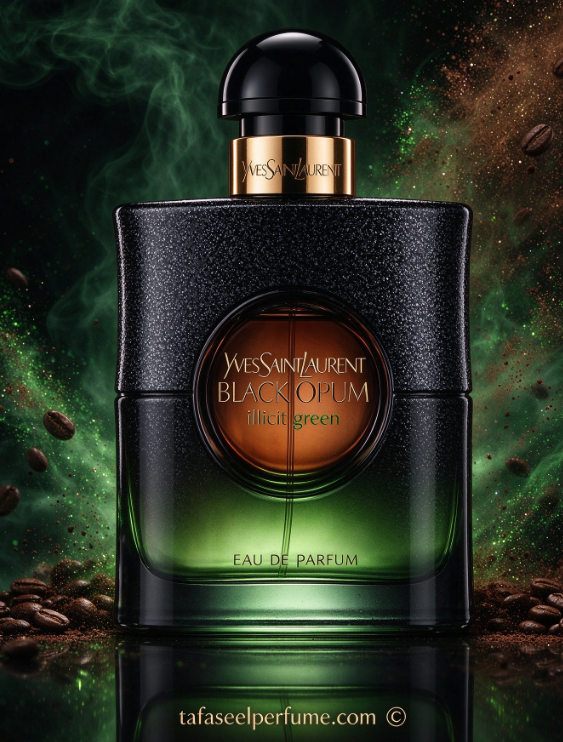
- YSL Black Opium Illicit Green EDP: The Electric Mocktail That Rewrites the Coffee Rule: A shot of green mandarin. A veil of creamy fig. The unmistakable Black Opium coffee signature—shaken, not stirred. Yves Saint Laurent Black Opium Illicit Green Eau de Parfum is not a flanker that plays it safe. It takes the dark, addictive DNA of the original and cuts it with a neon-bright citrus-fig voltage, creating something that feels less like a perfume and more like an olfactive adrenaline shot.
A shot of green mandarin. A veil of creamy fig. The unmistakable Black Opium coffee signature—shaken, not stirred. Yves Saint Laurent Black Opium Illicit Green Eau de Parfum is not a flanker that plays it safe. It takes the dark, addictive DNA of the original and cuts it with a neon-bright citrus-fig voltage, creating something that feels less like a perfume and more like an olfactive adrenaline shot. Launched in 2022 and composed with the input of Parisian mixologist Margot Lecarpentier, Illicit Green is the Black Opium for people who want the coffee high without the heavy, syrupy comedown.
If the original Black Opium is a late-night espresso in a dimly lit bar, Illicit Green is the same bar at 7 PM—windows open, neon flickering on, a cold, sparkling drink in hand. It keeps the addiction, but swaps the velvet rope for an electric green door. This is a fragrance built on contrast: roasted coffee against juicy citrus, creamy fig against sharp green leaves, the familiar against the unexpected. Below, we break down the scent architecture, the performance, the comparisons, and the exact mood Illicit Green is built to occupy—so you can decide whether this green twist deserves a place in your women’s perfume rotation.
Jump to: 1. The Scent DNA · 2. The Note Pyramid · 3. The Mocktail Concept · 4. Performance & Sillage · 5. Illicit Green vs. Original · 6. The Bottle & Aesthetic · 7. Who Should Wear It
1. The Scent DNA: What Makes Illicit Green Different
The core genius of Black Opium Illicit Green lies in a single structural decision: the coffee is no longer the opening act. In the original Black Opium, the roasted coffee accord hits early and often, wrapping the wearer in a warm, bittersweet cloud from the first spray. Illicit Green inverts that architecture. The first thing you smell is green mandarin superessence—a sharp, pulpy, almost effervescent citrus that feels like peeling the fruit directly under your nose. It is followed almost immediately by fig leaf, which brings a grassy, slightly milky greenness, and a pear accord that adds a watery, juicy softness to the opening.
The coffee has not disappeared; it has been demoted to the base, where it smolders underneath a creamy fig and vanilla bourbon foundation. This means Illicit Green reads as fresh-leaning for the first hour, then slowly descends into the familiar Black Opium warmth as the citrus burns off and the coffee-patchouli-vanilla trio takes over. For anyone who found the original too dense, too sweet, or too “nightclub-only,” this structural shift is the entire point. Illicit Green is the Black Opium you can wear before sunset—and still smell like Black Opium after midnight.
This makes it an unusually versatile entry in the Black Opium line, and a natural bridge for anyone exploring the broader unisex perfume space, where fresh-gourmand hybrids have become a dominant language.
2. The Note Pyramid: From Green Spark to Creamy Base
According to Fragrantica and YSL’s own breakdown, the pyramid is precise and deliberate: Top notes of pear, green mandarin, and fig leaf; heart notes of fig, orange blossom, and jasmine; base notes of coffee, patchouli, and bourbon vanilla. On paper, it looks simple. On skin, the transition is where the fragrance earns its keep.
The opening is the most “Illicit Green” part of the experience: zesty, slightly bitter from the fig leaf, with a green floral shimmer from the mandarin’s terpenes. It is not a sweet citrus; it is a sharp, rind-forward citrus, closer to the smell of tearing a lime leaf than drinking orange juice. Within twenty to thirty minutes, the fig flesh in the heart softens the edges, introducing a creamy, almost coconut-adjacent roundness that cushions the transition into the base. The orange blossom and jasmine are present but restrained—they provide a floral lift rather than a floral takeover, keeping the composition gourmand-leaning without tipping into white-floral territory.
The dry-down is where the Black Opium DNA reasserts itself. The coffee accord, described by YSL as a “signature black coffee” note, emerges alongside patchouli and a Madagascar bourbon vanilla infusion that has been sustainably sourced. The result is a creamy, slightly earthy, coffee-vanilla skin scent that lingers close to the body for hours. The patchouli is not the sharp, camphoraceous kind; it reads more like a soft, dusty woodiness that gives the vanilla a backbone. If you enjoy the architecture of modern gourmands but want something less sugary than the typical vanilla-coffee release, this pyramid is worth studying—and it sits comfortably alongside the curated selections you will find under perfume brands that specialize in this hybrid territory.
3. The Mocktail Concept and the Margot Lecarpentier Collaboration
YSL did not simply release a “green” version of Black Opium and call it a day. The brand framed Illicit Green as a “mocktail-inspired” fragrance, and the creation involved Margot Lecarpentier, a Parisian bartender and mixology expert, who collaborated with perfumer Nathalie Lorson. This is not just marketing garnish. The mocktail framing explains the fragrance’s entire texture: it is shaken, effervescent, and layered, with a bright top note that behaves like a citrus garnish and a base that functions like the syrup at the bottom of the glass.
Lorson, who has worked on multiple Black Opium iterations, described the brief as adding a dose of “fleshy, pulpy, voluptuous addiction” to the original. The collaboration with Lecarpentier pushed the composition toward a brighter, more “drinkable” freshness without stripping away the coffee-vanilla core that defines the line. The result is a fragrance that feels designed for a specific ritual: the transition from day to night, the moment when you want to smell awake and alive rather than simply seductive. It is the olfactory equivalent of ordering a non-alcoholic cocktail at a bar that takes its craft seriously—you are not sacrificing complexity for lightness.
For anyone building a fragrance wardrobe around mood-based rather than occasion-based wearing, this mocktail concept is the key to understanding where Illicit Green fits. It is not a “going-out perfume.” It is an energy perfume—and that distinction matters.
4. Performance, Longevity, and Sillage: What to Expect
Honesty is important here: Illicit Green is not a beast-mode projector. User reviews across retail platforms consistently describe it as softer and less intense than the original Black Opium EDP, with a shorter overall lifespan on skin. On fabric, the coffee-vanilla base can cling for six to eight hours; on skin, expect four to six hours of meaningful presence, with the first two hours being the most aromatic. The sillage is moderate—it creates a scent bubble of roughly arm’s length, not a room-filling trail. This is not a flaw; it is a design choice. The mocktail brief demands a lighter, more “sippable” experience, and the performance reflects that intention.
What Illicit Green lacks in raw projection, it partially compensates for in texture. The opening citrus is genuinely sparkling, and the fig-coffee transition is smooth enough that the fragrance never feels harsh or synthetic. It behaves best when sprayed on pulse points and clothing—the warmth of skin accelerates the citrus burn-off, while fabric holds the creamy base longer. If you are someone who prefers intimate, skin-close fragrances that reveal themselves in waves rather than announce themselves from across the room, this performance profile will feel intentional rather than disappointing. For those who prioritize projection above all else, the original Black Opium or a higher-concentration interpretation may be a better fit—and browsing a perfume ranking of long-lasting gourmands can help calibrate expectations before committing to a full bottle.
5. Illicit Green vs. Original Black Opium: A Side-by-Side
The comparison is unavoidable, and the verdict from the fragrance community is remarkably consistent: Illicit Green is the lighter, fresher, more daytime-appropriate sibling of the original Black Opium. The most frequently cited difference is the coffee intensity. In the original, coffee is a dominant, almost syrupy presence from the opening. In Illicit Green, coffee is a base-note whisper, buried under citrus and fig, emerging only after the top notes have fully dissipated. Some reviewers even note that the coffee is barely detectable in the first hour, which is either a feature or a bug depending on your relationship with the original.
The sweetness is also recalibrated. The original leans into a dark, almost boozy vanilla; Illicit Green replaces some of that density with the watery, green sweetness of pear and fig. The result is a fragrance that reads as “fruity-floral-gourmand” rather than “gourmand-oriental.” It is less cloying, more breathable, and significantly more versatile in warm weather. If you already own and love the original, Illicit Green is not redundant—it occupies a different climatic and temporal zone. If you actively disliked the original for being too heavy or too coffee-forward, Illicit Green is the version that might convert you.
This kind of flanker logic—same DNA, different voltage—is increasingly common in modern perfumery, and it is worth exploring how other houses handle the same challenge through perfume articles and reviews that track these evolving family trees.
6. The Bottle and the “Scandalous Green” Aesthetic
The bottle is not an afterthought. YSL describes the Illicit Green flacon as “a scandalous twist on the iconic Black Opium bottle lit up from inside by a radical and illicit neon green”. The original Black Opium bottle is a dark, glittering, night-time object—sequined, almost glam-rock. The Illicit Green version retains the same silhouette but swaps the black glitter for a translucent green glow, as if the liquid itself is emitting a low-frequency neon hum. The design references YSL’s historical provocations, particularly the 1971 “Scandal” collection, which famously shocked the couture world with its transparent, body-conscious aesthetic.
This visual language matters because Illicit Green is a fragrance that asks to be seen as well as smelled. It is not a discreet, old-world perfume object. It is a statement bottle—the kind of thing that looks intentional on a shelf, whether that shelf is in a minimalist bathroom or a maximalist dressing room. The green neon theme extends to the campaign imagery, which positions the Illicit Green wearer as someone driven by the senses, moving through a festive, neon-lit world where “perfume is pleasure”. If you are drawn to fragrances that function as aesthetic objects as much as olfactory ones, this bottle delivers. It also makes Illicit Green a natural candidate for perfume gift sets, where the visual impact of the flacon is part of the appeal.
7. Who Should Wear It? Mood, Season, and Occasion
Black Opium Illicit Green is best understood as a transitional fragrance. It is not a summer beach scent, and it is not a winter fireplace scent. It lives in the shoulder seasons—spring and early autumn—when the air is cool enough to carry the creamy base but warm enough that a heavy gourmand would feel oppressive. It is also an excellent day-to-night bridge: spray it in the morning for the green citrus spark, and by evening, the coffee-vanilla dry-down will have settled into something quietly sensual without ever having been loud.
The mood it projects is specific: awake, alert, slightly mischievous. This is not a “comfort scent” in the traditional sense. It does not wrap you in a blanket; it hands you a cold, sparkling drink and tells you the night is young. It suits people who enjoy the idea of Black Opium—the coffee, the addiction, the edge—but who want to wear that idea in daylight, without the full weight of the original’s syrupy intensity. If your fragrance preferences lean toward fresh-gourmand hybrids, citrus-forward orientals, or fig-centered compositions, Illicit Green is a coherent addition to the collection.
It is also a strong candidate for anyone exploring the broader Black Opium universe for the first time. Because it is lighter and more immediately approachable than the original, Illicit Green functions as a low-risk entry point into the line—a way to test the coffee-vanilla DNA without committing to the full dark-roast experience. From there, the original, Neon, and Extreme versions each offer their own variation on the theme, and comparing them side-by-side is one of the more enjoyable exercises in modern flanker archaeology. Whether you ultimately prefer the green spark or the black syrup, Illicit Green earns its place as the electric, daylight-facing chapter of the Black Opium story.


