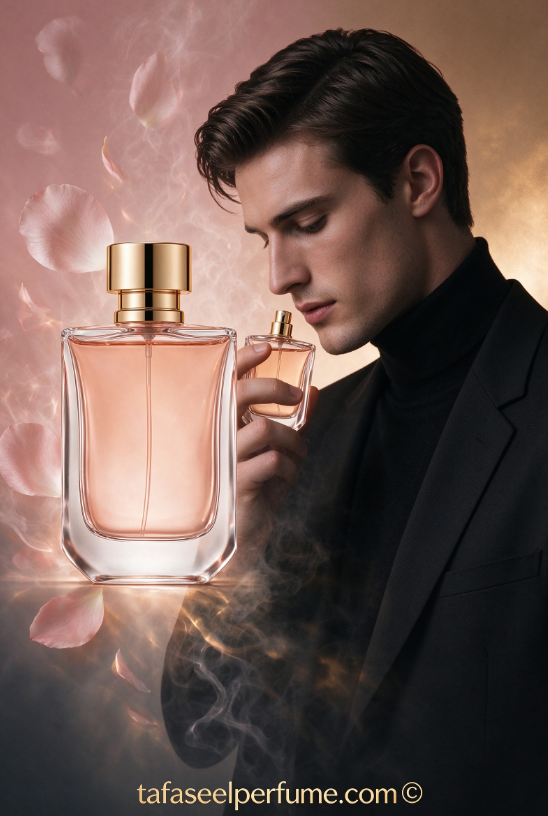
- Women's Fragrances for Men: A Complete Guide to Choosing, Wearing and Loving Feminine Perfumes with Confidence: A practical, honest guide for men who love the way women's perfumes smell — and want to wear them with confidence instead of confusion.
Fragrance has no gender, only character. Yet for decades the industry has drawn a hard line between the perfume aisle and the cologne aisle, convincing generations of men that a floral, powdery or vanilla-heavy scent is somehow "not for them." That line is fading fast. More men than ever are exploring women's fragrances for men, discovering that notes like rose, jasmine, iris, peony and sweet vanilla can feel powerful, elegant and deeply personal — often more interesting than the predictable citrus-woody template repeated across the men's counter. This guide walks you through everything: how to read a feminine fragrance, which scent families work best on male skin, how to choose your first bottle, how to wear it without overdoing it, and how to build a small collection you genuinely love.
Whether you are curious about a single note, shopping for a signature scent, or simply tired of smelling like everyone else in the elevator, this article gives you a clear, no-nonsense roadmap. You will learn the vocabulary, the practical rules of application, and the small adjustments that make a traditionally feminine perfume read as intentional and masculine on you. Along the way, we point you toward trusted product categories and reading material so you can keep exploring after you finish. Use the clickable outline below to jump straight to the section you need, or read top to bottom for the full picture.
Jump to a section:
1. Why Men Are Wearing Women's Fragrances
2. Understanding Women's Scent Families
3. Women's vs Men's Fragrance: What Really Differs
4. Choosing the Right Concentration
5. How to Pick Your First Women's Fragrance
6. Florals That Work Beautifully on Men
7. Vanilla and Gourmand Women's Fragrances
8. Oriental, Amber and Spicy Feminine Scents
9. How to Apply Women's Perfume on Male Skin
10. Matching the Scent to Season and Occasion
11. Layering Women's Fragrances with Men's Scents
12. Gifting and Shopping Smart
1. Why Men Are Wearing Women's Fragrances
The shift is cultural, chemical and practical all at once. Culturally, the boundary between "his" and "hers" has been collapsing for years in fashion, hair care and skincare — fragrance was simply the last holdout. Contemporary niche and designer houses increasingly release scents explicitly labeled for everyone, and shoppers have noticed that the most inventive compositions often sit on the women's shelf. Practically, men's fragrance has become a crowded, repetitive market: an enormous number of releases lean on the same handful of aromatic fougère and blue-woody accords, so anyone wanting to smell distinctive has to look elsewhere. Many men find exactly what they want in the women's aisle — richer flowers, softer resins, better vanilla, more risk.
There is also a chemical reality worth understanding. Skin chemistry, not marketing, decides how a perfume finally smells. A rose-forward eau de parfum that reads sweet and airy on one person can turn dry, green and almost leathery on another. Many men have naturally warmer or oilier skin, which tends to amplify base notes and push sweet or balsamic facets forward. That means a feminine composition with a strong woody or musky foundation — a very common structure — often lands in a surprisingly unisex place on a male wearer. For a broad overview of fragrances designed to sit outside the binary, browse this collection of unisex perfume, which is a good benchmark for understanding how shared scent profiles are built.
Finally, there is the confidence argument. Wearing a scent that is coded feminine requires a decision, and decisions read as self-assurance. People rarely notice the label on the bottle; they notice whether the fragrance suits the person wearing it. A man who carries a soft iris or a warm vanilla with ease comes across as someone with taste and a clear sense of self — which is a far better impression than smelling like a safe, forgettable bestseller.
2. Understanding Women's Scent Families
Before you can choose a women's fragrance, you need a working map of how they are built. Perfumery generally sorts scents into families, and the women's side of the market is dominated by a few broad groups. Floral is the largest: soliflores that spotlight a single flower, and floral bouquets that blend several. Floral woody musk is the modern commercial workhorse — clean, soft, radiant and extremely easy to wear. Oriental or amber fragrances build on resins, balsams, spices and vanilla, giving warmth and depth. Gourmand scents lean on edible notes like vanilla, caramel, praline, chocolate and tonka. Chypre fragrances combine citrus top notes with a mossy, patchouli-driven base, and green or aquatic florals stay fresh and transparent.
Each family behaves differently on skin. Gourmands and orientals tend to project heavily and last long, while citrus-green florals are brighter and shorter-lived. If you are new to the category, the smartest move is to sample across families rather than committing to a full bottle of the first thing you like in the air. A structured exploration of women's perfume categories will show you how wide the range really is, from barely-there skin scents to dramatic statement pieces. Keep notes on what you try — the family, the dominant note, how it evolved over six hours — and patterns will emerge quickly.
3. Women's vs Men's Fragrance: What Really Differs
The honest answer is: less than the labels suggest. There is no ingredient that is inherently male or female. Historically, the split came from marketing and from a few statistical tendencies — men's fragrances skew toward lavender, coumarin, woods and aromatic herbs, while women's skew toward florals, aldehydes, fruits and vanilla. But perfumers borrow freely across that line, and many "men's" classics contain generous doses of rose or jasmine while many "women's" icons are built on patchouli, vetiver and musk. The difference is usually one of emphasis, not substance.
What genuinely differs is framing and strength. Women's fragrances have traditionally been offered in a wider range of concentrations, from very light eau de toilette to dense extrait, and they are more likely to include sweet or powdery facets. Men's releases more often prioritize freshness and projection. If you want a crisp, dry, herbal profile, the men's side will usually deliver it faster. If you want nuance, texture and unusual flowers, the women's side is where the interesting work happens. A useful comparison exercise is to read across categories — look at men's perfume alongside feminine options and note where the two overlap. You will find far more crossover than the packaging implies.
4. Choosing the Right Concentration
Concentration determines how a fragrance performs, and it is the single most overlooked variable for men shopping in the women's aisle. Eau de toilette is lighter, brighter and more transparent — ideal for daytime, warm weather and office wear. Eau de parfum is the modern sweet spot, with more depth and six to eight hours of typical wear. Eau de parfum intense or extrait versions sit closer to the skin but last considerably longer and often expose richer base notes. Body mists and hair mists are the lightest option and excellent for testing whether you enjoy a profile before investing.
For men wearing women's fragrances, a moderate concentration usually works best. Highly concentrated sweet or floral extraits can become overwhelming in an office or a warm room, while a well-chosen eau de parfum gives you presence without fogging the space around you. If you want to experiment cheaply, start with travel sizes and discovery formats. Many houses now sell mini size & gift sets, which let you live with a scent for a few weeks instead of judging it from a paper strip in a shop. That single habit will save you more money than any review.
Also consider pairing your fragrance with a matching body product. Layering a scented lotion or a spa & fragrance product underneath the perfume extends longevity and softens the opening, which is especially helpful with citrus-heavy feminine compositions that fade quickly.
5. How to Pick Your First Women's Fragrance
Start with what you already like, then translate it. If you enjoy fresh, woody men's scents, look for feminine releases built on cedar, vetiver or white musk with a floral overlay — they will feel familiar but more textured. If you like sweet or boozy notes, gourmands are your entry point. If you gravitate toward clean laundry smells, explore soft floral musks. The mistake is choosing something radically outside your comfort zone as a first purchase and then feeling self-conscious wearing it.
Test properly. Spray on skin, never just on paper, and test no more than two fragrances per visit so your nose does not fatigue. Wear the sample for a full day, including the drydown — the last three hours of a fragrance are the part you will smell most often. Ask yourself three questions: does it feel like me, does it feel appropriate for where I go, and do I want to smell it again tomorrow? Two yeses is enough to justify a small bottle.
It also helps to read widely before you buy. Editorial coverage and community rankings are genuinely useful for narrowing the field, especially with feminine releases that are rarely sampled in mainstream stores. Browse the perfume articles and reviews section for detailed breakdowns, and check perfume rankings and top lists when you want a shortlist of proven crowd-pleasers rather than risky blind buys.
6. Florals That Work Beautifully on Men
Not all flowers read the same way. Some feel lush, some feel clean, some feel almost austere — and the austere ones are often the easiest for men to wear. Iris is a superb starting point: cool, powdery, slightly rooty and refined, it reads as elegant rather than sweet. Rose is the most misunderstood note in perfumery; when paired with pepper, oud, incense or patchouli it becomes dry, dark and distinctly commanding. Jasmine in small doses adds a narcotic warmth that works well in evening compositions, while neroli and orange blossom give a bright, soapy freshness that feels unisex by nature. Violet leaf brings a green, slightly metallic coolness that many men find surprisingly wearable.
The trick is context. A big, sugary white floral bouquet will read as traditionally feminine; the same flower over a woody or leather base reads as modern and gender-neutral. When sampling, pay attention to the base notes rather than the headline flower. A rose-patchouli combination is a completely different proposition from a rose-peony-sugar one, and the first is far easier to integrate into a male wardrobe.
If you want to explore flowers without committing to a feminine-labeled bottle, start with shared compositions and work outward. Unisex perfume selections frequently showcase iris, rose and neroli in structures that sit comfortably between the two aisles, giving you a safe bridge into more floral territory.
Related reading:
Beauty tips and guides — helpful for understanding how scent interacts with skin, hair and grooming routines.
7. Vanilla and Gourmand Women's Fragrances
Gourmands are the fastest-growing family in feminine perfumery, and they are also where many men discover their first genuine love for women's scents. Vanilla is the anchor: it can be creamy and dessert-like, or dry, smoky and almost resinous depending on how it is treated. Tonka bean adds a hay-like sweetness, praline and caramel bring richness, and cacao, coffee and milk notes create warmth that pairs well with woody bases.
For male wearers, the key distinction is sweet versus dry. A dry vanilla with benzoin, tobacco or sandalwood reads sophisticated and mature; a very sugary vanilla with fruit and whipped cream reads younger and more overtly feminine. Neither is wrong — it depends entirely on the image you want to project. In cool weather, gourmands are among the most comforting and compliment-generating fragrances you can wear, and a light application on the chest and wrists is usually enough.
Watch the projection. Gourmands are dense, and two sprays can fill a room. If you work in close quarters, apply under clothing or choose a lower concentration. A fragrance gel or a lighter body format is a smart compromise for daytime wear when you still want that warm vanilla signature without the density of a full parfum.
8. Oriental, Amber and Spicy Feminine Scents
The oriental family — sometimes called amber — is arguably the most naturally unisex territory in women's perfumery. Built on labdanum, benzoin, myrrh, frankincense, patchouli, amber and spice, these fragrances have a dark, glowing quality that feels equally at home on any wearer. Notes like saffron, cardamom, pink pepper and cumin add a dry, savory sharpness that keeps sweetness in check and gives the composition a distinctly grown-up character.
These are evening and cold-weather scents by nature. They project slowly, sit heavily on fabric, and reward restraint — one or two sprays on the chest or the back of the neck will last all night. If you have always worn woody-ambery men's fragrances and want to step into the women's aisle without abandoning your taste, this family is the smoothest possible transition. Look for ambers that emphasize incense and resins over sugar, and you will find something that feels like a natural extension of what you already own.
9. How to Apply Women's Perfume on Male Skin
Application is where good fragrance choices go wrong. The standard advice — spray on pulse points — is only partly right. Pulse points are warm and diffuse scent well, but the neck and wrists are also the most noticed areas, so heavy application there becomes intrusive. A better approach for women's fragrances, which are often designed to project more generously, is strategic restraint: one spray on the chest under the shirt, one on the back of the neck, and optionally a light spray on the inner forearm.
Skin condition matters. Moisturized skin holds fragrance longer, so applying an unscented lotion first will extend wear considerably. Applying to freshly showered, slightly damp skin also improves retention. Avoid rubbing your wrists together — the friction and heat break down the top notes and shorten the fragrance's life. If you want a softer effect, spray into the air and walk through the cloud, or apply to clothing from a distance of about twenty centimeters.
Do not neglect the rest of your grooming routine. Fragrance competes with deodorant, aftershave and hair products, and a clashing combination ruins an otherwise excellent scent. Choosing a deodorant & antiperspirant that is unscented or matched to your fragrance family removes the biggest source of accidental conflict, and it keeps the composition you deliberately chose clearly readable on skin.
10. Matching the Scent to Season and Occasion
Fragrance behaves differently across temperatures and contexts. In summer and warm climates, heat amplifies everything, so lighter concentrations, citrus, green florals, neroli and clean musks work best. Heavy gourmands and ambers can turn cloying and overwhelming within minutes outdoors. In winter, cold air mutes projection, which is why richer orientals, vanillas and spicy florals come into their own — they need the density to survive the air.
Occasion matters just as much. For the office, choose a soft floral musk or a light eau de toilette applied sparingly; you want to be discovered, not announced. For evening and social occasions, you can afford a more assertive eau de parfum with amber, rose or vanilla at the base. For intimate settings, skin-close scents — musks, iris, soft sandalwood — are far more effective than loud ones, because they invite someone closer rather than pushing them away.
Build a small rotation rather than relying on one bottle: a fresh daytime scent, a warm evening scent and one distinctive piece for occasions. This approach also lets you experiment across families without overcommitting, and it keeps your nose sharp because you are constantly comparing.
11. Layering Women's Fragrances with Men's Scents
Layering is the advanced move, and it is genuinely useful for men exploring women's fragrances. The idea is simple: combine a lighter, more feminine composition with a dry, woody or aromatic base to create something entirely your own. A soft vanilla or rose scent layered over a vetiver or cedar fragrance, for example, gives you the floral or gourmand character you love with a structure that reads traditionally masculine.
Two rules keep layering from becoming a mess. First, layer in the same family or a complementary one — vanilla with woods, iris with musk, neroli with citrus aromatics. Second, apply the heavier fragrance first and the lighter one on top, using fewer sprays of the second than you would wear alone. Give the combination twenty minutes to settle before judging it; the opening always seems louder than the drydown.
Testing combinations is much easier with smaller formats. A few mini size & gift sets covering the main families make an excellent layering laboratory, and they cost far less than buying full bottles on spec. If you enjoy a house's style, exploring its perfume brands page will show you which lines are built to be layered and which are best worn alone.
12. Gifting and Shopping Smart
If you are shopping for yourself, buy samples first and bottles second. If you are shopping for someone else — a partner, a friend, a family member — the safest route is a discovery set or a curated gift selection rather than a large bottle of a guess. Scent is intensely personal, and even a beautifully made fragrance can be completely wrong for the recipient. Perfume gift sets solve this elegantly, offering several options in one package so the recipient finds their own favorite.
Read the composition before you buy. A well-written product page tells you the concentration, the top, heart and base notes, and often the perfumer. Those details let you predict performance far more accurately than the marketing copy. Cross-reference with reviews, and be skeptical of descriptions that rely entirely on adjectives without naming a single ingredient. Buying from a specialist retailer also gives you better access to travel sizes, samples and discontinued bottles that mainstream stores no longer stock.
13. Common Mistakes to Avoid
Over-spraying is the number one error. Men coming from men's fragrance often apply the same number of sprays to a women's eau de parfum, and the result is overwhelming. Start with one spray, live with it for an hour, and add only if needed. Buying blind is the second. Reviews describe how a fragrance smells on someone else's skin; only a sample tells you how it smells on yours.
Judging in the first five minutes is another frequent mistake. The opening is designed to grab attention and is often the least representative part of the composition — the heart and base are what you will actually wear all day. Ignoring the setting is equally common: a dense amber worn to a morning meeting will read very differently from the same scent worn to dinner. Finally, apologizing for your choice undermines everything. If you have chosen a fragrance thoughtfully and applied it with restraint, wear it without commentary. The only person who needs to be convinced that a man can wear women's fragrance is the man wearing it — and once that is settled, everything else follows.
Fragrance is one of the few ways to make a personal statement that costs relatively little and lasts all day. The women's aisle is full of extraordinary, under-explored work. Go in with a plan, sample patiently, apply sparingly, and you will find scents that feel more like you than anything a gendered label could have predicted.
```


