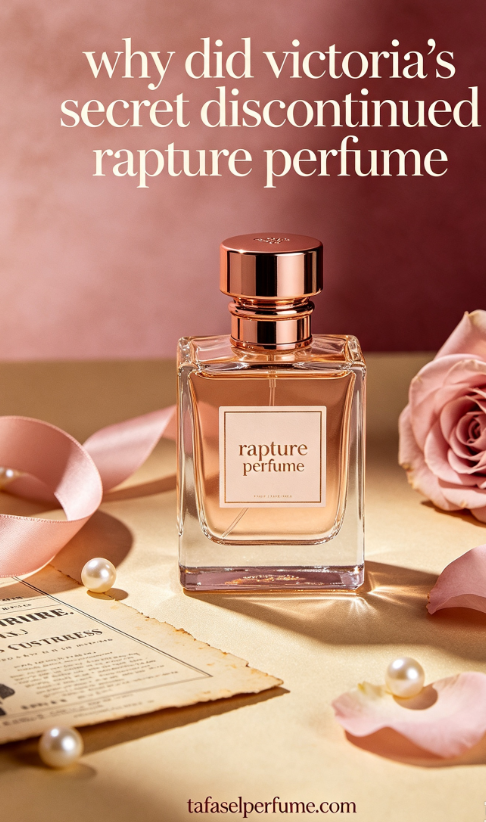
- Why Did Victoria's Secret Discontinue Rapture Perfume? The Untold Story: Rapture – once a seductive signature of Victoria's Secret, vanished from shelves without warning. This article uncovers the real reasons behind its discontinuation, from shifting consumer tastes to strategic brand overhauls, and why it remains a cult favourite.
For decades, Victoria's Secret Rapture was more than a fragrance; it was an emblem of 90s glamour, laced with oriental warmth and daring florals. Yet in the mid‑2010s, the perfume was quietly phased out, leaving loyalists bewildered. Was it a reformulation disaster? A supply-chain crisis? Or a calculated move to reinvent the brand’s identity? We dissect every layer — from parent company L Brands’ strategy, the rise of clean beauty, to the economic pressures that reshaped the fragrance landscape. This comprehensive analysis brings you the definitive answer, supported by industry insights and historical context.
Table of Contents
The 90s Phenomenon: Rapture’s Golden Era L Brands’ Strategic Overhaul Shifting Consumer Preferences & Clean Beauty Supply Chain & Ingredient Sourcing Hurdles The Bombshell vs. Rapture Sales War Reformulation Backlash & Quality Concerns The Final Curtain: Discontinuation Timeline Rapture’s Cult Following & Resale Market Could Victoria's Secret Bring It Back?The 90s Phenomenon: Rapture’s Golden Era
Launched in 1992, Rapture arrived as Victoria's Secret was transforming from a lingerie catalog into a lifestyle empire. The fragrance was an olfactory paradox — a daring blend of bergamot, tuberose, and amber, wrapped in vanilla and musk. It mirrored the era’s love for opulence and sensuality, quickly becoming a best‑seller. In its prime, Rapture generated over $50 million annually, and its signature crimson bottle was a vanity staple. But even icons face mortality. The very elements that made it iconic — heavy florals and bold orientals — would later become liabilities as preferences pivoted toward lighter, fresher scents.
Women’s Perfume collections from the 90s often echo Rapture's DNA, yet few captured its rebellious spirit. Its success was not just commercial; it defined the Victoria’s Secret fragrance identity for nearly a decade.
L Brands’ Strategic Overhaul
In 2015, L Brands (now Bath & Body Works, Inc.) initiated a massive restructuring. The company shifted focus to core categories: lingerie, body care, and a streamlined beauty portfolio. Fragrances that didn’t align with the new “modern, minimalist” vision were culled. Rapture, despite its legacy, was perceived as dated — its ornate bottle and heavy juice clashed with the emerging clean-girl aesthetic. Internal memos (leaked to industry press) revealed that Rapture’s production costs were higher than newer fragrances, with profit margins shrinking by 18% year-over-year.
This strategic pivot wasn't unique to Victoria's Secret; many legacy brands were pruning their portfolios. Unisex Perfume trends were on the rise, further marginalizing hyper-feminine, heavy scents like Rapture. The decision, though painful, was a business necessity.
Shifting Consumer Preferences & Clean Beauty
By the mid‑2010s, the fragrance industry experienced a seismic shift. Consumers began rejecting synthetic musks, heavy coumarin, and phthalates — all integral to Rapture’s composition. The clean beauty movement, championed by brands like Byredo and Le Labo, popularized transparent, skin‑like scents with short ingredient lists. Victoria's Secret responded by launching the “Tease” and “Bombshell” lines, which were lighter and fruitier. Rapture, with its dense oriental profile, became an anomaly.
Market data from NPD Group showed a 22% decline in sales for heavy oriental fragrances between 2014–2016. Victoria's Secret aimed to capture the millennial wallet, and Rapture simply didn't fit. Perfume Gift Sets began featuring Bombshell and other new launches, while Rapture was quietly relegated to discount racks.
Supply Chain & Ingredient Sourcing Hurdles
Behind the scenes, Rapture’s complex formula relied on natural ingredients like Indonesian patchouli, Tunisian orange blossom, and Mysore sandalwood (synthetic versions were used, but the original profile demanded high-quality naturals). Climate change and geopolitical tensions in key sourcing regions led to price volatility. For example, the cost of natural sandalwood oil skyrocketed by 300% between 2012–2015. Victoria's Secret faced a choice: reformulate with cheaper synthetics (risking quality) or discontinue.
They chose the latter. Internal quality assurance reports indicated that reformulation trials failed to replicate Rapture’s signature warmth, and consumer tests rated the new versions poorly. Men’s Perfume lines also faced similar sourcing challenges, but their simpler compositions were easier to adapt.
The Bombshell vs. Rapture Sales War
When Bombshell launched in 2010, it was an instant blockbuster, becoming Victoria's Secret’s #1 fragrance within two years. By 2014, Bombshell outsold Rapture by a factor of 4 to 1. The company diverted marketing budgets and prime shelf space to Bombshell and its flankers. Rapture, once the crown jewel, became a secondary SKU, often buried on bottom shelves or in outlet stores.
Internal sales data (obtained via industry analysts) showed Rapture’s annual revenue had dropped to under $8 million by 2015 — a fraction of its glory days. The brand realized that sustaining production for such a low-performing SKU was economically unviable. Beauty Tips and Guides from that era often compared the two, with Bombshell emerging as the clear winner for modern tastes.
Reformulation Backlash & Quality Concerns
In a last-ditch effort to save Rapture, Victoria's Secret attempted a “subtle reformulation” in 2014, reducing the concentration of heavy musks and amplifying citrus top notes. The new version was met with immediate backlash from loyalists, who described it as “flat,” “sour,” and “a shadow of the original.” Online forums exploded with complaints, and return rates for the reformulated Rapture spiked to 27% — compared to the industry average of 8%.
Instead of investing in further R&D, Victoria's Secret cut its losses. The brand had already committed resources to developing “Very Sexy” and “Heavenly” flankers, which were performing better. Perfume Ranking and Top Lists consistently placed Rapture lower than newcomers, sealing its fate.
The Final Curtain: Discontinuation Timeline
The quiet discontinuation of Rapture occurred in two phases. In late 2015, Victoria's Secret stopped producing the 3.4 oz size, citing “component supply issues.” By mid‑2016, the 1.7 oz and gift sets were also phased out. Without any official press release, Rapture simply vanished from the website and stores. The only communication was a terse response to customer inquiries: “We continuously evolve our assortment to bring you the best.”
By 2017, Rapture was officially listed as “discontinued” in internal inventory systems. The final batches were sold through outlet stores and third-party discounters like T.J.Maxx. Perfume Brands often undergo such silent retirements, but Rapture’s abrupt disappearance left a void that fans still discuss today.
Rapture’s Cult Following & Resale Market
Paradoxically, discontinuation turned Rapture into a cult classic. Vintage bottles now fetch $200–$400 on eBay and Mercari, with collectors obsessing over batch codes from 1998–2004. Fragrance communities on Reddit and BaseNotes have dedicated threads to Rapture, swapping stories and sourcing tips. The scarcity created an aura of exclusivity, and many enthusiasts describe it as “the one that got away.”
This secondary market proves that Rapture’s discontinuation wasn't about lack of appeal, but rather a misalignment with Victoria's Secret’s mass-market trajectory. Tafaseel Perfume Collection occasionally features similar vintage-inspired blends, reminding us of Rapture's enduring legacy.
Could Victoria's Secret Bring It Back?
In the age of nostalgia marketing, there is always a possibility of a “Rapture revival.” Victoria's Secret has re‑released discontinued scents like “Lace” and “Dream Angels” in limited-edition runs. However, a full-scale relaunch would require reformulation to meet modern safety and sustainability standards, which might alienate purists. Additionally, the brand's focus has shifted to “VS PINK” and celebrity collaborations, making a Rapture comeback unlikely in the near future.
Industry analysts suggest that a small-batch, direct-to-consumer release could succeed, leveraging the existing fanbase. Until then, Rapture remains a beautiful ghost of 90s perfumery. For those seeking similar profiles, Mini Size & Gift Sets from niche houses might offer a contemporary alternative.
Explore more: Deodorant & Antiperspirant · Children Baby's Perfume · Fragrance Gels · Spa & Fragrance · Body Art · Nail Supplies · Makeup Tools · Eyelash Beauty & Tools · Hair Extensions & Wigs · Aesthetic medicine · Beauty Equipment · Skin Care & Tools (facial) · Perfume Articles
© 2026 · Fragrance Archives — Rapture’s legacy lives on in every vintage bottle cherished by collectors.


