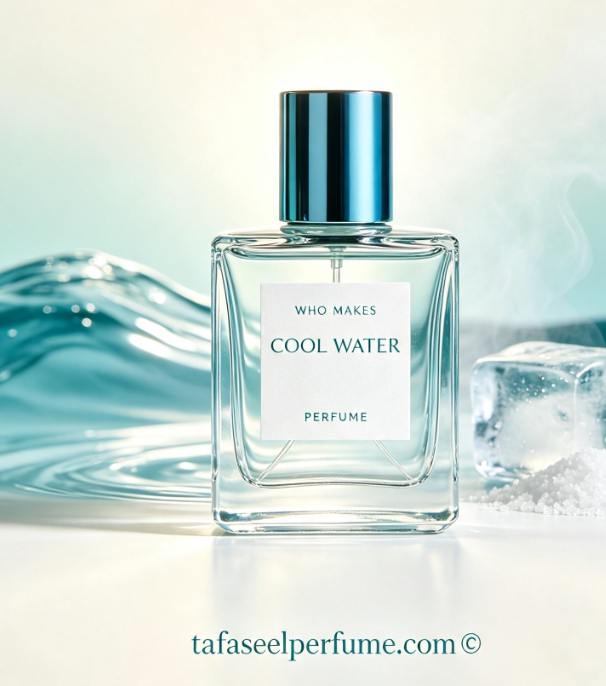
- Who Makes Cool Water Perfume? The Legacy, The House, And The Fresh Wave: Cool Water is one of the most iconic aquatic fragrances ever created. But who stands behind this wave of freshness? The answer leads to Davidoff – a name synonymous with luxury, yet the perfume itself was crafted by the legendary nose Pierre Bourdon. This article dives deep into the creators, the brand, and the timeless appeal of Cool Water.
Cool Water by Davidoff is not merely a fragrance; it’s a cultural milestone. Launched in 1988, it redefined men’s perfumery with its marine, ozonic freshness. But the question “who makes Cool Water perfume?” opens a door to a fascinating story of collaboration. The fragrance is produced by Davidoff, a Swiss luxury goods company known for cigars and accessories, but the juice itself was developed in partnership with Firmenich, one of the world’s leading fragrance houses. The master perfumer Pierre Bourdon – also the creator of Green Irish Tweed – composed Cool Water, blending lavender, mint, and sea notes with a distinctive dihydromyrcenol accord that became a blueprint for countless aquatics. Over decades, Cool Water has spawned numerous flankers, yet the original remains a benchmark. In this feature, we explore the brand, the perfumer, the ingredients, and why this fragrance continues to make waves.
2. Pierre Bourdon – the nose that shaped a generation
If Davidoff is the face, Pierre Bourdon is the brain behind Cool Water. A French perfumer trained at Givaudan, Bourdon is one of the most influential noses of the late 20th century. He is also the creator of Green Irish Tweed (for Creed) and Dolce & Gabbana Pour Homme. When Davidoff approached him to create a fragrance that embodied “coolness” and “water,” Bourdon took a revolutionary approach. He overdosed a synthetic molecule called dihydromyrcenol – which gave a fresh, citrusy, almost metallic scent – and combined it with lavender, mint, and oakmoss. The result was a fragrance that felt like a plunge into the ocean.
Bourdon’s genius was in creating a scent that was both synthetic and natural, fresh yet enduring. He once said, “Cool Water is not a perfume, it’s a sensation.” His work on Cool Water set the template for the aquatic fougère genre, influencing countless fragrances from Acqua di Gio to Nautica Voyage. Even today, Bourdon’s name is synonymous with the fragrance, and he remains the definitive answer to “who makes Cool Water perfume” in the creative sense.
3. The birth of a genre – aquatic fougère explained
Before Cool Water, fougère fragrances were typically heavy, woody, and aromatic (think Paco Rabanne Pour Homme). Cool Water introduced a new sub-genre: the aquatic fougère. By blending the classic fougère structure (lavender, oakmoss, coumarin) with a massive dose of marine and ozone notes, Bourdon created a scent that smelled like a fresh breeze over the sea. This was a radical departure from the spicy, leathery masculines of the 1970s and 1980s.
The fragrance opens with a blast of mint, lavender, and coriander, leading to a heart of geranium, jasmine, and sandalwood, and a base of musk, cedar, and tobacco. But the real star is the dihydromyrcenol – a molecule that provides a “clean, watery” effect. This novel combination made Cool Water a benchmark, and soon, every major brand tried to copy its formula. The genre exploded in the 1990s, but Cool Water remains the archetype.
4. Cool Water vs. the legends – Green Irish Tweed comparison
One of the most persistent debates in fragrance circles is the comparison between Cool Water and Creed Green Irish Tweed. Both were created by Pierre Bourdon, and both share a similar fresh, green, and aquatic profile. However, Green Irish Tweed is often considered more refined, with a prominent violet leaf and ambergris note, while Cool Water is brighter, mintier, and more accessible. The price difference is staggering – Green Irish Tweed costs nearly ten times as much – but many consider Cool Water a “democratic” version of the same olfactory idea.
Interestingly, Bourdon himself has stated that he drew from his work on Green Irish Tweed when creating Cool Water, but he designed Cool Water to be more “modern and synthetic” – a fragrance for the masses, not just the elite. This has led to Cool Water being both praised as a masterpiece and dismissed as “too common.” Yet its longevity in the market proves that it struck a chord that few fragrances have ever achieved.
5. Ingredients & composition – what makes it so fresh?
The magic of Cool Water lies in its carefully selected ingredients, but also in the proportions. The top notes include mint, lavender, rosemary, and coriander – all aromatic and invigorating. The heart introduces geranium, jasmine, sandalwood, and orange blossom, adding a floral-woody nuance. The base is a blend of musk, cedar, tobacco, and oakmoss (though modern versions use synthetic moss due to IFRA regulations). The signature “marine” note comes from a synthetic accord called calone and the aforementioned dihydromyrcenol.
This combination creates a scent that is fresh but not sharp, clean but not soapy. It evokes images of cool ocean spray, sea breeze, and sun-drenched skin. The longevity is moderate (around 4–6 hours), making it perfect for daytime wear, especially in spring and summer. Many fans describe it as “the scent of youth and freedom.”
Explore more: Skin Care & Tools · Spa & Fragrance · Beauty
6. Flankers and family – the Cool Water universe
Since its launch, Cool Water has spawned over a dozen flankers, each exploring a different facet of freshness. Cool Water Deep adds a darker, more aquatic depth with seaweed and amber. Cool Water Intense amps up the citrus and spices for a more powerful silhouette. Cool Water Wave introduces a salty, marine twist. There are also summer editions, limited editions, and even a women’s version (Cool Water Woman, launched in 1996) that uses melon, pineapple, and lotus flower.
The flankers are designed to keep the brand relevant while staying true to the original DNA. However, none have surpassed the original in terms of cultural impact. The Cool Water family is a testament to the enduring power of a great fragrance blueprint, and the brand continues to release new iterations, often with updated packaging or slight reformulations.
7. Who wears Cool Water today? Timeless or dated?
There’s no shortage of opinions on whether Cool Water is timeless or a relic of the 90s. For many millennials and Gen X, it’s a nostalgic classic – the first “real” perfume they owned. For Gen Z, it’s often seen as a vintage gem, rediscovered via social media. The fragrance’s affordability (often under $30 for a bottle) makes it a popular choice for students and young professionals. It’s also a favorite among those who prefer fresh, non-offensive scents for the office or casual wear.
Critics argue that the synthetic freshness feels dated compared to modern niche fragrances, but fans counter that its simplicity is its strength. It’s a no-fuss, universally pleasant scent that works in almost any setting. The question “who makes Cool Water perfume” is often followed by “is it still good?” – and the answer is a resounding yes for many.
8. Production & distribution – where is it made?
While Cool Water is designed in Switzerland and France, its production takes place in several locations. Currently, the fragrance is manufactured under license by Coty in their facilities across Europe (mainly in France and Spain) and also in the United States for the American market. The bottles are typically made in Europe, and the juice is compounded by Firmenich or other suppliers before being filled and packaged.
The supply chain is global, but the quality control remains strict. Since the acquisition of the Davidoff fragrance license by Coty, the formulations have undergone slight modifications to comply with IFRA regulations (especially regarding oakmoss and lilial). However, the core character of Cool Water has been preserved. For most consumers, the question “who makes Cool Water perfume” is answered by “Davidoff / Coty” – but the true craft lies with the perfume chemists and the original vision of Pierre Bourdon.
9. Why Cool Water still matters – 35+ years of influence
More than three decades after its debut, Cool Water remains a reference point in perfumery. It’s not just a fragrance; it’s a textbook example of how innovation can democratize luxury. It paved the way for the aquatic genre, inspired countless imitators, and introduced millions of people to the joy of wearing a “designer” scent. Its influence can be seen in fragrances from Bvlgari Aqva to Versace Man Eau Fraîche.
Cool Water also broke the mold by being affordable while smelling expensive – a feat that few fragrances achieve. It’s a staple in fragrance collections, and its bottle (designed by the legendary Pierre Dinand) has become iconic in itself. The story of Cool Water is a story of collaboration between a luxury brand, a visionary perfumer, and a world-class fragrance house. And that is the comprehensive answer to “who makes Cool Water perfume.”


