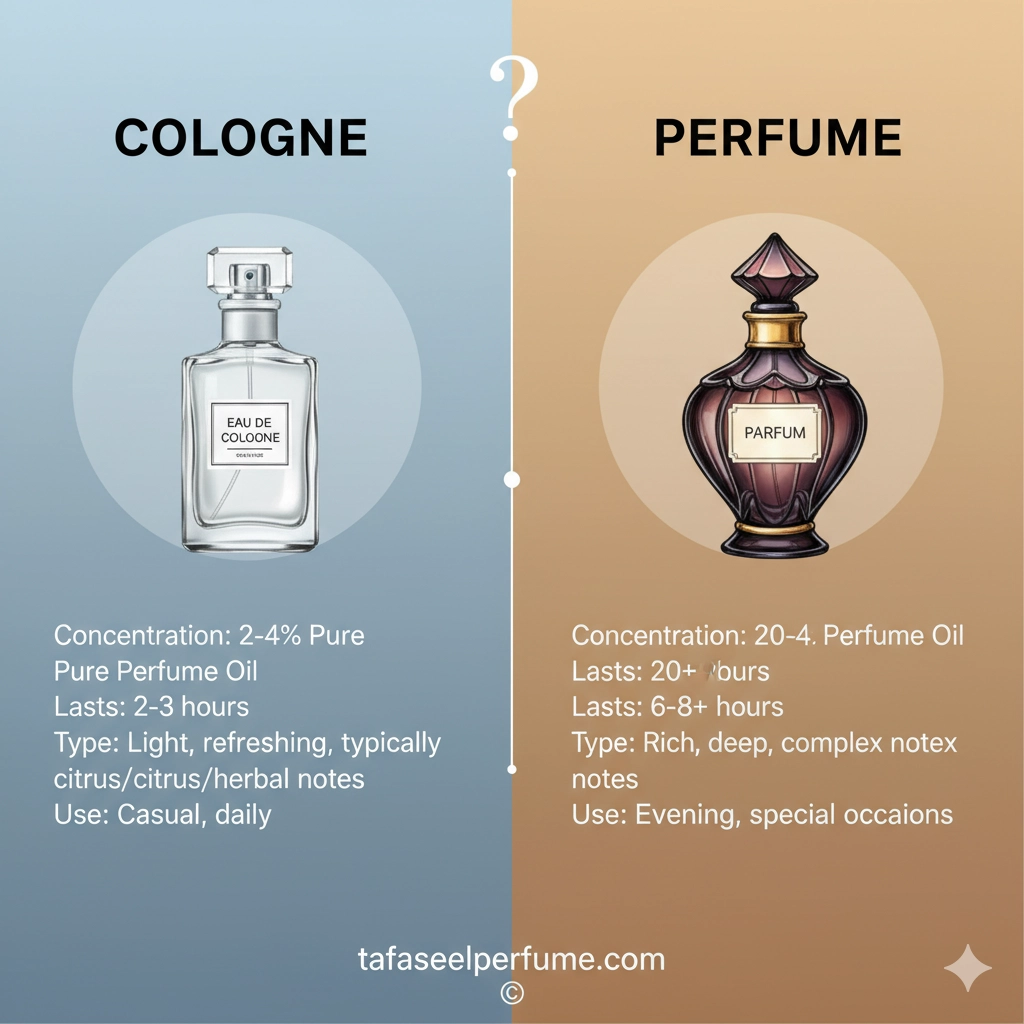
- What's the Difference Between Cologne and Perfume? A Clear Guide to Strength, Longevity, and Smart Fragrance Choices: Short introduction: Many people use the words cologne and perfume interchangeably, but in the fragrance industry they represent very different concentration levels, performance profiles, and use cases.
Extended introduction: Understanding what's the difference between cologne and perfume can completely change how you shop for fragrance. From how long a scent lasts on skin, to how intensely it projects, to whether it works best for daily wear or special occasions, the distinction matters. This guide breaks down the technical, cultural, and practical differences between cologne and perfume, helping you choose the right fragrance format for your lifestyle, budget, and personal style.
Table of Contents
1. Fragrance Concentration Explained – How oil percentages define cologne and perfume.
2. Longevity and Sillage Differences – How long each type lasts and how far it projects.
3. Price and Value Considerations – Why perfume usually costs more.
4. When to Wear Cologne vs Perfume – Occasion-based fragrance selection.
5. Gender Perception and Marketing Myths – Why cologne is not “just for men.”
6. Skin Chemistry and Performance – How your skin changes the outcome.
7. Choosing the Right Option for You – A practical decision framework.
1. Fragrance Concentration Explained
The most important factor in what's the difference between cologne and perfume is concentration. Perfume, often labeled as parfum or extrait de parfum, typically contains 20–30% fragrance oils. Cologne, traditionally known as eau de cologne, usually contains only 2–5% fragrance oils. This difference directly affects strength, richness, and overall sensory impact.
Because perfume is more concentrated, a single spray delivers a denser aroma profile with more noticeable top, heart, and base note development. Cologne, by contrast, feels lighter, fresher, and more volatile, often emphasizing citrus or aromatic top notes.
2. Longevity and Sillage Differences
Longevity refers to how long a fragrance lasts on skin, while sillage describes the scent trail it leaves behind. Perfume can last anywhere from 8 to 12 hours or more, depending on formulation and skin type. Cologne generally fades within 2 to 4 hours.
If you value all-day performance without reapplication, perfume offers superior staying power. Cologne works better for short outings or environments where subtlety is preferred. For a broader perspective on long-lasting options, see
List of Best Perfumes for Mens: Timeless Scents Every Man Should Know
3. Price and Value Considerations
Perfume costs more per bottle because fragrance oils are the most expensive component of any scent formula. Higher concentration means higher raw material costs and often more complex compositions.
However, higher price does not always mean better value. Since perfume requires fewer sprays, a small bottle may last longer than a larger bottle of cologne. Value should be evaluated based on cost per wear, not just retail price.
4. When to Wear Cologne vs Perfume
Cologne is ideal for daytime, hot weather, offices, gyms, or casual social settings where a lighter presence is appropriate. Perfume is better suited for evenings, colder seasons, formal events, and situations where depth and longevity matter.
Many modern consumers keep both in their collection, rotating based on context. For softer and more nuanced expressions, explore
Feminine Cologne: How Soft Power and Scent Elegance Redefine Modern Fragrance
5. Gender Perception and Marketing Myths
One common misconception is that cologne is for men and perfume is for women. In reality, these terms refer to concentration, not gender. The confusion stems from decades of marketing practices, especially in Western markets.
Today, unisex and niche fragrance brands actively blur these lines. Concentration choice should be about performance preference, not gender labeling. Browse modern neutral options in
6. Skin Chemistry and Performance
Skin type dramatically influences how cologne and perfume perform. Oily skin tends to hold scent longer, enhancing both formats. Dry skin may cause cologne to evaporate quickly, making perfume a better option.
Temperature, hydration, and even diet can alter scent behavior. This is why testing on skin is essential before committing to a full bottle.
7. Choosing the Right Option for You
When deciding between cologne and perfume, consider your daily routine, climate, sensitivity to strong scents, and reapplication habits. If you prefer light freshness and flexibility, cologne may be sufficient. If you want depth, complexity, and endurance, perfume is the stronger choice.
Exploring curated categories like
and
can help narrow down options efficiently.
Frequently Asked Questions
Is perfume stronger than cologne?
Yes. Perfume contains a much higher concentration of fragrance oils, making it stronger, longer-lasting, and more intense than cologne.
Can men wear perfume instead of cologne?
Absolutely. Gender has no technical relevance in fragrance concentration. Men can wear perfume if they prefer stronger performance and longevity.
Why does cologne smell lighter?
Cologne smells lighter because it contains more alcohol and less fragrance oil, causing it to evaporate faster and project less.
Which lasts longer on skin, cologne or perfume?
Perfume lasts significantly longer, often three to four times as long as cologne on the same skin type.
Is cologne better for summer?
Yes. Cologne’s lighter profile makes it more comfortable in heat, reducing the risk of overwhelming projection.
Does perfume expire faster than cologne?
No. Due to higher oil content, perfume often has a longer shelf life when stored properly.
Final note: Understanding what's the difference between cologne and perfume empowers you to invest wisely in fragrance and build a collection that truly fits your lifestyle.


