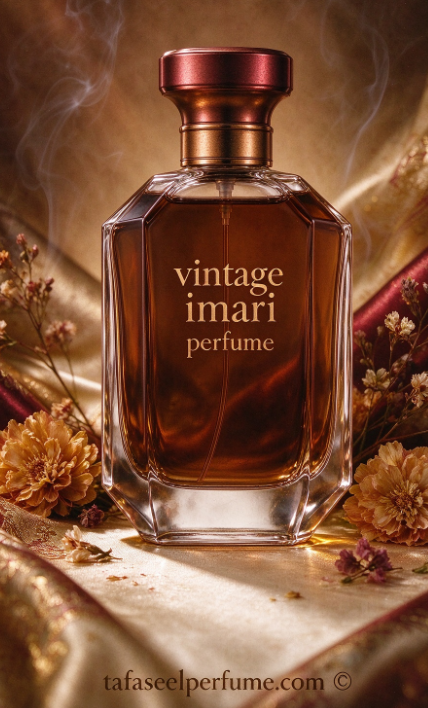
- Vintage Imari Perfume: The Avon Classic and the Porcelain Scent Bottle Tradition Behind the Name: Vintage Imari perfume is not a single object. It is a crossroads where two very different collector worlds meet: the mass-market American fragrance history of Avon’s 1985 Imari, and the older, quieter tradition of Japanese Imari porcelain scent bottles that travelled from Arita kilns to Victorian dressing tables. One is a scent you wear; the other is an object you keep behind glass. Both carry the name, and both reward a slower, more attentive look.
A short introduction. When people search for vintage Imari perfume, they are usually looking for one of two things: an older bottle of Avon Imari, the aldehydic floral that defined a certain 1980s American idea of sensuality, or an antique porcelain scent bottle decorated in the Imari palette of cobalt blue, iron red and gold. This guide treats both seriously. It explains what the vintage Avon Imari actually smelled like before reformulation, how its bottle changed, and why older batches are still chased by people who remember the original. It also steps back into the nineteenth century to look at Imari scent bottles as objects — silver-mounted, hand-painted, and collected today as small pieces of decorative history. If you have inherited a red Avon bottle, spotted a porcelain flacon at an estate sale, or simply want to understand why the word “vintage” matters so much here, the sections below are written for you.
A longer introduction. Avon launched Imari in 1985, at a moment when American fragrance counters and catalogues were still dominated by bold, declarative scents. Imari was not a niche experiment. It became one of Avon’s most recognised women’s fragrances, sold through representatives and catalogues to households that might never have stepped into a department store perfume hall. Its original composition was a floral aldehydic with a distinctly resinous, woody, almost incense-like drydown — a structure that felt richer and more adult than its affordable price point suggested. For many people who grew up around it, the original dark red bottle is the reference point; later, lighter versions are judged against it and often found wanting. But the name “Imari” did not begin with Avon. Japanese Imari porcelain, with its characteristic palette and export history, had already lent its name to small scent bottles in the nineteenth century. Victorian silversmiths mounted Imari porcelain bodies with silver screw caps, and firms in Europe produced porcelain scent bottles in the “Imari taste” for a market that associated the pattern with Japanese luxury. A vintage Imari perfume can therefore be a scent with a memory attached, or a small ceramic object with a silver collar and a hundred-year-old journey behind it. This article keeps both in view, because the confusion between them is part of what makes the search interesting.
1. What “Vintage Imari Perfume” Actually Refers To
2. Avon Imari 1985: The Scent That Made the Name a Household Word
3. The Original Fragrance Pyramid, Note by Note
4. The Red Bottle and the Later Bottles: Why Packaging Tells You Almost Everything
5. Vintage vs. Reformulated Imari: The Difference Collectors Talk About
6. Antique Imari Scent Bottles: Porcelain, Silver, and the Older Collecting Tradition
7. How to Assess, Buy, and Care for a Vintage Imari Perfume
1. What “Vintage Imari Perfume” Actually Refers To
The phrase works on two levels, and neither level is wrong. On the first level, vintage Imari perfume means an older bottle of Avon Imari — specifically, a bottle produced before the fragrance was significantly reformulated and before the packaging moved away from the opaque dark red glass that original users remember. These bottles circulate on resale platforms, in estate lots, and among people who wore the scent in the 1980s and 1990s. The interest is personal and olfactory: they want the version that lasted, projected, and developed into the resinous, incense-adjacent drydown that made Imari feel more expensive than it was.
On the second level, “Imari perfume” can refer to a scent bottle made of Imari porcelain or decorated in the Imari style. Japanese Imari ware was exported in large quantities from the seventeenth century onward, and its blue-and-orange palette became so recognisable that European and American makers adapted it for everything from dinner services to vanity objects. Small porcelain scent bottles with Imari decoration were produced in the nineteenth century, often with silver mounts added in London or other assay offices. A Victorian silver-mounted Imari scent bottle is a different collectible from an Avon Imari cologne spray, but the shared name means that searches and conversations constantly overlap. A serious buyer learns to ask: am I looking at a fragrance, a flacon, or a little of both? The rest of this guide separates the two strands so that neither gets lost inside the other.
2. Avon Imari 1985: The Scent That Made the Name a Household Word
Avon introduced Imari in 1985, and the fragrance quickly became one of the company’s most visible women’s launches. This was still an era when Avon representatives were a primary point of fragrance discovery for many households, and a successful Avon scent could become intimately associated with a generation’s idea of “dressing up.” Imari was marketed as alluring, sensual, and opulent — language that matched the deep red bottle and the rich, aldehydic floral inside it. In some markets the fragrance was sold under the name Impromptu, which is why older collectors sometimes use the two names interchangeably. The original was not a delicate spring floral. It was a statement scent with a resinous backbone, and that is precisely why people who loved it remember it decades later.
The cultural position of Imari is inseparable from its availability. Because it was sold through catalogues and representatives rather than exclusively through luxury counters, it reached a broad audience. A bottle might have been a birthday gift, a Christmas present, or something a mother or aunt kept on a dresser. That domestic familiarity is part of the vintage appeal now. When someone searches for vintage Imari perfume, they are often trying to recover not just a smell but a room, a person, or a period. The fragrance’s later history — flankers, reformulations, packaging changes — only sharpens the sense that the early bottles belong to a specific moment. For readers exploring other women’s fragrances from the same era, our Women’s Perfume collection is a useful place to compare how different houses approached the same decade.
3. The Original Fragrance Pyramid, Note by Note
The original Imari is classified as a floral aldehydic, and its pyramid is unusually complete for an affordable fragrance of its time. The top notes are aldehydes, galbanum, and bergamot. That opening is bright but not simple: the aldehydes give a lifted, slightly soapy sparkle, while galbanum contributes a green, resinous sharpness that keeps the citrus from feeling thin. The heart is where Imari becomes recognisably itself — tuberose, orris root, ylang-ylang, and lily of the valley. Tuberose supplies a creamy, almost narcotic floral weight; orris adds a powdery, rooty softness; ylang-ylang brings a fruity-spicy richness; lily of the valley threads a green freshness through the middle. The base is sandalwood, amber, musk, vanilla, and cedar. In the vintage version, this base is not a quiet afterthought. It is the part that lingers on skin and fabric, and it is where the fragrance’s famous resinous, incense-like character lives.
Understanding the pyramid explains why vintage and modern versions diverge so sharply. A fragrance built on a generous resinous base behaves differently from one built to be lighter and more “fresh.” The vintage drydown is often described as slightly bitter, woody, and smoky, with the vanilla and amber rounding the edges rather than sweetening the whole composition. That structure is also why some wearers find Imari more suitable for cooler weather or evening wear; it has weight, and it develops slowly. If you are building a wardrobe around richer, older-style compositions, it helps to read across categories and price points rather than assuming that “vintage” automatically means “heavy.” Our Perfume Ranking and Top Lists section can help you place Imari alongside other fragrances with similar density and projection.
4. The Red Bottle and the Later Bottles: Why Packaging Tells You Almost Everything
The original Imari bottle is one of the most reliable visual markers in this category. It was an opaque dark red glass bottle, curvy and solid, with a presence that matched the fragrance. Long-time users describe the red bottle as the version they bought “for thirty years,” and they are blunt about the difference: the newer, see-through bottles do not hold the scent the same way. This is not pure nostalgia. Opaque glass limits light exposure, and older packaging often coincided with older juice. A dark red bottle is therefore both an aesthetic object and a practical clue.
As the Imari line expanded, Avon introduced flankers and colour-coded variants. Imari Seduction arrived in 2007, Imari Mystique in 2011, and Imari Blossom in 2013, each with its own bottle colour and olfactory direction. The original red Imari remained the anchor, but the market gradually filled with lighter, fruitier, or more floral interpretations. For a collector, this means that “vintage Imari perfume” should never be bought on the strength of the name alone. The bottle colour, opacity, cap style, and labelling all matter. A transparent bottle may still be an older bottle, but it is not the same object as the dark red original. If you are buying as a gift, our Perfume Gift Sets category is a better starting point for presentation-focused purchases than chasing a single vintage bottle without knowing its history.
5. Vintage vs. Reformulated Imari: The Difference Collectors Talk About
Avon reformulated Imari for its thirtieth anniversary, and the change is one of the central topics among people who care about the vintage version. The reformulated fragrance was made lighter and fresher, with a shift away from the original’s heavier resinous and incense-like qualities. Wearers who remember the original often describe the newer version as more powdery, more delicate, and less durable on skin. This does not make the reformulation bad; some people prefer a lighter aldehydic floral. But it does mean that the two versions serve different purposes, and a buyer looking for the old experience needs to know which one they are getting.
The vintage-versus-modern distinction is also a lesson in how fragrance aging works. A sealed bottle from the 1980s or 1990s has had decades to settle, and the top notes may have softened while the base has become more integrated. Some collectors find that older Imari opens with more resin and musk and less of the sharp green galbanum bite. Others find that the fragrance becomes more incense-like on fabric after several hours. These are the kinds of details that cannot be captured by a note list alone. They are also why the vintage community values partial bottles and boxed examples with traceable dates. If you enjoy reading this kind of close comparison, our Perfume Articles and Reviews section is built around exactly that slower, more observational approach.
6. Antique Imari Scent Bottles: Porcelain, Silver, and the Older Collecting Tradition
Long before Avon used the name, Imari porcelain was already associated with small, precious scent vessels. Japanese Imari ware was exported widely, and its blue, orange, and gilt decoration became a recognisable sign of Japanese luxury in European markets. In the nineteenth century, porcelain scent bottles in the Imari style were fitted with silver mounts — sometimes a simple collar, sometimes a hinged lid — and sold as vanity accessories or travel pieces. A Victorian silver-mounted Imari scent bottle might take the form of a miniature plate or charger, or a slender baluster-shaped flask with hand-painted floral decoration. These objects were made to hold perfume, but they were also made to be seen.
The collecting logic here is different from the Avon logic. Condition, silver hallmarks, porcelain integrity, and decorative quality matter more than scent. A bottle with a rubbed gilt finish or light crazing can still be desirable if the form is rare or the silver is crisp. Auction records for silver-mounted Imari scent bottles often sit in the low hundreds of pounds, but rare or finely painted examples can exceed that range depending on maker, date, and condition. For readers who enjoy the object side of perfume history, this is a reminder that “vintage Imari perfume” can mean a fragrance that has evaporated away, leaving only the vessel — and that the vessel alone can be worth collecting. Our Perfume Brands section is a helpful companion when you want to place a small flacon within a wider history of makers and houses.
7. How to Assess, Buy, and Care for a Vintage Imari Perfume
If you are buying an Avon Imari, start with the bottle. The dark red opaque original is the clearest signal of the version most collectors want. Check the fill level, the condition of the cap and sprayer, and whether the box or any inserts are present. A sealed or nearly full bottle is preferable, but a partial bottle can still be useful if the seller is transparent about storage conditions. Be cautious with very cheap listings that use “vintage” loosely; the word is often applied to any bottle that is no longer in current production. If the fragrance is being sold as a gift or a sampler, our Mini Size & Gift Sets category offers a lower-risk way to explore older-style presentations without committing to a full bottle.
If you are buying an antique Imari scent bottle, shift your attention to materials and marks. Look for silver hallmarks on the mount, check for restoration or replacement stoppers, and examine the porcelain under good light for cracks, chips, or heavy rubbing. A little surface wear is normal; a repaired neck or a mismatched stopper changes value significantly. Store both types of vintage Imari away from direct sunlight and heat. Fragrance should be kept upright and away from temperature swings; porcelain should be handled with clean hands and kept stable on a shelf rather than crowded against harder objects. For more guidance on caring for the broader dressing table — skin, tools, and the rituals around fragrance — our Beauty Tips and Guides section covers the practical side of living with older and newer beauty objects alike.
Vintage Imari perfume rewards patience. Whether you are chasing the dark red Avon bottle that smelled like a particular decade, or holding a silver-collared porcelain flacon that once carried scent from Arita to a Victorian dressing room, the object in front of you is never only one thing. It is a fragrance, a package, a material history, and a memory — and the best way to understand it is to look at all of those layers at once.


