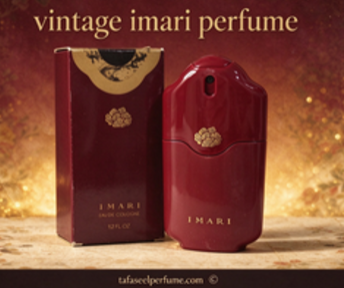
- Vintage Imari Perfume: The Aldehydic Floral That Carried a Porcelain Name Into Modern Collecting: Quick intro: Vintage Imari perfume most often refers to the 1985 Avon fragrance Imari — a woody, powdery aldehydic floral that became a quiet staple in American homes and now circulates as a sought-after older-formula bottle. At the same time, “Imari” carries a second life: the Japanese porcelain style exported from Arita through the port of Imari, a visual vocabulary of cobalt blue, iron red, and gold that has decorated perfume flacons since the Edo period.
Quick intro: Vintage Imari perfume most often refers to the 1985 Avon fragrance Imari — a woody, powdery aldehydic floral that became a quiet staple in American homes and now circulates as a sought-after older-formula bottle. At the same time, “Imari” carries a second life: the Japanese porcelain style exported from Arita through the port of Imari, a visual vocabulary of cobalt blue, iron red, and gold that has decorated perfume flacons since the Edo period. This guide moves between those two meanings: the scent, the vessel, and the collector’s practical reality of finding, judging, and wearing a bottle that belongs to an earlier moment in perfumery.
Big intro: Vintage perfume is not simply “old perfume.” In collecting practice, a bottle becomes vintage for a given reference when it predates a documented formula change — often a reformulation driven by IFRA restrictions, cost substitution, or brand repositioning — and therefore contains materials, concentrations, or accords no longer present in current stock. Imari fits this definition unusually well. Launched by Avon in 1985 as a floral aldehydic composition, it was reformulated in 2015, and the older bottles — especially those in the dark red glass that longtime wearers associate with the original — are now the reference point for anyone who wants to smell Imari as it was before the change. The fragrance itself sits at a fascinating intersection: it is affordable, mass-market, door-to-door American perfume history, yet its structure — a rush of aldehydes, a powdery orris heart, a resinous sandalwood-musk drydown — belongs to the same broad aldehydic floral language that defined luxury perfumery for decades. For collectors, the appeal is not rarity in the auction-house sense, but access: Imari offers a way to study a classic aldehydic architecture without the price pressure of a Guerlain or Chanel. This article approaches vintage Imari perfume from multiple angles — the scent profile, the porcelain namesake, the reformulation divide, authentication, storage, wearability, and the cultural memory that keeps a discontinued drugstore-adjacent fragrance in conversation. If you are building a reference library of vintage feminines, it belongs beside the more obvious icons; if you are simply curious about what a pre-reformulation aldehydic floral smells like on skin, Imari is one of the most honest places to begin.
In this guide:
The Scent Architecture of Vintage Imari
Imari Porcelain and the Perfume Vessel
Reading a Vintage Imari Bottle
Storage, Skin, and Wearability
Cultural Memory and the Scent of the 1980s
Vintage Imari Versus Modern Aldehydes
Collecting Imari Without Overpaying
The Narrative Power of a Named Perfume
The Origins of Imari Perfume
Avon released Imari in 1985, at a moment when the company was still a primary fragrance channel for millions of American households — sold through representatives, catalogues, and neighborhood networks rather than department-store counters. The name was evocative without being literal: “Imari” gestured toward Japanese export porcelain, but the scent itself was grounded in the aldehydic floral tradition rather than any attempt at a “Japanese” olfactory theme. This is an important distinction for collectors. The perfume’s identity is not a reference to incense, tatami, or Zen minimalism; it is a Western aldehydic floral that borrowed a porcelain name for atmosphere and shelf presence. What made Imari notable within Avon’s lineup was its structure. It was not a simple sweet floral or a soapy drugstore cologne. It opened with a pronounced aldehyde rush, supported by galbanum and bergamot, and moved into a heart of orris root, tuberose, ylang-ylang, and lily of the valley, settling into sandalwood, cedar, musk, amber, and vanilla. That combination — green sharpness, powder, white-floral richness, and a resinous woody base — gave Imari a character that outperformed its price tier. Community reviews repeatedly describe it as a “classic 80’s” scent, intense and rich by modern standards, with a powderiness that some wearers find elegant and others find challenging. The original 1985 composition also had a specific visual signature: the dark red bottle. Longtime buyers recall that the original dark red glass and the older juice inside performed differently from the later see-through bottles, a common point of frustration in reviews of the reformulated version. For anyone approaching vintage Imari perfume, the origin story matters less as nostalgia and more as context: this is a fragrance born in the mass-market aldehydic era, not a niche reconstruction, and its strengths and limitations both flow from that position.
The Scent Architecture of Vintage Imari
The architecture of vintage Imari is best understood in three movements: an aldehydic opening, a powdery floral heart, and a resinous woody drydown. The top notes are aldehydes, galbanum, and bergamot. Aldehydes in this style do not read as “chemical” in the pejorative sense; they create lift, a sparkling, slightly soapy brightness that makes the opening feel as though it is reaching toward the wearer. Galbanum adds a green, slightly bitter snap that keeps the aldehydes from becoming purely talc-like, and bergamot provides a brief citrus clarity before the composition shifts. The heart is where Imari becomes recognizably itself. Orris root delivers a powdery, violet-adjacent elegance; tuberose brings richness without necessarily going “heady” if the bottle is sound; ylang-ylang threads creaminess through the florals; lily of the valley adds a dewy freshness that prevents the heart from collapsing into heaviness. The base is sandalwood, cedar, musk, amber, and vanilla — a combination that reads woody, slightly resinous, and softly sweet rather than gourmand. Vintage reviewers often note that Imari changes substantially over wear. One detailed review describes the opening as a brief “aldehyde blitz” followed by resinous, tea-like bitterness, then a mid-wear that can feel quiet or even disappointing, before the base reasserts itself hours later with an incense-like, musky-woody presence that clings to fabric and skin. This arc — loud beginning, contemplative middle, surprising finish — is part of what distinguishes the older juice from thinner modern aldehydes. It is also why sampling vintage Imari on skin, rather than judging from the first spray, is essential. The scent is not a linear “pretty floral”; it is a structure with a beginning, a middle, and an end, and the end is often the most compelling part. If you are exploring Women's Perfume references from the aldehydic era, Imari belongs in that conversation precisely because its architecture is legible: you can smell the aldehydes, you can smell the orris, and you can smell the base doing its work.
Imari Porcelain and the Perfume Vessel
“Imari” is not only a perfume name. It is a European collecting term for Japanese porcelain produced in Arita, in the former Hizen province of Kyushu, and exported through the port of Imari specifically for the European market. The classic Imari palette is immediately recognizable: cobalt blue underglaze, iron red overglaze, and a white porcelain ground, often with gold additions and, in later periods, green. Long before Avon borrowed the word for a fragrance, Imari porcelain was already attached to perfume vessels. Surviving examples include nineteenth-century porcelain perfume flacons with silver collars, baluster shapes, and blue-and-red decorative branches — objects made for eau de cologne and scent, not merely display. Auction records and museum collections also document Edo-period Arita ware Imari bottles, sometimes later mounted in European gilt bronze, moving between Japanese ceramic production and European luxury consumption. This dual history gives vintage Imari perfume a material depth that most fragrance names lack. When you hold a vintage Imari bottle — whether an Avon glass flacon or an antique porcelain scent bottle — you are touching two distinct histories of “Imari”: the Japanese export-porcelain tradition and the twentieth-century American fragrance industry. For collectors of Perfume Gift Sets and presentation objects, the porcelain connection also explains why Imari-themed perfume bottles appear in decorative-arts contexts, not only fragrance forums. The name carries visual expectations: blue, red, white, floral or landscape motifs, a glazed surface. Avon’s Imari did not attempt to reproduce that visual language literally, but the borrowed name still creates an associative field around the scent — porcelain, export, elegance, distance. That field is part of the perfume’s charm, even if the juice itself is a Western aldehydic floral.
The Reformulation Divide
The single most important fact for a buyer of vintage Imari perfume is the reformulation. Imari was reformulated in 2015, and the current stock — where available — is not the same composition as the 1985 original. Wearers who remember the original dark red bottle frequently describe the newer version as lighter, more powdery, less tenacious, and lacking the older base’s staying power on skin and fabric. This is not unusual in the aldehydic floral category: the materials that gave vintage compositions their density and lift are precisely the materials most affected by regulatory and economic changes. The IFRA restrictions that began rolling out progressively from 2008 onward affected natural oakmoss, several nitro musks, and other materials central to classic chypre and fougère structures; aldehydic florals were not exempt from the broader shift toward lighter, more transparent formulations. As a result, “vintage Imari” in the collector’s sense means a bottle produced before the 2015 reformulation — ideally with the dark red glass and older batch coding — and the difference is not merely cosmetic. The older juice is more likely to display the full aldehydic opening, the orris-root powder, and the resinous, incense-like drydown that reviewers describe from 1990s bottles. For anyone building a reference collection, this divide is actually useful: Imari offers a relatively accessible before-and-after comparison. You do not need a museum budget to study how reformulation changes an aldehydic floral. You need a pre-2015 bottle, a current or later bottle, and the patience to wear both on skin. That comparison is one of the most instructive exercises in vintage perfume literacy, and it is available at a fraction of the cost of studying the great luxury reformulations. If you are browsing Brands with an eye toward vintage references, treat Imari as a case study in formula change rather than a trophy object.
Reading a Vintage Imari Bottle
Authentication and dating of vintage Imari rely on the same three pillars that apply across the vintage perfume market: batch code analysis, secondary visual markers, and storage history. Batch codes are the primary dating tool for most major brands. On Avon bottles, the code is typically printed on the bottom of the bottle, the bottom of the box, or both. Community databases and collector threads can resolve many Avon codes into production years, though not every code is documented with equal reliability. Visual markers matter just as much. On Imari, the dark red glass is a strong secondary indicator of older production; the transition to see-through bottles is a visible dividing line that longtime buyers associate with the reformulated era. Label typography, cap material, and box printing also shift across decades, and a bottle that matches multiple independent markers is far more confidently dated than one that matches only a single feature. Storage history is the invisible variable. A bottle kept cool, dark, and with minimal headspace can retain surprising top-note clarity decades later; the same bottle stored warm and half-empty may have lost a substantial portion of its opening brightness. When buying online, ask for photographs of the batch code, the fill level, the cap interior, and the bottle base. A seller who cannot or will not provide these images is a risk. For vintage Imari perfume specifically, the dark red bottle is not a guarantee of pre-reformulation juice, but it is a useful filter: it narrows the field to the era most collectors actually want. Cross-check the batch code against known Avon dating conventions, and treat “vintage” in a listing as a claim to verify, not a fact. The Perfume section of a good reference library should include dating guides and batch-code resources; use them before you bid.
Storage, Skin, and Wearability
A sound bottle of vintage Imari can be wearable, but it requires realistic expectations. The aldehydic opening is the most fragile part of the composition. Even a well-stored bottle may show a slightly compressed or “flattened” top compared with the original fresh spray, because aldehydes are volatile and sensitive to oxygen and heat. The heart and base — orris, sandalwood, musk, vanilla — are more resilient, and many vintage bottles perform best after the first fifteen to thirty minutes, when the opening settles and the powder-woody core emerges. Wearers with dry skin often find that vintage aldehydic florals project less and fade faster than they do on oilier skin; applying an unscented moisturizer before spraying can improve both longevity and the perception of the heart notes. On fabric, vintage Imari often lasts dramatically longer than on skin, and the drydown can leave a soft, incense-like residue that reviewers describe as one of the fragrance’s most attractive phases. The practical recommendation is to spray sparingly at first. Vintage Imari is not a modern “skin scent” designed to sit close; it is a structure with a broad arc, and over-application flattens the very evolution that makes it interesting. If you are exploring Unisex Perfume or shared fragrance wardrobes, vintage Imari can function as a reference point for powdery-woody florals, but it is not conventionally unisex in its marketing or its cultural coding. Treat it as a feminine aldehydic floral with a resinous base, and wear it in cooler weather when the powder and woods have room to breathe.
The Vintage Imari Market
Vintage Imari is not a high-value auction category. It circulates on eBay, estate-sale platforms, and general vintage marketplaces, often at modest prices — single bottles or small lots can sell for amounts that would not cover shipping on a luxury vintage. That accessibility is both an advantage and a caution. The advantage is obvious: you can experiment, compare bottles from different years, and build a small reference set without significant financial exposure. The caution is that low prices encourage careless buying. A cheap bottle with a degraded fill level or uncertain storage is not a bargain; it is a variable you cannot control. The better approach is to prioritize condition over quantity. A single dark red bottle with a clear batch code, a high fill level, and credible storage history is more useful than five anonymous miniatures with unknown provenance. The market also includes later Imari flankers and interpretations — Imari Blossom, Imari Seduction, and other line extensions — but these are not the same reference as the 1985 original. Collectors should distinguish between the original aldehydic floral and the later fruitier or more “seductive” flankers, because the name alone is not a reliable guide to what is inside. For Ranking exercises, vintage Imari is best positioned as an “accessible reference” rather than a “top-tier rarity.” Its value lies in what it teaches, not in what it might fetch at resale.
Cultural Memory and the Scent of the 1980s
A significant part of the vintage Imari conversation is memory. Community reviews are full of references to mothers, aunts, catalogue orders, and the specific experience of smelling Imari on someone else — often in childhood — and recognizing it instantly decades later. This is not incidental sentiment. Perfume is one of the most powerful carriers of autobiographical scent memory, and mass-market fragrances like Imari were present in millions of homes in a way that luxury perfumes were not. For many people, “vintage Imari” is not a collecting category at all; it is a sensory route back to a particular person or period. That emotional charge has practical consequences for the market. It keeps demand steady for older bottles, even when the juice inside has degraded, because the object itself carries meaning beyond its olfactory performance. It also creates a risk for buyers who are chasing a memory rather than a composition: the bottle they remember may have been stored differently, worn on different skin, or smelled in a room that no longer exists. The honest collector’s position is to honor the memory without confusing it with condition. A dark red bottle that smells of a beloved relative’s dressing table is a different object from a sealed, well-stored example; both are legitimate, but they are not the same purchase. If you are writing about or cataloguing Beauty and fragrance memory, Imari is a useful case because its cultural presence is so clearly tied to the 1980s American home — not to a Paris boutique or a niche atelier.
Vintage Imari Versus Modern Aldehydes
Placed beside contemporary aldehydic florals, vintage Imari reads as denser, more powdery, and more openly resinous in the base. Modern aldehydic compositions often aim for transparency: a bright opening, a clean floral heart, and a musky-woody drydown that stays close to the skin. Vintage Imari does not prioritize transparency. Its opening is a statement, its heart is unapologetically powdery, and its base can turn distinctly incense-like on fabric after several hours. That makes it a valuable comparison point for anyone learning to distinguish between “aldehydic” as a historical style and “aldehydic” as a contemporary marketing descriptor. The vintage bottle also reveals how reformulation changes a fragrance’s relationship to time. The older structure expects the wearer to wait; the modern expectation is often immediate legibility. Neither is superior, but the difference is instructive. If you are assembling a reference set across Tafaseel or a broader library of feminine references, include at least one pre-reformulation aldehydic floral and one current example. Vintage Imari can serve as the former: it shows what the style looked like before the shift toward transparency and shorter arcs. The comparison will make you a sharper reader of both vintage and modern perfumery.
Collecting Imari Without Overpaying
The most sensible entry point into vintage Imari perfume is a single well-documented bottle, not a lot. Look for the dark red glass, a legible batch code, a fill level that reaches or nearly reaches the shoulder of the bottle, and a seller who can describe storage conditions. If the listing includes the original box, treat that as a positive secondary marker, but not a substitute for bottle condition. Avoid bottles with obvious evaporation, discolored juice that has darkened far beyond a pale amber, or caps that have corroded into the neck. When the bottle arrives, smell it on paper first, then on skin. The opening may be muted; give the drydown a full two to three hours before deciding whether the bottle is sound. If you are buying for comparison, a second bottle from the reformulated era — even a small mini — is worth having, because the contrast is the lesson. Do not chase flankers unless you have a specific interest in the line’s later history; they dilute the reference. And do not assume that every dark red bottle is pre-2015; batch codes and visual markers must agree. For collectors who also explore Mini Size & Gift Sets, vintage Imari minis can be a low-risk way to sample older juice, but minis are more vulnerable to evaporation and are rarely the best representation of a full bottle’s condition. The discipline of buying one good reference beats the accumulation of many uncertain ones.
The Narrative Power of a Named Perfume
Imari is a useful reminder that a perfume’s name does not have to describe its smell to shape its reception. The word “Imari” summons porcelain, export, craft, and distance — a visual and material history that the fragrance itself does not attempt to reproduce in scent. That gap between name and composition is not a failure; it is a characteristic of mass-market perfumery, where names are chosen for atmosphere and memorability rather than olfactory literalism. For collectors, the gap is worth noticing because it separates the object’s cultural meaning from its chemical reality. A vintage Imari bottle is simultaneously a 1985 aldehydic floral and a small piece of porcelain-named commercial design. The porcelain association also connects the fragrance to a much older history of perfume vessels — the Imari flacons and scent bottles that moved through European collections centuries before Avon existed. Holding both histories in mind makes the object richer without overclaiming what the juice can do. If you are writing about vintage Imari perfume for a collection or a review, resist the temptation to make the scent “Japanese” in a way the formula does not support. The more interesting story is the collision of a Japanese export-porcelain name with an American aldehydic floral, and the way that collision has been stabilized by decades of wear, memory, and reformulation.
Common Misconceptions
Several myths recur around vintage Imari. The first is that “vintage” simply means “old.” As the collecting literature makes clear, vintage in perfumery is anchored to formula change, not calendar age alone; a late bottle of a stable formula is old but not vintage in the market sense, while an early bottle of a reformulated reference is vintage even if it is not ancient. The second is that the name guarantees the scent. Imari has been used across flankers and line extensions, and a bottle labeled “Imari” is not automatically the 1985 aldehydic floral. The third is that dark red glass alone proves pre-reformulation juice. Bottle color is a useful secondary marker, but batch codes and other visual evidence must corroborate it. The fourth is that a cheap bottle is a low-risk bottle. Price does not guarantee condition, and a degraded fill level or poor storage history can make an inexpensive bottle useless as a reference. The fifth is that vintage Imari is a “luxury” fragrance in the historic sense. It is a mass-market composition that happens to use a classic aldehydic structure; its value is educational and experiential, not status-based. Correcting these misconceptions makes the hunt more productive and the collection more coherent.
Final Thoughts: Why Vintage Imari Still Matters
Vintage Imari perfume matters because it makes an important period of perfumery accessible. The aldehydic floral is one of the most influential structures in modern fragrance history, but the luxury examples are increasingly expensive and the reformulated versions no longer smell the way they did. Imari offers a side door: a 1985 composition that used the same broad architecture — aldehydes, orris, white florals, sandalwood, musk, vanilla — and that can still be found in pre-2015 bottles at prices that encourage comparison rather than deference. It also matters because it refuses to be only one thing. It is a fragrance, a porcelain name, a reformulation case study, a 1980s memory object, and a lesson in how to read a bottle. The collector who approaches it with the same discipline they would apply to a more expensive reference — checking batch codes, verifying visual markers, asking about storage, and giving the drydown time — will learn more from a modest dark red bottle than from many anonymous “vintage” purchases. If you are building a library of Women's Perfume references, place vintage Imari in the aldehydic-floral section, note its reformulation date, and treat it as a working comparison rather than a trophy. That is precisely the role it is best suited to play.


