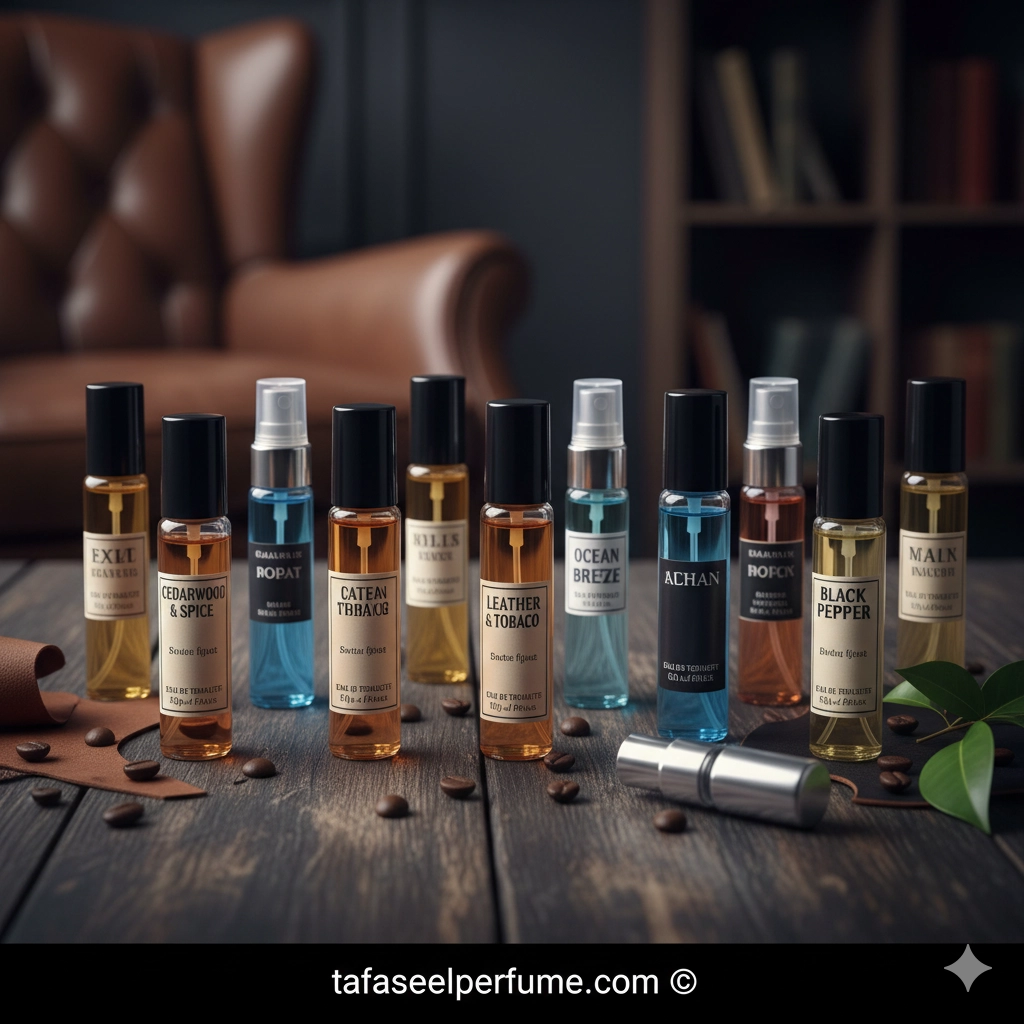
- Try Before You Commit: The Smart Guide to Cologne for Men Samples: Short intro: Sampling colognes lets you discover what truly suits your skin, lifestyle, and scent preferences before investing in a full bottle.
Long intro: Choosing a signature cologne is a personal and often costly decision. Cologne for men samples give you an economical, low-risk way to test longevity, sillage, and how notes evolve on your skin throughout the day. Samples are also ideal for travel, season-based rotation, gifting, and building a curated collection without clutter. In this guide you’ll find practical steps for sampling, how to interpret what you smell, where to source reliable samples, and how to use them intelligently so every purchase you make is confident and informed. Sampling is the single best practice for avoiding buyer’s remorse and finding a scent that becomes part of your identity.
1. Why Try Samples First — Small-cost validation before purchasing an expensive bottle.
2. Types of Samples — Vials, decants, blotters, and discovery sets: pros and cons.
3. How to Test Effectively — Step-by-step testing method to evaluate top, heart, and base notes.
4. Where to Source Reliable Samples — Reputable retailers, fragrance houses, and decant communities.
5. Sample Storage & Rotation — How to preserve scent integrity and build a rotation.
6. Using Samples for Travel & Gifting — Efficient packing and thoughtful gift strategies.
7. Common Sampling Mistakes — What to avoid so samples give accurate feedback.
1. Why Try Samples First
Buying a full bottle without testing is a gamble. Samples reduce that risk by letting you verify how a fragrance interacts with your unique skin chemistry. Many fragrances smell markedly different on blotter paper than on skin, and factors like diet, temperature, and humidity alter perception. Samples let you confirm sillage (how far the scent projects), longevity (how long it lasts), and whether the scent’s development suits your daily routine or special occasions. For niche or high-end bottles, where replacement costs are substantial, sampling is an essential step in a responsible purchase strategy.
Additionally, samples enable seasonal and situational testing. A citrus or aquatic cologne you love in summer may feel shallow in winter; conversely, a heavy amber may perform poorly in heat. Using samples across different days and environments gives a robust dataset to base your decision on.
Practical tip: try a sample for at least two full wearing cycles (morning-to-evening) before deciding. Your perception on the first hour often reflects top notes only; true character emerges later.
2. Types of Samples
Not all samples are created equal. Common formats include: manufacturer vials (official), retailer discovery sprays (mini sprays), decants (third-party redistributed amounts), and blotters (paper strips used in stores). Manufacturer vials and discovery sprays are ideal for fidelity to the original; decants can be economical but depend on the decanter’s hygiene and accuracy. Blotters are useful for initial screening but should never be the sole test because they lack skin chemistry interaction.
Another format is the discovery set — a curated group of small sprays from a house, useful for understanding a brand’s DNA before committing. If you’re exploring a new house, discovery sets are often the best value-per-scent for comprehensive comparison. Always check provenance; reputable sellers will list concentration (EDT, EDP), volume, and expiry or production batch information where possible.
3. How to Test Effectively
Effective testing follows a controlled, repeatable method. Start with clean skin (no other fragrances or heavily scented lotions). Spray once on the inner forearm or chest; avoid over-spraying. Wait 15–20 minutes and then observe the top notes — the initial impression. Revisit at 1 hour to assess the heart notes and again at 4–6 hours for base notes and longevity. Record your impressions: projection, compliments, any irritation, and suitability for the occasion.
Avoid testing more than three to four fragrances in one session; olfactory fatigue reduces discrimination. Use coffee beans sparingly as a reset; better yet, step into fresh air or sniff neutral-smelling fabric. When comparing two similar scents, wear them on opposite wrists and follow the same timeline to judge relative performance. Keep a small notebook or phone note for each sample — your future self will thank you.
4. Where to Source Reliable Samples
Buy from trusted retailers, official brand discovery kits, or well-reviewed decant communities. Department store fragrance counters provide manufacturer-backed samples and knowledgeable staff, though stock and sample generosity vary. Independent online retailers often offer single vials or discovery sets at competitive prices; verify return policy and authenticity information. Decant communities and marketplaces allow access to niche or sold-out bottlings but require careful vetting: check seller ratings, photos of the decant, and community feedback.
For reference, some curated articles and retailer pages offer useful guides and discovery collections to explore further, such as Irresistible Men’s Cologne: The Ultimate Guide and curated lists like Top 25 Men’s Cologne. When in doubt, prefer sources that disclose batch and concentration information.
5. Sample Storage & Rotation
To preserve a sample’s integrity, store vials upright in a cool, dark place away from direct sunlight and temperature swings. Avoid bathroom storage due to humidity. Proper storage extends usable life — many samples remain stable for 1–3 years if kept sealed and away from light. For everyday rotation, label each sample with purchase date and notes; a modest rotation strategy (e.g., 6–8 samples in regular use) prevents scent fatigue and lets you evaluate each scent in different contexts.
When travelling, keep a small case for vials to protect glass and reduce evaporation. For decants, ensure caps are tight and decant into darker glass if long-term storage is planned. Small actions like proper storage directly impact the accuracy of your sampling results.
6. Using Samples for Travel & Gifting
Samples are travel-friendly: mini sprays or vials occupy minimal space and comply with many carry-on volume restrictions. Choose lighter, fresher scents for hot climates and richer, spicier options for colder trips. Samples also make thoughtful gifts — a discovery set or a few curated vials communicates intent without forcing a full-bottle choice on the recipient. When gifting samples, include a short note about when and how to apply each scent to maximize appreciation.
For business or formal travel, keep a neutral, crowd-pleasing sample (fresh woody or mild citrus) to ensure broad acceptance. For romantic or evening travel, carry one bolder sample to make a stronger impression. These small strategic choices can enhance experiences while keeping luggage light.
7. Common Sampling Mistakes
Common pitfalls include testing too many scents at once, relying only on blotters, judging a fragrance immediately after application, and ignoring skin chemistry effects. Another mistake is dismissing a scent after a single wear; many fragrances reveal complexity only after hours. Conversely, over-committing to a single short-lived top-note impression leads to poor purchasing choices. Finally, buying from unverified decanters without community proof risks counterfeit or degraded product — always vet sellers and read user feedback.
Mitigation: limit testing sessions, document each wear, and prefer manufacturer or well-rated sellers for purchase. If budget allows, keep a small “evaluator” journal to track each sample across multiple wears and environments.
FAQs — Cologne for Men Samples
Q1: How long should I test a cologne sample before deciding?
Test a sample for at least two full wear cycles (two different days) and observe at immediate, 1-hour, and 4–6-hour marks. This captures top, heart, and base behaviour and reduces misjudging a fragrance based on fleeting top notes.
Q2: Are decants safe and authentic?
Decants can be safe and authentic if purchased from reputable sellers with positive community feedback and clear photos. Check seller ratings, descriptions, and return policies. When buying rare or expensive scents, prefer official samples or trusted retailers when possible.
Q3: How many samples can I reliably test in one session?
Limit yourself to three or four fragrances per session to avoid olfactory fatigue. If you must test more, split into multiple sessions or use neutral breaks between tests (fresh air, plain water, or unscented fabric).
Q4: Can I travel with cologne samples on a plane?
Yes. Small vials and discovery sprays under airline liquid limits are generally permitted in carry-on luggage. Pack them in a protective case to prevent breakage and check current airline/TSA rules for exact volume limits.
Q5: What’s the difference between EDT and EDP in samples?
EDT (Eau de Toilette) typically has a lower concentration of fragrance oils and may project less and last a shorter time than EDP (Eau de Parfum). When sampling, note the concentration listed; the same fragrance in EDT vs EDP can perform differently on your skin.
Q6: How should I store my samples long-term?
Store samples upright, sealed, away from direct sunlight, heat, and humidity. A cool, dark drawer or cabinet is ideal. Proper storage helps maintain the fragrance profile for months or years depending on the format.
Q7: Can I decant a manufacturer sample into a spray for convenience?
Yes, but use a clean, airtight atomizer designed for fragrance to avoid contamination and evaporation. Transfer carefully in a clean environment and label the atomizer with the fragrance name and date.
Burberry Her Perfume Hombre — A Modern Take on British Elegance
Perfume de Marly Herod — A Regal Tobacco Masterpiece Reimagined
Creed Vanille: The Luxurious Vanilla That Redefines Warmth
Sunlit Zest: Discovering Dolce & Gabbana Orange Perfume
Discover the Timeless Elegance of Paco Rabanne: Fragrance, Fashion, and Inno
Discovering the Essence of Prada Perfume Milano
Seductive Men's Cologne: Mastering the Art of Irresistible Scent


