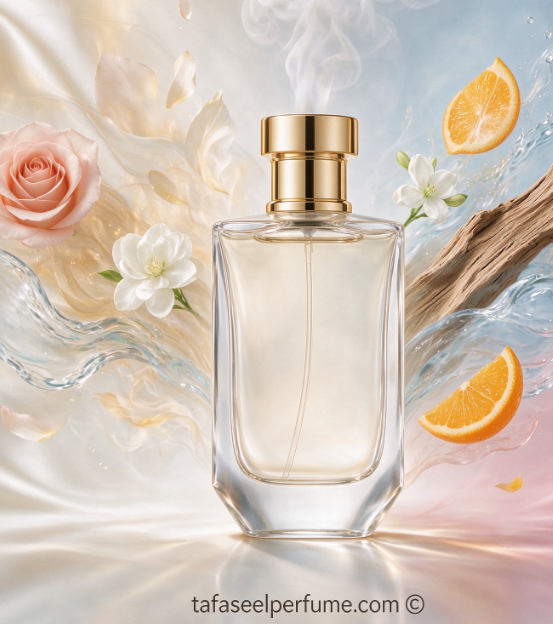
- The Fragrance of Perfume: A Complete Guide to Notes, Families, and Choosing Your Signature Scent: Short intro: The fragrance of perfume is far more than a pleasant smell in a bottle. It is a story told in layers, a blend of raw materials and memory that changes on your skin from the first spray to the final dry-down. Understanding how the fragrance of perfume is built helps you choose scents that feel personal, last longer, and genuinely suit the way you live.
Long intro: Walk into any perfume shop and you will meet hundreds of bottles, each promising something different. What separates a forgettable scent from one you wear for years is not the label or the price — it is the structure and harmony of the fragrance itself. The fragrance of perfume is created from a formula that balances top, heart, and base notes, and the way those notes unfold over time is what makes a perfume feel alive.
The fragrance of perfume also depends on the concentration of aromatic oils, the quality of the raw materials, and, crucially, the chemistry of the person wearing it. The same scent can smell bright and citrusy on one person and warm and resinous on another. Learning to read a fragrance — its family, its intensity, its rhythm — is the fastest way to stop buying bottles on impulse and start building a collection you actually wear.
In this guide, we explore the fragrance of perfume from the inside out: how it is structured, how the major fragrance families differ, how concentration shapes longevity, and how to test, wear, and store perfume so the fragrance stays as beautiful as the day you bought it. Whether you are new to scent or already know your favourite accords, there is something here for you.
What you will find in this guide:
1. What the Fragrance of Perfume Really Means — the difference between smell, scent, and a composed fragrance.
2. The Anatomy of a Perfume: Top, Heart, and Base Notes — how a fragrance unfolds from first spray to dry-down.
3. Fragrance Families: Floral, Woody, Oriental, and Fresh — the four broad families and what they say about a scent.
4. How Concentration Changes the Fragrance of Perfume — eau de cologne, eau de toilette, eau de parfum, and parfum.
5. Skin Chemistry and the Fragrance of Perfume — why one perfume never smells the same on two people.
6. How to Test and Wear the Fragrance of Perfume — practical testing steps that save money and regret.
7. The Fragrance of Perfume by Season and Occasion — matching scent intensity to weather, time, and setting.
8. Storing and Preserving Your Perfume's Fragrance — simple habits that protect a bottle for years.
9. Building a Fragrance Wardrobe — how to choose a small, versatile set of scents.
1. What the Fragrance of Perfume Really Means
In everyday language, people use "smell," "scent," and "fragrance" almost interchangeably. In perfumery they are not the same. A smell is simply what your nose detects. The fragrance of perfume, by contrast, is a deliberately composed work: a formula in which dozens, sometimes hundreds, of aromatic materials are blended so that they support one another rather than compete. That composition is what gives a perfume its personality.
A fragrance has intent. A perfumer chooses each material for a reason — a citrus top for lift and brightness, an iris heart for powder and elegance, a musk and amber base for warmth and cling. The finished fragrance of perfume is judged not by how strong it is, but by how well its parts fit together and how gracefully it evolves over the hours after application.
It is also worth separating perfume from other scented products you use daily. Deodorants, body mists, and shower gels may carry a scent, but they are usually built around a single accord and a light concentration. You can explore related categories such as Deodorant & Antiperspirant and Spa & Fragrance products to see how the fragrance of perfume-inspired accords moves into everyday body care, while fine fragrance remains a distinct, structured creation.
Finally, the fragrance of perfume is cultural as much as chemical. Materials that read as luxurious in one tradition may feel familiar or everyday in another. Oud, rose, and amber carry centuries of association in the Middle East, while lavender and citrus anchor classic European colognes. When you wear a perfume, you are wearing a small piece of that history as well.
2. The Anatomy of a Perfume: Top, Heart, and Base Notes
The fragrance of perfume is built like a piece of music: it has an opening, a middle movement, and a closing statement. Perfumers call these the top notes, the heart (or middle) notes, and the base notes. They are not separate fragrances but three time zones of the same composition, designed to hand over from one to the next without a visible seam.
Top notes are what you smell in the first few minutes. They are usually made of small, volatile molecules — citrus, bergamot, green leaves, light fruits, pink pepper — which evaporate quickly. Their job is to create a first impression and to lift the composition, which is why some people love a perfume on first spray and then feel disappointed twenty minutes later. That is simply the top notes leaving the stage.
Heart notes appear once the top notes begin to fade and last for several hours. This is where the real character of the fragrance of perfume lives: florals such as jasmine, rose, and ylang-ylang; spices like cardamom and cinnamon; soft resins and powdery materials. The heart is the part people around you notice most, and it is usually what a perfumer works hardest to balance.
Base notes are the heavy, slow-evaporating materials that stay close to the skin and hold the composition together — sandalwood, cedar, patchouli, vetiver, amber, musk, vanilla, and oud. They determine how long the fragrance lasts and what remains at the end of the day. A well-built base is why a beautiful perfume can still feel recognizable on your scarf the next morning, long after the opening has gone.
Understanding this layering changes how you shop. You should never decide on a perfume within the first two minutes; you should smell it on skin, wait, and smell it again. Many specialty retailers and gift sets, including Mini Size & Gift Sets, are useful precisely because they let you experience the full arc of the fragrance of perfume before committing to a full bottle.
3. Fragrance Families: Floral, Woody, Oriental, and Fresh
Fragrance families are the basic grammar of perfumery. Learning them gives you words to describe what you like, so you can narrow hundreds of bottles down to a handful. Most perfumes are classified into four broad families — floral, woody, oriental (amber), and fresh (citrus/aromatic) — though many modern releases blend two or more, producing hybrid families such as floral-woody or fresh-ambery.
Floral fragrances centre on flowers: rose, jasmine, tuberose, gardenia, iris, and lily of the valley. They range from a single-solifore bouquet to complex floral bouquets with fruit and musk. Floral scents read as elegant, romantic, and often feminine, and they are the backbone of many classic fragrances. If you enjoy florals, browsing a dedicated collection of Women's Perfume is an efficient way to explore the family's different moods, from fresh and dewy to rich and velvety.
Woody fragrances are built on sandalwood, cedar, vetiver, guaiac wood, and patchouli. They feel dry, structured, and grounded, and they often form the base of masculine or unisex compositions. Woody scents sit close to the skin and last well, which makes them a reliable everyday choice. Many men find their first love in this family; a good starting point is the Men's Perfume range, where woody, aromatic, and spicy ideas are usually well represented.
Oriental or amber fragrances rely on resins, balsams, vanilla, benzoin, labdanum, and spices. The fragrance of perfume in this family feels warm, enveloping, and slightly sweet, and it performs beautifully in cool weather. Fresh fragrances, by contrast, are all about citrus, green notes, aquatic accords, and herbs — bright, transparent, and energetic. They are the easiest family to wear in heat and in close quarters, though the most volatile and therefore the shortest-lived.
Because many modern perfumes deliberately cross families, it is often more useful to think in terms of accords rather than rigid categories. A fragrance can open fresh and turn woody; a floral can be built on an amber base. If you are unsure where to begin, read a few editorial pieces such as these Perfume Articles and Reviews to see how reviewers describe familiar scents in family terms.
4. How Concentration Changes the Fragrance of Perfume
Two perfumes can share an identical formula and still smell different because of concentration — the percentage of aromatic oil dissolved in alcohol. Concentration affects strength, projection, longevity, and even how the fragrance of perfume is perceived: a high-concentration version often smells rounder and richer, while a lighter version feels fresher and more transparent.
Eau de cologne is the lightest at roughly 2–5% oil. It is bracing, citrus-led, and short-lived, designed for refreshment. Eau de toilette sits around 5–12% and is the most common everyday format: clear, wearable, and usually lasting three to six hours. Eau de parfum typically contains 12–20% oil, offering deeper character and longer wear, and parfum or extrait can reach 20–40%, with the closest, most intimate sillage and the longest lifespan on skin.
Higher concentration is not automatically better. A dense parfum may be overwhelming in an office or in summer heat, while a cologne can be exactly right for a morning commute or a humid afternoon. The right choice depends on the fragrance of perfume itself: citrus and green materials shine in lighter formats, whereas resins, woods, and animalic musks need more oil to unfold properly.
Practically, this means you should check the label before comparing prices, because you are not comparing equal things. A 30 ml parfum may offer more wear than a 100 ml cologne. It also means you can layer lighter formats for daytime and heavier ones for evening, which is why many enthusiasts keep several formats of the same or related scents. Discovering how different brands approach these concentrations is one of the pleasures of exploring the Perfume Brands pages, where each house tends to have its own signature intensity.
5. Skin Chemistry and the Fragrance of Perfume
No perfume smells exactly the same on two people. Skin pH, moisture level, body temperature, diet, medication, and even the natural oils in your sebum all interact with the aromatic molecules in a perfume and shift the way they evaporate. This is why the fragrance of perfume is often described as personal rather than universal, and why a scent that smells wonderful on a friend can turn sharp or flat on you.
Dry skin tends to release fragrance faster and hold it for a shorter time, because there is less oil and moisture to anchor the heavier molecules. Oily skin often prolongs a perfume and can make it smell richer or sweeter. Warm skin projects more; cooler skin keeps the fragrance closer. Applying an unscented moisturiser before spraying, and spraying on pulse points where the skin is warm, are simple ways to improve both comfort and longevity.
Hormonal changes matter too. Many people notice that a favourite perfume smells different at certain points in the month, during pregnancy, or after a significant change in diet. This is normal, and it is one reason not to throw out a bottle you dislike after a single trial. Give it two or three wears, on different days and in different weather, before you make a decision.
Because chemistry is so individual, sampling is everything. Splash bottles, travel sprays, and discovery sets let you test the fragrance of perfume on your own skin over several days. Unisex compositions are especially useful here, since they are not built around gendered expectations and often reveal how differently one formula can read across skin types — a good reason to explore the Unisex Perfume category alongside traditional men's and women's sections.
6. How to Test and Wear the Fragrance of Perfume
Testing perfume well is a skill, and most people do it too quickly. The classic mistake is to smell six or seven fragrances in a row on paper strips, buy the one that smells best in that moment, and discover a month later that it is not what they wanted. The fragrance of perfume needs time, skin, and a little patience to be judged accurately.
Start with two or three fragrances, not ten. Your nose tires quickly, and after a few minutes it struggles to separate similar materials — a phenomenon often called olfactory fatigue. If you must smell more, ask for coffee beans or smell your own unscented sleeve between samples to reset your perception. Then apply your shortlist to skin, one on each wrist or forearm, and leave the shop.
Judge the fragrance in stages. Note the opening after two minutes, the heart after thirty, and the base after three or four hours. Pay attention to how the scent behaves in your normal environment: at your desk, on the commute, in the kitchen. A perfume that is gorgeous in a boutique can feel heavy in a shared office, and the reverse is also true. If you want a structured way to compare notes, ranking and top-list resources such as these Perfume Ranking and Top Lists can help you sanity-check your impressions against wider opinion.
Apply less than you think. Two to four sprays are usually enough for an eau de parfum, and one or two for a concentrated parfum. Spray onto moisturised skin, avoid rubbing the wrists together, and do not spray directly onto delicate fabrics or jewellery. For a gentler, more diffused effect, spray into the air and walk through the mist — a technique that suits light colognes and daytime wear especially well.
7. The Fragrance of Perfume by Season and Occasion
Fragrance behaves differently depending on temperature and humidity. Heat amplifies volatile molecules, which is why a rich amber that feels cosy in winter can become overwhelming in August, and why a crisp citrus cologne that feels refreshing in July may disappear in a cold wind. Matching the fragrance of perfume to season and occasion is one of the simplest ways to wear scent comfortably.
Spring and summer favour fresh, green, citrus, aquatic, and light floral compositions. They feel clean, keep their distance politely, and work well in heat. Autumn and winter welcome woods, spices, resins, vanilla, and oud — fragrances with weight and warmth that bloom in cool air and last on scarves and coats. If you live in a hot climate, lighter concentrations and fresher families will serve you better year-round.
Occasion matters as much as weather. Daytime and office settings reward restraint: a soft eau de toilette, an elegant floral, or a clean woody scent applied lightly. Evenings invite more projection and depth — an amber, a spicy oriental, a rich floral, or a tobacco-and-vanilla base. Weddings, dinners, and celebrations are where you can afford to wear something bolder, while travel and long flights call for gentler, less intrusive choices out of consideration for the people around you.
It also helps to think about the accessories and rituals that surround your scent. A perfume that clashes with your scented hair products or body lotion can feel muddy, so it is worth keeping your other products relatively neutral. Those who enjoy the sensory side of beauty often pair fragrance with wider rituals, and the guides in Beauty Tips and Guides can help you coordinate skincare, hair, and scent without conflict.
8. Storing and Preserving Your Perfume's Fragrance
Perfume is a perishable product. Light, heat, oxygen, and humidity all slowly break down the aromatic molecules that make up the fragrance of perfume, and the first signs are usually a sharper, flatter opening followed by a sour or vinegar-like undertone. Proper storage is not complicated, but it does require a little discipline.
Keep bottles in their original boxes, away from direct sunlight. A dark cupboard or drawer in a room with a stable temperature is ideal. Bathrooms are one of the worst places for perfume, because the constant steam and temperature swings accelerate degradation. The refrigerator is sometimes suggested, but it is only helpful for unopened bottles and can cause condensation problems if you move a bottle in and out frequently.
Minimise air exposure. A nearly empty bottle has more oxygen inside it, which is one reason the last few millilitres of a beloved perfume often smell different from the first. Splash bottles and rollerballs avoid this problem; for spray bottles, simply keep the cap on and avoid unnecessary pumping. Where you can, buy the size you will actually finish within a few years rather than the largest bottle available.
Finally, treat perfume as a considered purchase rather than a collectible to be hoarded. A well-kept bottle will hold its character for years, but a neglected one can turn in months. If you enjoy layering and experimenting, small formats and fragrance gels are excellent ways to explore new ideas without putting a large bottle at risk — the Fragrance Gels range is a good example of a lighter format that still delivers a genuine, well-composed scent.
9. Building a Fragrance Wardrobe
A fragrance wardrobe is a small, deliberate collection of perfumes chosen to cover the situations you actually live in, rather than an ever-growing shelf of impulse buys. When you understand the fragrance of perfume — its families, its structure, its concentration — you can plan a wardrobe of four to six scents that serve different moods and seasons without overlapping too much.
Start with a signature. This is the scent you reach for most often, the one that feels like you. It should suit your climate, your workplace, and your tolerance for sweetness or intensity. Add a fresh option for hot days and long working hours, a warm option for evenings and cool weather, and a special-occasion scent that you save for celebrations. A shared or unisex scent is a useful fourth or fifth piece because it works for many occasions.
Then let the wardrobe grow slowly. Buy after you have worn a sample for at least a week, not after a single impressive first spray. Keep track of what you actually finish, because that is the truest signal of what you love. If you enjoy exploring, curated sets and small sizes are a sensible route — the Perfume Gift Sets category is a practical way to try several formats and families at once, and a thoughtful gift for anyone beginning their own collection.
Above all, remember that the fragrance of perfume is meant to be worn, not admired from a distance. The best perfume is the one that fits your life, makes you feel like yourself, and earns a compliment without filling a room. Once you can read a fragrance, you stop chasing trends and start choosing scents you will still love a decade from now.


