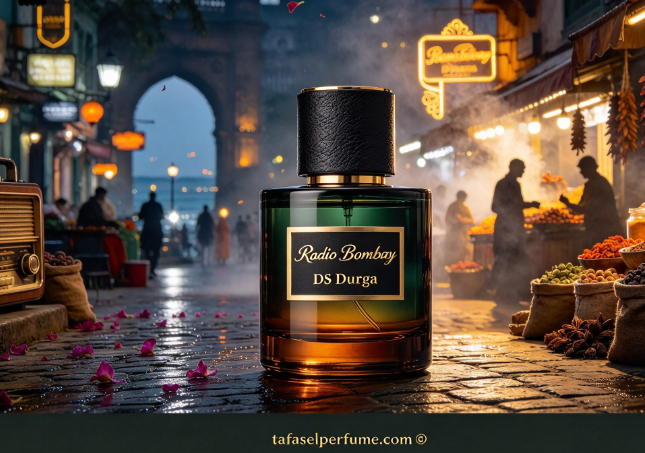
- Radio Bombay DS Durga: The Complete Guide to Sandalwood, Copper, and Sensory Storytelling: Quick Intro: Radio Bombay by D.S. & Durga is not your typical sandalwood fragrance. It is a scent built on a hypothetical: a transistor radio carved from sandalwood, its hot copper tubes warming the wood and releasing creamy, musky, electric plumes into the humid Bandra air . If you are searching for a woody fragrance that feels nostalgic yet modern, calm yet quietly strange, this guide breaks down everything you need to know.
Big Intro: Released in 2016 and composed by D.S. & Durga’s self-taught perfumer David Seth Moltz, Radio Bombay sits at the intersection of memory, material deconstruction, and atmospheric storytelling. The fragrance takes the idea of Mysore sandalwood—a material Moltz describes as “perfection” but which has been overharvested and largely unavailable to perfumers—and rebuilds it from fragments: radiant wood, metallic copper, cedar, iris, coconut musk, and ambergris . The result is a fragrance that smells like a warm electronic device sitting in a small shop in Mumbai, humming with ragas and heat. It has earned a devoted following among niche fragrance lovers who prefer intimate, skin-close woods over loud projection. Whether you are a longtime DS & Durga collector or simply sandalwood-curious, this article maps out the scent’s structure, performance, layering potential, and the conversations surrounding it.
DS & Durga: Deconstructing Scent — Raw Poetry, Radical Architecture
In This Guide:
1. What Does Radio Bombay DS Durga Actually Smell Like?
2. The Notes Breakdown: From Copper to Coconut Musk
3. Performance and Longevity: How Long Does It Last?
4. Radio Bombay vs. Tam Dao: The Sandalwood Comparison
5. How to Layer Radio Bombay for Better Results
1. What Does Radio Bombay DS Durga Actually Smell Like?
The opening of Radio Bombay is famously deceptive. Many wearers report a sharp, dry blast of cedar and what some describe as “pencil shavings” or a dusty, metallic spark before the sandalwood fully arrives . This is the copper accord doing its work—a synthetic reconstruction of hot electronic tubes that gives the fragrance its signature “electric warmth.” As the initial brightness settles, the heart reveals a dry, slightly powdery sandalwood, softened by a whisper of iris and a barely-there peach sweetness. The coconut musk in the base is not tropical or suntan-lotion-like; instead, it reads as a creamy, skin-like softness that holds the woods close to the body. The overall impression is quiet, intimate, and slightly melancholic—like the afterglow of a song you almost recognize.
2. The Notes Breakdown: From Copper to Coconut Musk
According to the official D.S. & Durga pyramid, Radio Bombay opens with radiant wood, copper, and cedar. The heart contains sandalwood, radiant iris, and boronia, while the base settles into balsam fir absolute, coconut musc, and ambergris . What matters more than the list itself is how these materials interact. The copper note is not a literal metal scent; it functions as a texture—dry, warm, slightly sharp—that prevents the sandalwood from becoming too creamy or precious. The boronia, a lesser-known floral with a green-fruity character, adds a subtle complexity that keeps the heart from feeling flat . The ambergris in the base contributes a faint saline skin-scent quality, while the balsam fir lends a touch of forest dryness. Together, they create a fragrance that smells less like a “perfume” and more like a room, an object, a temperature.
3. Performance and Longevity: How Long Does It Last?
Radio Bombay is not a projection monster, and that is entirely by design. Community consensus on Fragrantica places its sillage in the intimate-to-moderate range, with many users reporting 3 to 6 hours of wear on skin, occasionally stretching to 8 hours depending on climate and skin type . It performs best in spring and autumn temperatures, where the woods feel warm without becoming cloying. In high heat, the coconut musk can amplify; in cold air, the fragrance becomes quieter and more skin-close. If you are someone who wants a scent that announces your arrival, this is not the one. But if you love the experience of catching your own fragrance in small, private waves throughout the day, Radio Bombay rewards that intimacy.
4. Radio Bombay vs. Tam Dao: The Sandalwood Comparison
No discussion of Radio Bombay is complete without addressing Diptyque’s Tam Dao, the other widely known creamy sandalwood in the niche space. The comparison is inevitable, and the similarities are real: both are dry, milky sandalwoods with a powdery finish and a unisex temperament. However, the differences are instructive. Tam Dao is smoother, more monolithic, and arguably more immediately pleasing—a sandalwood block polished to a soft sheen. Radio Bombay is more restless. The copper and cedar opening gives it a metallic edge; the boronia adds a green-floral flicker; the musk in the base feels more animalic and skin-like . One Fragrantica reviewer described Tam Dao as a Brionvega radio and Radio Bombay as a Tivoli model—a square rather than a cube, more alive and less predictable . If you want the platonic ideal of sandalwood, choose Tam Dao. If you want sandalwood with a strange, warm, electric pulse, choose Radio Bombay.
5. How to Layer Radio Bombay for Better Results
D.S. & Durga’s own layering notes suggest using Radio Bombay as a “soft sandalwood base” to temper sweet gourmands, boost creamy woody combinations, or sit underneath rose and floral compositions . In practice, the fragrance works particularly well when paired with something drier or more mineral. A single spray of a vetiver-forward scent underneath can sharpen the copper edge; a rose fragrance layered over it brings out the iris and boronia in unexpected ways. Some wearers enjoy combining it with other DS & Durga scents like Steamed Rainbow or Concrete for a more textural, atmospheric effect . The key is restraint—Radio Bombay is quiet enough that layering can easily overwhelm it.
Frequently Asked Questions
Is Radio Bombay DS Durga unisex?
Yes. It is officially marketed as a unisex fragrance, and community voting on Fragrantica reflects a broad split across gender preferences, with a slight lean toward unisex categorization . The dry woods and metallic opening make it equally wearable for anyone comfortable with powdery sandalwood scents.
How long does Radio Bombay last on skin?
Most wearers report 3 to 6 hours of noticeable wear, with some getting closer to 8 hours on clothing or in cooler weather . It is an intimate fragrance, so the longevity feels appropriate rather than disappointing.
Is Radio Bombay similar to Tam Dao by Diptyque?
They share a creamy sandalwood core, but Radio Bombay has a drier, more metallic and powdery character due to the copper accord and cedar opening. Many fragrance enthusiasts consider Radio Bombay the more complex and “alive” of the two, though Tam Dao remains the smoother, more straightforward option .
What is the “copper” note in Radio Bombay?
The copper note is a constructed accord designed to evoke the warmth and faint metallic tang of hot electronic tubes. It is not a literal metal smell but rather a dry, sharp texture that contrasts with the creamy sandalwood and coconut musk .
When is the best season to wear Radio Bombay?
Spring and autumn suit it best. In summer, the coconut musk can become more prominent; in deep winter, the fragrance stays very close to the skin. Fragrantica voting data shows the highest number of “when to wear” votes for autumn, followed by summer and spring .


