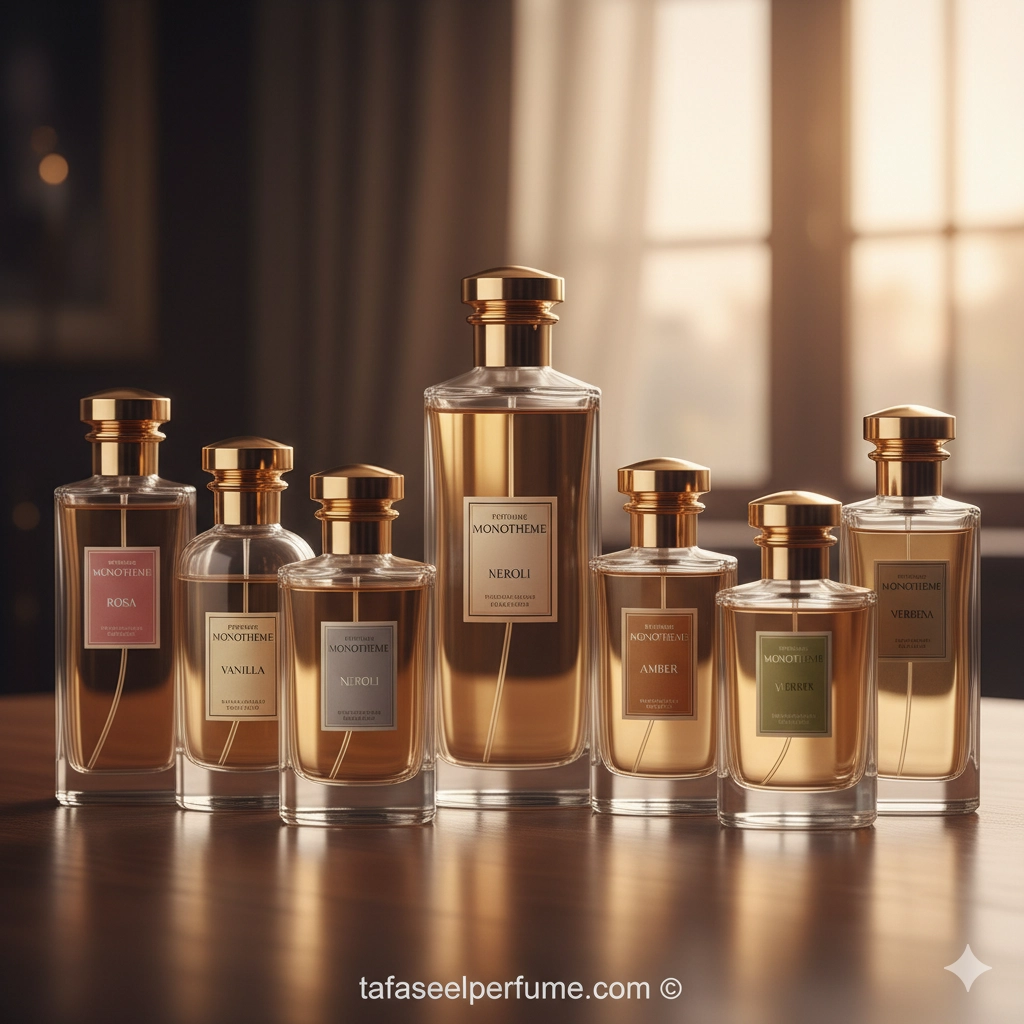
- Perfumes Monotheme: A Focused Guide to Single-Theme Fragrances: Short intro: This concise guide explains what a perfumes monotheme (single-theme fragrance) is, why collectors and casual wearers appreciate it, and how to choose one that suits your mood or brand identity.
Long intro: A perfumes monotheme centers an entire composition around a single olfactory idea — vanilla, patchouli, tobacco, citrus, or a specific floral note — and explores its facets through layering, concentration, and supporting notes. These fragrances are prized for their clarity and narrative: by committing to one theme, perfumers can highlight nuance, create unexpected contrasts, or produce powerful statements that read clearly on skin. In this guide you will find a curated set of focused topics, practical buying and wearing advice, and deeper analyses of how monotheme perfumes function in modern wardrobes and retail strategies. Along the way, I reference useful reviews and product pages such as
Irresistible Men’s Cologne: The Ultimate Guide
and category pages like
to give you immediate examples and shopping context.
1. Choosing Your Monotheme — brief guidance on selecting a dominant note based on season, occasion, and skin chemistry.
2. Concentration and Longevity — how parfum, eau de parfum, and eau de toilette affect a single-theme fragrance.
3. Layering and Complementary Notes — techniques to expand a monotheme without diluting its identity.
4. Signature Notes: Vanilla, Patchouli, Tobacco — exploration of three of the most common monothemes and what they convey.
5. Niche vs. Designer Approaches — differences in formulation philosophy when a brand commits to one theme.
6. Sampling and Acquisition Strategy — a practical plan for testing and building a monotheme collection, including gift-set considerations.
7. Marketing a Monotheme Fragrance — how retailers and creators position single-theme scents to stand out.
1. Choosing Your Monotheme
Choosing the central theme for a fragrance should start with clear intent. Ask whether you want comfort (vanilla, tonka), freshness (citrus, green tea), depth (oud, tobacco), or an evocative memory (rose, amber). Consider seasonality: citrus and aquatic themes perform well in warm months, while resinous or gourmand themes read as cozy in cooler months. Skin chemistry is decisive: the same single note can evaporate, amplify, or morph depending on skin pH and diet. Practical method: test on blotter, then on skin for four hours; note the progression of top, heart, and base impressions even in a monotheme composition. For inspiration, examine focused reviews such as
Creed Vanille: The Luxurious Vanilla
to understand how a single dominant note can be presented with varying textures and concentrations.
2. Concentration and Longevity
Concentration alters the perception of a monotheme dramatically. A parfum-strength vanilla will be dense, persistent, and tactile; an eau de toilette interpretation of the same note can read brighter and more fleeting. When evaluating longevity and projection, check the stated concentration and also examine the supporting solvent and fixatives. Synthetic isolates and natural absolutes behave differently: some naturals fade sooner but evolve richly, while certain synthetics maintain a steady linearity that can be beneficial when you want the theme to remain constant. Retail and gifting contexts — for instance,
— often favor EDP formulations for their balance of value and lasting power.
3. Layering and Complementary Notes
Layering allows you to broaden a monotheme without compromising its core idea. For example, a patchouli monotheme benefits from a whisper of bergamot to add top lift, or from a leather accord to increase structure. Successful layering follows three rules: do not mask the central theme, choose accords that enhance a facet of the note, and test combinations on skin. Some brands offer companion products — body gels, scrubs, and creams — designed to reinforce the theme; consult category pages like
for practical examples on continuity across formats.
4. Signature Notes: Vanilla, Patchouli, Tobacco
Vanilla: a gourmand monotheme that can be warm, sweet, or resinous depending on the vanillin profile and adjuncts (benzoin, tonka). It appeals as a comfort scent but can be engineered for elegance rather than cloying sweetness. Patchouli: an earthy, versatile monotheme that shifts from dry and woody to dark and balsamic when blended with amber or incense. Tobacco: a leathery, aromatic theme that often signals maturity and complexity; when presented with sweet or spicy accents it balances rusticity with polish. For focused editorial takes on patchouli, see resources like
Patchouli White: The Soft Earthy Whisper
.
5. Niche vs. Designer Approaches
Niche houses often treat a monotheme as an exploration: higher concentrations of a raw material, unusual extraction methods, and a willingness to accept polarizing wearers. Designer brands usually aim for broader appeal, smoothing extremes with crowd-pleasing accords. The choice between niche and designer depends on your goals: do you want a statement piece that sparks conversation, or a reliable signature that works across meetings and dates? Study presentation and editorial framing to see how each sector positions focused scents; for example, product storytelling in category pages such as
illuminates commercial strategies.
6. Sampling and Acquisition Strategy
Because single-theme fragrances are about nuance, sampling is non-negotiable. Build a two-stage testing protocol: first, rank blotter impressions to narrow options; second, test chosen samples on skin during normal activity for at least six hours. Consider travel or mini sizes for rotation; small formats reduce risk while letting you compare multiple monothemes. Retailers often bundle travel sizes in gift sets — check
— which provide economical sampling while forming a cohesive collection.
7. Marketing a Monotheme Fragrance
From a retail and brand perspective, a monotheme simplifies storytelling: the campaign can revolve around a single evocative image, texture, or memory. Marketing tactics include focused imagery, ingredient provenance narratives, and pairing the scent with complementary product categories (spa, body art). Retail merchandisers often create themed displays and tester pairings to educate shoppers quickly. For examples of catalog and editorial placement, see curated article lists like
Discover the Elegance of Dolce & Gabbana Light Blue
and broader category pages such as
.
Section lead-in: The following FAQs address common practical and conceptual questions about perfumes monotheme so you can apply the ideas above with confidence.
FAQ 1: What defines a perfumes monotheme?
A perfumes monotheme is defined by its compositional focus on a single prominent olfactory idea. That note is the narrative anchor: supporting accords exist to reveal facets, but they do not compete with the core theme.
FAQ 2: Are monotheme fragrances more polarizing?
Often yes; their clarity exposes preferences. A single strong theme can delight aficionados who appreciate nuance and frustrate wearers who prefer blended crowd-pleasers. That said, formulation choices (concentration, smootheners) can mitigate polarity.
FAQ 3: How should I store and rotate monotheme bottles?
Store in a cool, dark place away from light and heat to preserve volatile top notes. Rotate seasonally: lighter themes in spring/summer and richer themes in fall/winter — a practical habit that prolongs interest and maintains bottle integrity.
FAQ 4: Can monotheme scents be unisex?
Absolutely. A focused theme like cedar, vanilla, or citrus transcends gender when presented with neutral supporting accords. Check cross-category pages like
for product examples.
FAQ 5: What is the best way to present a monotheme in a retail description?
Lead with the theme in plain language, describe three characteristic facets (top/heart/base feel), and recommend complementary products or situations (office, evening, travel). Use evocative but concrete imagery — e.g., "warm bakery vanilla with a dry cedar backbone."
FAQ 6: How do I avoid a monotheme becoming monotonous?
Rotate supporting products (lotions, shower gels), experiment with layering, and choose different concentrations of the same theme (EDP vs extrait) to reveal alternate textures. Gift sets and mini sizes are strategic tools for this exploration — see
.
FAQ 7: Where can I learn more or find reputable examples?
Begin with editorial reviews and brand pages that focus on single-note explorations. For concrete product reviews and themed features, consult curated articles such as
and categories that gather similar items like
.


