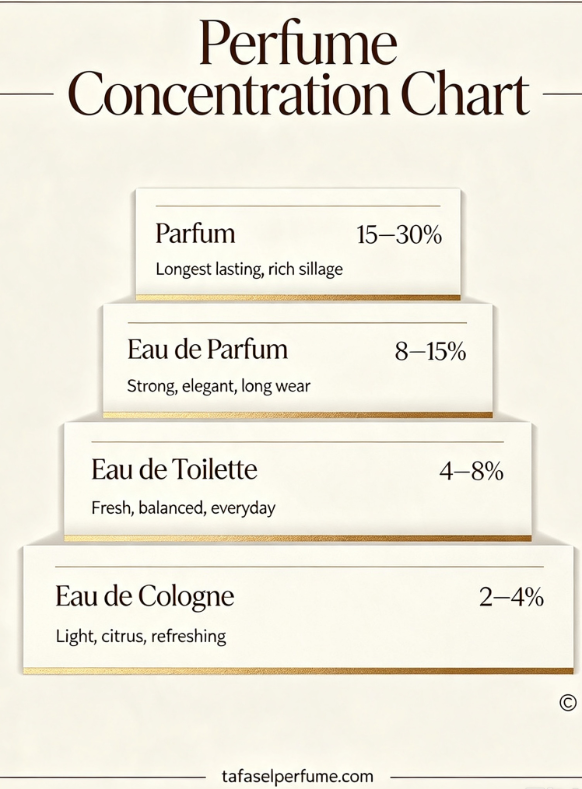
- Perfume Concentration Chart · Decode Strength, Sillage & Longevity: Short & sharp: The perfume concentration chart reveals the exact percentage of fragrance oil in a composition. From Eau Fraîche (1–3%) to pure Parfum (20–40%), each tier shapes projection, durability, and price. Master the chart and choose your perfect scent with confidence.
The complete picture: Perfume concentration is the backbone of any fragrance. It dictates how a scent unfolds on skin, how far it radiates, and how many hours it stays with you. Yet the world of concentrations — EDC, EDT, EDP, Parfum, Extrait, and niche variations — can be confusing. This article walks through every level of the perfume concentration chart, explaining the chemistry, the art, and the real‑world differences. We also include curated links to trusted collections, so you can explore men’s, women’s, unisex, and gift sets with a new understanding. Whether you are a collector, a casual wearer, or a curious beginner, this guide turns concentration into your superpower.
1. Eau Fraîche & Eau de Cologne (EDC)
Concentration: 1–3% (Eau Fraîche) · 2–5% (Eau de Cologne). The lightest members of the family. Eau Fraîche often contains little to no alcohol, while EDC has a crisp, citrus‑forward character. They are the ultimate refreshers — short‑lived (1–2 hours) but perfect for gym bags, post‑shower spritzes, or a quick mood lift.
Historically, Eau de Cologne originated in Germany and became a staple for its invigorating neroli, lemon, and rosemary notes. Because the oil percentage is low, the scent stays close to the skin. If you love subtlety or work in scent‑sensitive environments, this tier is your ally. For a broader spectrum, explore Unisex Perfume collections that often feature cologne‑strength options with modern twists.
Despite their brevity, Eau Fraîche and EDC are affordable, and they layer beautifully with heavier fragrances. Think of them as the "whisper" of the perfume world — delicate, effortless, and endlessly wearable.
2. Eau de Toilette (EDT)
Concentration: 5–15% fragrance oil. EDT is the most popular category worldwide, balancing cost, presence, and wearability. It typically lasts 3–5 hours, with moderate sillage. The alcohol content is higher, which means the top notes burst open dramatically — think zesty bergamot, fresh lavender, or aquatic accords.
EDT is ideal for daytime wear, office settings, and warmer weather. The lighter concentration allows the scent to evolve quickly, so you experience the heart and base notes sooner. Many iconic men’s and women’s fragrances are offered as EDT. If you are new to a scent, starting with EDT is a smart move. Men’s Perfume and Women’s Perfume sections are rich with EDT classics.
One underrated advantage: EDT is forgiving. You can reapply mid‑day without overwhelming those around you. It’s the “daily driver” of the fragrance world — reliable, vibrant, and versatile.
3. Eau de Parfum (EDP)
Concentration: 15–20% (sometimes up to 22%). EDP is the gold standard for fragrance enthusiasts. It offers a richer, more complex composition with a longevity of 5–8 hours. The higher oil percentage slows down evaporation, so the scent develops more gradually, and the base notes (wood, amber, musk) linger beautifully.
EDP is often the choice for evening wear, cooler seasons, and special occasions. It projects well without being brash — a sophisticated aura that draws people in. Many niche and luxury brands focus on EDP concentrations, because they allow the perfumer’s vision to shine. For gifting, Perfume Gift Sets frequently include EDP versions alongside matching body lotions.
If you appreciate depth and evolution, EDP is your territory. The price is higher than EDT, but the intensity and trail (sillage) justify the investment. It’s the fragrance equivalent of a tailored suit — refined, memorable, and powerful.
4. Parfum / Extrait
Concentration: 20–40% (sometimes over 50% in pure extraits). This is the apex of perfume concentration. Parfum (or Extrait de Parfum) is dense, viscous, and intensely long‑lasting — often 8–12+ hours on skin, and days on fabric. The sillage is moderate but unmistakable, and the scent unfolds in slow motion, revealing hidden facets over hours.
Because the oil content is so high, Parfum requires less application — a single dab on pulse points suffices. It is the most expensive tier, but a single bottle can last years. Parfums are often the original, unadulterated version of a fragrance, as the perfumer intended. For those who seek exclusivity, Brands and Tafaseel collections feature rare extraits.
Wearing Parfum is a ritual. It warms with skin chemistry, creates an intimate scent bubble, and leaves a lasting impression. If you want to experience the soul of a fragrance, Parfum is the ultimate journey.
5. Concentration & Sillage — The Projection Factor
Sillage (the trail a fragrance leaves behind) is directly influenced by concentration, but it’s not a one‑to‑one relationship. A high‑oil Parfum can have a smaller sillage than an EDT with strong diffusive molecules. However, generally, EDP and Parfum create a more substantial aura due to the higher percentage of fixatives (like resins and musks).
EDC and EDT tend to have brighter, more volatile top notes that project rapidly but fade quickly. EDP balances projection with longevity, while Parfum stays closer to the skin but lasts significantly longer. Your choice depends on whether you want to announce your arrival (EDT/EDP) or leave a mysterious trace (Parfum).
For practical advice, Perfume Articles offer real‑world reviews on sillage. Also, layering a lighter concentration with a matching body product (from Skin Care & Tools) can enhance both projection and endurance.
6. Longevity vs. Intensity — What Really Matters?
Longevity measures how long a fragrance lasts, while intensity describes how strong it feels. They are correlated but not identical. A light Eau de Cologne may last 2 hours but feel very intense in the first 30 minutes due to citrus top notes. Meanwhile, a Parfum may feel subtle but persist for 12 hours.
Skin type, climate, and application technique also play huge roles. Oily skin holds fragrance longer, while dry skin may need a moisturizer base. Spraying on clothes extends longevity, but it reduces the scent’s evolution. The perfume concentration chart is your starting point — but personal experimentation is key.
Explore Mini Size & Gift Sets to sample different concentrations without committing to full bottles. And don’t forget Deodorant & Antiperspirant for a complementary, low‑concentration daily option.
7. How to Choose by Concentration — A Practical Guide
For daily work / school: EDT or Eau Fraîche. They are affordable, light, and won’t overwhelm colleagues. For evening events / date nights: EDP or Parfum — they add an air of mystery and sophistication. For summer heat: EDC or EDT, as high heat amplifies projection, and lighter concentrations feel fresher. For winter: EDP or Parfum, because cold air dampens sillage, and richer concentrations cut through the chill.
Also consider the occasion: a casual brunch calls for a spritz of EDT, while a wedding or gala deserves the opulence of Parfum. Your budget matters too — EDP gives the best “bang for buck” in terms of longevity and richness, while Parfum is a luxury investment.
Finally, trust your nose. Samples are your best friend. Visit Ranking to see top‑rated concentrations, and browse Beauty guides for application tips. The perfume concentration chart is a map, not a rule — your journey is personal.
Final takeaway: Understand the chart, but wear what moves you.
© 2026 · Perfume Concentration Chart · curated with care for fragrance connoisseurs.


