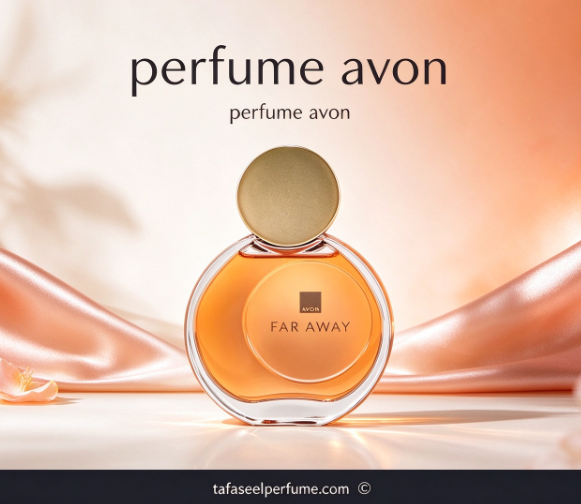
- Perfume Avon: The Quiet Giant of Affordable Fragrance That Still Outsells Hype: Avon does not advertise on billboards in duty-free halls, and it does not chase the same “viral” releases that dominate social feeds every month. Yet perfume Avon remains one of the most consequential fragrance operations in the world—a direct-sales machine that has been putting wearable, recognisable scents on dressing tables since the 1880s.
Avon does not advertise on billboards in duty-free halls, and it does not chase the same “viral” releases that dominate social feeds every month. Yet perfume Avon remains one of the most consequential fragrance operations in the world—a direct-sales machine that has been putting wearable, recognisable scents on dressing tables since the 1880s. This guide is not a catalogue. It is a practical map of what Avon fragrance actually is in 2026: which classics still deserve shelf space, which modern lines are quietly outperforming their price tags, and how to separate the repeat-purchase heroes from the brochure filler. If you have ever wondered why a single Avon scent can stay in production for thirty years while designer launches disappear in eighteen months, the answers are below.
Big Introduction:
Perfume Avon occupies a strange position in the fragrance conversation. On one side, it is dismissed by hobbyists who equate low price with low ambition. On the other, it is defended with unusual loyalty by people who have worn the same bottle for two decades and have no intention of stopping. Both reactions miss the point. Avon is not trying to compete with niche houses on complexity, and it is not trying to imitate designer releases note for note. Its advantage is different: scale, access, and an almost stubborn commitment to keeping proven formulas alive. The company began in 1886 when a book salesman named David H. McConnell realised that the free perfume samples he was handing out were more popular than the books he was selling. That origin story still shapes the product: Avon fragrance is built to be sampled, shared, and reordered, not admired from behind glass. Today the portfolio spans amber florals, clean green florals, fougères, and soft orientals, with bestsellers like Far Away, Imari, and Sweet Honesty surviving decades of reformulation and retail disruption. What follows is a working guide to the scents that matter, the lines that are worth exploring first, and the practical questions that come up again and again when people ask whether Avon perfume is actually any good.
Article Contents
1. Why Avon Perfume Has Outlasted Countless Designer Launches
2. Far Away: The Amber Floral That Became Avon’s Global Signature
3. Beyond Far Away: Imari, Haiku, and the Classics Still Worth Buying
4. Avon for Men: Wild Country, Black Suede, and the Forgotten Fougères
5. How to Choose, Layer, and Get the Most From Avon Perfume
1. Why Avon Perfume Has Outlasted Countless Designer Launches
The first thing to understand about perfume Avon is that it operates on a different business clock. Designer fragrances are typically launched with a two-to-three-year commercial window in mind; if the scent does not perform, it is discontinued, reformulated, or pushed into discount channels. Avon’s bestsellers, by contrast, are treated as long-term assets. Far Away has been in continuous production since 1994 and is still described by representatives as the brand’s worldwide bestseller. Sweet Honesty has been on the market since 1973, and Imari since 1985. That kind of longevity is not nostalgia marketing; it is evidence of a product that enough people repurchase to justify keeping the lights on. The second factor is access. Avon’s direct-sales model means the fragrance reaches customers through representatives, catalogues, and online stores without the overhead of department-store counters or global advertising campaigns. The money that would have gone into a celebrity face or a prime-time slot goes instead into keeping the juice affordable. That does not automatically make every Avon release a masterpiece—plenty of flankers are forgettable—but it explains why the core catalogue contains scents that have outlived hundreds of trendier launches. For anyone building a fragrance wardrobe around value rather than hype, browsing a curated Brands directory alongside Avon’s own classics is a useful exercise in seeing what actually survives.
2. Far Away: The Amber Floral That Became Avon’s Global Signature
If you only try one perfume Avon in your life, Far Away is the logical starting point. Launched in 1994 and composed by Xavier Renard and René Morgenthaler, it is a warm amber floral built around jasmine, gardenia, freesia, peach, coconut, and vanilla. On paper, that sounds like a dessert; on skin, it behaves more like a comforting, slightly powdery white-floral blanket. The opening is bright and peachy, with a coconut nuance that some wearers initially read as “tropical” before the jasmine and gardenia take over. The dry-down is where Far Away earns its reputation: vanilla, sandalwood, and a soft amber warmth that sits close to the skin for hours without becoming syrupy. It is not a minimalist scent, and it is not trying to be. Avon’s own representatives describe it as a fragrance for people who like a “warm, slightly richer perfume with a soft oriental feel,” and they are candid that it can feel full-on for wearers who prefer barely-there freshness. The Far Away family has expanded into a wardrobe of flankers—Glamorous, Beyond, Royale, Shine, Gold—but the original EDP remains the reference point. At its typical price, it is one of the few fragrances that genuinely rivals department-store amber florals at a fraction of the cost, even if its projection is more polite than a luxury extrait. If you are exploring Women’s Perfume categories and want a benchmark for affordable warmth, Far Away is the scent to sample first.
3. Beyond Far Away: Imari, Haiku, and the Classics Still Worth Buying
Far Away casts a long shadow, but perfume Avon is not a one-scent operation. Imari (1985) is the glamour option: a spiced amber floral with rose, jasmine, and a woody base that wears like an evening scent but has a devoted following among wearers who make it their daily signature. Haiku is the opposite pole: a clean green floral inspired by Japanese minimalism, with crisp air, bamboo, lily, and a whisper of musk. It is the scent to recommend to someone who says they hate heavy perfume, and its Kyoto Flower variation extends the same transparent aesthetic. Rare Pearls occupies the creamy-white-floral space, with a soft, elegant dry-down that reads as “wedding-and-Sunday-best” without feeling formal. Sweet Honesty, now past its fiftieth year, remains a gentle powdery citrus-floral-musk that functions as both a comfort re-buy for long-time customers and a first perfume for teenagers. These scents are not trying to be edgy, and they are not trying to be unisex in the contemporary marketing sense. They are trying to be recognisable, wearable, and repurchasable—and by that standard, they succeed. For readers who enjoy comparing Avon’s accessible classics with higher-priced designer releases, articles on scents like Lancôme La Vie Est Belle or Tom Ford Cherry perfumes offer useful context for what “luxury” actually adds—and what it does not.
4. Avon for Men: Wild Country, Black Suede, and the Forgotten Fougères
Avon’s men’s fragrance line is smaller than its women’s portfolio, but it contains at least one genuine heritage piece. Wild Country (1976) is a lavender-citrus-leather-moss construction that has been in the catalogue for fifty years and still functions as the brand’s “cowboy” scent: fathers wore it, and sons now ask for it. Black Suede (1980s) is smoother and warmer, with suede, sandalwood, and soft spice, making it the most office-friendly of the classic trio. Mesmerize (1992) is a bergamot-lavender-amber fougère that reads slightly dressier than Wild Country and has enough structure to feel deliberate rather than generic. None of these are “beast mode” projectors, and none are trying to compete with the blue-fresh dominance of modern men’s designer launches. What they offer instead is a different kind of masculinity: softer, more barbershop-adjacent, and often better suited to wearers who find contemporary aquatic fougères interchangeable. If you are building a rotation around Men’s Perfume, Avon’s classics are worth sampling as palate cleansers—fragrances that remind you what lavender, moss, and leather smell like without a sugar or ambroxan overload. For a broader comparison, guides to Paco Rabanne XS for Him and Versace Eros illustrate how the fougère genre has evolved in the designer space while Avon’s versions stayed closer to their original brief.
5. How to Choose, Layer, and Get the Most From Avon Perfume
The practical challenge with perfume Avon is not finding something to buy; it is narrowing the catalogue down without blind-buying ten bottles. A few rules help. First, match the concentration to the climate and occasion. Avon’s EDPs generally deliver better longevity and sillage than the EDTs, but they are also heavier; Far Away Gold, for example, is described as offering “excellent longevity” with some wearers calling it a “beast” of a performer, while more transparent lines like Haiku are better suited to daytime and warm weather. Second, use pulse points rather than clothing if you want the fragrance to develop on skin; fabrics hold scent longer but flatten the progression of top, heart, and base notes. Third, do not assume that a bestseller will suit you. Far Away’s warmth is a strength for some and a barrier for others, and Avon’s representatives are unusually honest about this: a fragrance that sells consistently can still be the wrong fit if your taste runs very citrusy, very floral, or very minimalist. Fourth, consider the gift and discovery route rather than committing to full bottles. Avon’s Mini Size & Gift Sets and Perfume Gift Sets are low-risk ways to audition multiple scents, especially for people who are new to the brand or shopping for someone whose taste is not fully known. Finally, if you enjoy the hunt for value, Avon’s rotating offers and clearance cycles mean that patience is often rewarded—a discipline that is easier to sustain when the downside risk of a blind buy is already low.
FAQ 1: Is Avon perfume actually good quality, or is it just cheap?
“Cheap” and “good value” are not the same thing, and Avon sits firmly in the second category for its bestsellers. The brand works with professional perfumers—Far Away was composed by Xavier Renard and René Morgenthaler, and Far Away Gold by Calice Becker—and its classics have survived for decades because enough customers repurchase them. Quality in fragrance is not a single scale that runs from “drugstore” to “niche”; it is a question of whether the composition achieves what it sets out to do at a given price. Avon’s strengths are in wearable, recognisable structures with decent longevity for the money, not in rare materials or experimental accords. If you expect a £20 Avon EDP to smell like a £200 extrait, you will be disappointed. If you expect it to smell like a coherent, pleasant, reorderable fragrance that performs respectably on skin, it usually delivers.
FAQ 2: What does Avon Far Away actually smell like?
Far Away is a warm amber floral with a peachy, powdery, vanilla-driven character. The opening combines jasmine, gardenia, and freesia with peach and a noticeable coconut nuance; the heart leans further into white florals and apricot-like fruitiness, and the base settles into vanilla, sandalwood, and soft amber. It is not a fresh scent, and it is not a clean musk. It is cosy, slightly rich, and more suited to cool weather or evening wear than to a hot summer afternoon. Some wearers find the coconut and vanilla so prominent that the fragrance reads as “tropical” or even gourmand-adjacent, while others focus on the jasmine-gardenia pairing and read it as a white floral. Both readings are accurate; Far Away’s identity is broad enough to accommodate them.
FAQ 3: How long does Avon perfume last on skin?
Longevity varies by concentration, scent family, and skin chemistry, but a reasonable expectation for Avon EDPs is 5–8 hours, with the first two to three hours being the most noticeable. Far Away Gold is specifically described as offering “a solid five hours of performance from discrete sprays” on pulse points, with longer wear on clothing. Lighter compositions such as Haiku may sit closer to the 4–6 hour range, while richer ambers and orientals can push toward 8 hours on some wearers. Avon’s EDTs are generally shorter-lived than the EDPs, which is standard for the concentration. If longevity is a priority, choose the EDP version where available, apply to moisturised skin, and spray on pulse points rather than fabric alone.
FAQ 4: Is Avon perfume unisex, or is it strictly for women?
Most of Avon’s catalogue is marketed explicitly as women’s or men’s fragrance, and the compositions generally follow those conventions. Far Away, Imari, Haiku, and Rare Pearls are positioned as feminine; Wild Country, Black Suede, and Mesmerize are positioned as masculine. That said, fragrance has no biological gender, and plenty of Avon scents cross over in practice. Far Away’s amber-vanilla warmth is not inherently feminine, and some men wear it comfortably; conversely, Wild Country’s lavender-citrus-moss structure is close to the kind of fougère that many women already wear in niche and designer spaces. If you are exploring beyond the gendered categories, Avon’s cleaner and greener compositions—particularly Haiku—are the easiest entry points into what is often called Unisex Perfume territory.
FAQ 5: Are Avon perfumes worth buying as gifts?
Yes, with a caveat. Avon’s gift sets and miniatures are practical, well-presented, and low-risk for the giver, especially when the recipient already knows and likes the brand or has worn one of the classics before. The risk is the opposite of luxury gifting: because Avon is so accessible, a poorly chosen bottle can feel generic rather than thoughtful. The solution is to match the scent to the person rather than to the price tag. Far Away suits someone who likes warm, cosy ambers; Haiku suits someone who prefers clean, green, barely-there freshness; Wild Country suits someone who appreciates old-school lavender-leather fougères. If you are unsure, a Perfume Gift Set or a miniature selection is a better choice than a full bottle of a scent the recipient has never smelled. And if you are shopping alongside other options, the Perfume Specials approach—buying proven formulas on offer rather than chasing new launches—is a reliable way to give something that will actually be worn.


