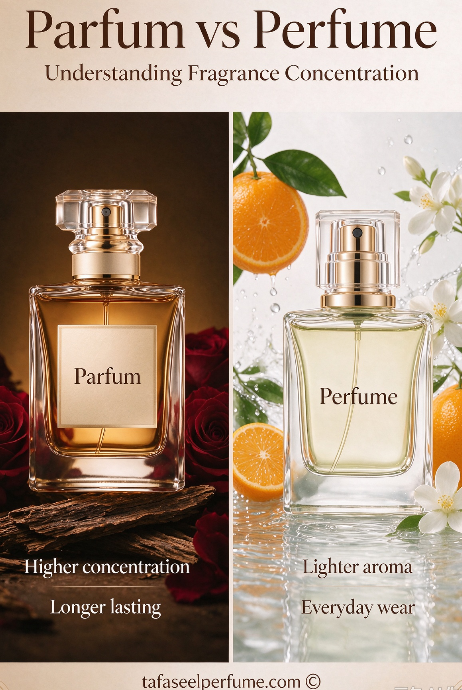
- Parfum vs Perfume Difference: Understanding Fragrance Types, Concentrations, and How to Choose the Right Scent: Have you ever wondered about the parfum perfume difference when shopping for a new fragrance? Although the words parfum and perfume are often used interchangeably, they can have different meanings depending on the country, language, and fragrance industry context. Understanding these terms can help you make better purchasing decisions, recognize fragrance concentrations, and find a scent that matches your personal style.
The fragrance world includes many different products, from light everyday scents to rich and long-lasting compositions designed for special occasions. Parfum is commonly used to describe a highly concentrated fragrance category, while perfume is a broader term that refers to scented products in general. However, the distinction is not always straightforward because terminology varies between brands and international markets. In this guide, we will explore the parfum perfume difference in detail, including fragrance concentration, longevity, scent development, pricing, application methods, and shopping considerations. Whether you are buying your first fragrance or expanding an existing collection, understanding these differences will make choosing the right product much easier.
Table of Contents
1. What Is the Difference Between Parfum and Perfume?
2. Understanding Fragrance Concentration Levels
3. How Long Does Parfum Last Compared to Other Perfumes?
4. Why Is Parfum Usually More Expensive?
5. Parfum vs Eau de Parfum vs Eau de Toilette
6. How Fragrance Notes Affect Your Scent Experience
7. Choosing the Right Fragrance for Different Occasions
8. Is Parfum Better for Men or Women?
9. How to Apply Parfum and Make It Last Longer
10. How Skin Type and Weather Influence Fragrance Performance
11. How to Choose the Best Perfume for Your Budget
12. Frequently Asked Questions About Parfum and Perfume
1. What Is the Difference Between Parfum and Perfume?
The most important thing to understand about the parfum perfume difference is that the two words do not always describe completely separate products. Perfume is a general English term for fragrant products, while parfum is a French word commonly used by fragrance brands to identify their most concentrated fragrance category. In everyday conversations, people may use both words to describe the same scented product.
In the fragrance industry, parfum usually refers to a formulation with a relatively high percentage of aromatic compounds. These compounds are blended with alcohol and sometimes other ingredients to create a balanced fragrance. Because parfum contains a higher concentration of fragrance materials than many lighter fragrance categories, it can provide a richer scent experience and often requires fewer sprays during application.
Perfume, on the other hand, is frequently used as an umbrella term covering several fragrance concentrations. Eau de Cologne, Eau de Toilette, Eau de Parfum, and Parfum can all be described as perfumes in general conversation. This explains why product descriptions sometimes create confusion for shoppers who are trying to compare different fragrance bottles.
Another important distinction comes from regional language. In French-speaking markets, parfum simply means perfume or fragrance. In English-language product listings, however, the same word may specifically indicate a high-concentration fragrance product. Therefore, it is always useful to check the product label and concentration information instead of relying on the name alone.
For shoppers exploring different fragrance categories, browsing unisex perfume, men's fragrances, and women's fragrances can provide a better understanding of how fragrance styles differ beyond concentration.
2. Understanding Fragrance Concentration Levels
Fragrance concentration is one of the most important factors when comparing different perfume products. It describes the proportion of aromatic ingredients used in a fragrance formula relative to the finished product. A higher concentration often produces a more noticeable scent and may increase longevity, although actual performance depends on the ingredients, formulation, skin chemistry, and application method.
Parfum or Extrait de Parfum commonly contains approximately 20% to 40% aromatic compounds. This range is not a universal industry standard, but it provides a useful general reference. These fragrances are often rich, smooth, and designed to develop gradually on the skin. Their concentrated nature means that a small amount can be sufficient for many situations.
Eau de Parfum generally contains around 15% to 20% fragrance concentration. It is one of the most popular choices because it offers a balance between noticeable fragrance performance and everyday practicality. Many people prefer Eau de Parfum for work, social events, and evening occasions because it can provide a satisfying scent without always feeling excessively intense.
Eau de Toilette commonly contains approximately 5% to 15% aromatic compounds. It tends to feel lighter and fresher, making it suitable for daytime use, warmer weather, and situations where a subtle fragrance is preferred. Eau de Cologne often contains around 2% to 5%, although formulations vary considerably between brands.
These percentages should be treated as general guidelines rather than strict rules. Some modern fragrance formulations do not follow traditional concentration expectations. A well-designed Eau de Toilette may last longer than a particular Parfum because fragrance performance also depends on the volatility and characteristics of individual ingredients.
Understanding these categories helps consumers compare fragrance products more accurately and select a concentration that suits their personal preferences.
3. How Long Does Parfum Last Compared to Other Perfumes?
Longevity is one of the most frequently discussed aspects of the parfum perfume difference. Many shoppers choose Parfum because they want a fragrance that remains noticeable for an extended period. Since Parfum generally contains a higher concentration of aromatic materials, it often has the potential to last longer than lighter fragrance categories.
As a general reference, Parfum may last approximately six to twelve hours or longer, depending on the formula and individual circumstances. Eau de Parfum often lasts around four to eight hours, while Eau de Toilette may remain noticeable for approximately three to six hours. Eau de Cologne typically provides a shorter fragrance experience.
However, these figures are not guarantees. A fragrance containing long-lasting woody, amber, musk, or resinous ingredients may remain on the skin longer than a composition dominated by fresh citrus or delicate floral materials. Even within the same concentration category, two fragrances can perform very differently.
Skin chemistry also plays an important role. Natural skin oils, moisture levels, body temperature, and individual scent perception can influence how a fragrance develops. Someone with dry skin may notice that certain perfumes disappear more quickly, while moisturized skin can sometimes help fragrance materials remain noticeable for longer.
It is also important to distinguish between longevity and projection. Longevity refers to how long a fragrance remains detectable, while projection describes how far its scent travels from the wearer. A perfume can last many hours while staying close to the skin. Another fragrance may project strongly during the first hour but become much softer later.
4. Why Is Parfum Usually More Expensive?
Parfum products are often more expensive than lighter fragrance concentrations because they can contain a larger proportion of aromatic ingredients. Some of these materials are costly to produce, extract, process, or obtain. Natural ingredients such as certain flower absolutes, resins, and specialty extracts may require substantial resources before they can be incorporated into a fragrance formula.
However, fragrance pricing is influenced by much more than concentration. Brand reputation, packaging design, advertising, distribution costs, ingredient sourcing, and production quantities can all affect the final retail price. A luxury Eau de Toilette may cost more than an affordable Parfum from another brand.
Packaging can also contribute to the overall cost. Premium fragrance products may feature specially designed glass bottles, decorative caps, detailed labels, and sophisticated presentation boxes. These elements influence the shopping experience but do not necessarily indicate that the fragrance itself performs better.
When comparing prices, shoppers should consider the amount of product in the bottle, the concentration, the fragrance composition, and how frequently they intend to use it. A concentrated fragrance may require fewer sprays per application, but this does not automatically make it more economical in every situation.
For people purchasing fragrances as presents, perfume gift sets can provide an alternative way to explore different fragrance products while enjoying coordinated packaging and multiple items.
5. Parfum vs Eau de Parfum vs Eau de Toilette
Understanding the difference between Parfum, Eau de Parfum, and Eau de Toilette makes fragrance shopping considerably easier. Although these categories are related, they are designed to provide different levels of intensity, fragrance character, and wearing experiences.
Parfum is generally the most concentrated option among these three categories. It is often selected by people who enjoy deep fragrance compositions and prefer applying a smaller quantity. Its scent can develop slowly, allowing the wearer to experience different layers throughout the day.
Eau de Parfum is a versatile middle ground. It offers a noticeable fragrance presence without necessarily reaching the intensity of a highly concentrated Parfum. This makes it suitable for a wide range of personal preferences and occasions, including office environments, casual outings, and evening events.
Eau de Toilette is usually lighter and more refreshing. It can be particularly appealing during spring and summer, when some people prefer fragrances that feel clean, airy, and less intense. Fresh citrus, aquatic, aromatic, and green compositions are commonly found in this category.
The best option depends on how you want your fragrance to behave. Someone who enjoys a subtle scent may prefer Eau de Toilette, while someone who wants a richer fragrance experience may choose Parfum. There is no universal winner because fragrance selection is ultimately a matter of personal taste.
6. How Fragrance Notes Affect Your Scent Experience
Fragrance concentration is only one part of understanding a perfume. The ingredients and structure of a fragrance also determine how it smells, changes over time, and interacts with the skin. Most traditional fragrance compositions are organized into three main stages: top notes, heart notes, and base notes.
Top notes are usually the first scents people notice immediately after applying perfume. They often include citrus, aromatic herbs, light fruits, and other relatively volatile materials. These notes create the initial impression of a fragrance but generally fade faster than the deeper components.
Heart notes emerge as the top notes become less noticeable. They form the central personality of the composition and may include floral, spicy, fruity, or aromatic elements. Rose, jasmine, lavender, geranium, and various spices are frequently used to create distinctive fragrance characters.
Base notes provide depth and help establish the lasting character of a fragrance. Common examples include sandalwood, cedarwood, vanilla, amber accords, musk, patchouli, and resinous materials. These ingredients often remain noticeable after the brighter opening notes have disappeared.
A highly concentrated Parfum does not necessarily smell stronger in every stage. Some formulas emphasize soft and intimate base notes, while others create a powerful opening. The balance between ingredients is often more important than concentration alone.
Testing a fragrance on your skin and allowing it to develop for several hours is one of the best ways to understand its complete character. Smelling only the first spray may not reveal the fragrance you will experience later in the day.
7. Choosing the Right Fragrance for Different Occasions
The ideal fragrance often depends on where and when you plan to wear it. A scent that works beautifully for a formal evening event may feel too intense for a crowded office or a casual daytime activity. Considering the setting can help you select a fragrance that complements the occasion.
For everyday use, many people prefer fresh, clean, and moderately concentrated fragrances. Citrus, aquatic, green, and soft floral compositions can provide a pleasant scent without dominating the surrounding environment. Eau de Toilette and lighter Eau de Parfum formulations are popular choices for this purpose.
For evening occasions, richer fragrance profiles can create a more distinctive impression. Woody, amber, spicy, gourmand, and oriental-inspired compositions are often associated with deeper and warmer scent experiences. Parfum and Eau de Parfum may be suitable choices, depending on the specific formula and personal preference.
During professional activities, moderation is especially important. A fragrance should complement your personal presentation rather than overwhelm colleagues or customers. Applying a small amount and choosing a fragrance with controlled projection can be a practical approach.
For vacations and travel, portability is another consideration. Smaller fragrance bottles and travel-size products make it easier to carry a preferred scent without bringing a full-size bottle. Exploring mini size and gift sets can help you find convenient options for different occasions.
8. Is Parfum Better for Men or Women?
Parfum is not exclusively designed for men or women. The term describes a fragrance concentration category rather than a gender classification. Both men's and women's fragrance collections can include Parfum, Eau de Parfum, and Eau de Toilette products.
Traditional fragrance marketing often separates scents into masculine and feminine categories. Men's collections frequently feature woody, aromatic, fresh, spicy, and leather-inspired compositions. Women's collections commonly include floral, fruity, sweet, powdery, and woody fragrances. However, these descriptions represent historical marketing conventions rather than strict rules about who can wear a particular scent.
Modern fragrance preferences are increasingly flexible. Many people enjoy fragrances regardless of the category under which they are marketed. A woody vanilla perfume may appeal to someone who traditionally prefers floral fragrances, while a fresh citrus scent can be enjoyed by anyone who likes its character.
Men's perfume collections and women's perfume collections can both offer a wide range of fragrance concentrations and scent families. Exploring these categories can help shoppers discover different styles without limiting themselves to traditional labels.
Ultimately, the best fragrance is one that makes you feel comfortable and confident. Concentration, scent profile, personal preference, and occasion are more useful considerations than assuming Parfum belongs to a particular gender.
9. How to Apply Parfum and Make It Last Longer
Applying fragrance correctly can improve your overall scent experience. Because Parfum is generally more concentrated than lighter fragrance products, using a small amount is often sufficient. Applying too much may create an overpowering scent, particularly in enclosed spaces.
Pulse points are common application areas because these locations naturally produce warmth. The wrists, neck, and areas behind the ears are frequently used. However, fragrance can also be applied to other suitable areas of the body, depending on the product instructions and personal preference.
Moisturized skin may help certain fragrance formulas remain noticeable for longer. Applying an unscented moisturizer before perfume can create a more comfortable base for fragrance application. Extremely dry skin may not retain some scent materials as effectively as well-hydrated skin.
One common mistake is rubbing the wrists together immediately after applying perfume. This can disturb the fragrance on the skin and alter how the scent develops. Allowing the product to dry naturally is generally a better approach.
Storage also matters. Direct sunlight, excessive heat, and repeated exposure to changing temperatures may affect fragrance quality over time. Keeping perfume in a cool, dry location away from direct sunlight can help preserve its original characteristics.
Finally, remember that more sprays do not always produce a better result. Start with a small amount, evaluate the fragrance projection, and adjust your application according to the strength of the product and the environment.
10. How Skin Type and Weather Influence Fragrance Performance
The same perfume can smell and perform differently on different people. This is partly because skin chemistry, moisture levels, temperature, and environmental conditions influence the way fragrance materials evaporate and develop.
Dry skin may cause some fragrances to become less noticeable relatively quickly. Using an unscented moisturizer before applying perfume can sometimes improve fragrance retention. This does not change the original concentration, but it may create a more suitable surface for the fragrance to develop.
Oily skin can interact differently with fragrance materials. Natural skin oils may help certain aromatic compounds remain noticeable for longer. Nevertheless, the result varies depending on the perfume formula and the individual wearing it.
Weather also influences fragrance performance. Warm temperatures can increase the evaporation rate of volatile fragrance materials, making a scent seem stronger during the opening stage. Cold weather may make certain compositions feel softer and less noticeable, particularly when they contain fresh or delicate notes.
For hot climates, many people prefer fresh citrus, aquatic, green, or light floral fragrances. During colder months, warmer woody, spicy, amber, and vanilla compositions may feel more suitable. These are preferences rather than fixed rules, and any fragrance can be worn throughout the year if it feels comfortable.
11. How to Choose the Best Perfume for Your Budget
Choosing a fragrance should involve more than comparing bottle prices or selecting the product with the highest concentration. A good purchasing decision considers fragrance quality, personal preferences, product size, intended usage, and overall value.
Start by identifying the scent families you enjoy. If you prefer fresh and energetic fragrances, citrus, aquatic, and aromatic compositions may be a good starting point. If you enjoy warm and sophisticated scents, woody, amber, spicy, and gourmand fragrances may be more appealing.
Next, compare different concentrations. Parfum may offer a more concentrated fragrance experience, but Eau de Parfum and Eau de Toilette can provide excellent performance depending on their formulas. Paying more does not automatically guarantee that a fragrance will smell better or last longer.
Testing before purchasing is especially useful. Whenever possible, apply a fragrance to your skin and allow enough time for the top, heart, and base notes to develop. This helps you understand how the composition performs beyond its initial opening.
Consider bottle size as well. A smaller bottle may be a sensible option if you are trying a new fragrance for the first time. It can reduce the initial cost and prevent you from purchasing a large quantity of a scent you may not use regularly.
It is also worth comparing product descriptions, ingredient information, packaging, and seller reputation. Reliable product information makes it easier to understand what you are purchasing and avoid confusion between fragrance concentration categories.
12. Frequently Asked Questions About Parfum and Perfume
Is parfum the same as perfume?
Not always. Perfume is a broad English term for fragrance products, while parfum is often used in the fragrance industry to describe a highly concentrated fragrance category. In French, parfum simply means perfume, so the meaning depends on the context.
Does parfum last longer than perfume?
Parfum often lasts longer than lighter fragrance concentrations because it generally contains a higher proportion of aromatic compounds. However, longevity depends on the formula, ingredients, skin chemistry, and environmental conditions. Concentration alone cannot guarantee performance.
Is Eau de Parfum stronger than Parfum?
Generally, Parfum has a higher fragrance concentration than Eau de Parfum. However, perceived strength and projection are not determined by concentration alone. Some Eau de Parfum formulations may project more strongly than certain Parfum products.
Can men wear women's Parfum?
Yes. Fragrance categories are not strict rules about who can wear a scent. Anyone can enjoy floral, woody, fresh, spicy, sweet, or other fragrance styles according to personal preference.
Is expensive Parfum always better?
No. Price can reflect ingredients, brand positioning, packaging, marketing, and distribution costs. A more affordable fragrance may provide an excellent scent experience, while an expensive product may not match everyone's preferences.
Should I choose Parfum or Eau de Parfum for everyday use?
Both can work well for everyday use. Parfum may be suitable if you prefer concentrated fragrances and controlled application, while Eau de Parfum offers a versatile balance between intensity and practicality. Your preferred scent and the environment should guide your decision.
How many sprays of Parfum should I use?
There is no universal number because fragrance strength and personal preferences vary. Starting with one or two sprays is a reasonable approach for many concentrated fragrances. You can adjust the amount after evaluating the projection and intensity.
Does Parfum contain alcohol?
Many traditional Parfum products use alcohol as a solvent to distribute aromatic materials. However, alcohol-free fragrance formulations also exist. Checking the ingredient list and product description is the best way to determine the composition of a particular product.
Final Thoughts: Understanding the Parfum Perfume Difference
Understanding the parfum perfume difference makes it easier to navigate the fragrance market and choose products that match your preferences. Perfume is generally a broad term for scented products, while Parfum often refers to a more concentrated fragrance category. Although concentration can influence longevity and intensity, it is only one part of the overall fragrance experience.
The scent composition, ingredient quality, skin chemistry, weather, application technique, and personal preferences all contribute to how a fragrance performs. Rather than automatically choosing the strongest or most expensive option, take time to explore different fragrance families and concentrations.
Whether you prefer a light daytime scent, a versatile Eau de Parfum, or a rich and concentrated Parfum, the right fragrance is the one that suits your lifestyle and makes you feel confident. By understanding fragrance terminology and comparing products carefully, you can make more informed decisions and enjoy a better perfume shopping experience.


